

London | Madrid | La Coruña
Joined May 2017
- Tweets9.6K
- Following863
- Followers755
- Likes12.4K




Mateo Silos Ribas retweeted
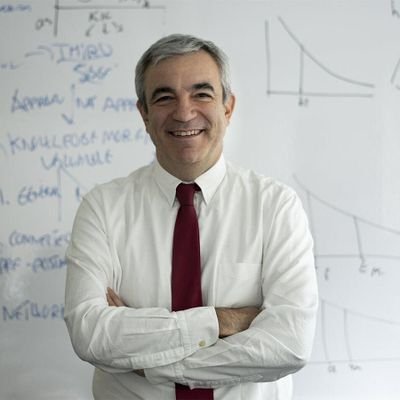
I must confess to being thrilled that the @nytimes asked me to write about Messy Jobs. The piece is just out. Enjoy it!
nytimes.com/2026/11/27/opini…

Mateo Silos Ribas retweeted

Most of the Elizabeth Line actually dates back to the Victorian era.
Digging just 21km of tunnel through central London connected century-old commuter lines into a single 117km network. It’s called “through-running,” and US cities like NYC, Boston, and Chicago have the infrastructure to do the same thing.
Read more: worksinprogress.co/issue/the…


Mateo Silos Ribas retweeted

Access my updated historical national accounts for Spain, 1850-2025, incl. capital, labour, and TFP.
Includes GDP and population, 1277-1850 (joint work with C Álvarez-Nogal and @Carlos_SanCab)
frdelpino.es/investigacion/e…
@frdelpino

Mateo Silos Ribas retweeted
Wow, Messy Jobs is one of Bloomberg's best books of 2026 , thanks! And thanks @peter_orszag @erikbryn
(The two capsules below by Orszag and by Brynjolfsson are really worth reading)
bloomberg.com/features/2026-…


Mateo Silos Ribas retweeted

A True Giant. Posner's best antitrust contributions were technical, e.g., 1981 HLR article (with Landes) on market power. Some were wrong -- e.g., his defense of the indirect purchaser rule. My favorite read is not technical: Penn L.Rev. piece on Chicago School (c. 1979)

Disappointing WaPo obituary; it feels like it was written at Judge Posner’s retirement in 2017 and never updated, and not just because it refers to “esoteric antitrust law.”
wapo.st/4kc778s

Mateo Silos Ribas retweeted

RIP, the inimitable Richard Posner.
It is almost impossible to do justice to his contributions to law and economics generally, or to antitrust specifically. There will be time to do that. I'll sure try. But for now, a short personal anecdote that I think probably resonates with so many that grew up in the law and economics tradition.
I would not have gone to law school had I not run into Posner's Economic Analysis of Law as an undergraduate. I studied math and economics. My plan was to go to graduate school in economics. That book changed everything. My brain was wired like an economist. I wanted to understand why things were happening and the lens of incentives and economics was a powerful way to see the world. But I had not given law a second thought.
When I took an L&E class as an undergraduate it changed everything. It was a whole system of thinking about the law. And not just antitrust where the force of economics was clear. But about every square inch of the law from substantive doctrine to procedure. Economics offers a system of thinking. And here was Posner painting every corner of the canvas with that system as an economist yes, but with deep institutional detail about how the law works, how judges think, and even how courts function.
The best of modern law and economics retains the Posnerian attention to institutional detail and pragmatic constraints. He was not what Armen Alchian would have called "a blackboard economist," i.e. a theorist who when confronted with models that did not predict accurately the actions of economic agents would blame them rather than the model. This is at least partially because his empirical hook was almost always what was happening in the cases (and sometimes courts) themselves.
It was exposure to that book that made me think a career in law -- or even thinking about the law as an interesting economic subject -- could be for me. And I'm not alone. There is a generation of law and economics scholars, judges, and practitioners who were put on to the same idea because of the breadth and depth and power of Posner's work. There are very, very few individuals that have the intellectual creativity, insight, and acumen to create a field or change its trajectory forever. Posner and Henry Manne come to mind -- in different ways -- as leaving such a pronounced real world impact.
I will be forever grateful for what Judge Posner did for the field, of course. But even more appreciative of showing so many of us that economic thinking had a powerful place in the law.
What a tremendous loss. My condolences to Eric Posner and the U Chicago family.
Mateo Silos Ribas retweeted

Breaking News: Judge Richard A. Posner, the most-cited legal scholar of the latter half of the 20th century, has died. nyti.ms/4Aizsyo

Mateo Silos Ribas retweeted

A tribute to the astonishing Richard Posner, the most influential legal thinker of our era.
bloomberg.com/amp/view/artic…
Mateo Silos Ribas retweeted
RIP Richard Posner, one of the most brilliant, hard-working and intellectually honest people I have ever met. He wrote his own opinions rather than leaving them to his clerks, and he spent seven years as chief judge of the Seventh Circuit. Even so, he wrote around 3,300 judicial opinions, about 90 a year, roughly three times the output of a typical appellate judge. On top of that he wrote some 50 books (between 40 and 66, depending on what counts) and between 300 and 500 articles, depending on what counts as an article.
I had the luck to work with him. After 9/11 he was talking to the FBI director Robert Mueller about whether to split the FBI, as many other countries do, into a crime-fighting agency and an intelligence-gathering one, following the notorious intelligence failures of the 2000s, most notably 9/11. He asked me to help, and I was honored to work with him for a year or so. We wrote a report for him and published some of our ideas in the Journal of Economic Perspectives in 2005 and later to them in the WSJ.
What I remember best is his dedication and discipline. Whenever I sent him a document, whether on Saturday evening or Sunday morning, he returned it within a few hours with dozens of insightful comments. He was generous, optimistic, sharp and honest. He wanted the truth. He was a believer in free markets, but he concluded that the 2008 crisis was a market failure and wrote a book saying so: A Failure of Capitalism: The Crisis of ‘08 and the Descent Into Depression (2009).
With his friend Gary Becker, he embodied best what @UChicago calls the life of the mind: a life consacrated to taking ideas seriously. RIP.

We mourn the loss of Senior Lecturer Richard Allen Posner, a longtime #UChicagoLaw scholar, former federal appellate judge, and pioneer in the field of law and economics, who died on November 10.
Read more about his legacy: buff.ly/e3c3WdL

ALT In loving memory of Richard Posner 1939-2026
Mateo Silos Ribas retweeted
It speaks highly of the Prime Minister to show up to listen to a speech of his Cabinet secrety Antonia Romeo. I don't think I have seen something like this before. She was brilliant and charismatic on the civil service reform they want to implement.

Mateo Silos Ribas retweeted

Highgate Wood #Autumn canopy - looking up from a favourite spot with my vintage Nikon 8mm fisheye lens


Mateo Silos Ribas retweeted

Remembering William Nordhaus, 2018 laureate in economic sciences, who passed away a few days ago.
Throughout his career, Nordhaus transformed our understanding of the relationship between the economy and climate change. In his Nobel Prize banquet speech, he reflected on the responsibility of the present generation to address one of humanity's greatest challenges:
"I end this toast with words for students, young people, and our grandchildren. You are likely to live through the 21st century. The globe at century’s end will be vastly different from today. The condition of our world will depend on the steps we, in this generation, take now to slow global warming."
Nordhaus was awarded the prize in 2018 "for integrating climate change into long-run macroeconomic analysis". His pioneering models helped economists and policymakers better understand the relationship between economic activity, climate change, and important climate control measures such as carbon taxes.
Mateo Silos Ribas retweeted

A giant is gone. news.yale.edu/2026/10/31/wil…

Mateo Silos Ribas retweeted

Join Works in Progress at Building Abundance: How Britain can flourish in the age of AI, a day of ideas for rebuilding Britain’s economy and state so it can adapt to and embrace artificial intelligence and other opportunities for growth.
luma.com/ria1khmw
Sessions include:
- @Dominic2306 and Morgan McSweeney in conversation on the decline and fall of British state capacity,
- @JohnFingleton1 on the Nuclear Taskforce and its implementation by the government, one year on from its pledge to implement it in full.
- @bswud, @SCP_Hughes and me on why nearly every attempt to get Britain building has failed;
- @rachelwolf on what the public really thinks about economic growth and AI;
- @lugaricano on messy jobs and Britain’s labour market;
- @jujulemons on why Britain needs gigawatt-scale compute, and how to get it built here;
- @salonium on why fixing clinical trials is the best industrial policy Britain could have;
- @MichaelDnes1 on building the first new tunnel under the Pennines since 1954;
- @RobertBoswall on how to finance and power the data centre buildout; and
- @daisychristo on why VAR matters for state capacity.
It will be held on Thursday 3rd December at the LSE, from 1pm to 7:30pm (doors open 1pm for a 1:20pm start). We're hosting it in association with the LSE Law School and School of Public Policy. Tickets are free.
See you there!
luma.com/ria1khmw


Mateo Silos Ribas retweeted

I very highly recommend visiting the UK's great cathedrals, e.g. Lincoln and Durham. I did so earlier this year and find myself reminiscing about them quite frequently. Some of the most beautiful buildings in the world.
Mateo Silos Ribas retweeted

Congratulations to Robert E. Hall of @Stanford and Michael Woodford of @Columbia on winning the @NobelPrize in Economic Sciences! aeaweb.org/news/nobel-prize-…

Mateo Silos Ribas retweeted

Woodford and Hall. A Great Nobel
grumpy-economist.com/p/a-gre…

Mateo Silos Ribas retweeted

The very first class I took at @UChicago was from Mike Woodford, "Dynamic General Equilibrium Theory." Impossible to have buyers' regret when walking into such a fabulous class! Economics taught the right way. @albertobisin

2026 economic sciences laureate Michael Woodford’s economic model has made it possible to respond to supply shocks more effectively.
Various types of shocks can disrupt the balance between supply and demand. A negative supply shock could be a commodity shortage, while a positive supply shock could be a technological breakthrough that makes the production of large volumes cheaper and easier. A positive demand shock could be good news about the future that increases households’ consumption, and a negative one the opposite news. If the balance is disrupted, it can be reset using a stabilisation policy that reduces demand (to the left) or increases it (to the right).
#NobelPrize
