

Associate Prof doing bioinformatics and computational neuro at @UofT and @CAMHresearch. Tweets about neurons, ephys, and single-cell RNAseq.
Toronto, Ontario
Joined February 2009
- Tweets5.5K
- Following2.9K
- Followers3K
- Likes8.4K





Shreejoy Tripathy retweeted

John's paper is out. Can the transcriptomic profile of a neuron predict its physiological properties? A tale of ion channels and firing rate adaptation across species.
sciencedirect.com/science/ar…
who knew that countless hours playing starcraft in highschool would pay off handsomely in this era of agentic ai. still need more pylons though.
Shreejoy Tripathy retweeted

Thrilled to see PsychAD published! 🧠
A journey begun in 2019: 60+ investigators, 8 institutions, 1,494 human brains—illuminating brain aging and disease.
Supported by NIA. Made possible by the generosity of donors and families.
psych-ad.org/
nature.com/collections/jfibi…
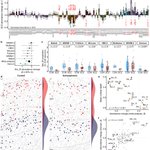
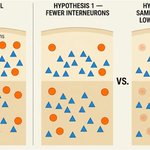
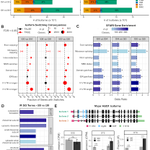
New preprint from our lab: "Selective depletion of upper-layer somatostatin interneuron subtypes in schizophrenia." The largest case/control single-cell analysis of the schizophrenia brain to date. 🧵
biorxiv.org/content/10.64898…

We release full DE + abundance results for every cortical cell type, all code, and harmonized cell-type annotations for every cell in the 8 public datasets github.com/stripathy/scz_cel….

Really proud of this huge team effort led by the Nicole Endresz at @CAMH_KCNI and our great collaborators, @Etienne_Sibille, @gburgos412 and @LaramieDuncan. Comments welcome!
Really grateful to play a minor part in this exciting study led by @_GA_Craig and Veronica! Huge congrats to the team and excited to see it out!

Oligodendrocyte dysfunction in human age-related cognitive decline dlvr.it/TV977q

Shreejoy Tripathy retweeted

CIHR has been engaging the research community on how to keep the Project Grant program strong, fair, and sustainable as application volume rises.
Read more about key themes that emerged and what comes next: cihr-irsc.gc.ca/e/54795.html…

ALT Project grant update
Shreejoy Tripathy retweeted
Primate brains increased computational power and area specialization during evolution, not by making more neurons per volume of tissue, but by making large and complex 'psychic cells' in the newly evolved prefrontal cortex. nature.com/articles/s41467-0…

Shreejoy Tripathy retweeted

Want to learn more about long-read #bioinformatics? Want to know how to read methylation tags in BAM files? This is the bootcamp for you! Sign up to get access to recorded tutorials + live Q&A session. @PacBio

Join our New Tech Session: HiFi Long-Read Bioinformatics Bootcamp! 🧬
Build a solid foundation for analyzing #PacBio HiFi data with an on-demand video playlist plus a live Q&A with PacBio experts. Learn core tools & best practices.
Register today: bit.ly/44JH93e

At least once a year I wish my mentor Dr. Gordon Shepherd were still alive and I could ask him about some obscure neuroanatomy question from the 80s or 90s.
Shreejoy Tripathy retweeted

First paper from the lab! Check out our review for Molecular Psychiatry on single-cell studies of brain disease:
nature.com/articles/s41380-0…
Shreejoy Tripathy retweeted

Transitioning to being a PI in the age of AI
Computational biology is in a period of upheaval that is both exhilarating and terrifying. Rapidly, we are approaching a moment of “analytic abundance”, where basically idea you can think of (and several you didn’t) magically appear within minutes of you thinking of them. Of course, the central proximal challenge is the evaluation of the sheer volume results—how do we know they are right when we don’t have the time to check over every line of code?
I think it’s very telling that when I talk to AI-pilled faculty, they are exhilerated, but many trainees seem more cautious and far more ambivalent. I think that’s because faculty often have been removed from the details for a long time and probably haven’t checked over a line of code in years. They are used to managing (rather than doing) analysis. Over time, they usually develop a sense for whether things seem right or wrong. In this day and age, this is the skill that you, too, must develop.
How do faculty do it? I am guessing every faculty member has their own list of internal sanity checks, but here are a few of mine:
* Checksums. I look for things that should add up correctly (percentages add to 100, etc.). If it looks even a little bit off, I ask questions.
* Never let go. If something doesn’t make sense, I don’t let go until it does make sense. Never relent!
* Explain stray datapoints. Always dig into outliers in the data. How did they come to be? Often, they reveal some hidden assumption or something unexpected about the data.
* Do not tolerate warnings. If code gives you a warning, resolve it. Do not continue, do not pass go, until you either understand or eliminate the warning.
* Track the number of datapoints. Even a single missing row can be a sign of some fencepost bug.
And I’m sure many more that I’m forgetting right now. Basically, it’s a transition from a maker to an interrogator.
I also feel it worth reiterating that this is a highly unsetting period of time. I have been fortunate (?) to have 16 years of time to make a transition that people are now being asked to make in months. Again, exhilarating and terrifying, all at once!
Shreejoy Tripathy retweeted

Approach sounds very similar to science.org/doi/10.1126/scie…

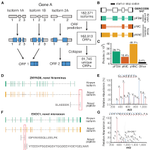
I'm so proud of our paper on the molecular signature of DRG sleeping nociceptors from mine and @LampertLabRWTH's groups, out today in Cell! cell.com/cell/fulltext/S0092….

hope you read this paper and enjoy it half as much as I did while we were working on it. A couple special shoutouts: mine and co-first author Jannis's daughters were both born over the course of this work. Their impending births definitely catalyzed this.
and huge thanks to all of the amazing collaborators on this, especially @LampertLabRWTH and Jannis Korner. They taught me everything I ever wanted to know about the peripheral sensory system, neuropathic pain, and more. Here's a photo of near Flanders Field, near Aachen, Germany
