

I like building software | GPU kernel engineer @AMD | Blog: https://nitter.cf/t.co/aoUjpbPpw9
Italia
Joined April 2023
- Tweets1.2K
- Following292
- Followers324
- Likes3.4K



Pinned Tweet
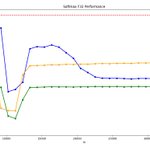
My first ROCm blog post just got published!
In this one, I dissect the anatomy of high-performance GEMM kernels on AMD CDNA4 GPUs.
Huge thanks to my co-authors @salykova_ and @linluo77 for their contribution.
Read the blog: rocm.blogs.amd.com/software-…
Companion code: github.com/nirw4nna/hipgemm

Christian Gilli retweeted

Over the past week, I’ve been overwhelmed by the love and support of friends, industry colleagues, and people I've never met. Thank you to everyone who has shown kindness to my family and me. It means the world to me.
I came to the United States 53 years ago, and becoming an American citizen is one of the greatest gifts and proudest moments of my life. NVIDIA has been my life’s work. Building it into the company it is today alongside my colleagues has been a privilege and an honor. Nowhere but in America could a company like NVIDIA be possible. I love our country, and I love NVIDIA.
I did not live up to the standards expected of everyone at NVIDIA, and I have made serious mistakes in my personal life. I created problems for the Board that I deeply regret. I own my mistakes completely, and I am committed to cooperating with the Board’s independent investigation.
Since my departure, I’ve seen an outpouring of calls from NVIDIA’s employees, investors, business partners, and customers for me to return as CEO. Many continue to reach out to me directly as the company navigates complex technology, market, competitive, and geopolitical dynamics. NVIDIA is a once-in-a-generation company. If the Board of Directors decides that my return is in the best interest of our shareholders, our employees, the company, and America, I would be honored to answer these calls and return as CEO.
Thank you again to everyone who has shared their good wishes. I am profoundly humbled by your support. To my family: I love you, and I will spend the rest of my life being worthy of yours.
Jensen
Yes please 🙏

Last Year We Built Megakernels. This Year We Deleted Them.
One year ago, we helped introduce some of the first AI megakernels to the world. Since then, we’ve enjoyed seeing their wide adoption from friends and researchers. However, while whole model megakernels are a helpful abstraction, we’ve found that they overcomplicate and are not always an ideal optimization target.
Below, we discuss our journey to understand and push past these limitations. We start with a deep dive into two contrasting paradigms of ML optimization – Torch Compile and Megakernels
8
246


Christian Gilli retweeted

Agentic coding benefits from powerful abstractions, just like humans do.

AI may well be able to write massive software projects “from scratch”, but that almost certainly isn’t the fastest / highest performance / highest security / most token efficient way to do things. Good building blocks matter.
In addition to RL’ing the agents on final task loss, we should try to get them to regularize the building blocks as well. What would the standard library look like that makes the agents most effective?
It is likely at the limit that it turns out to be some alien organization of code, but given the existing human-bias in training, I bet that in the near term it would be lovely code that old programmers would appreciate.
I suspect the same could be said for mathematics, but that is out of my lane.
How I feel about gpu kernels: a good set of reusable primitives matters, even in the agentic era.
Problem is if you don’t take your time to really think about what this would look like it’s hard to get there. I somehow agree with Terence Tao’s take that if you don’t work through a problem you won’t get some breakthrough ideas once in a while.
AI may well be able to write massive software projects “from scratch”, but that almost certainly isn’t the fastest / highest performance / highest security / most token efficient way to do things. Good building blocks matter.
In addition to RL’ing the agents on final task loss, we should try to get them to regularize the building blocks as well. What would the standard library look like that makes the agents most effective?
It is likely at the limit that it turns out to be some alien organization of code, but given the existing human-bias in training, I bet that in the near term it would be lovely code that old programmers would appreciate.
I suspect the same could be said for mathematics, but that is out of my lane.
Dumb question: is **just** selling tokens a profitable business? I don’t mean specialized inference providers, just plain and simple open-source LLM serving.
2
4
534
Semi-serious question: what do you do while your agents work on something? Study something else or just fuck around?
1
8
418
I think AI should be used deliberately for things like coding but not to communicate ideas to other human beings. In the age of automation, ideas and taste are your most important assets. If you delegate everything to an AI agent then what’s left for you?
1
5
124
Christian Gilli retweeted

AMD's launching an AI world tour to put hands-on skills & ROCm certification in the hands of developers everywhere.
The AMD AI DevDay World Tour runs October 29 through March 2027. Each stop is free and packs a full day of workshops, expert talks, and certification.
Register👇


I’ll be at AI Pulse 2026 in Paris on October 13th!
I’ll be at the @AMD booth. Come by if you want to discuss matrix core issue cycles, the best patisserie in Paris, or anything in between.


Christian Gilli retweeted

~440 tok/s/user P90 interactivity on MiniMax M3 at concurrency=1 on MI355X.
How? TileRT MegaKernel → FlyDSL MonoKernel → ATOM, fusing Indexer + GEMM + MLA + AllReduce + MoE into a single kernel launch.
Open software stacks turn ideas into production performance—fast. #AMD #ROCm

It seems like agents love indirection. I often find stuff like:
def foo_xyz(x, y, z):
...
def foo_01(x):
foo(x, 0, 1)
def foo():
foo_01(0)
which makes me a bit nervous.
2
12
2,058
Christian Gilli retweeted

So excited to welcome @theworldlabs and @drfeifei to the @AMD family! I’ve always been a huge fan of Fei-Fei and her pioneering research in AI. Together, we’ll combine World Labs’ deep expertise in AI and world models with AMD’s compute leadership to power the future of AI and strengthen the open AI ecosystem. Can’t wait for all we’ll accomplish!


I think this also shows how good abstractions are good not only for humans but for agents too.


1
5
435
Reminder:

I've got an agent in a loop optimizing a renderer with the goal to minimize frame times (and tests to measure). It got times down from 88ms to 2ms and allocations down from ~150K to 500. Sounds good, right? Wrong. This is exactly why agent psychosis is a big fucking problem.
As an experiment, I rewrote the Ghostty core render state in Go, with access to identically laid out data structures as Ghostty and the exact same validation tests. I made a purposely naive renderer (simple, correct, but slow). 88ms per frame with 150,000 allocations (horrendous, lol)!
I then kickstarted a Ralph loop to bring the frame times down. I told it it can't modify input data structures or the public API or tests (they're correct), but it can do anything else it wants. It got to work.
It has worked for about 4 hours. I've spent around $350 on this experiment so far. The results?
88ms => 1.5ms
150K allocs => ~500 allocs
Incredible right? Nope.
My hand-written renderer I ported has frame times (same benchmark) of ~20us (0.020ms) and 0 allocations in the update path.
This is the problem with psychosis and lacking systems understanding. If you don't understand the system, you're going to accept that this is an incredible result. If you understand the system, you'll see better solutions immediately and can do roughly 75x better on throughput.
The people who blindly trust agent output are in the former camp. They're sheeple, overdrinking from a fountain of mediocrity.
Standard disclaimer: I use AI all the time. I like AI. The point I'm making is to not blindly accept results. Think. Analyze. Learn.
3
177
It’s great seeing HK primitives on Helios!

Open collaboration is moving GPU kernel development forward.
AMD and contributors from @Caltech, @Stanford, @togethercompute and the broader developer community teamed up to bring HipKittens support to AMD Instinct MI455X GPUs. The collaboration produced peak-performance GEMM kernels for the Helios GPU architecture using HipKittens.
The walkthrough starts with a baseline kernel and progresses through optimizations including asynchronous memory transfers, Tensor Data Movers (TDM) and workgroup-cluster multicast. Developers can follow the code and see how each technique shapes kernel performance.
Explore the technical breakdown and code: rocm.blogs.amd.com/software-…

5
267