

Head of engineering @Opendatasoft | create the best data experiences
Luberon
Joined June 2011
- Tweets7.3K
- Following514
- Followers2K
- Likes1.9K







Pinned Tweet
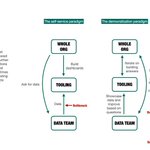
Why have you been investing in a $$$ #datalake project if you hope to build a global data driven culture in your org ?
Why your board reports do not use the same data as your business execs ?
A data strategy can only be judged on the long run...

Nicolas Terpolilli retweeted
Wrong reaction: “Wow, AI may be smart enough to solve the Riemann hypothesis!”
Correct reaction: “Wow, human beings are smart enough to invent a machine that may have enabled them to solve the Riemann hypothesis!”

BREAKING: A mathematician at Anthropic claims to have used the company's AI to solve the Riemann hypothesis, the most notorious open problem in all of math
sciam.com/article/anthropic-…

Nicolas Terpolilli retweeted

Today we’re launching BriqMe 🧱
Type one sentence: your house, your dog, your last trip.
10 minutes later: a custom brick set with a 3D model, parts list, and instructions.
Then we ship it to your door.
Built and run by an autonomous company.
First build is free → briqme .com
Nicolas Terpolilli retweeted

Bring Jensen back

Over the past week, I’ve been overwhelmed by the love and support of friends, industry colleagues, and people I've never met. Thank you to everyone who has shown kindness to my family and me. It means the world to me.
I came to the United States 53 years ago, and becoming an American citizen is one of the greatest gifts and proudest moments of my life. NVIDIA has been my life’s work. Building it into the company it is today alongside my colleagues has been a privilege and an honor. Nowhere but in America could a company like NVIDIA be possible. I love our country, and I love NVIDIA.
I did not live up to the standards expected of everyone at NVIDIA, and I have made serious mistakes in my personal life. I created problems for the Board that I deeply regret. I own my mistakes completely, and I am committed to cooperating with the Board’s independent investigation.
Since my departure, I’ve seen an outpouring of calls from NVIDIA’s employees, investors, business partners, and customers for me to return as CEO. Many continue to reach out to me directly as the company navigates complex technology, market, competitive, and geopolitical dynamics. NVIDIA is a once-in-a-generation company. If the Board of Directors decides that my return is in the best interest of our shareholders, our employees, the company, and America, I would be honored to answer these calls and return as CEO.
Thank you again to everyone who has shared their good wishes. I am profoundly humbled by your support. To my family: I love you, and I will spend the rest of my life being worthy of yours.
Jensen
Nicolas Terpolilli retweeted

A Ferrari is 10X faster than you on a racetrack, but you're infinitely faster than it crossing a jungle. The problem with the fast takeoff crowd in AI is that they think the world is a racetrack, when in fact it's more like a jungle.


Nicolas Terpolilli retweeted

Everyone has drawn this chart in their head and is making a generational bet on which line is true.
🤖 Made with AI

Nicolas Terpolilli retweeted

I stand by opinion that if a community dividend fund is set up for the communities where data centers are proposed, the dumb activists would be booted out by the residents post haste and the projects would move forward without a hitch immediately
Nicolas Terpolilli retweeted

My Experience With the Leaders of the Jensen Coup
At the start of 2025, numerous Washington, D.C. based NGOs began spreading the false rumor that DeepSeek smuggled 50,000 H100 GPUs. Speaking from firsthand experience, organized think tanks, PR firms, and lobbyists aggressively personally attacked anyone merely asking them to provide evidence. Call them the Export Controls Deep State, or if that’s too right-coded for you, use the Obama-administration term “Foreign Policy Blob”.
The same charlatans are attempting a coup on Jensen Huang, the most indispensable CEO to America’s AI success. If we lost Sam, we have Dario. If we lost Dario, we have Demis. Nvidia is singular. The gap between Nvidia and AMD would be wider than the gap between OpenAI and Mistral, Europe’s top AI company whose models don’t rank in the top 40. This is an attempt to derail the most important company for the American AI industry.
The entire coup against Jensen Huang can be halted by asking a single question. What evidence is there that Alice Huang is actually a Chinese spy? The answer, unsurprisingly, is absolutely zero. There is not even the pretense of a factual basis for the claim. “We made it the fuck up, and if you have a problem with that, what are you, pro-China?”
Taking away this obvious falsehood, the coup against Jensen boils down to a celebrity tabloid headline. Moreover, without the entirely fabricated ‘national security relevance’, these tabloid headlines would be at best a weekend story in the New York Post. Another basic question: if there is evidence of ‘national security relevance’, why not charge Jensen? The basic answer: they lack even the evidence to justify a warrant.
During my time in DC, I was advised repeatedly to stay on the good side of the Export Controls Deep State. I was added to many groups for boosting content spreading the 50,000 H100s conspiracy theory. In several groups, I asked whether there was any evidence behind this claim. One group administrator, who was and still is affiliated with Georgetown, explicitly told me to “focus on bolstering the narrative”. I later posted Patel’s pseudo-correction and was subsequently removed from all of these groups.
What you need to understand about the Export Controls Deep State is that they have no incentive to be remotely honest, because they are entirely unaccountable. To this day, they provided zero evidence for their claim. Internet historians later traced the origin of this claim to a tweet by Dylan Patel of Semianalysis. Patel later said they lied about his tweet and that his claim counted legally obtained hardware.
Affiliates of universities and think tanks promote these baseless claims and are taken seriously by the national press. In reality, their theories about Nvidia are as kooky as the guy who shot up Comet Pizza. The reason they succeed is not only because they are unaccountable, but because they constantly use their unaccountability to attack others. There are broader foreign policy implications to these observations about political power, but I will stick to what I witnessed firsthand.
After Trump’s election, his administration began lifting the export control cap. Surprising no one informed about this policy, America widened our lead. Deepseek was closest to catching up to American models in January 2025, literally the moment of peak export controls.
Based on communication with members of the administration, the evidence that a) the export controls were net negative and b) the export controls deep state was acting in bad faith, that as soon as the situation was described accurately, the administration began rolling them back.
Part of this is because many of these NGOs are funded by foundations like Open Philanthropy / Coefficient Giving, who explicitly intend to harm American AI companies because they believe American AI will “cause human extinction”. As a result, the BIS under the Biden administration was used as an informal cudgel against AI companies, both to censor in favor of their worldview, as seen in the Gemini scandal, as well as to backdoor regulation to slow down American AI broadly.
While they love to accuse everyone else of being traitors, the Export Controls Deep State makes Americans poorer and the American military, to the extent they use AI, weaker.
Most of the time, the best you can do is ignore them. They really are unaccountable and the personal retribution isn’t worth the cost. But now, they are leading a coup against the AI industry’s most indispensable man based on lies and tabloid gossip. Everyone should understand that the Export Controls Deep State has never provided any evidence for their claims nor any reason for their word to be trusted.
Nicolas Terpolilli retweeted

Another unexpected comparison: one of our data centers uses about as much water in a year as a single Krispy Kreme store.
Not the whole chain. One store.


Nicolas Terpolilli retweeted

« La France est en train de construire une indépendance IA de taille réduite, mais rendant le service effectif minimum pour rester une véritable puissance.
Et la France est le seul pays sur terre aux côtés de la Chine et des US à réussir cela.
Au lieu de pleurnicher sur le fait que Mistral Large 4 ne fait pas de jolies fusées en vectoriel, on devrait plutôt prendre du recul et se rendre compte de l’immensité de l’accomplissement. »
👏👏👏

Quelques points sur Mistral pas encore lus dans le débat public :
1. mistral large 4 est exactement aussi bon que ce que les Américains arrivent à produire à puissance de calcul égale. Cela signifie que l’écart est désormais sur de la taille de centre de calcul, probablement pas sur la compétence.
2. Étant données les prévisions de montée en charge de Mistral dans le calcul, ils devraient pouvoir produire un modèle de niveau Opus 5.5 dans 12 à 18 mois.
3. Cela peut paraître lointain, mais il faut bien comprendre à quoi ça sert d’avoir des modèles français. Essentiellement, au-delà de la question que tout le monde connaît de sécurité des données et de dépendance étrangère pour le fonctionnement de ses entreprises, à deux autres choses : 1. La souveraineté régalienne. 2. La balance des paiements.
La souveraineté régalienne aujourd’hui se joue avant tout sur la cybersecurité : la capacité à sécuriser son infrastructure militaire et civile de façon autonome pour ne pas être vulnérable aux IA étrangères.
Surprise surprise, Mistral Large 4 est particulièrement bon dans ce domaine. Ce n’est bien sûr pas un hasard.
La balance des paiements : le grand risque qui nous pend au nez, c’est que les entreprises françaises dépensent en masse en tokens américains, et souvent au détriment des salaires français, ce qui a pour conséquence que l’argent français s’enfuie de l’autre côté de l’Atlantique, vidant notre pays de ses richesses.
Or pour des usages entreprises, la course à la frontière n’est pas infinie. Quiconque a déjà utilisé opus 5.5 avec son harnais cowork sait qu’il y a déjà de quoi faire fonctionner l’essentiel des postes de l’économie de services. En d’autres termes nous arrivons en haut de la sigmoïde : les progrès subséquents des modèles frontières seront clés pour le progrès scientifique, pour des usages très avancés, mais pas forcément pour suppléer les fonctions marketing et comptabilité des boîtes du cac40.
Nous sommes donc à 18 mois d’avoir un Mistral qui peut faire le gros de ce dont a besoin l’économie française. Et ainsi stopper l’hémorragie de cash.
4. Le goulet d’étranglement est de plus en plus le harnais, la couche d’orchestration et d’exécution qui permet au modèle d’évoluer dans des environnements complexes, de se connecter à des outils, de gérer de multiples agents en parallèle, etc. Or il se trouve que nous avons en France aussi Dust, qui excelle sur cette couche. (Encore un truc de X d’ailleurs. Avez-vous pensé à remercier Napoléon et ses blocs de granit récemment ? Parce que de la même façon que nous vivons encore 75 ans plus tard sur les efforts de De Gaulle avec la dissuasion et le parc nucléaire, nous vivons en bonne partie sur de l’héritage TECHNOLOGIQUE napoléonien. Pour la Patrie les sciences et la gloire les amis.)
5. Pour continuer le parallèle. De la même façon que notre dissuasion nucléaire est toute petite par rapport à l’américaine ou la russe, mais que comme disait De Gaulle, on hésite à attaquer un pays qui peut tuer 80 millions de tes habitants en un instant, même si toi tu peux raser la France, la France est en train de construire une indépendance IA de taille réduite, mais rendant le service effectif minimum pour rester une véritable puissance. Et la France est le seul pays sur terre aux côtés de la Chine et des US à réussir cela. Au lieu de pleurnicher sur le fait que ML4 ne fait pas de jolies fusées en vectoriel, on devrait plutôt prendre du recul et se rendre compte de l’immensité de l’accomplissement.
6. Rien n’est joué et tout peut s’écrouler bien sûr. La survie d’une nation se joue à chaque instant.
Il faut encore monter en charge, construire masse de nucléaire et de centres de calcul, développer une industrie de puces d’inférence. Dans un contexte de chaos.
Mais merde. Même à terre, même après des décennies de déréliction, la France reste la France.


Nicolas Terpolilli retweeted

Meet Mistral Large 4, aka Le Chonk.
• 1T parameters, natively multimodal. 49B active.
It is the best open weights model from US or Europe on aggregated benchmarks.
• State-of-the-art on critical workloads, including cyber defense, manufacturing and finance and it surpasses closed frontier models on visual grounding.
• Forged in Europe end-to-end and is deployable from Europe via our own Mistral Cloud infrastructure.
• Available to all via API today. Working with cybersecurity partners privately.
Open weights release end of October.
🤖 Made with AI


Nicolas Terpolilli retweeted

The printing press led pretty directly to tens of millions of deaths within a generation of its diffusion across Europe. Germany's population dropped 50% by the end of the 30 Years War.


Nicolas Terpolilli retweeted

This is becoming a test for America.
If Anthropic cannot survive economically, the government must let it fail. Not tomorrow, not after another round of protection, not after deciding that it has become too important to AI safety or national security. Let it fail.
America has already run this experiment with finance. In 1984, the rescue of Continental Illinois helped give us the expression “too big to fail.”
During the Savings & Loan crisis, regulators kept insolvent institutions alive. The FDIC itself says this regulatory forbearance made the problem worse, and taxpayers eventually paid more than $100 billion.
After 2008, America had to redesign part of its financial system precisely because everyone understood how dangerous it was when private companies could take risks knowing the state could not afford to let them die.
The mechanism even has a very simple name: moral hazard. If failure is no longer possible, bad incentives become rational.
Now imagine creating this monster in AI.
A company builds an enormous ecosystem around the idea that its technology is potentially catastrophic.
That ecosystem influences how government thinks about the technology. Then the company becomes so central to the safety and national-security apparatus that its own failure becomes politically unacceptable.
At that point you no longer have capitalism. You have privatized upside and socialized survival.
If Anthropic is right, builds great products and finds a sustainable business, good. Let it win.
If it cannot, let it die.
The worst possible outcome for American AI would be to manufacture a new “too big to fail” industry before the industry is even mature.

I have conducted an audit of Anthropic's finances.
What I have found is so shocking that I am calling for a Congressional investigation.
Anthropic is not just seeking regulatory capture.
It has built a regulatory capture machine that cannot be turned off.
Structural financial incentives make it impossible for Anthropic -- I call it the Anthropic Network -- to turn off its own AI doom cycle.
It starts with METR.
Dario Amodei proposes "third-party evaluators" to assess the risk of Anthropic's models.
He proposes METR for this purpose.
But METR is financially dependent on the Anthropic's success -- specifically, on the explosive growth of more than $7 billion dollars in Anthropic stock.
Dustin Moskovitz invested this stock into Good Ventures Foundation, where it represents the majority of that organization's portfolio.
And GVF is the overwhelming funder of the entire Anthropic Network ecosystem.
This stock was worth $500 million early last year.
It is worth more than $7.7 billion just ~16 months later.
METR -- and all of those building a career its parent organizations -- cannot afford to disrupt that growth.
Because if Anthropic goes under, many of the organizations that fund METR go under as well.
But if Anthropic succeeds, METR and its parent organizations become more richly financed to regulate AI -- something those at METR want very much.
The "third-party evaluator" is not "third-party" at all.
The evaluator is on Anthropic's payroll.
If this were the end of it, that's bad.
But that isn't all.
The same organizations that fund METR also fund the many organizations, such as the Tarbell Center, that promote AI Doom.
The Tarbell Center publishes AI Doom articles in The Verge, Science, LA Times, The Dispatch, TIME, and others.
They are selling the problem, and then selling the solution to the problem -- from the same money pile: Anthropic's.
All of these organizations are financially dependent on the same exploding $7 billion money pile.
As Anthropic grows more and more powerful, its AI Doom Machine grows better and better financed -- louder and louder.
Meanwhile, the regulatory regime seeded in METR grows larger to solve the increasingly loud -- now hysterical -- problem of AI Doom that the Anthropic Network itself created.
From this standpoint, as Anthropic becomes more powerful, AI might be getting scarier, sure -- but the positive feedback loop also becomes more deafening -- independent of objective facts.
This itself is an objective fact.
The deafening AI Doom is part of an business model, that, as it expands, so too does the AI Doom messaging -- there is simply more money to do it.
But the problem also goes in the other direction:
If Anthropic dies, the Regulatory Regime and the AI Doom Machine are crippled or die.
Neither METR nor Tarbell nor the other organizations in the Anthropic Network can allow that to happen.
Hence, neither METR or the AI Doom Machine can be trusted to provide independent assessments of Anthropic's models or AI more broadly.
They simply are not organizations independent of Anthropic.
And Anthropic cannot detach itself from METR or Tarbell or countless other safety orgs (not shown here), either, because they drive hype for the models and the possibility of eventual regulatory capture, and Anthropic will not give that up willingly.
What's more, the people at all of these organizations are all the same ecosystem, the same community. They just shuffle between organizations.
The Anthropic Network is therefore, so long as it is successful, locked into a self-amplifying feedback loop inside an ideological monoculture.
And that feedback loop is winning.
That's what Jacob Coxon is.
China is keeping messaging tight. That is why optimism for AI is so high in China.
America has Anthropic: a massive company pushing anti-AI propaganda at a state level.
Anthropic will either create hysteria until American AI slows down and China wins, or it will create fractures throughout American society with severe political consequences.
Ironically, because of the structural financial incentives underpinning the Anthropic Network, it has become the same kind of self-amplifying virus that it fantasizes AI to become in the future -- while hiding its tracks just as carefully.
It is the mirror of the same AI virus that it hypothesizes to consume America.
Anthropic's business model, models itself after the very thing it claims to fear.
Except Anthropic's ideology infects humans, not computers.
Congress must investigate.
Evidence and Github in next post.
Then some supplementary figures.


Nicolas Terpolilli retweeted

Don’t pace building and owning your own AI models and systems as an enterprise, and there will be no doomsday for you
Nicolas Terpolilli retweeted

What Is To Be Done?
I propose a simple plan:
Big AI companies should be allowed to build AI as fast and aggressively as they can – but not allowed to achieve regulatory capture, not allowed to establish a government-protect cartel that is insulated from market competition due to incorrect claims of AI risk. This will maximize the technological and societal payoff from the amazing capabilities of these companies, which are jewels of modern capitalism.
Startup AI companies should be allowed to build AI as fast and aggressively as they can. They should neither confront government-granted protection of big companies, nor should they receive government assistance. They should simply be allowed to compete. If and as startups don’t succeed, their presence in the market will also continuously motivate big companies to be their best – our economies and societies win either way.
Open source AI should be allowed to freely proliferate and compete with both big AI companies and startups. There should be no regulatory barriers to open source whatsoever. Even when open source does not beat companies, its widespread availability is a boon to students all over the world who want to learn how to build and use AI to become part of the technological future, and will ensure that AI is available to everyone who can benefit from it no matter who they are or how much money they have.
To offset the risk of bad people doing bad things with AI, governments working in partnership with the private sector should vigorously engage in each area of potential risk to use AI to maximize society’s defensive capabilities. This shouldn’t be limited to AI-enabled risks but also more general problems such as malnutrition, disease, and climate. AI can be an incredibly powerful tool for solving problems, and we should embrace it as such.
To prevent the risk of China achieving global AI dominance, we should use the full power of our private sector, our scientific establishment, and our governments in concert to drive American and Western AI to absolute global dominance, including ultimately inside China itself. We win, they lose.
And that is how we use AI to save the world.
It’s time to build.
Nicolas Terpolilli retweeted

Mistral co-founder and CEO Arthur Mensch on open source AI and why no company will want its intelligence running on someone else's grid:
"If you assume that the entire economy is going to run on AI systems, enterprises will just want to make sure that nobody can turn off their systems."
"It's the same way if you have a factory and you connect it to the grid. You want to make sure that nobody's going to turn off the grid because they don't like you... that's one of things that open source technology can bring."
"It's also the only way you can create systems that use the folklore knowledge of your employees."
"That's the knowledge you've accrued for decades. The only way to turn it into an asset that nobody else gets access to is to create your own models based on those open source models."
"This is a technology which is so important that you don't want to be locked into a single vendor."
@arthurmensch on @BigTechPod (January 2026)
Nicolas Terpolilli retweeted

I scraped 100 million pictures of kids' drawings, and made them searchable so you can see the trends of the last 20 years walzr.com/kids-trends
