
Research director @ Naver AI Lab
Joined January 2010
- Tweets390
- Following224
- Followers343
- Likes398




Sangdoo Yun retweeted

Blog:
Part 1 cartesia.ai/blog/from-tokens…
Part 2 cartesia.ai/blog/from-tokens…
(Voiceover created entirely by Cartesia's Sonic text-to-speech model!)

Sangdoo Yun retweeted

💡 Many discoveries come from connecting ideas across fields. Can AI find these connections?
🐝 Introducing CPR-Dataset for cross-pollination retrieval.
1. Existing retrievers fail (best: 0.26 Recall@10).
2. Training on it transfers, up to +33% on AnaloBench and +70% on BRIGHT.

Sangdoo Yun retweeted

a world model that takes robot actions in plain english just planned 13.9x faster than a video-gen world model 🗣️
LaLa-World writes actions and visual changes as text, so one latent world model trains on sim, robot data, and video.
🧠 one model beats per-domain latent world models at planning
⚡ matches a video-gen baseline at 6x less training cost
🤖 fine-tunes into a policy on par with Cosmos Policy, up to 5.5x faster
Why it matters: language could be the action space that lets world models train on everything.

Very interesting idea and implementation, especially the special token tricks, <copy> and <sink>.

⌘C ⌘V: Introducing Copy-Paste Language Models!
CPLMs learn to copy tokens better, improving downstream accuracy, CoT, long-context performance, and memory-efficiency for RAG at <3% overhead
PS: they (partially) mitigate the LM head bottleneck
Paper: arxiv.org/abs/2610.19247

Sangdoo Yun retweeted

AR/VR world models will need to generate ultra-high-res video in real time. But as resolution-and token count-grow, generation quickly becomes prohibitively slow.
This paper offers a clever idea worth exploring: stop spending compute on tokens once they converge. Applied spatially, the same principle could focus full compute on key ROIs while passing less important regions through!

Does every token need to be denoised until the final step? 🤔
No! We introduce ⚡Speculative Forcing⚡, which accepts tokens as soon as they converge and keeps denoising only the rest
Project page: speculative-forcing.github.i… 🧵 (1/n)
Sangdoo Yun retweeted

Does every token need to be denoised until the final step? 🤔
No! We introduce ⚡Speculative Forcing⚡, which accepts tokens as soon as they converge and keeps denoising only the rest
Project page: speculative-forcing.github.i… 🧵 (1/n)
What can robots learn from WATCHing different people do the same task?
Robot data for in-context imitation is costly, so WATCH pre-trains world-action model on human videos only.
MimicDroid in-context success: 40.9% → 68.3%
watch-wam.github.io/
Per collection budget, scaling human videos matches or beats scaling robot data.
Assuming robot video costs 8× more to collect (we sweep 4–16×), pre-training on all human pairs reaches 72.5% on in-context L2. The largest robot-pair run gets 49.0% at ~2× the budget.


Sangdoo Yun retweeted

Introducing Code Video Model 🎬
Amazing work led by @raywzy1 and the team!
Agentic coding as the engine for controllable video generation.
Scene layout, motion, timing, camera trajectories, and physical dynamics, all in editable code.
A coding agent turns prompts into executable programs that render proxy videos. Our training-free early-step conditioning lets a pretrained video model follow the proxy’s structure while adopting a reference image’s appearance.
From physics-grounded motion and bullet time to 3D/4D reconstruction and robotics simulation, it all starts with code.
Watch the demo and explore more visual results 👇
Project page: code-video-model.github.io/
Paper: code-video-model.github.io/t…
Code: github.com/code-video-model/…
Data: huggingface.co/datasets/code…
Youtube: youtube.com/watch?v=dTtiVkSR…
Sangdoo Yun retweeted

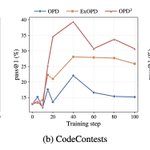
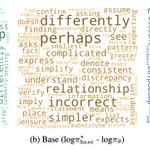
[CL] Revisiting Complete Reasoning Traces for Post-Training
J Hwang, S Yun, B Heo, D Han [NAVER AI Lab] (2026)
arxiv.org/abs/2609.07103


Sangdoo Yun retweeted

Nice to see this idea getting attention!
This is essentially what we called "depth-wise batching": overlapping requests at different recurrent depths (much higher utilization with adaptive compute).
Recursive Models: arxiv.org/abs/2410.20672
MoR: arxiv.org/abs/2507.10524


a few thoughts on "recurrent depth" transformers
the main question: why recurrent depth instead of just scaling depth? it's not faster at inference or training* since you still go through the full "effective depth", the advantage is storage (for kv cache storage btw you could do kv sharing) and a few other things i tried to list below
1) could be better in undertrained regimes (too few data or compute constraints) but i don't think any frontier model is in this regime? could also help convergence somehow, maybe it's just not possible to train a 10T effective param model (so maybe 2Tx5) without tricks like this, but i doubt it..
2) one positive aspect could be better adaptive depth/compute (which is a good direction imo): depending on the token, you skip some recurrent blocks. but you could also just skip layers (or skip moe routing like in longcat flash) and get something quite similar
you could also imagine co-training models this way, sol with 8 blocks, terra with 4, luna with 2 or something like that
3) another interesting thing (to verify?): you could simulate higher batch size at inference by overlapping the computation of depth_block=1 of request 1 and depth_block=t of request 2 on the same gpus, so effective batch size = batch size * number of recurrent blocks (and you could even overlap across models if you do the co-training i mentioned above!), see the picture attached for an illustration of what i mean
still quite skeptical overall, i think scaling depth is just more expressive when you are not compute/data bound but excited to see a potential new direction
*on "faster to train", could be if you only backprop through the last few loops or something like that

Sangdoo Yun retweeted

Papers on recurrent transformers: arxiv.org/pdf/2606.21562 (ours): train full Tr, distill -> rec Tr
arxiv.org/pdf/2608.02870 train full and rec jointly, max. coherence
arxiv.org/pdf/2606.06479 train rec Tr w predict. obj.
arxiv.org/pdf/2608.08888 train full Tr, add rec latents

This is fascinating!
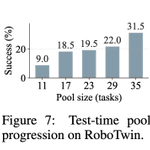
Our complementary take: light post-training lets VLAs/WAMs do in-context (retrieval-augmented) action generation - a new task is just new demo in the pool (even human-hand video), zero gradient updates.
📄 Retrieve, Don't Retrain: arxiv.org/abs/2606.15631


