





percccca retweeted

Nazuna Kyoto Tsubaki Street
เริ่มต้นคืนละ 20,000+
📍trip.com/t/Me2JGST9AX2
โรงแรมนี้ไม่ได้รีโนเวทมาจากแค่ตึกเดียว แต่พี่เค้าเหมาทั้งตรอก Nazuna Kyoto Tsubaki เป็นตรอกรูปตัว L ที่มีบ้านมาจิยะอายุกว่า 110 ปีเรียงกันอยู่ 23 หลัง ปรับปรุงใหม่ทำเป็นเรียวกังเดียว บ้าน 1 หลัง = 1 ห้องพัก ตัวตรอกออกแบบให้ฟีลเหมือนย่านเกอิชา
แต่ละห้องคือบ้านสองชั้นทั้งหลัง มีอ่างอาบน้ำกึ่งเอาท์ดอร์ส่วนตัวทุกห้อง ห้องแบ่งตามธีมธรรมชาติ 5 แบบ ไผ่ น้ำ หิน ดอกไม้ ใบไม้ โรงแรมนี้มีความคล้ายเรียวกังสุดแล้วในลิสต์นี้ แต่ก็ยังได้ฟีลความเป็นโรงแรมอยู่ และไม่ต้องออกนอกเมืองไปไกล
ความเริ่ดคือ โรงแรมนี้เป็น adult only ไม่รับเด็กต่ำกว่า 6 ขวบ


percccca retweeted

Taiwanese semiconductor analyst Andrew Lu’s take on the recent scandal involving Jensen Huang:
Why the US Seized on the Scandal to Draw Its Sword: Three Strategic Objectives
The purpose of this scandal is by no means to expose an affair. It is to force through three critical objectives that had made no headway in the tech war between the US and China because Jensen Huang opposed them.
The first cut: Completely destroy the legitimacy of Jensen Huang's lobbying against sanctions in Washington
Over the past two years, the loudest and most influential business leader in Silicon Valley opposing a total ban on chip exports to China has been Jensen Huang. He has told the White House the same thing all along: "Cede the Chinese market to Huawei, and the only one that ends up dead is the American tech industry."
But the moment US intelligence labels the woman named as Huang's affair partner "a spy working for China's Ministry of State Security who sought to steer the US toward easing its chip controls," every bit of lobbying he has done for looser controls takes on an entirely different political meaning. It becomes a national security matter, raising the possibility that a foreign spy used a secret relationship to exert influence.
Huang can no longer say a single word in defense of the Chinese market before Congress or the White House. If he does, he will be branded as someone who "fell for an intelligence operation and still hasn't come to his senses."
The second cut: Reverse the H200 export approvals for China and sever the link between Chinese shell companies and Southeast Asian smuggling networks
Look at the timing of the two reports.
On November 8, the very day the Jensen Huang scandal broke, The New York Times published an investigation for which its reporters went in person to dozens of Chinese companies that the US Commerce Department had approved to handle Nvidia's H200 chips. New Matrix in Beijing was one of them. According to the report, the registered addresses of companies approved to buy the chips turned out to be empty "ghost offices," and some of the companies had close ties to entities on US sanctions lists and to firms under contract with the Chinese military.
One exposé says Nvidia's CEO was having an affair with a female spy from Megaspeed, the Singapore company that handled the chip smuggling. The other says the Chinese companies Commerce approved to buy H200s are nothing but shell companies trading on behalf of the Chinese military. The aim of these two reports is clear. They are meant to pressure the Trump administration and the Commerce Department into fully revoking or freezing H200 export approvals for China and, going further, to force a sweeping overhaul of the loophole that let chips be diverted through data centers run by third parties in Singapore and elsewhere in Southeast Asia.
The third cut: Put Nvidia on a national security leash through congressional oversight and an independent investigation
As the world's largest company by market cap and the dominant force in AI, Nvidia has until now enjoyed broad autonomy in how it runs its business. But in the wake of this incident, the three congressional committees responsible for China, foreign affairs, and intelligence have begun examining Nvidia's internal security measures directly. They have even pressured Nvidia's board into forming an independent investigation committee to look into the company's own founder and CEO.
In effect, Washington's national security establishment has planted a watchdog right inside Nvidia's board. From now on, the goal is to make sure that everything, down to where each and every one of Nvidia's high performance chips ends up, conforms strictly to US national security strategy. It also means there is no more room for skirting the edge of the rules or releasing chips with specs specially tailored to regulatory thresholds.
Conclusion
"The scandal was a detonator set off right on cue. The real goal was to plug the holes chips were leaking through."
Jensen Huang made the fatal mistake of letting his guard down in his private life and personal relationships. In the end, he fell into a honey trap, the textbook tactic of intelligence warfare, and was compromised. America's national security and intelligence agencies ruthlessly exploited the weakness his private life had exposed. As a result, they solved three thorny problems in a single stroke: Nvidia's lobbying at the White House to ease restrictions on China, the flow of H200 chips into Chinese shell companies, and smuggling routed through Singapore.
The closed congressional hearing set for November 18 will be the decisive turning point at which the US moves in earnest to tighten its sanctions on China's AI compute even further.

percccca retweeted

$AMZN just reported earnings, and AWS is the BIG story here.
Amazon reported Q3 revenue of $201.9 billion, slightly missing expectations of $202.3 billion, while EPS came in at $1.89 versus $1.96 expected. However, operating income came in stronger than expected at $28.1 billion, beating estimates of $26.2 billion.
The biggest highlight was AWS, which generated $46 billion in revenue, beating expectations of $45.4 billion and growing an impressive 39% year over year. That puts AWS at a $184 billion annualized revenue run rate, and management is now projecting growth above 40% in both 2027 and 2028.
However, not everything was positive. Amazon's advertising business generated $19.6 billion in revenue, missing expectations of $20.87 billion, while North American sales also came in slightly below estimates. Meanwhile, capital expenditures reached a massive $77.3 billion, significantly above expectations of $57.5 billion, with trailing twelve-month free cash flow falling to negative $42.4 billion.
What's interesting here is that AWS is accelerating at a time when Amazon is spending enormous amounts of money building out AI infrastructure. The demand is clearly there, and growing a business of this size by nearly 40% is extremely impressive. But the biggest question is how much Amazon will ultimately have to spend to sustain that growth.
I think AWS is easily the strongest part of this report, but the combination of weaker advertising revenue, enormous capital expenditures, and negative free cash flow is something investors shouldn't ignore. Amazon is showing that AI demand is translating into real revenue growth, but investors are still waiting to see how much of that growth will eventually translate into free cash flow.

percccca retweeted

OMG!! $INTL down 20%. Intel is down 20%. It just had a great quarter and gave a scary guide.
The quarter was the best in years. Data center revenue jumped 78% to $7.3bn, the strongest growth in 15 years. EPS of $0.52 crushed the $0.40 estimate. Gross margin hit 44.1%, and the foundry grew 58%. Every number we wanted to see in our preview came in.
But the guide is the issue… Q4 revenue of $15–16bn against $17.1bn expected. EPS of $0.25 against $0.43. Gross margin drops to 38%. That's exactly what we said would disappoint…a lower Q4 and margins slipping. The reason is PCs. Management expects the PC slowdown to last at least through the first half of next year, and PCs are still about half of Intel.
So, the AI side of Intel is booming, and the old PC side is shrinking. For now the old side is bigger, so it wins the guide. Note too that $0.17 of this quarter's EPS came from a mark to market gain, not the business imo.
We think the market is punishing the right problem with the wrong time horizon. PCs will recover. Data center growing 78% and a foundry growing 58% are the future of this company. A 20% drop prices in the bad news. It doesn't price in the turnaround. PT $130. Overweight.


$INTC reports after the bell today. A year ago people asked if Intel would survive. Last quarter sales grew 25%, the fastest in 15 years and margins jumped 12 points.
AI agents run on CPUs and Intel's data center business is up almost 60%. Sales are guided to $15.8–16.8bn tonight. What we want to hear is more outside customers for the foundry and progress on 18A. Tonight is about how far it goes. PT $130. Overweight.

percccca retweeted

Don, there is a missing term in your equation.
The crunch spread is not: Token Price - GPU rental price.
Rather it is: (Token Price * Token Volume) - GPU rental price.
More simply: Revenue per GPU - GPU rental price.
Continuous throughput improvements for the same exact token mean that volume growth can more than offset token price declines for the exact same model/token
i.e. Kimi K3 token throughput per GPU has recently been improving at a 37% annualized rate driven by inference engine optimizations.
GPU prices are vertical because:
1) Mix is shifting from higher margin frontier tokens to lower margin open-weight tokens. $10 in Claude revenue requires $1 of inference compute. $10 of of open-weight revenue requires $3 to $7 of inference compute given competition between inference providers leads to lower margins. Open-weight tokens taking share is positive for AI infrastructure demand given lower margins at the model layer. The reverse is also true in that frontier tokens taking share is negative for AI infrastructure demand. Open-weight models have been taking share since early summer.
2) Throughput is steadily improving for each individual token type such that GPU compute becomes more valuable even as true like for like token prices decline.
percccca retweeted

ทำไมผู้ชายบางคนไม่ค่อยโตงงแบบ ต้องบอกถึงคิดได้ พี่นี่ก็เป็นนี่ว่าเกิดจากการเลี้ยงดูจริงๆนะ ไม่ใช่ว่าแม่เลี้ยงไม่ดี แต่พอเป็นผชเหมือนแม่ไม่ค่อยสั่งสอนอ่ะแบบไม่อยากยุ่งมาก คิดว่าเป็นผชแล้วมีความคิด ผชบางคนเลยไม่ค่อยมีความคิดถึงความรู้สึกคนอื่นไรเงี้ย แบบภาพรวมการอยู่ร่วมกัน not all
percccca retweeted

คนชอบบอกว่าถ้าไม่มีลูก ตอนแก่ๆ รัฐจะไม่มีตังค์มาสร้างสวัสดิการ บริการสาธารณะ สาธรณูปโภค เก็บภาษีเพิ่ม เราจะเดือดร้อน ผมถามหน่อย แก่ไปจะใช้เงินอะไรมากมาย รายได้ไม่มี ภาษีเงินได้ก็ไม่ต้องจ่าย อย่างมากก็ใช้เงินเก็บ วันนึงอยู่ไม่ไหวก็แค่ตาย แต่ถ้ามีลูกวัยทำงาน ลูกเราต้องมาเจอสภาพนั้นนะ
คือผมมีเงินอยู่ไหวตอนแก่ครับ อยู่ไม่ไหวก็ช่างแม่งสิครับ ส่วนใครที่ไม่มีปัญญาหาเงินเก็บต้องพึ่งพาสวัสดิการรัฐตอนแก่จะเดือดร้อนเพราะประชากรคนอื่นไม่มีลูก ด้วยสภาพประเทศแบบนี้ กับรัฐบาลที่เลือกมาแบบนี้ ก็ช่างหัวมึงสิครับ ช่างหัวแม่มึงด้วย
สรุปให้นะ คนกลัวถ้ามีผลกระทบแล้วจนท.ผู้บังคับใช้กฏหมายไม่สามารถทำได้ไม่ว่าจากปัจจัยใดใดเช่นเส้นสาย สินบน หรือกม.ปจบ.ไม่ครอบคลุม ทำให้คนคิดว่า ไม่มีดีกว่า คือคนไม่เชื่อถือว่ากฏหมายจะใช้ได้กับนายทุนนั่นเอง

เรื่อง Data Center ในกรุงเทพ
1) มีมานานแล้ว ไม่ใช่เพิ่งมี ขนาดที่กำลังก่อสร้างในกรุงเทพไม่ได้ขนาด Super โรงงานขนาดนั้นไม่น่าเกิน 10MW ไม่เข้าเกณฑ์พวก Hyperscaler ใดๆ ถามว่าทำไมต้องมี ไอ้ Server website / Application จำนวนมากที่คุณใช้ตอนนี้น่ะแหละมันก็ใช้พวกนี้ ใครทันยุคก่อน COLO เนี่ยแหละคือ Data Center ทั้งนั้น
2) ทำไมมีการขยายเยอะ? รองรับการเติบโต Infrastructure ของยุค Internet/AI มันก็มีการลงทุนเป็นธรรมดา เราลงทุนเรื่อยๆ อยู่แล้ว สื่อจับเลขชนกันมั่ว อันใหญ่ๆ ลงทุนอยู่นิคม EEC ไปแถวนั้นครับ ในเมืองก็ขนาด Server Farm ปกติ
3) มันกินไฟและน้ำเยอะมากเลยนะ จะแย่งทรัพยากรเราไปหมด > ด้วยขนาดในกรุงเทพมันไม่ได้ใหญ่ขนาดนั้นครับ พอๆ กับตึกออฟฟิศนี่แหละ ห้างยังแดกไฟกว่า ส่วนพวก Hyperscaler เค้าต้องไปลงนิคมอยู่แล้วครับ เพราะมันใหญ่เว่อ ในเมืองไม่มีปัญหา กฟน บอกแล้วรองรับสบาย
4) น้ำมัน 2 แสนลิตรไม่เยอะเกินไปเหรอ > ผมจะบอกว่าระบบไฟคือหัวใจของ DC ต้องเน้นห้ามล่มเกินกี่ชั่วโมง น้ำมัน 2 แสนลิตรสำหรับ 10MW อยู่ได้ 3 วันเองครับ มันไม่ได้เยอะมหาศาลอะไร แล้วทำไม Data Center หลังๆ ต้องเตรียมไว้ คุณจำม๊อบตัดไฟ CAT ไม่ได้เหรอครับ.....อ้อนั่นก็ Data Center นะ
5) สิ่งที่ผิดและเป็นปัญหาคือการลักลอบก่อสร้าง เพราะขอ Data Center ไม่ได้ ก็ไปขออาคารปกติ ซึ่งไม่ผิดกฎหมายด้วย เพราะเรายังไม่มีกฎหมายแบบที่ชัชชาติบอก ส่วนอันที่เล่นงานตอนนี้ได้เต็มๆ คือ การเก็บน้ำมันดันไม่ได้ขอ อันนี้ผิดเต็มๆๆๆๆ แล้วก็ไม่เข้าใจเหมือนกันว่าบริษัทมาตรฐานไม่น่าพลาดตรงนี้ ไม่แน่ใจทำไม
6) ชาวบ้านเดือดร้อนนะอยู่ใกล้ Data Center ทั้งความร้อน ทั้งกลิ่นน้ำมัน > อันนี้ไม่ผิดที่เป็น Data Center ครับกลิ่นน้ำมันคือการกักเก็บน้ำมันผิดวิธีหรือเปล่า ส่วนความร้อน ไม่ต่างกับคอนโดหรือออฟฟิศที่มีคอมแอร์เยอะๆ แค่นั้น
7) Data Center มันไม่สร้างงานสร้างอาชีพนะ > แต่มันคือการลงทุนยุคใหม่ครับ คุณจะบอกว่าไม่ต้องลงทุนเครื่องจักรนะ ให้คนมีงานทำเหรอ สุดท้ายโรงงานพวกนั้นก็แพ้โลกหมด มันฝืนไม่ได้ แล้วมันคือโครงสร้างพื้นฐานในยุคอนาคต เด็กในยุคต่อไปโตมากับ Infra พวกนี่แบบที่เรานึกไม่ออกว่าชีวิตไม่มีไฟฟ้ากับน้ำประปาใช้จะเป็นยังไง มันก็แบบนั้นแหละครับ
8) เราอย่ากลัว Data Center เกินเหตุครับ มันมีข้อดีข้อเสียก็จริงแต่เป็นสิ่งที่เลี่ยงไม่ได้แล้วมันคือ Backbone ของโครงสร้างพื้นฐานยุคต่อไป เหมือนเราต้องทำโรงไฟฟ้า ทำระบบชลประทาน เขื่อน อะไรไป ไม่งั้นที่บ่นว่าไทยสู้เขาไม่ได้ ยิ่งห้ามอะไรแบบนี้ก็จะยิ่งสู้กันไม่ได้ไปกันใหญ่
93
percccca retweeted
Really does work as advertised.
“Hey Matic go clean the kitchen.”
First 10/10 product rating from Wired in a decade. And kids love it for some strange reason.
Happy that @Atreidesmgmt is an investor.

Introducing Cues: Voice & Gesture control for Matic
We raised $115M and spent 9 years to make the world’s first intuitive home robot
Say you spilled coffee: Point to the spill and say, "Hey Matic, clean this" and it will hear, see, locate in 3D, and go clean on its own.
Matic comes with a lot of features:
1. Say "Hey Matic" - it locates your voice, turns, and looks at you
2. Say "Hey Matic, follow me" and start walking. Matic will follow behind
3. Say "Hey Matic, go clean the living room". Since it knows your house map, it navigates and just does it
It's so easy, a 5 year old and an 80 year old can use it and it understands 75 different languages.
Matic has 8x the airflow, specialised cleaning algorithms for rugs, corners, toekicks, mopping, etc and cleans better than any other robot vacuum.
Also keeps improving with software updates.
13,000 families use and love Matic.
WIRED magazine gave it a 10/10 (the only hardware to receive this rating in a decade)
Buy yours at maticrobots.com and if you don't love it after 6 months, we'll give you a full refund.
To celebrate our launch, we're cleaning 300 homes with Matic in San Francisco and New York City.
Comment "Matic" below, we'll send you the link to sign up and come to your doorstep to clean your home with Matic.
percccca retweeted

Important framing. 🧐🎯📈

The reality is what we are seeing unfold is Nvidia speedrunning the creation of a synthetic hyperscaler.
Apologies in advance to all the investors who are stuck in their priors that this will trigger.
But what is a hyperscaler? Strip it down and it’s a scaled infrastructure collective of CPUs, networking, storage with a development platform on top. It fulfills two purposes. Financial: it pools and smooths the financial obligations of its users, renting infrastructure as opex instead of capex. And Operational: it builds software that makes consumption the underlying primitives simple by abstracting them away.
The hyperscaler makes a healthy 35-40% operating margin by buying hardware at bulk pricing, pooling scale to get a lower cost of capital, and driving utilization of that hardware with software that shares and shards workloads across many customers.
But in the age of AI, the atomic units of compute changed. Training (massive coherent clusters) and inference (agentic workloads) - require a fundamentally different configuration of resources. These new workloads require dramatically more accelerated compute, shifting the design target from multi-tenant utilization (the cloud era) to absolute workload performance (the AI era). The economics of the data center inverted. A giant, redundant fleet of Amazon Basics CPUs and storage doesn’t work when the job is synchronous training and one straggling node stalls the entire cluster. For inference, tokens per watt and time to first token dominate the economics, not how many VMs you can pack in a box. And none of it works in a world of limited power (at least in the West. Maybe in China).
As Nvidia built more compute and sold it to the hyperscalers, it faced a fundamental problem. The hyperscalers had classic innovator’s dilemma - expecting 35-40%+ op margin, along with an underlying desire to commoditize Nvidia's 75% GMs with their Amazon Basics equivalent. Pay an ASIC vendor a 25% margin instead of Jensen’s 75%, then stack your own 40% on top! They owned the customer relationships too, enterprises developed on AWS, Azure, GCP and their data was captive there too. But most important of all, these companies moved at their own pace. They were not scrappy or hungry to operate at the pace Nvidia or the AI labs felt was necessary to build out compute to fulfill the demand in front of them. They would never look at retrofitting a 35MW site outside of Ashburn, Virginia!
Meanwhile, a group of hungry entrepreneurs noticed the fat margins the hyperscalers earned renting what was basically stock Nvidia hardware with limited software on top, and started building businesses around it. Nvidia - skeptically at first - recognized that working with these partners would lead to faster development cycles and competitive fires and pressures for the ecosystem. Thus the neoclouds were born.
The software these neoclouds co-developed with Nvidia were purpose built for the new workloads. They solved the new problems and requirements operating the new infrastructure needed. They were ready with hotswaps, they did predictive maintenance, they built new storage software that was built for training with cheaper ingress and egress fees, because their competitive drive was to win workloads, not to lock in enterprise data on their platform. And it was working - AI labs started preferring to work with them over the hyperscalers. Common complaints on the incumbents: too slow, too particular with how their clusters were built, virtualization and networking overlays that made GPU clusters underperform stock Nvidia reference designs. Neocloud bare metal was cheaper too as their teams built AI software, not a cloud data warehouse business. And they were happy to run at half the margin (~20%) that the big guys would never accept.
But the hyperscalers still had one structural advantage: their balance sheets. Investment grade. Able to fund speculative capacity ahead of demand and rent it out at much higher spot rates. The neoclouds couldn’t play that game as lenders would only finance hardware that was already contracted with offtake. And more expensive if that offtake were the labs which at an earlier point were much more speculative. If only they could build ahead of demand, they could maybe earn the kind of returns Elon is achieving on Colossus.
But the twist is that balance sheet edge is eroding in real time. Google just printed its first negative-FCF quarter and raised $50B equity. Microsoft is carrying $329B of leases signed but not yet commenced. Even the IG balance sheets hit the wall - more capital had to come from somewhere else.
And that's how we got to where we are today. Look at what Nvidia has actually built. The operational half of a hyperscaler: DSX OS and Mission Control to run and operate GPU fleets, DSX reference designs and Omniverse digital twins as hardened playbooks for building a data center itself. Dynamo for inference serving. All the old secret sauces of the hyperscalers built specifically for new age data centers that they have led the way in architecting. Offered to any hungry, technically competent team with a serviceable site.
And then the financing half: the revenue share and credit support model that smooths utilization across a distributed fleet the way multi-tenancy used to. Support the operator, release capacity to demand, share in upside, and now bring $500B of third-party capital to the table. Nvidia standardized the asset with reference designs, proved the compute was “fungible and transferable across customers and operators” and showed infrastructure investors DD unlevered yields across 7-8% hurdles. Those investors wet their beaks on early special situation financings, saw the paybacks, and understood the demand was global. That’s why Jensen spent 2025 flying around Europe, the Middle East, and Southeast Asia - these are the ground zero for new compute sites. The reality is that this didn’t happen just over the last 3 months. CoreWeave master agreement in 2023, the $6B spot reserve backstop in 2025 (to sponsor capacity for the inference clouds), the Blackrock AI Infrastructure Partnership in 2024, Brookfield’s $100B fund with Nvidia in 2025, KKR Helix with Nvidia in 2026. And now six independent financing platforms. Chess!
So now the three fears by name. Circularity? Monday was the opposite with Apollo, BlackRock, Blackstone, Brookfield, Goldman Sachs, and KKR bringing third party capital, independently underwritten apart from one another, replacing Nvidia’s balance sheet rather than just extending it. Useful lives / underwritability of these assets? CoreWeave just disclussed A100s, 6 year old silicon contracted through 2029 and pushed 25% price increase on its fleet in July. The collateral is aging more like an aircraft than a smartphone as feared. Market share? If you don’t see that the platform of Nvidia and the fungibility of this compute is the reason why this is even possible - the skeptics themselves are making the bull argument. The complaint that these platforms keep capital tethered to Nvidia and away from other ASICs / accelerators… $500B that can only buy Nvidia reference architecture is a moat dressed up as a risk.
So what were you doing when the first synthetic hyperscaler was built under your nose? :)
All views expressed are my personal views. Does not reflect the views of Altimeter or Nvidia or anyone else. Full disclosure I/we may hold positions in companies mentioned. Purely for discourse and thinking - no financial advice.
percccca retweeted

Sergey knew that you let your best technical talent (Jeff Dean) do what they want and back them fully with resources, even if the work sounds silly at first.
McKinsey Sundar missed the Sergey lesson entirely and now all the superstar AI talent has left or is leaving.
Never let a McKinsey person run your technology company. Financialization and myopia eventually catches up with you.

Sergey Brin on AI and Jeff Dean back in December when Gemini peaked: “I would say in some ways we for sure messed up in that we underinvested and sort of didn't take it as seriously as we should have, say, eight years ago when we published the Transformer paper.
We actually didn't take it all that seriously and didn't necessarily invest in scaling the compute. And also we were too scared to bring it to people because chatbots say dumb things. And, you know, OpenAI ran with it, which is good for them.
It was a super smart insight, and it was also our people like Ilya who went there to do that. But I do think we still have benefited from that long history.
So we had a lot of the research and development of neural networks kind of going back to Google Brain.
That was also kind of lucky. It wasn't luck that we hired Jeff Dean. I mean, we were lucky to get him.
But we were in this sort of mindset that deep technical things matter. And so we hired him. We hired a lot of people from DEC, honestly, because they had the top research labs at the time.
But he [Jeff Dean] was passionate about neural networks. And it stemmed, I think, from actually his college experiment. I don't know.
He was like, whatever, curing third world disease and figuring out neural networks when he was like 16. He's done crazy things. But he was passionate about it.
He built up a whole effort. And actually in my division at the time in Google X. We had him but I didn't I was like okay Jeff you do whatever you want. He's like oh we can tell cats from dogs.
I'm like oh okay cool. But you know, you also trust your technical people and soon enough they were developing all these algorithms these neural nets that were doing some of our search.
And then, you know, Noam came up with a transformer and we were able to do more and more.
But yeah, I mean, so we had the underpinnings, we had the R&D. We did underinvest for a number of years and didn't take it as seriously as we should have.”
Both Jeff Dean and Noam Shazeer left Google in the past two months.
percccca retweeted

this makes me extremely bullish on g. sergey should take even more control of the co & delegate everything that isn’t core to sundar. more importantly he should also be the public face of google ai cuz he is extremely articulate & very likeable too.
google’s biggest constraint is org velocity (bureaucracy) + external comms / messaging. sergey is the only person that can bulldoze through both of these by being authentic, relatable, & honest.
also would not be too shocked if sergey starts posting on x.


percccca retweeted

A sunny day in Mountain View. Like every other day.
Jeff, Sanjay, Oriol and Quoc walk into a VC office on Sand Hill. The VC is on his second oat latte and has fourteen minutes blocked for this.
Jeff: So. We decided to build our own company.
VC: Okay, great, love that. Who's "we"?
Jeff: The four of us.
VC: ...All of you?
Jeff: Yes.
VC: All four. In one company. Together.
Jeff: That's right.
VC: I'm giving you $100 million right now.
Jeff: We haven't shown you anyth-
VC: You know what, forget it. A billion. One billion dollars.
Sanjay: We prepared a deck.
VC: I don't want the deck.
Jeff: It's only eleven slides.
VC: Two billion.
Oriol: Slide one is the mission.
VC: Three.
Oriol: "Automate machine learning, science and engineer-"
VC: FOUR. Four billion. Stop reading.
Quoc: Should we talk about the market?
VC: If you say the word "market" I will go to five and I have not cleared five with my partners.
Jeff: We were also thinking about being a Public Benefit Corp-
VC: Five.
Jeff: Do you want to hear the technical approach?
VC: Six billion. Please leave. Please leave...
Jeff: Nice to talk with you!
VC: Seven, please go 😥
They leave. It's still sunny. It's always sunny. The deck was never opened.
percccca retweeted

Gavin Baker says compute players could risk their entire business if they break memory LTAs
"Let's just think about the game theory of breaking an LTA. So there's four companies that matter at scale. There's Amazon with their Trainiums, there's Google with their TPUs, there's AMD, and then there's Nvidia, who's much bigger than everybody else combined."
"The more memory you put with FLOPs for a given unit of compute, the more tokens you get out. It's the single most important thing you could do to increase token output per unit of compute."
"I think for the next several years market share is going to be determined by supply chain allocations and what you have pre purchased."
"If you break your LTA and then in the next two or three years for any reason leverage shifts back to the memory guys, you're out of business. It's over."
"If you break an LTA, they just say, 'OK, fine. You know what? Great, you broke the price agreement. We're going to break the volume agreement, and screw you, we're going to give the volume to your competitor.' You just lost share."
percccca retweeted

Amazon $AMZN on AI infrastructure returns:
“On average, it takes a little less than 3 years to break even on that investment.”
“The servers currently have a useful life of at least 5 to 6 years, and most of our AI capacity these days is being contracted for at least five-year terms.”
“Our data centers have 30-plus-year useful lives and should support at least five to six generations of server economics.”

percccca retweeted

Sounds like Apple is expecting further memory chip price hikes in the coming quarters:
Apple earnings call: "Let me back up and talk about memory in general, because I know this is a subject on many of your minds. If you look at, as I'd said on the last call, we paid more for memory in the March quarter than the December quarter. As I alluded to last quarter, we expected to pay significantly more in the June quarter than the March quarter, and that is what happened. It was partially offset by the benefit of carry-in inventory."
"For September, we expect to pay even higher memory costs, and we're able to offset partly by a few factors, and let me walk through kind of what they are. The first is, as you would expect, we have a benefit from some carry-in inventory in the September quarter. However, we believe we'll see decreasing benefit from this over time beyond the September quarter."
"On the pricing front, we reluctantly raised prices, I would say. We did it because we're in what I would characterize as a 100-year flood on the memory pricing, with exponential increases in memory prices."
percccca retweeted
$SKHY the most important part of SK Hynix earnings.
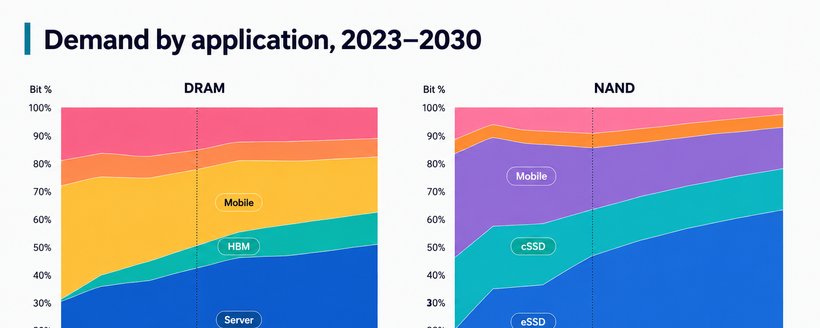
Basically, SK Hynix's blended ASP was dragged down this quarter by frontloaded HBM3e volume shipping against its earlier contract (my educated guess), while the higher value products got pushed into the back half. HBM4 ran a bit delayed, and leading edge DRAM was competing for the same wafers as HBM3e (already contracted). As that HBM4 and DRAM volume ramps through 2H 2026, potentially on a new HBM contract at higher prices, ASP is expected to improve.
It could also mean Samsung and $MU did a better job shifting toward DRAM when they had the chance as they weren't HBM3(e) leaders at the time.
I can't believe Korean analysts didn't see this coming. Anyhow, things will look better for SK Hynix (it looks crazy good right now too).
"We manage the sales mix between HBM and conventional DRAM based on customer demand and some medium to long-term product strategy. In the second quarter, shipments of some high value add products were pushed back into the second half, and changes in the product portfolio appeared to have affected our blended ASP."
"These factors are likely to gradually ease in the second half. As HBM4 shipments ramp up in earnest and the 1c nm conventional DRAM shipment increases, we expect bit growth in the second half to be higher than the level in the first half."
"In addition, considering customer demand and the changing product mix, the growing HBM4 sales and the higher contribution from value-add products will have a positive impact on our blended ASP as well."
"This will result in higher shipment volumes and continued improvement in the product mix, which will push up our ASP as well as earnings in the second half."
percccca retweeted

I agree with his view 100%.
I highly recommend giving it a read.
SK Hynix missing numbers is BULLISH for SK Hynix. I'm serious. Hear me out.
The Korean analyst who predicted the Q2 miss said it happened because SK Hynix has a higher HBM mix.
HBM is the more durable, higher-moat business that should command a higher multiple. HBM is in major shortage the next several years. SK Hynix is number one in HBM. Just see how Dario, Sam, Hock, and Jensen appeared to greet HBM makers in SF last week.
In the short term, the higher DRAM-mix players benefit, but long term it's a detriment as China will eventually enter the DRAM space one to two years out with more capacity. China will be no where in HBM.
So a Q2 miss caused by more HBM mix actually means SK Hynix is BETTER positioned in the long run. Don't listen to me, listen to the Korean axe who has a Buy rating, a very high PT, and nailed the mechanics of this quarter.

