

5G Networks: https://nitter.cf/t.co/Ce7RolSFSg ; Mobile: https://nitter.cf/t.co/n2LMKKpj1S and Cloud Comms: https://nitter.cf/t.co/6Bh3sO9Bl4
Joined March 2007
- Tweets1.9K
- Following917
- Followers1K
- Likes1.2K


Peter Gradwell retweeted

We’ve provisionally found that #Vodafone’s planned merger with #Three could lead to tens of millions of mobile customers in the UK having to pay more.
Ashleye Gunn, CMA Inquiry Group member, explains more ⬇️
Find out more: gov.uk/government/news/cma-s…
Peter Gradwell retweeted

Small cell installations have taken place in Shrewsbury’s Quarry park ahead of this weekends concerts. These will provide much needed WiFi and cellular capacity and will harness Fibre Hero’s Gigabit class Fibre backhaul.


This is one of our defining characteristics

My Election Day Monologue on @TimesRadio. In praise of British democracy.
It’s election day in the United Kingdom, a seminal event we too often take for granted. We also do it in a very British way.
There will be no armed guards at the polling stations. No intimidating mobs. Just paper and pencil, trusted tellers and friendly canvassers.
If the British people decide it’s time to change governments, that will happen quickly and without fuss. The military will not be mobilised. Barbed wire will not be arranged around public buildings. Defeated candidates will not be fleeing the country. Riot police will not be assembling on side streets.
But a removal van — something we’ve all had to use at some stage in our lives — will turn up sometime Friday morning to help the incumbent move out. Another will bring the belongings of the new prime minister and family.
A few words from the winner outside 10 Downing Street, a round of applause as he goes through the famous door — and the business of government continues as before. Even with a new broom there will be a sense of continuity. And calm.
Nobody will contest the overall integrity of the result, whatever minor challenges there are at the margins. The loser will concede defeat and wish the winner well. The winner will try to be magnanimous.
Nobody will be exiled. There will be no talk of being cheated, of a rigged election, or lawyers getting rich on endless court challenges. No mob will descend on the Palace of Westminster determined to overthrow the result. The pigeons will continue to peck away, undisturbed, on Parliament Square.
However people voted the result will be accepted. Folks will just get on with their lives and wait to see what the next government has in store for them.
Such a peaceful, uneventful, very British passage of power is to be treasured. It is perhaps THE distinguishing hallmark of democracy that power is passed in this way, without upheaval or protest, at the behest of the people.
Democracy requires a winner to be gracious and a loser to accept that they’ve lost, without quibble. That is the British way. It is not now true of that great democracy across the Atlantic.
It is also the case, if today heralds a change, that a centre right government will give way to a centre left one. Whatever the result the numbers in Parliament who might be deemed hard right or hard left will be de minimis. Pretty much irrelevant.
There is something quite British about that too. It will not be the case when that great democracy across the Channel votes on Sunday, where the extremes on both sides of the political divide are likely to make up almost two thirds of the National Assembly.
We broadcasters don’t do British party politics on election day. That can wait until you’ve voted and we know the result sometime after 10 o clock tonight.
So we will spend the next hour looking at elections in France and America, two countries with their own strong democratic traditions.
Also two countries, as we shall see, with democratic challenges we don’t face, whatever else may confront us.
They are our allies — fellow democrats in a world threatened by autocrats — and we must wish them well in overcoming their problems, as we tackle ours. While taking some comfort and pride from the fact that there is something quite special about our own British democracy.
So let us savour this important day.
It’s today! Come down and find out more about our bath 5g network.

Come and see! Queen Sq, Bath on Weds 15h May (this week) to learn about private 5g and find out about our @SciTechgovuk funded ONE WORD project to bring a Bath City Centre high speed, low latency wireless network which will be live later in 2024. #bathdigitalfestival

Peter Gradwell retweeted

Come and see! Queen Sq, Bath on Weds 15h May (this week) to learn about private 5g and find out about our @SciTechgovuk funded ONE WORD project to bring a Bath City Centre high speed, low latency wireless network which will be live later in 2024. #bathdigitalfestival
Great to see our bath 5G project moving another step forward. Now we’ve just got to get planning permission!

We have been awarded a £773,132 government grant which would fund an 18-month pilot scheme to test a next generation 5G mobile network in Bath city centre, if approved. Find out more here:
newsroom.bathnes.gov.uk/news…

ALT view over bath
Peter Gradwell retweeted

We have been awarded a £773,132 government grant which would fund an 18-month pilot scheme to test a next generation 5G mobile network in Bath city centre, if approved. Find out more here:
newsroom.bathnes.gov.uk/news…
ALT view over bath
So vodafone has published a report to tell us how rubbish the service is from.. *checks notes*… vodafone?

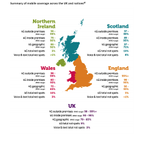
A huge number of people living in areas of Britain classed as rural and deprived have no access to 5G networks, according to a new study published by Vodafone. telecoms.com/524734/half-of-…
Peter Gradwell retweeted

A huge number of people living in areas of Britain classed as rural and deprived have no access to 5G networks, according to a new study published by Vodafone. telecoms.com/524734/half-of-…
Peter Gradwell retweeted

15 years ago today, then-Senator @BarackObama was elected president.
Take a look back at his remarks from Grant Park in Chicago that night:
Peter Gradwell retweeted

HDD: Urban Infrastructures and Smart Cities with @LouLancaster @SciTechgovuk, Ian Vernon @AWTG_Ltd, @CerenClulow Cambridge City Council, @peterg @TeletResearch, Andrew Miles @TeletResearch, @KQayam @NEC

Peter Gradwell retweeted

Next up is a really interesting panel topic - interworking & hybrids of public / private / neutral host networks
@Adtran @Cisco @TeletResearch @bt_uk @uktin
Featuring the legendary @jamesbody !

Peter Gradwell retweeted

How I CEO (part #1): On taking advice as a leader.
Over the next few months, I (Immad Akhund, CEO of Mercury), will share my stories, learnings, and tips for other leaders based on what has worked for me. I started my entrepreneurial journey 16 years ago as a recently graduated engineer and have had to learn all the “CEO” lessons the hard way — often feeling like I was making it up as I go. How one leads as a CEO is extremely dependent on any number of factors, like your style, your company, your stage, or your industry. Rather than taking these ideas as ones to copy verbatim, take them as food for thought — one example to learn from amongst the many.
———
When the idea for this series arose, one of my first thoughts was whether my advice or learnings as a CEO would be valuable to others. After all, I’ve hardly mastered the art of “CEOing” and, in fact, don’t know that it can be mastered. Still, I have learned from leaders around me, and realize that my own experience can help answer others’ questions as they build their own companies and define their styles of leadership.
With that in mind, it seemed only natural to kick off this series with my thoughts on how to learn and contextualize advice as a leader — whether you’re getting that advice from your network, your investors, or, in this case, me.
The role of a CEO is a strange one in that you have to be constantly learning, and yet have nobody from whom you can learn very easily. There is only ever one CEO in your exact position, and that’s you. As a CEO, you don’t have a lot of the same structures or relationships around you that one might typically learn from. There are no managers or direct peers who are doing quite what you do. Also unlike most traditional roles, most founder CEOs are in a position where they’re doing a job that they’ve never done before — a job that, beyond being unfamiliar, is also constantly changing. Your role as a CEO today might be vastly different from your role as a CEO six months down the road as your team grows. Engineering, sales, fundraising — these are all different things that you might have your hands in at any given time. Plus, there’s hiring, which involves familiarizing yourself to a certain extent with each distinct function so that you can hire the right people for your company. And then once you’ve hired a strong team, it might be time to go out and fundraise again — but raising a Series A is different from raising a seed, so you’re once again tasked with learning as you go.
The question then becomes, how does a CEO learn along the way? For me, one of the most valuable things has been to seek out advice. I think a “bad” CEO is one who doesn’t proactively source advice from the right people. In my experience, I’ve usually found that the best people to get advice from are CEOs and investors, with a few main callouts:
* When seeking advice from other CEOs, I believe it’s best to turn to CEOs that are slightly further along — like looking to the CEO of a Series B company as the CEO of a Series A company or something like that. This way, you’re taking advice at a point where it still feels fresh in a CEO's mind but considerate of the bigger picture and potential outcomes. For that same reason, you also don’t want to turn to someone who is so much further along that they likely haven’t dealt with your situations or particular pain points in a long time. For example, if you ask someone who’s got a 10,000-person company for advice on a very uniquely seed-stage situation, they’ll still give you advice, but it’s likely that it might be outdated or possibly based on information that has since been misremembered or reinterpreted. In that way, the intention of the advice might be sound, but the advice itself might be irrelevant or misleading.
* When seeking advice from investors, I tend to rely on them most for fundraising advice unless that investor has very recently been an active entrepreneur and can speak from recent experience on running a company. Investors can also be really useful in pointing you to other people who could be great advisors or giving you general pattern-matching advice on what they have seen work at other portfolio companies.
But even once you identify people from whom you can learn, advice is always tricky. After all, if knowing what to do was so simple or obvious, then you wouldn’t need advice in the first place. In that sense advice often is somewhat non-obvious in nature.
Nobody is ever quite in your shoes, and everyone will always do things slightly differently. For that reason, when seeking advice, I always consider a) situational dependence and b) the why behind the advice.
In regards to situational dependence, I find it helpful to ask yourself, “What was a person’s situation and why did their particular approach make sense given their circumstances?” In some cases, you might find that there’s actually a good match, like in the case of your companies being quite similar. When that happens, the advice might be easier to translate to your own role or company. In other cases, you might find that the situations are just too different for it to be a 1:1 comparison. So considering the context of why someone’s advice made sense in their particular situation is important to seeing how applicable it is to you.
The “why” behind their advice can help you adapt someone else’s advice to your situation. (As a general point, I am a fan of using a framework like the five whys to try to get to the first principle of the advice).
For example, when starting Mercury, I talked to a lot of fintech and banking lawyers about whether we should become a chartered bank or whether we should partner with an existing bank. This led to a lot of conflicting opinions, where some felt that being chartered was the only way and others felt that partnering was the right approach. I realized that lawyers who help get you chartered have a strong incentive to push that suggestion as they can get a lot more fees from you — and frankly, that's all they know. Hearing contradictory advice in this situation helped me understand what was really black and white versus what was unknown. The takeaway is that when multiple “authorities” give contradictory advice, you are probably in a situation where you have to use your own judgment and think about your long-term vision.
This particular example is also a good reminder that considering a range of viewpoints and perspectives helps avoid any potential biases or gaps in the advice you’re receiving. You should never simply go out, get advice from a single person, and be done. Generally speaking, I like to have at least three or four data points at minimum. That exact number might change based on the scope of the decision — for example, consulting one person might be adequate if you’re deciding on a good location for an offsite, but if you’re looking for advice on a new startup idea, you might want to talk to 10+ people in addition to potential customers. One way to know if you have talked to enough people is if the advice you are getting starts sounding repetitive. This can sometimes happen in as little as three conversations, but sometimes it takes many more as your questions begin to change and improve with the more people you talk to. There’s no exact science to it, but I think just considering the scope of the decision in relation to the number of people you’re sourcing feedback and advice from is critical — along with making sure that there are diverse perspectives represented in your dataset.
As an anecdote, when I was about to go raise a Series B for Mercury I had never raised a growth round before and didn’t know how to value the company. Via investors and my own network, I got in touch with five unicorn founders who had raised a round within the last two years, and within a few conversations, I went from very low confidence on how to do it to a pretty good understanding of how to pitch growth investors and what valuation range to target.
And a final thought — something I’ve found to be an important element of continued growth and learning as a CEO is maintaining a certain level of humility and comfort with not knowing all the answers. I think very often, CEOs succumb to a tendency to think that, as leaders, they’re meant to have all the answers. The reality, though, is that I’ve learned a lot by leaning on my co-founders and posing questions to my team in moments of uncertainty. The feedback I get from them — and even just the opportunity to think about a question out loud with my team and co-founders as a sounding board — allows me to consider things I hadn’t before or tap into the expertise of my team where my knowledge or skills might not be as strong. In that way, I think that learning as a CEO — beyond who you learn from and how you learn — comes down to an openness to learn in the first place.
Excited to be showing off the new cellXica M5Q being created as part of the @TeletResearch “best of British” project.

Another UK-based SDR + private network prototype, this time with a small cell from #CellXica
There seems to be a quiet trend toward “sovereign” 4G/5G infrastructure options

Peter Gradwell retweeted
@benwood We hope you don’t “bump” into these (we’re trialing improved tracking & comms for the medical teams) but don’t forget that Telet, the UK’s 5th MNO is transmitting 5G-SA on-site this week @glastonbury.


With vf+3 merging, could we please put some of the excess spectrum in bands 3, 38 and n78 into the shared spectrum pool for all to use?
Did a podcast, talked about building gradwell communications. May contain business insight, or just bring back memories.
YouTube: lnkd.in/ev2xerEQ
Apple: lnkd.in/edDvuuVG
Spotify: lnkd.in/eS6WcU7K