

US Stocks | AI & Tech Analysis The crowd sees risk. I look for opportunity. 🐂 Bull vs. Bear. 📊 Facts over hype. $ASTS focus | Execution matters
Joined April 2016
- Tweets2.7K
- Following436
- Followers2.7K
- Likes1.5K







Contrarian 🅰Edge retweeted
RON BARON: “Aside from inflation, I don’t pay attention to macro-level issues; my focus is on companies capable of achieving growth.”
So, which "growth"-oriented companies could fit Ron Baron's investment philosophy?
$ASTS — AST SpaceMobile
A potential game-changer in the global telecommunications industry, building a space-based cellular broadband network that connects directly to everyday smartphones.
Could $ASTS be one of the biggest growth stories of the next decade?
Contrarian 🅰Edge retweeted
🧵 $ASTS × $FLY: WHAT DID AST SPACEMOBILE REALLY BUY?
I've taken a deep dive into the Firefly agreement. There's been plenty of criticism, and some of it is justified. But to understand this deal, we need to look beyond the $1.3B headline number.
1/ The deal breakdown
The agreement is valued at more than $1.3 billion:
• $800M for a perpetual license to manufacture Miranda and Vira engines — $400M in cash plus 10–14 million ASTS shares.
• $250M for 36 engines: 27 Miranda and 9 Vira, intended for the first three Blacklift rockets.
• $250M for three years of engineering support.
The license is the biggest piece of this deal.
2/ What does ASTS actually get?
This isn't simply an engine purchase.
ASTS gets the right to manufacture these engines itself, along with access to the designs, manufacturing processes, and extensive testing data.
That could save significant time and R&D costs compared with developing an entirely new engine family from scratch.
3/ The value of time
Building a comparable engine family from zero could potentially cost hundreds of millions of dollars and take years of development, with no guarantee of success.
Firefly's Miranda engine has already completed more than 175 hot-fire tests, totaling over 4,200 seconds.
That's meaningful progress.
However, neither Miranda nor Vira has flown to orbit yet. Their development still carries real technical risk. Their designs also draw on Firefly's previous propulsion experience, including technologies used in its existing launch vehicles.
4/ The engine is only one piece of the puzzle
Let's be clear: ASTS still has a massive amount of work ahead.
It must develop and validate:
• Fuel tanks and vehicle structures
• Propellant systems and avionics
• Flight software and guidance
• Stage separation and fairings
• BlueBird payload integration
• Thermal protection and recovery systems
• Launch facilities, testing infrastructure, and production lines
And the entire vehicle must pass the required regulatory and flight-safety approvals.
Buying engine technology does not mean buying a finished rocket.
5/ What about the 2028 timeline?
ASTS is targeting a first Blacklift launch in late 2028.
That's ambitious.
Personally, I would leave room for delays. A 2029 maiden flight may be a more conservative expectation, although a 2028 attempt shouldn't be ruled out.
Firefly's engineering support and existing engine development could help accelerate the process, but execution will determine the actual timeline.
6/ Why take this risk?
In my view, Blacklift addresses one of ASTS's biggest long-term structural risks: dependence on third-party launch providers.
Owning its launch capability could eventually give ASTS:
• Greater control over deployment schedules
• More predictable launch capacity
• Potentially lower long-term launch costs
• More flexibility to expand and replenish its constellation
Blacklift is designed to carry up to five BlueBird satellites per launch.
For a company that may eventually need to deploy and replace hundreds of satellites, vertical integration could be strategically valuable.
7/ The part I'm still cautious about
I have reservations about paying for a perpetual engine license so early.
An engine-supply agreement alone might have reduced ASTS's immediate financial commitment and execution risk.
But choosing to acquire the manufacturing rights suggests the company's ambitions go far beyond the first three Blacklift rockets.
ASTS appears to be positioning itself to build a long-term launch business, manufacture its own engines, and potentially serve demand beyond its own constellation.
That's a much bigger ambition — and a much bigger financial commitment.
8/ The long-term bet
This investment won't be justified by just a handful of launches.
For the economics to make sense, ASTS may need to operate Blacklift at a high launch cadence over the next 10–15 years, while successfully achieving reusability and lowering costs.
In the meantime, external launch providers remain essential. ASTS has agreements covering more than 100 BlueBird satellites for deployment during 2027 and 2028.
That means Blacklift isn't the solution for the first phase of deployment.
It's a bet on the next phase: long-term growth, constellation replenishment, and control over access to orbit.
My conclusion:
The $1.3B agreement is expensive, ambitious, and carries substantial execution risk.
But it may also be one of the most consequential strategic decisions ASTS makes.
The real question isn't simply whether Blacklift can fly.
It's whether ASTS can turn launch independence into a lasting competitive advantage.
What's your take? Is Blacklift a visionary long-term investment or an unnecessary financial risk?
Follow me for more independent analysis of $ASTS, $FLY, and the space industry. 🚀


Contrarian 🅰Edge retweeted
$ASTS — WHO REALLY WINS FROM THE BLACKLIFT DEAL?
Everyone is talking about AST SpaceMobile building its own rocket.
But there's another side to this deal that deserves attention.
Firefly Aerospace gets:
• A deal worth more than $1.3 BILLION.
• Engine supply commitments.
• Three years of engineering services.
• A major opportunity to expand its engine manufacturing business.
ASTS gets the potential for long-term launch independence.
But there's a catch:
ASTS must still execute the rocket development, fund the infrastructure, and prove that Blacklift can deliver on its promises.
Is this a brilliant long-term strategic investment, or is ASTS taking on too much risk too early?
Who benefits more from this deal: $ASTS or $FLY?
Follow me for more independent space industry analysis.

Contrarian 🅰Edge retweeted
$ASTS — Building rockets is one thing. Building a global satellite network is another.
AST SpaceMobile says BlueBird production is now underway through satellite 51.
It also has external launch agreements covering 100+ satellites for 2027–2028.
That's where the real execution challenge begins:
• Can manufacturing keep pace with deployment?
• Can launches happen consistently?
• How quickly can new satellites translate into actual coverage and revenue?
Blacklift may improve long-term launch independence, but the immediate priority is getting BlueBirds into orbit.
Investors need to see execution, not just expansion plans.
Follow me for more $ASTS analysis.


Contrarian 🅰Edge retweeted
$ASTS — The biggest question about Blacklift isn't whether AST can build a rocket.
It's whether building one will actually create more value for shareholders.
Let's be realistic:
• $800M upfront for the engine license, including 10–14M shares.
• Another $500M in engine supply and engineering agreements.
• First Blacklift launch targeted for late 2028.
• More than 100 BlueBird satellites still scheduled for external launches in 2027–2028.
Vertical integration could eventually give ASTS greater control over launch costs and capacity.
But execution, capital allocation, and shareholder dilution matter just as much as the technology.
The real question: Will Blacklift become a competitive advantage or a massive capital burden?
I'm bullish on the long-term vision, but the numbers need to prove it.
Follow me for more $ASTS updates, insights, and investor analysis.

Contrarian 🅰Edge retweeted
$ASTS — BIG NEWS!
AST SpaceMobile is making a MASSIVE move toward FULL VERTICAL INTEGRATION!
The company is taking a bold step toward controlling more of its own launch infrastructure with BLACKLIFT, backed by a $1.3 BILLION+ agreement with $FLY (Firefly Aerospace).
Here's what investors need to know:
36 rocket engines for the first three rockets.
Licensing rights to manufacture Miranda and Vira engines.
Capacity to carry up to 5 BlueBird satellites per launch.
First launch targeted for late 2028.
WHY DOES THIS MATTER?
Greater control over launch capacity.
More flexibility over deployment schedules.
Potential long-term cost advantages.
But let's not ignore the risks:
Massive capital requirements.
Engineering and execution challenges.
Potential shareholder dilution.
The vision is getting BIGGER. Now ASTS needs to prove it can deliver.
IS BLACKLIFT THE MOVE THAT TAKES $ASTS TO THE NEXT LEVEL?
Drop your thoughts below!
LIKE ❤️ FOLLOW 🔔 SHARE 🚀


Contrarian 🅰Edge retweeted
$ASTS, WHEN YOU FINALLY HIT $100…
I'll probably look exactly like this.
After all the volatility, the sleepless nights, and the endless waiting…
JUST TAKE ME TO $100 ALREADY!
Who's still holding until triple digits?
Contrarian 🅰Edge retweeted
Democrats just threatened to cut off Elon Musk's government contracts.
Elon's response?
"Happy to cancel any that the government doesn't want. Just say the word!" 😂
But here's why he isn't backing down:
SpaceX had less than a 10% chance of survival when it started.
Falcon 1 failed three times. The fourth launch finally reached orbit.
This June, SpaceX rang the Nasdaq bell in what was described as the largest IPO in history.
Elon now says government revenue will account for less than 10% of SpaceX revenue this quarter, falling below 5% in a year.
Think about it:
SpaceX started with less than a 10% chance of survival. Now, it's working to make government contracts a smaller part of its business.
You can't understand SpaceX's journey without understanding the risks it took.
What do you think comes next?
Contrarian 🅰Edge retweeted
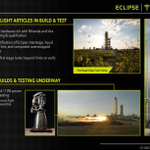
FROM ALPHA TO ECLIPSE — $FLY IS BUILDING ITS FUTURE.
Firefly Aerospace is pushing forward on multiple fronts:
Alpha — An established launch vehicle.
Eclipse Stage 1 — Advancing next-generation rocket manufacturing.
Eclipse — The next step toward medium-lift launch capability.
Miranda — Engine development and testing are moving forward.
And here's why this matters to $ASTS investors:
Firefly's engine technology and manufacturing capabilities could become an important part of AST SpaceMobile's long-term BLACKLIFT ambitions.
The opportunity is significant, but execution will be everything.
Is $FLY becoming a much bigger player in the launch industry?
What's your take?
Follow me for more $FLY and $ASTS updates.

Contrarian 🅰Edge retweeted
$ASTS, $FLY: ARE INVESTORS MISSING THE BIGGER PICTURE?
There's more to this story than a headline about a $1.3B+ deal.
The real question is what AST SpaceMobile gains from its relationship with Firefly Aerospace.
Access to proven engine technology.
A path toward in-house engine manufacturing.
Greater long-term control over satellite deployment.
Potentially more flexibility over launch schedules.
But let's not confuse contracted revenue backlog with the value of an engine agreement. They are two completely different things.
BLACKLIFT is an ambitious long-term investment, not an overnight solution.
Could this partnership give $ASTS a meaningful strategic advantage?
Or is the market underestimating the cost and execution risks?
What's your take?
Follow me for more $ASTS


Contrarian 🅰Edge retweeted
$ASTS JUST MADE ONE OF ITS BIGGEST BETS EVER.
BLACKLIFT could give AST SpaceMobile greater control over its satellite launch pipeline.
But there's one question investors cannot ignore:
WHO PAYS THE BILL?
$1.3B+ in Firefly engine agreements.
A new rocket development program.
Expanding BlueBird production.
Billions in potential future capital requirements.
The upside could be enormous.
But so could the financial burden.
Is BLACKLIFT a long-term competitive advantage or a costly distraction?
I want to hear both sides.
BULLISH or BEARISH on this move?
Follow me for real $ASTS analysis — beyond the hype.


Contrarian 🅰Edge retweeted
If $ASTS hits $75 this year I’ll get an ASTS tattoo on my ass.
Contrarian 🅰Edge retweeted
SHOCK AND AWE: FIVE DAYS THAT COULD REWRITE THE $ASTS THESIS
November 2–6, 2026. Five business days. Multiple major developments. And a potentially significant shift in how investors should evaluate AST SpaceMobile.
I've been following the $ASTS story closely, and this past week deserves more than another headline or another bullish price prediction.
What happened between November 2 and November 6 touched several of the company's most important strategic priorities:
Commercial direct-to-device technology.
Carrier partnerships and network integration.
Competition with SpaceX.
Satellite manufacturing and deployment.
Government and defense opportunities.
Vertical integration through the development of BLACKLIFT.
The most important question is no longer simply whether ASTS can put satellites into orbit.
It's whether the company can build an integrated space-based telecommunications business with control over more of its technology, manufacturing, and launch infrastructure.
Let's break down what actually happened, why it matters, and what investors should be watching next.
MONDAY, NOVEMBER 2 — THE WIRELESS INDUSTRY'S STRATEGIC DIVIDE
The Washington Post published a significant report about SpaceX's efforts to enter the US mobile phone market.
According to the report, Elon Musk personally approached executives at Verizon, T-Mobile, and AT&T in recent months, seeking access to their wireless networks to help SpaceX launch its own mobile phone service.
All three carriers reportedly declined.
SpaceX has also been exploring a potential arrangement involving EchoStar and Boost Mobile.
Why does this matter to $ASTS?
Because it highlights an important difference between two competing business strategies.
SpaceX is trying to expand from satellite connectivity into the traditional wireless market.
AST SpaceMobile is pursuing a different model: working with existing mobile network operators to extend their coverage through space.
AST doesn't necessarily need to own the customer's wireless relationship.
It needs to become an essential part of the infrastructure that keeps customers connected.
That distinction could become extremely important.
Traditional carriers already have customers, spectrum, billing systems, distribution, and terrestrial infrastructure.
AST's opportunity is to provide the satellite layer that extends those networks beyond the reach of conventional cell towers.
However, SpaceX's reported difficulties should not be interpreted as proof that it has been permanently blocked from the wireless market. Its potential Boost Mobile arrangement remains a developing situation, and carrier consent may still be required.
The competitive landscape is changing, but the outcome is far from settled.
MONDAY, NOVEMBER 2 — THE AT&T HANDOFF MILESTONE
This was arguably one of the most important technical developments of the entire week.
AT&T and AST SpaceMobile announced the successful completion of what they described as the industry's first handoff between a terrestrial cellular network and a direct-to-device satellite network.
The demonstration took place on October 21 outside Granite Falls, Washington.
Think about what this actually means.
A smartphone connection moved from AT&T's ground-based network to AST's satellite network without the traditional interruption associated with changing coverage systems.
This is a critical step toward making satellite connectivity feel like a natural extension of ordinary mobile service.
The technology partners were also significant:
ERICSSON
Provided combined radio and core technology, together with intelligent network automation to optimize the transition.
NOKIA
Provided radio access technology and mobility software for AST's space-based network.
According to AT&T, network automation reduced the transition time from seconds to milliseconds.
Why is this important?
Because successful satellite communication is not just about connecting a phone to a satellite.
A commercially useful service must also manage the transition between terrestrial and satellite coverage.
Customers shouldn't have to think about which network they're using.
They should simply remain connected.
This demonstration does not mean nationwide commercial service is ready today. Real-world beta testing and further integration remain important milestones.
But it moves the discussion beyond theoretical capability.
AST and AT&T have demonstrated a crucial part of the network integration required for commercial deployment.
That's meaningful progress.
WEDNESDAY, NOVEMBER 4 — THE DEFENSE AND GOVERNMENT OPPORTUNITY
One area investors should continue watching is AST SpaceMobile's government business.
The company's technology is not limited to consumer smartphone connectivity.
Its broader platform could support several government applications, including:
Secure communications.
Remote connectivity.
Emergency response.
Internet of Things applications.
Government and defense networks.
Potential sensing and other specialized capabilities.
AST's November 6 announcement specifically referenced opportunities beyond direct-to-device broadband, including US government radar, secure communications, IoT, federal emergency applications, and AI edge computing.
The company also disclosed a technology platform backed by more than 3,900 patent and patent-pending claims.
It operates more than 500,000 square feet of manufacturing and operational facilities and has a workforce exceeding 2,250.
These numbers help illustrate the scale of the industrial infrastructure AST has been building.
But investors should make an important distinction:
A potential government application is not the same thing as a funded contract.
A patent portfolio is not the same thing as recurring revenue.
The next step is to see how these capabilities translate into funded programs, contracts, and measurable financial contributions.
Government business could become an important additional revenue stream.
It still needs to be demonstrated in the numbers.
FRIDAY, NOVEMBER 6 — BLACKLIFT CHANGES THE CONVERSATION
Then came the announcement that may have the biggest long-term strategic implications.
AST SpaceMobile announced that it intends to develop its own reusable 20-ton-class rocket, named BLACKLIFT.
The rocket is designed to deploy up to five BlueBird satellites per launch, with its first flight targeted for late 2028.
And the engine partnership is just as important.
AST signed a major agreement with Firefly Aerospace ($FLY) covering Miranda and Vira engines.
The agreement includes:
27 Miranda engines.
9 vacuum-variant Vira engines.
A perpetual license for AST to manufacture the engines.
A new US-based engine manufacturing facility.
Three years of engineering support from Firefly.
The total disclosed agreement exceeds $1.3 billion.
Here's the financial breakdown:
ENGINE LICENSE
Approximately $800 million in upfront consideration, consisting of $400 million in cash and 10–14 million shares of AST Class A common stock.
ENGINE SUPPLY
$250 million for engines for the first three Blacklift rockets.
ENGINEERING SERVICES
Another $250 million over three years.
This is a substantial commitment.
But it also represents a major strategic decision.
AST is no longer content to depend exclusively on third-party launch providers over the long term.
It wants to develop its own launch capability.
WHY THE MIRANDA ENGINE MATTERS
Firefly says Miranda has completed more than 175 hot-fire tests, accumulating over 4,200 seconds of testing.
The engine has also completed a flight-like test at 110% performance.
That is an important engineering foundation.
However, investors should understand the distinction between ground-tested engines and successful orbital flight.
Miranda is not yet a flight-proven operational engine.
Firefly's broader engine development experience and technology heritage provide a foundation, but Blacklift still has to demonstrate that the complete vehicle can work.
AST's stated goal is to use the existing engine development work to shorten its own development timeline.
The first Blacklift launch is targeted for late 2028.
Ambitious? Absolutely.
Guaranteed? Not at all.
THE MOST IMPORTANT DETAIL: AST IS NOT ABANDONING EXTERNAL LAUNCH PROVIDERS
This point deserves attention because it changes how investors should interpret Blacklift.
AST has stated that it will continue using external launch providers.
Its existing launch agreements now cover more than 100 BlueBird satellites expected to be deployed cumulatively between 2027 and 2028.
In other words, the company is pursuing a two-track strategy.
NEAR TERM:
Continue using external launch providers to deploy the constellation and move toward commercial service.
LONG TERM:
Develop BLACKLIFT to gain additional control over launch capacity, scheduling, and potentially the economics of satellite deployment.
This is a more sensible interpretation than assuming AST will immediately replace SpaceX or other launch providers.
Blacklift is a long-term infrastructure project.
The existing satellite deployment program still needs to succeed independently.
That distinction is critical.
DPAS — ANOTHER GOVERNMENT-RELATED ADVANTAGE?
There is another detail in the Blacklift announcement that investors should not overlook.
AST specifically referenced access to additional launches for US government missions alongside its Defense Priorities and Allocations System (DPAS)-rated program.
DPAS is a federal system that allows the US government to prioritize certain orders involving critical industrial resources and services.
This is relevant because launch capacity can become strategically important for government missions.
A DPAS-rated program could provide AST with an additional regulatory framework for prioritizing qualifying government-related work.
But let's be precise.
The announcement does not establish that every AST launch can automatically be placed ahead of commercial launches by SpaceX or other providers.
The scope of any priority depends on the applicable rated orders, contracts, and regulatory requirements.
Still, the fact that AST is referencing DPAS in the context of its launch strategy is worth watching.
It reinforces the importance of the government market in the company's long-term plans.
WHAT FULL VERTICAL INTEGRATION COULD MEAN FOR AST
Let's step back and look at the bigger picture.
AST is gradually assembling a much broader industrial platform.
1. SATELLITE HARDWARE
BlueBird spacecraft designed and manufactured in-house.
2. COMMUNICATION TECHNOLOGY
Proprietary phased-array technology and ASIC capabilities.
3. MANUFACTURING INFRASTRUCTURE
More than 500,000 square feet of facilities and a workforce exceeding 2,250.
4. CARRIER DISTRIBUTION
Partnerships with established mobile network operators, including AT&T.
5. GOVERNMENT OPPORTUNITIES
Commercial and government applications across communications and other specialized markets.
6. LAUNCH INFRASTRUCTURE
BLACKLIFT, supported by Firefly's Miranda and Vira engine technology.
The ultimate objective is to control more of the value chain.
That could create several advantages:
Greater control over satellite production.
More flexibility in deployment schedules.
Reduced long-term dependence on outside launch capacity.
Potential improvements in launch economics.
Greater ability to serve commercial and government customers.
But vertical integration is not automatically a guarantee of higher margins.
Owning more infrastructure also means taking responsibility for more capital expenditure, engineering challenges, manufacturing risks, and operational complexity.
The opportunity and the risk are growing together.
THE FINANCIAL QUESTION — WHO PAYS FOR ALL OF THIS?
This is where I become more cautious.
The $1.3 billion-plus Firefly agreement is not a small investment.
AST is also continuing to expand its satellite manufacturing operations and build out its constellation.
The company needs capital for:
BlueBird satellite production.
Launch services.
Blacklift development.
Engine manufacturing infrastructure.
Network operations.
Commercial service deployment.
The license consideration includes both cash and shares, which means shareholders need to monitor the potential dilution.
The company must also demonstrate that commercial and government revenue can grow fast enough to support its expanding capital requirements.
This is the biggest financial question surrounding the new strategy.
Can AST expand aggressively without putting excessive pressure on existing shareholders?
That's what I want management to address.
A bigger company does not automatically mean greater value per share.
Execution, financing discipline, and returns on invested capital will ultimately determine whether this strategy creates shareholder value.
WHAT I'LL BE WATCHING NEXT WEEK
There are two major upcoming dates.
MONDAY, NOVEMBER 9 — Q3 2026 EARNINGS
This is the first major opportunity for management to address the market following the recent strategic announcements.
Here are the questions I want answered:
SATELLITE PRODUCTION
How many BlueBird satellites are currently being manufactured?
Is production accelerating toward the company's longer-term manufacturing targets?
DEPLOYMENT
What is the updated launch schedule?
What is the status of the satellites awaiting launch?
COMMERCIAL SERVICE
What is the latest progress with AT&T and other mobile network partners?
When should investors expect meaningful commercial service milestones?
FINANCIAL POSITION
How much capital is available?
How will management finance the expanding business?
What does the Blacklift commitment mean for future capital allocation?
GOVERNMENT REVENUE
Are government opportunities translating into funded programs and measurable revenue?
I don't want another presentation filled with ambitious targets.
I want numbers, timelines, and accountability.
THURSDAY, NOVEMBER 12 — BLACKLIFT UNVEILING
This could be another important event for long-term investors.
The market needs more information about:
Rocket dimensions and architecture.
Reusability plans.
Launch site.
Development milestones.
Testing schedule.
Expected launch cadence.
Engine manufacturing plans.
Project cost and funding requirements.
The November 6 announcement established the strategic direction.
The November 12 event should help investors understand the engineering roadmap.
The difference between a compelling concept and a functioning rocket is enormous.
We need to see how AST intends to bridge that gap.
THE RISKS HAVE NOT DISAPPEARED
I remain interested in the long-term opportunity, but there are several risks that cannot be ignored.
1. EXECUTION RISK
AST is simultaneously expanding satellite production, commercial operations, and rocket development.
That's an enormous operational challenge.
2. CAPITAL REQUIREMENTS
The Firefly agreement alone exceeds $1.3 billion.
Additional investment will be required to develop and manufacture Blacklift.
3. LAUNCH DEPENDENCY
External providers remain essential to the near-term deployment strategy.
Blacklift is not expected to begin flying until late 2028.
4. COMMERCIALIZATION
Technical milestones must eventually translate into paying customers and recurring revenue.
5. SHAREHOLDER DILUTION
The Firefly agreement includes stock consideration, and future financing decisions could affect existing shareholders.
6. COMPETITION
SpaceX remains an extremely powerful competitor with significant launch infrastructure and an established satellite constellation.
AST does not need to beat SpaceX at everything.
But it must establish a commercially sustainable position of its own.
MY CONCLUSION: THE ASTS THESIS IS GETTING BIGGER — AND MORE COMPLEX
Five business days have delivered several important developments.
The AT&T handoff demonstrated progress toward seamless terrestrial-to-satellite connectivity.
The Washington Post report highlighted the strategic challenges facing SpaceX as it attempts to enter the traditional wireless market.
The Blacklift announcement introduced a completely new dimension to AST's long-term business model.
And the Firefly agreement provides an engineering and manufacturing pathway for that ambition.
Taken together, these developments reinforce the idea that AST is trying to build much more than a satellite constellation.
It wants to create an integrated space-based communications platform.
I believe the long-term opportunity remains fascinating.
But I also believe investors need to separate strategic ambition from financial reality.
A successful handoff is not nationwide commercial service.
A rocket announcement is not a successful launch.
A government opportunity is not recognized revenue.
And a larger addressable market does not automatically translate into higher earnings per share.
The next phase is about proving that all these pieces can work together.
For me, the biggest question is this:
Can AST SpaceMobile turn its growing control over technology, manufacturing, carrier integration, and launch infrastructure into a profitable global business?
That's the thesis I will be watching.
Not just the headlines.
Not just the stock price.
The execution.
$ASTS — BIGGER VISION. BIGGER OPPORTUNITY. BIGGER RESPONSIBILITY TO DELIVER.
I'm watching Monday's earnings and Thursday's Blacklift unveiling very closely.
What do you think?
Has ASTS just strengthened its long-term competitive position, or is management taking on too much capital and execution risk at once?
Let's discuss.
I am long-term focused, but not blind to the risks. This is my personal analysis, not financial advice. Always do your own research.
Contrarian 🅰Edge retweeted
MONDAY COULD BE A HUGE DAY FOR $ASTS!
November 9. The numbers are coming.
AST SpaceMobile is making BIG moves — expanding its BlueBird constellation, developing its own BLACKLIFT rocket, and committing to a massive partnership with $FLY.
But now investors need ANSWERS.
The vision is getting bigger. But big promises are not enough anymore.
Monday's earnings call needs to deliver clarity, numbers, and a credible roadmap.
CAN $ASTS FINALLY TURN BIG AMBITIONS INTO REAL RESULTS?
BULLISH, BEARISH, OR WAITING FOR ANSWERS?
Drop your prediction below.
Follow me for real $ASTS analysis — beyond the hype.
Contrarian 🅰Edge retweeted
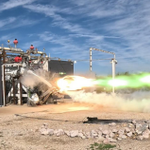
THIS IS THE POWER BEHIND $ASTS BLACKLIFT!
Here's Firefly Aerospace's MIRANDA engine putting on a show.
These engines are expected to power AST SpaceMobile's BLACKLIFT rocket, designed to launch up to five BlueBird or BlackBird satellites in a single mission.
A major step toward greater control over satellite deployment and launch capacity.
Big ambitions from $ASTS and $FLY. Now it's all about execution.
#ASTS #Space
Contrarian 🅰Edge retweeted
I've invested in $ASTS before, and I've genuinely believed in its long-term vision.
I understand the ambition behind AST SpaceMobile. Building a global satellite-to-cell network is an incredibly exciting opportunity.
But its decision to develop BLACKLIFT has made me seriously reconsider the strategy.
Let's be honest: building an orbital rocket is not a small side project.
It requires enormous CAPEX, years of engineering, experienced teams, and potentially significant shareholder dilution.
Just look at $RKLB. Rocket Lab has spent nearly two decades building its rocket business, developed a proven orbital launch vehicle, and invested years into Neutron.
Even for a company with that level of experience, developing a new rocket is an enormous challenge.
So why is $ASTS taking on an entirely new engineering challenge when it still has so much to accomplish with BlueBird?
I understand the appeal of controlling its own launch capabilities. But does the potential benefit justify the financial and execution risks?
As someone who has invested in and believed in $ASTS, I genuinely want to understand the bull case.
Would shareholders be better served by focusing capital on satellites and relying on established launch providers?
Am I missing something, or is ASTS taking on more than it needs to?
I'd love to hear both sides. 👇
$ASTS $RKLB

Contrarian 🅰Edge retweeted
$ASTS JUST ENTERED A NEW CHAPTER!
AST SpaceMobile is no longer thinking like just a satellite company.
With the announcement of its own BLACKLIFT rocket, a $1.3B+ Firefly engine agreement, expanding BlueBird production, and growing government opportunities, ASTS is making a massive bet on vertical integration.
But there's another side to the story:
Massive capital requirements.
Potential shareholder dilution.
Significant engineering challenges.
A long road before Blacklift's first planned launch in late 2028.
The vision is getting bigger. The execution now matters more than ever.
November 9 earnings could be a major reality check.
Are you bullish on ASTS's bold new direction, or is management taking on too much at once?
Follow me for facts, risks, and real $ASTS analysis.


Contrarian 🅰Edge retweeted
BIG MILESTONE FOR $ASTS!
AST SpaceMobile has officially notified the FCC of its plans to commence Direct-to-Cell (D2C) operations outside the United States.
Here's why this matters:
International D2C operations are coming imminently.
Operations will be conducted in collaboration with mobile network operator (MNO) partners.
Required national authorizations have been obtained in the countries listed in the filing.
This is more than just another regulatory update. It's another step toward turning AST's satellite technology into a real global connectivity business.
The vision is becoming reality, one market at a time.
The next big question: Which country will be first to see commercial service?
Stay focused. $ASTS
Follow me for more breaking news and analysis!
