






Pinned Tweet
It's official. The Pogun waitlist is open. 🎉
Watch @omerh_ announce the next chapter of Pogun live from the Nakamoto Stage at @BitcoinConfAsia.
Borrow against your Bitcoin without selling it. Lend stablecoins on terms you set.
Capital without compromise. Join us 👉 pogun.io/#waitlist


Pogun retweeted

Cardano-Swaps Protocol v2 has been audited by @txpipe_tools 🔍
No critical or major issues found. All findings were resolved or acknowledged.
Special thanks to @Cardano_CF for supporting the audit process! 🧵
Pogun retweeted
It’s still just a small multisig. Adding in more providers just makes the net multisig slightly bigger.
Or what if the TradFi sources themselves go bad like CoinGecko having a bug/problem?
You are only as strong as your weakest link. Not strong enough for serious capital IMHO
Pogun retweeted
@pogun_io doesn’t use oracles. Users take the responsibility to set prices themselves. It is the same with my order book.
I’d rather do that than accept a backdoor.
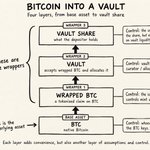
This is what happens when you use WBTC in a Vault. Consider that that native BTC in a Vault just skips one layer of the wrappers.


Pogun retweeted

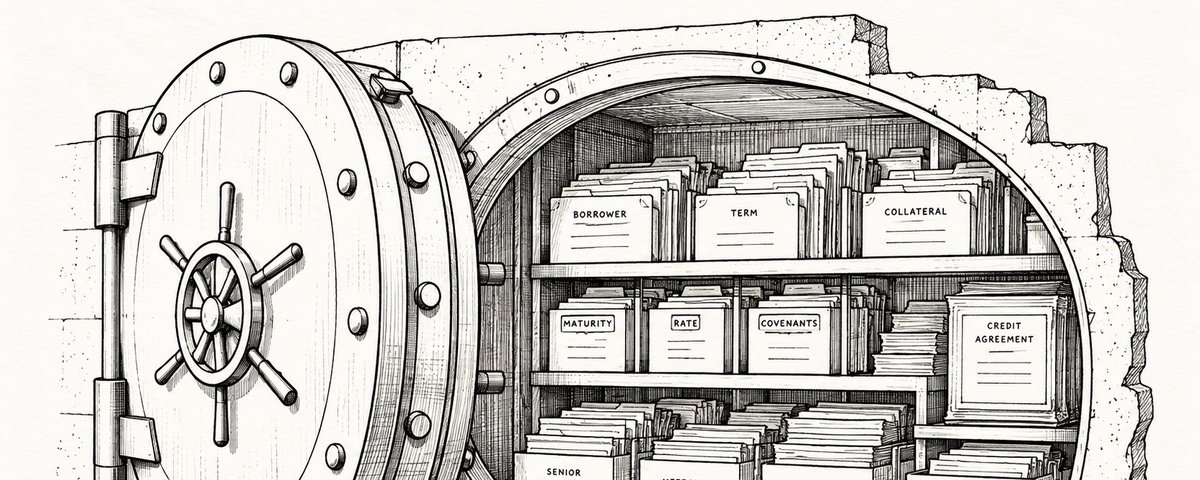
Gave into the trend and wrote a piece on Vaults.
Crypto should be moving beyond “trust me, bro” finance. Vaults are a perfectly legitimate trust layer when delegated judgment is the product, but they are still a layer. The cleaner architecture is to start from the right primitive for the market: a loan when the product is credit, a pool when the product is liquidity, a vault when the product is allocation. The wrapper should simplify the underlying object, not compensate for its absence.
@blocksmithy @pogun_io @DonAntonioHS @LucaProsperi @__fallen_icarus
Pogun retweeted
Come talk to our CEO at the DAT summit to figure out how you can predictably borrow against your BTC without it ever leaving the network.


Pogun retweeted

Singapore, this lineup is looking elite. 👀
We’re glad to have @CaymanFinance, @Sailo_Tech, @pogun_io and @bitcoincojp supporting the Digital Assets & Tokenization Summit Singapore, with @Cointelegraph, @Yellow, DigitalCFO Asia, @beincrypto and @The_Byteline joining us as media partners to help take the conversation further.
Now, meet the people taking the stage. 👇

Come talk to our CEO at the DAT summit to figure out how you can predictably borrow against your BTC without it ever leaving the network.
Pogun retweeted
@andrewchen’s cold start problem methodology is what we’re using to create a small network of lenders and borrowers.
And it’s going phenomenally well.

Pogun retweeted
A distribution deal is not a network effect. The test is whether adding one partner makes the market more useful to everyone already in it.
Lending pools compete on liquidity depth. Isolated pools and hub-and-spoke designs change how capital and risk are organised, but reorganising liquidity does not, by itself, create a market for individually negotiated credit. At Pogun, we start with the loan agreement, not the pool.
The first moat we’re working towards is market density. Wallets, exchanges and custodians bring borrowers into the same market of independent lenders. More borrowers give lenders more opportunities; more lenders give borrowers a better chance of finding suitable terms. A new distribution partner should improve funding opportunities across the network—not just create another captive bucket.
The second is credit history that supports more specific risk pricing. As repayment, renewal and default records accumulate, lenders can assess the borrower and the individual loan—not just collateral ratios and pool utilisation. The advantage isn’t collecting data. It’s helping lenders distinguish risks they previously had to price alike.
The third is a market for the loan claims. Each loan remains independent, but its lender’s claim can change hands. Building a base of buyers could give lenders an exit without requiring the borrower to repay early. Transferability alone isn’t liquidity; attracting those buyers is the work.
None of this makes us immune to distributors shopping around. But the defence we’re building is access to a credit market, not dependence on a particular integration. Distribution brings participants in. Better funding options, more informed pricing and a market for their claims give them reasons to stay.
The loans stay independent. The market is shared.
🤖 Made with AI


I too would write a love letter about partnering with competitors if I’d paid Robinhood $100m + for the privilege lol.
The funniest part is coinbase then turning around and bringing aave in as a credit layer for tokenised stocks.
The issue here is the conflating of distribution with a network effect that somehow accrues to morpho.
Coinbase using morpho doesn’t make robinhood more dependent on morpho and vice versa, If anything, every big distributor you add has more incentive to make sure the credit layer stays competitive and replaceable.
And I don’t think “we power your biggest competitor too” after paying them an insane amount of money is quite the flex to coinbase that you think it is.
The base + Aave stuff on tokenised stocks is basically showing you the model in real time.
Coinbase and RH own the users and distribution, they can shop the credit layer around product by product and make the protocols compete underneath them which is exactly what RH did and why you ended up massively overpaying.
It’s basically the supermarket model they own the shelf space while you’re fighting to be stocked which means:
You’re not the network.
You’re a vendor to the network.
DATs expose the asset.
Pogun turns that asset into credit — without forcing a sale, a wrap, or a liquidation on price.
That’s when treasury assets become productive capital.
@omerh_ @blocksmithy

DATs are heating up.
The original PIPEs were losers because everyone had the trade backwards.
Now liquid funds are realizing that when a DAT trades below 1x mNAV, you can get more token exposure per dollar.
At 0.33x mNAV, you’re effectively getting ~3x the exposure to the underlying token…if you believe the discount eventually closes.

Bridges get hacked. If you crack a Mirror, it’s 7 years of bad luck.
Our auditors are trying their best.
@IOHK_Charles @omerh_

Around 4,000 BTC left a bridge on Sunday. No key was compromised. The signers signed a withdrawal that was correct by every rule they could check, because the sidechain software had created coins indistinguishable from everyone else's. Twenty-three minutes after those coins reached the peg-out service, the payment was on Bitcoin.
Everything worked as designed. Three properties of that design decided the outcome, and none of them is about honesty.
@pogun_io @omerh_