

PhD student @EPFL 🇨🇭 | ML & computational biology 🤖🧬⚛️
Lausanne
Joined July 2021
- Tweets160
- Following469
- Followers801
- Likes1.4K




Pinned Tweet
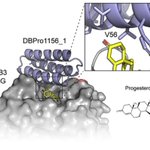
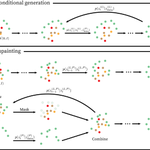
The code & camera-ready version of our #ICLR2025 paper on "Multi-domain Distribution Learning for De Novo Drug Design" are now available
📚 Paper: openreview.net/forum?id=g3VC…
💻 Code: github.com/LPDI-EPFL/DrugFlo…
(1/4)
Arne Schneuing retweeted

Join our team in the EU or UK!
aka.ms/bioemu_job


Public preview of BioEmu2! @MSFTResearch AI for Science’s new foundation model for biomolecular structure, dynamics and function. Open weights, MIT license.
github.com/microsoft/bioemu2
Movie: BioEmu2-simulated binding of intrinsically disordered peptide PUMA to MCL-1 receptor. 🧵⬇️
Arne Schneuing retweeted

Our team at MSR AI for science is looking for a post-doc researcher to help us generate chemically diverse molecular data to train Skala, our deep-learning exchange-correlation functional. Come join us!
#ai4science
Arne Schneuing retweeted

We will have several funded AI4Science positions open at the @UvA_Amsterdam! If you're interested in ML for Earth system modeling or mechanistic interpretability, apply through the ELLIS PhD/Postdoc call by 31 October: apply.ellis.eu
@Ellis_Amsterdam @ELLISforEurope
Arne Schneuing retweeted

Stellar lineup at the AITHYRA Next generation AI for Biomedical Science workshop -- next Monday 2 Nov at the IMBA lecture hall in Vienna Biocenter. No registration is required.

Arne Schneuing retweeted

Challenge 4 of the Anthropic × Adaptyv Protein Design Competition on @proteinbase is open: design a pH-sensitive protein to help shuttle drugs into the brain.
TfR1 is a receptor protein that brings iron-loaded transferrin into cells. It is highly expressed in the blood-brain barrier and drug developers can use this receptor to get drugs to pass the blood-brain barrier. The drug is fused to a binder to TfR1, which makes cells absorb the protein complex. If the binder is pH-sensitive it will release from the receptor inside the endosome and then exit the cells on the brain-facing side to deliver the therapeutic into the brain.
In this challenge, the goal is to make a pH-sensitive binder to TfR1 that targets precisely the right region on the receptor in order to allow absorption into the cell.
Wow, this looks super cool. Congrats @FrankNoeBerlin and team! 🚀
Public preview of BioEmu2! @MSFTResearch AI for Science’s new foundation model for biomolecular structure, dynamics and function. Open weights, MIT license.
github.com/microsoft/bioemu2
Movie: BioEmu2-simulated binding of intrinsically disordered peptide PUMA to MCL-1 receptor. 🧵⬇️
Arne Schneuing retweeted

We are hiring research interns in the broad area of machine learning and statistics @MSRNE @MSFTResearch! Come work with us!
Personally I have very broad interests and I’d love to learn about your favorite problems!

Arne Schneuing retweeted

At b12 Labs (YC S25) our mission is making the molecules AI designs. b12 Foundry is a significant step in that direction, and we’re excited to share that today!
Synthesis is a complex problem of carefully orchestrated planning and execution. We have worked intensely on planning (link to selenium), but the execution is what makes it all real.
We partnered with the HTEL at the University of Zurich to convert a state of the art automation facility into an advanced machine for producing molecules.
At the b12 Foundry, our agents and chemists collaborate day and night to produce valuable molecules, reactions and data with a flexibility and quality that few other places in the world can demonstrate.
Today, more than ever, it’s clear that the future of drug development starts with exquisitely designed molecules. We need to be able to make those complex molecules, and to make them efficiently, starting today.
If you have molecules that are hard to make, need experimental data generated, or are simply excited by robots + chemistry + AI, get in touch.
Read on in the comments 👇
#AI4Science #LabAutomation #Chemistry #DrugDiscovery #DeepTech #BioTech #AI
Arne Schneuing retweeted

Challenge 3 is live on @proteinbase and for the first time we're measuring cell activation 👀

Arne Schneuing retweeted

(1/n) Excited to announce Zatom-2, a generative model trained on ~5M atomistic structures from OMol25 and OMat24!
Learning to sample from datasets spanning relaxed and distorted geometries is challenging, and we explore several training recipes and the role of force conditioning

Thrilled to announce Zatom-2, an atomistic generative model spanning molecular, material, and protein science! Special thanks to @MirunaCretu2 for leading this effort. (1/11)
🌐 Project page: zatom-ai.github.io/nucleus

ALT Zatom-2's multitask pretraining architecture for atomistic chemical and biological data.
Arne Schneuing retweeted
Announcing Challenge 2 of the Anthropic x Adaptyv Protein Design Competition!
Humira, the best-selling drug ever, blocks TNF-α, an inflammation marker protein that’s overexpressed in rheumatoid arthritis and Crohn’s disease. In this challenge, the goal is to make a better binder for TNF-α that also releases selectively at pH 6.0 in the endosome of cells to improve drug half-life.
The protein must also bind both human and mouse TNF-α, making it easier to test the same design in preclinical models.
Arne Schneuing retweeted
Challenge 2 is live on @proteinbase!
Announcing Challenge 2 of the Anthropic x Adaptyv Protein Design Competition!
Humira, the best-selling drug ever, blocks TNF-α, an inflammation marker protein that’s overexpressed in rheumatoid arthritis and Crohn’s disease. In this challenge, the goal is to make a better binder for TNF-α that also releases selectively at pH 6.0 in the endosome of cells to improve drug half-life.
The protein must also bind both human and mouse TNF-α, making it easier to test the same design in preclinical models.
Arne Schneuing retweeted
We're launching Challenge 1 of the Anthropic x Adaptyv Protein Design Competition on @proteinbase: design a conditional binder to EGFR, a key cancer target.
The goal: bind EGFR under the acidic conditions of the tumor environment, but not at the normal pH around healthy cells. Moreover, the proteins must bind to both the human and the mouse variant of EGFR to support easier preclinical testing
Arne Schneuing retweeted

Looking forward to this hackathon on Friday in Zurich co-organized with AI4Science Zurich and @merckgroup! I'll be around helping and brainstorming with teams, I'm excited to hear a lot of cool ideas!
Sign up! luma.com/xrohmwdd

Arne Schneuing retweeted

Excited to finally announce a new preprint on Ensemble-Conditioned Molecular Design!
We tackle the issue of incorporating more dynamic structural information into 3D molecular generators by guiding sampling on multiple structural conditions
1/N 🧵
Arne Schneuing retweeted

RetroChimera has just been published in @Nature! Retrosynthesis is a hard problem (what an understatement) and so it’s extremely exciting to be making meaningful progress along the path to solving it computationally.

Custom-made molecules are advancing medicine, materials, and agriculture, but producing them is slow and expensive. A new Nature paper highlights RetroChimera, a predictive model that helps accelerate chemical synthesis, helping researchers explore a wide range of molecules.: msft.it/6012a5Ogy
Arne Schneuing retweeted

A Unified 3D Generative Model for Synthesizable Structure-Based Drug Design
1. The paper introduces LDDM (Large Drug Discovery Model), a unified 3D generative framework that jointly samples atom types, covalent bonds, and 3D coordinates conditioned on a protein pocket—so the same model can do de novo design, fragment growing/linking, (non)covalent docking, and even non-canonical peptide side-chain docking.
2. A key methodological idea is fragment-based masked modeling (inspired by masked language modeling): molecules are BRICS-fragmented, and during training different fragments are masked in different “roles” (design: graph+coords missing; docking: coords missing but graph known; context: fully known). This trains one model that naturally supports many structure-based tasks by changing what is masked/conditioned.
3. The generative core combines equivariant flow matching for continuous 3D coordinates with Markov bridge models for discrete atom/bond types, plus per-atom uncertainty estimates. That uncertainty becomes a practical scoring signal: it correlates with pose RMSD (Spearman ρ = 0.59) and can highlight which substructures are unreliable.
4. Training data is scaled via a curated synthetic complex dataset (836,259 protein–ligand complexes; 454,662 unique molecules) assembled from CrossDocked, BindingNet v2, and BigBind (BigBind ligands docked with Gnina), then heavily filtered with PoseBusters + GenBench3D and outlier filters. The model’s samples cover the training chemical space while staying novel: ~90% of generated molecules have <0.5 max Tanimoto similarity to the training set.
5. Benchmarking shows “unified but competitive” performance: on PoseBusters local docking, LDDM reaches 79.5% top-1 success at 2 Å RMSD (valid cases), and on a covalent docking benchmark it achieves 80.1% top-1 success at 2 Å—outperforming specialized covalent docking baselines in the cited comparison.
6. Beyond one-shot generation, the paper proposes programmable generation: an iterative fragment-tree search that alternates global filtering (e.g., QED thresholds) with local fragment-level filtering (pose plausibility, hydrogen-bond satisfaction, target interactions), allocating sampling budget with a UCB-style rule (Monte Carlo tree search flavor). This improves sampling efficiency for local, structure-dependent objectives versus SMILES RL (REINVENT), especially for hydrogen-bonding criteria.
7. A second practical innovation is synthesizable generation: programmable generation constrained by building blocks + reaction templates (demonstrated with Enamine REAL). Instead of generating “anything” then hoping it’s makeable, LDDM generates full molecules but only accepts expansions that match precomputed reaction products; partial matches use an MCS-anchored hybrid docking step. In comparisons with equal sampling budgets, this approach yields far more candidates that are both filter-passing and present in REAL space.
8. Experimental validation spans five targets and multiple modalities, emphasizing “few syntheses, high hit rates” rather than massive screening. In a VHL–CDO1 molecular glue campaign, LDDM redesigned two CDO1-contacting flanks while keeping the VHL anchor fixed; across both flank campaigns, 67% of synthesized LDDM modifications retained nanomolar ternary-complex affinity by SPR.
9. LDDM also optimized a covalent non-natural peptide inhibitor of cathepsin S (CTSS): docking non-canonical side chains (54 building blocks; 270 single mutants; 200 conformers each) led to one improved design (J2) with 3.5× better potency, improving IC50 from 70.4 nM to 19.9 nM in FRET assays—despite LDDM not being trained on peptides.
10. De novo hit-finding case studies show micromolar binders with orthogonal validation and pose accuracy: for PGK1, 4/6 purchasable one-shot designs bound (best KD 14.7 µM) with NMR CSPs supporting binding at the targeted nucleotide pocket; for BRD4, synthesizable designs produced binders (e.g., Z967 ~40–60 µM) with NMR CSPs consistent with the acetyl-lysine pocket; for SARS-CoV-2 Nsp3 Mac1, 6/88 synthesized candidates showed competition in HTRF (best IC50 46.2 µM), and X-ray structures for two designs showed ligand RMSDs of 2.35 Å and 1.43 Å vs designed poses.
💻Code: github.com/lpdi-epfl/lddm.
📜Paper: biorxiv.org/content/10.64898…
#ComputationalDrugDiscovery #GenerativeAI #StructureBasedDrugDesign #DiffusionModels #FlowMatching #MolecularDocking #FragmentBasedDesign #SyntheticAccessibility #DrugDesign #ChemicalBiology

Arne Schneuing retweeted

Synthesis is a major bottleneck in drug discovery. AI synthesis planning can help propose better routes and make generative molecular design tractable.
With our retroChimera model we have been pushing the boundaries of these models further - out in @Nature today. 1/2
Arne Schneuing retweeted
A Unified 3D Generative Model for Synthesizable Structure-Based Drug Design
1. The paper introduces LDDM (Large Drug Discovery Model), a unified 3D generative framework that jointly samples atom types, covalent bonds, and 3D coordinates conditioned on a protein pocket—so the same model can do de novo design, fragment growing/linking, (non)covalent docking, and even non-canonical peptide side-chain docking.
2. A key methodological idea is fragment-based masked modeling (inspired by masked language modeling): molecules are BRICS-fragmented, and during training different fragments are masked in different “roles” (design: graph+coords missing; docking: coords missing but graph known; context: fully known). This trains one model that naturally supports many structure-based tasks by changing what is masked/conditioned.
3. The generative core combines equivariant flow matching for continuous 3D coordinates with Markov bridge models for discrete atom/bond types, plus per-atom uncertainty estimates. That uncertainty becomes a practical scoring signal: it correlates with pose RMSD (Spearman ρ = 0.59) and can highlight which substructures are unreliable.
4. Training data is scaled via a curated synthetic complex dataset (836,259 protein–ligand complexes; 454,662 unique molecules) assembled from CrossDocked, BindingNet v2, and BigBind (BigBind ligands docked with Gnina), then heavily filtered with PoseBusters + GenBench3D and outlier filters. The model’s samples cover the training chemical space while staying novel: ~90% of generated molecules have <0.5 max Tanimoto similarity to the training set.
5. Benchmarking shows “unified but competitive” performance: on PoseBusters local docking, LDDM reaches 79.5% top-1 success at 2 Å RMSD (valid cases), and on a covalent docking benchmark it achieves 80.1% top-1 success at 2 Å—outperforming specialized covalent docking baselines in the cited comparison.
6. Beyond one-shot generation, the paper proposes programmable generation: an iterative fragment-tree search that alternates global filtering (e.g., QED thresholds) with local fragment-level filtering (pose plausibility, hydrogen-bond satisfaction, target interactions), allocating sampling budget with a UCB-style rule (Monte Carlo tree search flavor). This improves sampling efficiency for local, structure-dependent objectives versus SMILES RL (REINVENT), especially for hydrogen-bonding criteria.
7. A second practical innovation is synthesizable generation: programmable generation constrained by building blocks + reaction templates (demonstrated with Enamine REAL). Instead of generating “anything” then hoping it’s makeable, LDDM generates full molecules but only accepts expansions that match precomputed reaction products; partial matches use an MCS-anchored hybrid docking step. In comparisons with equal sampling budgets, this approach yields far more candidates that are both filter-passing and present in REAL space.
8. Experimental validation spans five targets and multiple modalities, emphasizing “few syntheses, high hit rates” rather than massive screening. In a VHL–CDO1 molecular glue campaign, LDDM redesigned two CDO1-contacting flanks while keeping the VHL anchor fixed; across both flank campaigns, 67% of synthesized LDDM modifications retained nanomolar ternary-complex affinity by SPR.
9. LDDM also optimized a covalent non-natural peptide inhibitor of cathepsin S (CTSS): docking non-canonical side chains (54 building blocks; 270 single mutants; 200 conformers each) led to one improved design (J2) with 3.5× better potency, improving IC50 from 70.4 nM to 19.9 nM in FRET assays—despite LDDM not being trained on peptides.
10. De novo hit-finding case studies show micromolar binders with orthogonal validation and pose accuracy: for PGK1, 4/6 purchasable one-shot designs bound (best KD 14.7 µM) with NMR CSPs supporting binding at the targeted nucleotide pocket; for BRD4, synthesizable designs produced binders (e.g., Z967 ~40–60 µM) with NMR CSPs consistent with the acetyl-lysine pocket; for SARS-CoV-2 Nsp3 Mac1, 6/88 synthesized candidates showed competition in HTRF (best IC50 46.2 µM), and X-ray structures for two designs showed ligand RMSDs of 2.35 Å and 1.43 Å vs designed poses.
💻Code: github.com/lpdi-epfl/lddm.
📜Paper: biorxiv.org/content/10.64898…
#ComputationalDrugDiscovery #GenerativeAI #StructureBasedDrugDesign #DiffusionModels #FlowMatching #MolecularDocking #FragmentBasedDesign #SyntheticAccessibility #DrugDesign #ChemicalBiology

Arne Schneuing retweeted

ʙɪɴᴅᴄʀᴀꜰᴛ2 is out, and we're not waiting for the paper. The full code drops today, free for academic and industry use.
We're releasing it early so you can start designing right now, and bring its full power to the current Adaptyv competition.
github.com/PacesaLab/BindCra…