
Love suffers long. Blessed family in a blessed land.
burkeville, texas
Joined April 2022
- Tweets3.4K
- Following413
- Followers241
- Likes182K


Savannah Lee retweeted

Yes, multiple US courts have held that underage boys impregnated via statutory rape by adult women remain liable for child support. Cases include a 13-year-old in Kansas (Hermesmann v. Seyer, 1993), a 15-year-old in California, a 14-year-old in Michigan, and others. The child's support rights override the crime's circumstances. Some states exempt if the woman is convicted, but courts have repeatedly enforced it otherwise.
Savannah Lee retweeted

Okay, time to explain guns to our new friends.
Every day, when I leave the house, I attach a holstered handgun to my belt, under my shirt or coat.
I would no more leave the house without a gun than I would walk around outdoors without shoes.
Is it because I "need" a gun?
No.
I live in rural Tennessee, which is state in the American south. It's very safe here. The dangerous parts of America are big cities where the local government is leftist, and they shelter illegal migrant from the third world, and won't send violent criminals to prison. Places like Chicago and New York City.
Yet, any time I leave the house, I put on a gun, knowing that I will probably never have to use it, and if I do, it will probably be on an aggressive stray dog, not a human.
So why do I do it?
Why do many other people who live around me do it?
Why do we do this so much that carrying a gun is considered totally normal? If someone spotted it, it would not even arouse a comment, much less any fear.
In fact, it is legal to carry a gun openly here, without covering it up. Covering it up is just considered polite.
So.... why?
Well, try thinking of an English nobleman, during the reign of Elizabeth the First. When he dressed to go ride to court, he would hang a slender fencing sword, called a rapier or smallsword, from his belt.
He didn't expect to be attacked.
He didn't even expect to fight a duel. And if he was challenged to a duel, he wouldn't need his sword right then. He would meet his challenger later at an agreed-upon place and time.
No, he wore his sword because it was an expression of who he was. He was a gentleman, a person of status, with the legal privilege of carrying a sword.
By carrying a sword, he asserted his rights and prerogatives as a nobleman.
In Japan, you had the same sort of thing happening. The samurai, members of the bushi class, wore the two swords not because they expected to be attacked at any moment, but because the two swords were an essential part of who he was.
So, in these two cases, weapons were carried by noblemen as an assertion of status. They had the right to do so, and they did so in order to assert, exercise, and retain the right.
Americans carry guns because every American citizen is a nobleman.
When we fought the British for our independence, that war began on April 19th, 1775, when British troops, fearing American rebelliousness, marched out from Boston to confiscate guns from people living in the surrounding countryside.
Our ancestors did not submit to this. We shot them instead, and they fled back to Boston with their tails between their legs, to cower under the cover of the guns from the warship HMS Sommerset.
Thus began several years of war.
And when we won that war, we made a country where no government, and no man, would ever be allowed to disarm the people.
No agent of the government may say to us, "I may have a gun, and you may not."
Because to say that is to say "I am a nobleman, and you are a peasant. I am a master, and you are a slave."
We are not peasants here. We are all noblemen. That is the most basic principle of what it means to be an American.
I can be impoverished, so I can to be so poor that I live in a van down by the river. But however reduced my circumstances, as an American, I still have the rights and freedoms of a nobleman, of a daimyo, because that is the basic founding idea of the nation we forged on that day.
If you come to America to visit, if you walk among us, you will pass many people carrying guns. You will not notice this. You will not see them. You will witness no violence. Everything will be normal. But the guns will be there.
Because that is who we are.
We don't carry guns to be violent. We don't wish to be rude, or to intimidate people. We keep our guns covered up.
But they are the deepest, most essential part of what it means to be American.
This quoted post is unavailable.
Savannah Lee retweeted

Not wrong for us the Jews use to tie the Torah to their head and right hand
Deuteronomy 6:5-9 NLT
[5] And you must love the Lord your God with all your heart, all your soul, and all your strength. [6] And you must commit yourselves wholeheartedly to these commands that I am giving you today. [7] Repeat them again and again to your children. Talk about them when you are at home and when you are on the road, when you are going to bed and when you are getting up. [8] Tie them to your hands and wear them on your forehead as reminders. [9] Write them on the doorposts of your house and on your gates.
This bullying won't work on anyone who actually diligently study the Bible
Deuteronomy 11:18 NLT
[18] “So commit yourselves wholeheartedly to these words of mine. Tie them to your hands and wear them on your forehead as reminders.


Savannah Lee retweeted

On March 30, 1822, when the massacre in Chios began, the Muslim Turks had clear orders. The Sultan had commanded that all Greek Christians be slaughtered, except for boys aged 3-12 and women from 12 to 40. These would be captured and destined for the slave markets.
Young girls were raped publicly in the streets, and newlyweds in front of their husbands, who were then slaughtered. Others were raped in front of their parents, after which the men's genitals were cut off. Women over 40 were set on fire and left to burn alive. Pregnant women had their bellies ripped open and their fetuses pulled out, while small children were thrown forcefully against rocks. The frenzy of the Muslims was unprecedented.
Many Turkish soldiers cut off the heads of Christians and then licked their swords. With this act, they believed they would earn a place in paradise. Others were hanged from the island's trees for deterrence. Severed human limbs and corpses were scattered on the streets, while the sea had turned red from the blood. The smoke from the burning houses had covered all of Chios, while the flames made the night look like day.Several women from Chios preferred death over dishonor and slavery.
They committed suicide by jumping off cliffs. Some were killed while defending their children, siblings, and husbands. Even among those who were captured, some died on hunger strike.Destitute women and children from the island were crammed into ships and transported to the markets of Smyrna and Constantinople, where they were sold as slaves at humiliating prices.
By May 1, 1822, over 41.000 slave ownership documents, known as "teskerés", had been issued in Chios. According to the French-language newspaper of Smyrna, Spectateur Oriental, by May 10, duties had been paid at the Smyrna customs for 40,000 slaves.
The priest Welsh from the English embassy in Constantinople recorded what he saw in those days at the city's slave market:
"The Turks treated the women from Chios with utmost contempt. They examined them, groped them like butchers do lambs, and bought them for 100 grosia to 3 pounds per head. About 500 women from Chios were sold in the fish market."
The tragic events of Chios shocked Europe and America. For many weeks, the European press reported daily information and descriptions about the fate of the inhabitants, the massacres, the plunder, and the sale of women and children in the slave markets.
Korais writes in a letter to Varvakis:
"Imagine that you see Christ on the Cross, drenched in His blood, and calling out to you these paternal words:
My son Varvakis, many thousands of captives baptized in my name are in danger at this hour of renouncing me and embracing the abominable religion of Mohammed. Behold the time, baptized in my name, beloved son, to save your baptized brothers from the Turkish defilement."
The horrific images of the crimes of the Muslims against the Greek Christians were never erased from the collective memory of Europeans. Great European artists were so shocked by the descriptions that they created important works inspired by Chios.
The famous painting by Delacroix is exhibited to this day in a prominent position at the Louvre. Victor Hugo's poem titled "The Greek Child" is a moving record. But the most famous sculpture of 19th-century America also stands out, named: the "Greek Slave." The sculptor Hiram Powers began carving it about twenty years after the tragic events. The statue depicts a young woman, nude, bound with chains. In one hand, she holds a small cross on a chain. Powers himself describes the subject of his work as follows:
"The Slave has been abducted by the Turks from one of the Greek Islands during the Greek Revolution, the history of which is known to all. Her father and mother, and perhaps all her relatives, have been exterminated by her enemies, and she alone was kept alive, as a treasure that could not be thrown away. Now she is among barbarian strangers, under the pressure of the full recollection of the catastrophic events that led her to this state. She stands exposed to the gaze of people she abhors, and awaits her fate with intense anxiety, which is mitigated by her trust in the goodness of God. Gather all these sufferings together, and add to them the strength and resignation of a Christian, and there is no room left for shame."
(You can search for the sculpture to see it; I'm not uploading it because X might take down the post for sensitive content.)
This from me on whether Islam respects women.
Islam does not belong in Europe. Islam does not belong anywhere.
As a Greek, I will use my weapon, the knowledge of my history, to warn as many as I can about the violent and barbaric invasion of Islam and the war we are experiencing today.
I will do whatever I can to warn you.
Inform everyone.


Savannah Lee retweeted

When I was a few weeks postpartum with my second child, I bundled us both up and waddled into the Fairfax County Circuit Court to testify against a man who had accosted my then-toddler daughter and I in a public bathroom while I was heavily pregnant.
When I arrived I was brought into a room with his other victims and found out he had assaulted a woman in the same bathroom. I suddenly felt I had been lucky.
The arresting officer who had also interviewed me weeks prior was clearly eager to do everything right to keep this guy off the street—he found additional witnesses, pulled surveillance footage, followed every step to the letter.
It was physically painful and difficult for me to even be there—trying to discreetly feed and soothe my two week-old for 6 hours on hard benches when we should both be home in bed. It was also terrifying discreetly breastfeeding in the same room as this monster.
When I finally took the stand, the attorney for the Commonwealth asked me if the man who was in the bathroom that day was in the room.
I paused, confused—because I knew what was going to happen next.
The courtroom had been packed all day but as case after case was handled, ours was the last one—now it was just the judge, court reporter, bailiff, the defendant, his lawyer, the Commonwealth attorney, and I.
The arresting officer wasn't in the room. The other victim and her husband had been given a new court date and sent home.
I adjusted my baby against my chest and looked at her as she repeated the question: Do you see the man you reported to police in this room today?
Why was she doing this? What was she doing?
I was sweating in my oversized cashmere nursing sweater and I felt prickles down my back. Everyone was staring at me. I'm not a lawyer. She asked me a question... and she was “on my side” so I should answer it, right?
I adjusted my baby again to give myself a free hand—and I pointed to him.
And just as I expected, his lawyer immediately pointed out there was nobody else present in the courtroom who it could be and therefore we had violated his constitutional right to due process.
The judge agreed. Hell, *I* agreed—but then I asked WHY hadn't the Commonwealth given me a photo array to choose from? Why did she ASK that?
Too late. It didn't matter that he was on surveillance footage entering the bathroom before us and pushing past us as we fled.
He was set free.
As I walked out of the court room the arresting officer spotted me from down the hall and ran over to me “Is it back in this courtroom? Is it starting?”
No, I told him, it's already over. He had been sent to another courtroom “by mistake.” He didn't even get a chance to testify. He looked horrified.
The Commonwealth attorney and “victims advocate” that morning assured us they were going to fight for us. They were SO SORRY this had happened to us. They were SO GRATEFUL that I had come to testify in my condition.
Instead they seemingly intentionally let the monster walk free.
It's been two years.
Yesterday he was released on bail for yet another crime—one of at least THIRTEEN he's committed since that day in court—including sexual abuse of a child under 15.
His arrest record from just the last 5 years spans four pages on the Virginia court website.
Look at how many women—and CHILDREN—he's victimized since that day.
Look how many times his victims have gone to court just as I did only to see him set free again and again and again.
This is NOT happening by accident.
This is deliberate.


Savannah Lee retweeted

Divorce is the choice we’ve been told not to question.
That must end.
A massive new study tracked over 1 million children across 50 years. The results are devastating.
If you’re a parent or policymaker, you need to see what divorce really does to kids: 🧵

"How many legs does a dog have if you call his tail a leg? Four. Saying that a tail is a leg doesn't make it a leg."- Abraham Lincoln.
Savannah Lee retweeted

The idea that “women only like jerks” is a total cope
Realizing that women do, in fact, prefer kind men forces some men to confront the fact that maybe they aren’t as nice as they think
You’re unable to view this Post because this account owner limits who can view their Posts. Learn more
Savannah Lee retweeted

I wholeheartedly agree. Salvation is through grace, by faith in who? Ourselves? NO! salvation is through Jesus Christ alone. H alone justified, sanctified/sanctifies, and will glorify us.


Savannah Lee retweeted
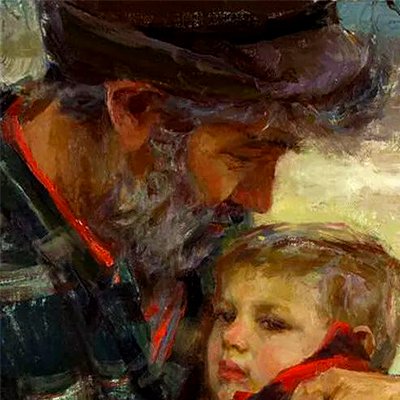
Boys need to be saturated with stories of adventure and bravery. They learn to fight evil by example, and great stories train them to properly recognize evil.
Give them these 43 books instead of Captain Underpants or Diary of a Wimpy Kid.
1. Call it Courage by Armstrong Sperry




Savannah Lee retweeted

“Today, the man wearing red got on the subway, he opened his folder and started reading. 🧐
A few stops later a man got on and asked him “what are you studying for? You look confused, maybe I can help?”
He said my son just failed a math test, and I am re-studying fractions so I can teach him. I am 42 years old and I don’t remember any of this, so I am reteaching myself.
The guy in the black informed him that he use to be a math teacher, and would help quiz him.
Everything the man in the red got wrong, it was broken down and corrected for him.
By the end of the train ride, the man had a better understanding.
He had a new method to go home with to teach his son.
It’s the little things like this that I love seeing, because most people could care less about what the person next to them is going through.
❤️❤️❤️”




Savannah Lee retweeted

Whenever we read the gospels, we see that Jesus had a select group of disciples who came with him for particularly important meetings: Peter, James, and John.
Peter went on to become a major church leader in both Jerusalem and Rome. He also authored two epistles which became New Testament books and his teachings are still studied for inspiration today.
John was Jesus’ closest friend and went on to become a great leader as well. He was the only apostle who died a natural death; apparently he was sentenced to burn but his flesh resisted the flames. John wrote three epistles, his own Gospel (a favorite of many) and perhaps Revelation (could also be another man named John on Patmos).
But what of James, John’s brother?
Truly we know little about him. He surely was a great church leader and a devout believer in Jesus. James was the first apostle to be martyred for Christ, and his death was a cheap attempt by Herod to win support from the Jewish leaders. How sad that this great man’s life was cut short in such a meaningless fashion? Can you imagine the terror of the fledgling church, to lose such a good man to injustice, despite all their prayers?
”About that time Herod the king laid violent hands on some who belonged to the church. He killed James the brother of John with the sword, and when he saw that it pleased the Jews, he proceeded to arrest Peter also. This was during the days of Unleavened Bread.“
Acts 12:1-3 ESV
Peter, sitting in prison, had every reason to believe that he was next on the chopping block. After all, he was guarded by four squadrons of soldiers. And the prayers of the church hadn’t saved James.
”So Peter was kept in prison, but earnest prayer for him was made to God by the church.“
Acts 12:5 ESV
Notice that even after the crushing blow of James’ death, the church was still gathered together in earnest prayer.
Earnest means faithful. That means believing in God’s power for a miracle.
There wasn’t any “Lord, make Peter die quickly,” or “Lord, let him feel little pain,” that night. Even though that’s the sort of prayer many of us would have offered today.
And that very night, an angel of the Lord visited Peter and escorted him out! Chains fell off, locked doors sprung open, and guards slept through it all.
Peter lived! And he went on to serve Jesus in Rome, saving innumerable souls for Christ.
Why did James die, yet Peter live? Do we think that his righteousness wasn’t enough? Did Jesus love Peter more? Did the church make non-earnest prayers on his behalf?
None of us can doubt James’ power and goodness. Jesus dearly loves us all, and surely a favorite disciple was no exception. And the church made constant, earnest prayers, believing in a miracle…yet receiving the harsh reality of persecution.
I have no idea why James died when Peter lived. If ever there were equals in righteousness, it was found in these two men. James’ execution was an injustice, so why did God save Peter but leave James to die?
I’ve no idea.
I’ll never know in this world. So often, our flesh demands “fairness” and grows angry at a God who lets His faithful servants perish. How can this God be good?
Sometimes in our own lives, when we see the righteous suffer and the wicked thrive, our anger burns at the injustice of it all. The prophet Habakkuk cried out to God in such a rage, demanding to know answers. I encourage anyone to read his book; you will relate to chapter one.
Between Job, Habakkuk, Revelation, the gospels, and the epistles, all we know is that some questions won’t have answers in this life. We are commanded to rejoice in the lord, ALWAYS, not just when it’s easy, and to obey Him.
”I have said these things to you, that in me you may have peace. In the world you will have tribulation. But take heart; I have overcome the world.”“
John 16:33 ESV
