

@samjlord.bsky.social Cell biology and microscopy researcher in the @MullinsLab at UCSF. I publish as Samuel J. Lord. https://nitter.cf/t.co/UaP9JgbpmS
San Francisco, CA
Joined October 2008
- Tweets93
- Following793
- Followers1.2K
- Likes5K






Pinned Tweet
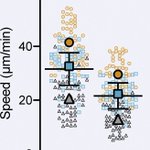
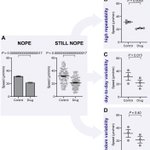
Q: What's wrong with these plots?
A: Pooling cell-level measurements across multiple runs conceals experimental reproducibility. Read more in JCB: rupress.org/jcb/article/219/…


Q: What's wrong with these plots?
A: Pooling cell-level measurements across multiple runs conceals experimental reproducibility. Read more in JCB: rupress.org/jcb/article/219/…
Unfortunately, it turns out that this is AI "enhanced." Nikon updated their article to clarify that the colors and organelles are all generated by AI "post-processing" of "grayscale" data. Very unclear what the raw data actually was. nikonsmallworld.com/masters-…
This quoted post is unavailable.


Sam Lord retweeted

Interested in molecular animation? Give ProteinBlender a try! It's free and open source. animation-lab.github.io/Prot… The latest tools include a DNA builder (shown in the tutorial video below). We'd love to hear what you think! We have short tutorials that cover all the features!
The @MBLScience #mblphysio course has access to an amazing benchtop SEM this summer, from @thermosciEMSpec


Time for #PeerReplication


We propose #PeerReplication: an alternative or augmentation to peer review, where key experiments are reproduced, adding robustness to published findings.
doi.org/10.1038/s44319-026-0…

Solve it with #SuperPlots

What is sample size in neuroscience? And what happens when we get it wrong? Our article in @MolecularAutism explores the prevalence of pseudoreplication, a form of statistical error which occurs when we get this wrong, in the FXS and NDD literature. edin.ac/3ZYkpdI 🧵

Even if it ONLY looked for pseudoreplication, that would solve half the problem.

Hot take for the future of peer review: Journals should start asking for a lightweight AI-based replication check (e.g., via Claude) at submission.
Not to replace reviewers, but to catch coding errors, logic inconsistencies, and reproducibility issues before a paper reaches them. At this point, many of these checks are fast, cheap, and automatable. There’s little reason to rely solely on human detection.
Even with restricted data, this is feasible. Authors can generate simulated datasets that preserve structure and run identical pipelines. The goal is just basic verification.
More broadly, we need to rethink how we use reviewer time. Not every submission needs 3 full human reviews. A more efficient pipeline might look like: editorial triage, AI-assisted checks/review, targeted human evaluation where it matters most. If done well, this could raise standards while reducing burden on the system.
I created a simple ImageJ/Fiji button that toggles the LUT between gamma = 0.45 and 1. The goal is to correct microscopy images for the nonlinear gamma of computer monitors, but do to without changing the underlying pixel values. github.com/samjlord/Gamma_LU…


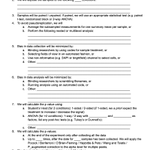
A simple template to help with experimental planning and preregistration. Any suggestions for edits/additions?
blog.everydayscientist.com/t…

Sam Lord retweeted

Researchers propose concept of “peer replication”: “A new tier of science built on reproducibility.”
link.springer.com/article/10…

I made a visual sample size calculator to help use our intuitions about how our graphs typically look to estimate the effect size and the required sample size.
I'm looking for input to make it more useful. Or if you spot bugs.
samjlord.shinyapps.io/visual…

We propose #PeerReplication: an alternative or augmentation to peer review, where key experiments are reproduced, adding robustness to published findings.
doi.org/10.1038/s44319-026-0…
Written tutorials are in the supplementary figures. And a video tutorial for Prism here: youtube.com/watch?si=u56pd2d…
There are also cool Violin SuperPlots by @MartinPlatelet and @IngmarSchoen: molbiolcell.org/doi/10.1091/…
