


Samokwe retweeted

He Came To Beg Me For Support, But Now He Looks Down On Those Who Made Him Governor — Senator Victor Umeh Tackles Soludo Over Ingratitude
Senator representing Anambra Central, Victor Umeh, has accused Governor Chukwuma Soludo of ingratitude, claiming he helped finance his first governorship campaign.
Speaking at the fifth anniversary of The Razor News in Awka on Thursday, Umeh said Soludo approached him for support while seeking to succeed former Governor Willie Obiano.
He said: “He came to my house in Enugu to beg me to support him to become governor. A lot of APGA people wanted to know who I was supporting to succeed Willie Obiano. When I endorsed him in my house in the village, that was when our party started recognising him.
“He was asked to bring N1 billion for his campaign, but he didn’t have it. I mobilised the money for him through friends.”
Umeh alleged that an Anambra billionaire contributed N800 million through his introduction but had yet to be repaid. He also claimed another person donated N100 million in exchange for his wife’s appointment as commissioner, while a South-East governor gave him $100,000, which he handed to Soludo.
He accused the governor of looking down on those who helped him become governor.
Their disagreement followed a dispute over Anambra’s preferred presidential candidate, with Umeh supporting Peter Obi of the Nigeria Democratic Congress (NDC) and accusing Soludo of promoting President Bola Tinubu. The rift worsened after a billboard featuring Umeh and Obi was pulled down.
Umeh insisted Soludo could not dictate how Anambra residents should vote.
He said: “But one thing I know is that Soludo cannot tell our people where to vote. Come January 16 presidential election, our people will vote Mr Peter Obi overwhelmingly, and he will see that he does not have the capacity to tell anyone where to vote.”

Samokwe retweeted

Let’s hold Tinubu accountable for once; he’s a public servant, not a deity.
Here is Tinubu’s 2023 campaign manifesto. Did he fulfill any of them?
Let’s find out below:👇
1) Fuel subsidy: ✅
Consequences: Petrol price jumped from N185 to over N1,500. This reckless decision fueled inflation and reduced purchasing power.
2) Electricity: ❌
Not achieved: 15,000 MW by 2025, average generation still around 4,000–5,000 MW. Frequent blackouts continue.
3) Security: ❌
Not achieved: Insecurity remains widespread in the North-West, North-Central, South-East.
4) Economy & Jobs: ❌
Create jobs, reduce poverty:
Not achieved: Unemployment and underemployment remain high; many companies shut down and left due to high inflation.
5) Exchange rate: ❌
Stabilization of the Naira:
Not achieved: Naira depreciated sharply from N460 to over N1,500–1,600 per dollar.
6) Inflation: ❌
Bring inflation to single digit:
Not achieved: Inflation peaked above 34% and remains high.
7) Education: ❌
Free education up to tertiary level:
Not achieved: Public universities still struggle with funding and ASUU strikes.
8) Healthcare: ❌
Universal health & better hospitals: Not achieved: Many still travel abroad for treatment; primary healthcare remains weak. 99% of government hospitals have no light or ambulance services.
9) Infrastructure: ❌
Good roads, rail & housing projects: Not achieved: Majority of roads and rail projects are in poor condition.
10) Agriculture: ❌
Food security, reduce imports:
Not achieved: Food inflation remains high; insecurity affects farming causing hunger and high cost of foodstuffs.
11) Anti-corruption: ❌
Not achieved: Systemic corruption continues. Yahaya Bello and Ifeanyi Okwa are still walking free.
12) Youth & Women:
Empowerment programmes, jobs: Not achieved: Many promised special programmes have ceased to exist due to lack of funding.
Four years of total failure!
If you’re sincere to your conscience, you and I know that Tinubu does not deserve a second term.
RT for those at the back !!!
Samokwe retweeted

Peter Obi passing through Ochanja Market Onitsha.
This is the first time in a very long time any human being is pulling this weight in Anambra.
For market people to leave what they're doing to come see you or cheer you up is rare, especially in Onitsha.

Samokwe retweeted

Watch: Oyo People Chant “Tinubu Must Go” While He Was Making His Speech.
No copyright infringement intended. DM for credits.

Samokwe retweeted

More videos show NDC presidential candidate, Mr Peter Obi, passing through Upper Iweka, Onitsha, Anambra State, ahead of the Obi-Kwankwaso town hall meeting.

Samokwe retweeted
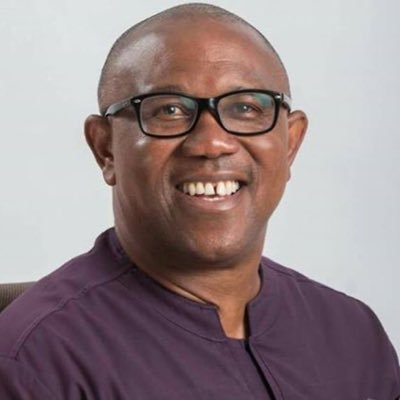
NIGERIANS, GO AND VERIFY (4)
Building a Healthy Nation: Our Health Sector Record in Anambra
Peter Obi
In the previous instalment of this series, I discussed our investments in education and explained why we considered human capital development central to the progress of Anambra State. Another sector that received considerable attention under our administration was healthcare. We understood that education gives people the tools to build their future, while good healthcare enables them to live healthy and productive lives.
When we assumed office in 2006, the healthcare system in Anambra faced serious challenges. Our health institutions required rehabilitation, medical equipment was inadequate, many communities lacked accessible primary healthcare facilities, and several medical training institutions had not secured accreditation. We therefore decided to approach healthcare as a comprehensive development priority, rather than concentrate resources on a few prominent hospitals.
Under our Anambra Integrated Development Strategy (ANIDS), we invested simultaneously in primary, secondary, and tertiary healthcare, medical training, maternal and child health, medical equipment, and partnerships with religious and private institutions.
Our approach was simple: healthcare should be accessible to people wherever they live, and the quality of treatment they receive should not depend on their status or whether they live in a city or a rural community.
Building a Teaching Hospital and College of Medicine
One of our most significant achievements was the establishment of the Chukwuemeka Odumegwu Ojukwu University Teaching Hospital at Awka.
We initiated, constructed, equipped, and secured accreditation for the institution, building it virtually from scratch. When I discovered that the state university was admitting medical students without having a teaching hospital through which they could complete their training, possibly with the intention of assigning them elsewhere, I considered the situation unacceptable. We therefore embarked on the construction of a modern teaching hospital to address this deficiency.
We constructed more than 25 buildings and provided facilities for the College of Medicine, laboratories, pathology, accident and emergency services, pediatrics, male and female wards, special wards, consultant clinics, and other essential departments.
We also provided vehicles, including ambulances and staff buses, to support the hospital and the College of Medicine as part of the accreditation requirements.
The objective was not merely to build another hospital but to establish an institution capable of providing specialist healthcare while training the next generation of Nigerian medical doctors.
Rehabilitating General Hospitals
We also recognized that a teaching hospital alone could not meet the healthcare needs of the population. General hospitals had to function effectively because they provide the essential link between primary healthcare and specialist treatment.
We rehabilitated and resuscitated 15 general hospitals across the three senatorial zones of Anambra State. We undertook substantial improvements in their buildings, wards, equipment, and general facilities.
In 2013, we provided ₦400 million for the ongoing renovation of 11 selected general hospitals, alongside other healthcare interventions.
Our intention was to ensure that people did not have to travel unnecessarily long distances to obtain basic secondary medical care.
Taking Primary Healthcare to the Communities
We believed that the best healthcare system is one that prevents illnesses and treats people early, rather than one that waits until minor health problems become emergencies.
That informed our extensive investment in primary healthcare. We built over 120 primary healthcare centers across communities in the 177 autonomous communities of Anambra State and rehabilitated existing facilities.
Samokwe retweeted

During my days as Director of Socials at the University of Nigeria, Nsukka. Boy, how time flies! I was just 19 when I took this picture. I was also an undergraduate activist who participated in the February 1974 student protests commemorating Kunle Adepeju.

Samokwe retweeted

DAY 11: Daniel Ojukwu remains in detention over his investigation exposing misappropriation of public funds by the office of the Senior Special Assistant to the President on Sustainable Development Goals (OSSAP-SDGs) headed by @AO_Adefulire.
1/3
#FreeDanielOjukwu


DAY 10: Daniel Ojukwu remains in Kuje Prison for exposing mismanagement of Public Funds.
The Nigerian state continues to weaponise the Cybercrime Act against journalism, despite its importance to democratic development.
#FreeDanielOjukwu.
#JournalismIsNotACrime

Samokwe retweeted

Soludo will finally have to refund Tinubu's money. 🤣🤣🤣🤣
@aonanuga1956, let Tinubu try this in Lagos. We want to see something. 🤡🤡🤡
Samokwe retweeted

The Nigerian Chief Justice of the Federation (CJN) was at Tinubu’s event yesterday, smiling while Tinubu was abusing opposition members.
Dear Madam, Nigerians will not want to spend 2027 in court over disputed election results. Use your good office to prevail on INEC to ensure free, fair, transparent and credible elections.
Nigerians want an election whose outcome truly reflects the wishes of the people.

Samokwe retweeted

The Lebanese Billionaire Who Owns
Nigeria
In 2004, the chairman of Nigeria’s anti-corruption agency set a trap. He’d been building a case for months against a man he believed was at the centre of one of the largest financial crimes in Nigerian history. The plan was to lure this man to a remote airstrip and arrest him the moment he stepped off his private jet.
The officers were in position, the indictment was ready, the plane touched down, and then someone tipped off the pilot by radio. The engines roared back to life. The plane accelerated down the runway and lifted off, leaving Nigerian airspace entirely.
The man on that plane was named Gilbert Chagoury. But who is this man, and how has he managed to build one of the largest portfolios of government infrastructure contracts of any private citizen in Nigeria?
High in the mountains of northern Lebanon, there is a village called Miziara, population about 15,000, Maronite Catholic, remote, and for nine months of the year almost empty. Because the working-age residents of Miziara are somewhere else, they are in Nigeria, working for one family.
That family is the Chagourys. Gilbert Ramez Chagoury was born in Lagos on the 8th of January 1946. His parents, Ramez and Alice, were Lebanese immigrants who had settled in Nigeria in the 1930s.
Gilbert was sent to Lebanon for school, came back to Nigeria as a teenager, and started working in sales, cars first, then flour milling with his father-in-law. And in 1971, at 25 years old, he and his younger brother Ronald founded the Chagoury Group. Construction, real estate, flour mills, hotels, it’s a lengthy list.
Over the next two decades, the Chagoury Group became one of the biggest conglomerates in Nigeria, with approximately 20,000 employees by the company’s own account, a business empire built in the country his parents chose as home. His supporters call him a builder, a visionary, a man who bet on Nigeria when others left. But there’s a dark side to the emergence of this empire.
On a flight to the oil-rich city of Port Harcourt, Gilbert Chagoury sat down next to a military officer named Sani Abacha. They talked, and then they became friends. That friendship would shape Nigeria in so many ways.
In November 1993, Abacha dissolved Nigeria’s democratic institutions, cancelled a presidential election, and installed himself as head of state. He would rule for five years, and in that time an estimated $2–5 billion would vanish from the national treasury, hidden in banks across Switzerland, Luxembourg, Liechtenstein, and the Isle of Jersey. Gilbert Chagoury didn’t just know Abacha during those years, he became indispensable to him.
Philippe Vasset, the long-time editor of Africa Energy Intelligence in Paris, a man who tracked the intersection of oil, money, and African politics for decades, described Chagoury’s role in a single sentence: “He was the gatekeeper to Abacha’s presidency.”
And to understand what that gatekeeper does, we need to go inside this one room. Now imagine you are Bill Richardson, a US congressman.
President Clinton has sent you to Nigeria to pressure Abacha on human rights. You’ve just spent hours across the table from one of the most feared men in Africa. Abacha doesn’t blink, he doesn’t concede. You walk out exhausted, and then your handlers take you somewhere else, a private home.
There’s a man waiting. You’ve never heard of him. He’s not a government official, he holds no title, and then he offers you pizza. You sit with him for an hour and a half. He’s charming, he’s knowledgeable, he seems sympathetic to Washington’s concerns about the regime in Nigeria. So you leave thinking you’ve made a useful contact. But what you don’t know is that the man sitting across from you is the gatekeeper of the regime you just came to pressure.

Samokwe retweeted

It is disturbing that history appears to be repeating itself. The experience brings to mind the tragic story of Dele Giwa. Must speaking truth to power continue to come at such a terrible cost?
O lagbara gan💔


Samokwe retweeted

I love watching this series and this is what you get when you have bright innovative minds at work!!!!
The way the song changed when Peter Obi stepped in eh, I just shouted “Okwute!!!!!!”

Samokwe retweeted

Daniel, I hope someone tells you that today, thousands of miles away from home, some people stood outside the Nigerian High Commission and called for your freedom.
You deserve justice, and no one should have to face injustice alone.
Even if the streets become empty, some of us will remain. We will do this again. And again. Until you are free. #FreeDanielOjukwu #Journalismisnotacrime


Samokwe retweeted

🇳🇬 Nigerian authorities should release @fijnigeria journalist Daniel Ojukwu (@Mazi_OJD) and drop all charges against him and FIJ founder Fisayo Soyombo (@fisayosoyombo) over reports questioning spending by the office of a presidential aide on Sustainable Development Goals.
