

Researching tax, inequality, and industrial policy. Formerly @ LSE, Brookings, UChicago.
Washington, D.C.
Joined July 2020
- Tweets846
- Following529
- Followers3.7K
- Likes7.1K




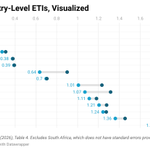

One of the dirty not-so-secrets of AI taxation: under current law, debt-financed capital investments (including, but not limited to, those in data centers) face a tax rate of around -46%. Yes, NEGATIVE 46 percent. (1/n)


“The AI buildout is one of the biggest economic bets in US history, and the tax code is encouraging companies to make it with borrowed money.” Read more from Thomas Brosy & @elenaspatel: tpc.io/48rI9uv

But when debt-financed capex by hyperscalers is already high and rising, and further accelerating AI investment may have detrimental effects on economic, social, and financial stability, removing this massive incentive for debt-financed AI investments feels like a bare minimum.

1
2
86

Sam Thorpe retweeted

!!: The federal tax code is helping pay for that borrowing. When these companies borrow to buy computing equipment, the tax rate on that investment is -46 percent. Instead of taxing the profits from this investment, the tax code effectively adds 46 cents to every dollar it earns"
“The AI buildout is one of the biggest economic bets in US history, and the tax code is encouraging companies to make it with borrowed money.” Read more from Thomas Brosy & @elenaspatel: tpc.io/48rI9uv
Sam Thorpe retweeted

🚨This week’s review!—Adrian Randall’s ‘Before the Luddites’. Going deep on when people resist the spectre of technological unemployment (and on when they don’t), via the English woollen industry in the Industrial Revolution.
unevenandcombinedthoughts.su…

Sam Thorpe retweeted

What do the Americans with Disabilities Act, the last minimum wage increase, and significant expansions of the Clean Air Act and civil rights laws have in common?
They were passed by D Congresses despite an R President.
A thread on how Ds should approach the next 2 years. 1/
Sam Thorpe retweeted

This is a wonderful thread on the discussion of how AI is affecting productivity.
Main take away: the documented trends amongst AI exposed firms for hiring/employment/productivity started well *before* LLMs, so likely not causal effect of AI or at least an interaction (I’m personally in the latter camp).

Quick thread on AI and productivity:
Lots of people say this chart shows AI is now showing up in the productivity data.
But I made this chart to argue the opposite: a trend that pre-dates AI and only shows up in the US doesn’t look like AI.
Here’s how I’m thinking about the data and underlying dynamics:

Sam Thorpe retweeted

All of these countries have access to the same LLMs.
This raises the likelihood that what’s behind the US productivity boost is less about AI-augmented task productivity & more about something else like mechanical AI capex effects… or something besides AI entirely.
This quoted post is unavailable.
Sam Thorpe retweeted

Nearly two years ago, I interviewed a woman who runs a successful modeling agency.
She started as a receptionist and worked her way up. Most of their work was shooting models for catalogs. Each shoot required an entire cast: the model, yes, but also the stylist, makeup artist, photographer, lighting.
At the time, I was at Brookings, poring over exposure data from OpenAI. In that data, fashion models didn’t look “exposed” to AI at all. Models couldn’t use ChatGPT to save time on doing their job tasks, like a software engineer or social media manager could.
But the woman who ran the modeling agency had no hesitation. She saw what was coming (per this video) a million miles away. She posited: Why would the Nordstroms of the world pay hundreds of thousands of dollars for a shoot if they can just use AI models? She told me it was bleak. If she wasn’t so close to retirement, she would have been distraught, especially if she was in the thick of raising her kids.
I have never forgotten that conversation. Whenever I would hear someone repeat, tritely, “you won’t lose your job to an AI. You will lose your job to someone else using AI,” I would think of her. All the AI skills in the world weren’t going to save her livelihood and the business she had poured blood, sweat and tears into.
The data we are using to track “exposure” misses an example like this when AI is so disruptive the whole industry shifts. The makeup artist, the photographer, the stylist, the lighting person: AI might not be able to be used to replace those jobs directly. But if AI simply automated modeling, it could take demand for those roles with it.

AI has tremendous promise for helping make economics more rigorous and replicable. This does not do that. It's embarrassing and should not have been posted. But it's even worse because so many of the 'errors' discussed here have already been extensively discussed and adjudicated!

Errors in the research of Emmanuel Saez and Gabriel Zucman marginalrevolution.com/margi…

I'm especially invested in this debate because in 2023 (with Bill Gale and John Sabelhaus) I spent weeks evaluating the assumptions made by PSZ and Auten/Splinter and writing them up for the public. Economists have spent years researching these issues. brookings.edu/articles/measu…


Sam Thorpe retweeted

This is so obviously silly I have a hard time believing anyone would take it seriously. You can't do economics this way, you can't even think this way. It's anti-intellectual. marginalrevolution.com/margi…
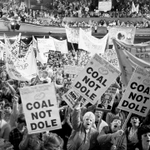
Loved working with @Mollykinder on this piece on automation and the meaning of work. We titled earlier drafts “people are not deck chairs:” the conversation around AI job loss too often defaults to moving people around between jobs, ignoring their preferences, skills, and dreams.

Not everyone is a mathematician, and not everyone in past periods of job loss was a miner or an artisan. But if we want to respond adequately to the hollowing out of skilled knowledge work, we must learn from our past failures to consider the personal meaning of work.
1
1
55
You can read the piece here - would love to hear your thoughts.
substack.com/home/post/p-221…
1
31