
Former Member Energy at the Planning Commission
Islamabad
Joined October 2009
- Tweets5.8K
- Following1.3K
- Followers2.2K
- Likes3.3K
Shahid Sattar retweeted

Pakistan’s most expensive lottery isn’t a jackpot. It’s the CSS exam.
• 43,189 candidates sat the first stage this year — only ~250 will become officers
• Odds from the first paper: just 0.6%
• Preliminary MCQ passes 85% (screens almost nobody)
• Written stage pass rate: 2.74%
• The queue burns ~PKR 11 billion a year — roughly PKR 44 million per officer
• That’s more than 50 years of an ordinary graduate’s earnings
• Candidates effectively value the post at PKR 60m+ because of rents (houses, cars, plots, status, tenure), not the salary (BPS-17 starts at only PKR 54k/month)
We call this merit. A better name is rent dissipation.
Talent is locked into exam-specific preparation that the private sector barely values, while the brightest chase power instead of production.
Read @nadeemhaque’s full analysis in Business Recorder:
brecorder.com/news/40446936/…
#CSS #Pakistan #Bureaucracy #Merit #RentSeeking

Karachi is hub of Pakistan’s commerce, manufacturing, finance and international trade. Its ports, factories, supply chains and services underpin export earnings employment. Reliable electricity critical national infrastructure.
profit.pakistantoday.com.pk/…
@MoWP15 @karachielectric

Shahid Sattar retweeted

What we have already decided
We speak of the future as if it were open. This map suggests otherwise.
The children on it were under five when they were measured. In the 2040s they will run our farms, offices and factories; in the 2060s they will be the parents and taxpayers on whom an ageing country leans. Two in five of them are stunted. Whatever we choose to do now, for them this part of the future has already been decided, before they could choose anything.
A child’s height at two is a kind of ledger. It records, with no possibility of appeal, whether her mother ate, whether the water was clean, whether someone helped when she had diarrhoea, whether anyone thought she mattered enough to reach. The ledger in Gujrat reads one way. In Thatta it reads another. In Haripur and Kohistan, a hundred and fifty kilometres apart, the same province records two different countries.
We like to believe this is history, or geography, or poverty, things that happen to us. But the greenest districts were never the richest land. They were the places where girls went to school, where men found work beyond the village, where the state and the market arrived. The map is not a record of what nature gave us. It is a record of whom we chose to reach.
We are a society that discounts the future heavily. We defer, we borrow, we promise. But children cannot be deferred. The first thousand days do not wait for a better budget year.
Somewhere in Jamshoro a girl stunted in 2018 will be a mother by 2045. What we failed to give her, she will not be able to give her child.
The question this map asks is not about them. It is about us.

Remittances are a poison
When atif mian says it is listened to
brecorder.com/news/40443695
@nadeemhaque

1
86
Shahid Sattar retweeted
Islamabad is losing its soul.
• Road expansions & underpasses prioritise cars over people
• Anti-encroachment drives hit outdoor cafés & small businesses
• Mature trees & green spaces sacrificed for more concrete
@sattars & @nadeemhaque argue the capital needs planning that values pedestrians, livelihoods and liveable public spaces — not just wider roads.
thefridaytimes.com/20-Oct-20…
#Islamabad #UrbanPlanning

Shahid Sattar retweeted
This is farcical! They shd have asked an ex prisoner to share what really happens. My daughter & son in law are both in Adiala & Imaan had a chest infection where she was denied medical attention till she collapsed & we made a public hue & cry & also officially complained. Hadi has developed Diabetes & an uneven heartbeat in jail. We are still trying to get his medicine prescription so we can get the medicines ourselves. They do blood tests of prisoners but do not share the results even with the prisoners. & much more incl questionable deaths.

DISCOs on the anvil, but the K-Electric experience exposes a credibility gap: why commit long-term capital if approved tariffs can be rewritten? Successful privatisation requires legally binding tariff frameworks, an independent regulator with consistent enforcement
1
163
The K-Electric tariff dispute sends investors a troubling message: approved rules can change after commitments are made. Utilities cannot plan investment or remain financially viable on shifting tariffs. Pakistan needs regulatory credibility to attract capital @nadeemhaque
Pakistan cannot court investment while moving the regulatory goalposts. Revising K-Electric’s approved tariff framework sends a blunt message: long-term commitments face short-term rule changes. Energy investment needs predictable rules.
1
104
Illogical and much delayed revision of ke tariff by nepra raises questions of impartiality epaper.brecorder.com/2026/09…

1
110
Shahid Sattar retweeted
If planning commission is doing projects that are not leading to growth and accumulating debt, should we ask questions?
Should there be such a planning commission?
Shahid Sattar retweeted

🇵🇰 Pakistan has no shortage of people demanding change.
But what are those demanding national renewal prepared to change in themselves?
We demand merit, then seek connections. We demand accountability, then protect our own side.
✍️ @sattars
🔗 thefridaytimes.com/08-Sep-20…

Shahid Sattar retweeted

This is not a Victorian survival operating beyond our control. It is a postcolonial ruling arrangement created through Pakistani statutes, rules, notifications, budgets and discretionary orders.
@Huzaimabukhari @sattars @nadeemhaque
thefridaytimes.com/06-Sep-20…

Shahid Sattar retweeted
A sharp historical argument: decolonisation cannot mean simply replacing foreign rulers with local ones while keeping the same upward, command-oriented bureaucratic structure intact.
By @sattars & @nadeemhaque
thefridaytimes.com/03-Sep-20…

Shahid Sattar retweeted
Pakistan’s DC system isn’t just administrative—it’s the institutional heir of a colonial extractive state. Built for upward control & revenue extraction, not citizen service. Decolonization requires redesign, not renaming.
By @sattars & @nadeemhaque
thefridaytimes.com/03-Sep-20…
Shahid Sattar retweeted
Privatization to the same old Seth families is no privatization. It is gifts of monopolies to same old favored families.
. A new form of IPPs.
Shahid Sattar retweeted
People, don’t let politicians hide behind “political engineering.”
• The fight for power is driven by greed
• They borrow without discipline
• Who signed the IPPs?
• Who built unnecessary flyovers?
• Who borrowed for bad projects?
• Who doled out money for political patronage?
• Who used the civil service for their own ends?
• Who increased perks, plots & patronage?
• Who captured/fortified institutions?
• Who weakens parliament?
• They bow to foreign powers for debt and let their consultants make policy
• They gatekeep their own research and intellect — build universities not for knowledge, but just to fill kids
• They pretend to be know-it-alls, lord over institutions, and give no respect to knowledge
They come in as MNAs, then grab ministerial posts & PSDP funds.
They have a lot to answer for.
Shahid Sattar retweeted
Spatial equity in the US
Your zip code still shapes life chances more than talent or effort in too many places.
•Quality schools, healthcare, and safe streets remain heavily concentrated in certain metros and neighborhoods
•Reliable transit, broadband, and job access lag in rural areas and many inner-city blocks
•Clean air, parks, and environmental amenities are unevenly distributed, often along historical lines of segregation
•Economic opportunity clusters where density, infrastructure, and networks already exist—leaving other regions behind
•Fair geography isn’t about identical outcomes everywhere; it’s about ensuring location doesn’t permanently lock people out of basic opportunity
Is absolute spatial equality possible?
No. Absolute spatial equality is neither feasible nor desirable. Geography is inherently unequal—climate, terrain, natural resources, coastlines, and population density differ by design. People also sort by preference, skills, and culture. Forcing identical distribution of every amenity would ignore economies of agglomeration, comparative advantage, and individual choice, while creating massive inefficiencies. The realistic goal is spatial equity: reducing avoidable barriers so that talent and effort matter more than the accident of birthplace.
Shahid Sattar retweeted

@akleghari sb The idea of utilizing lower daytime electricity tariffs & battery storage appears promising in theory. Yet without subsidies or accessible financing, this benefit remains out of reach for most households. The key question is: how can low-income and salaried families realistically afford the high upfront cost of battery storage systems? Any energy policy genuinely aimed at public relief must prioritize affordability and accessibility for the common citizen. #Electricity #EnergyPolicy #Pakistan @APTMAofficial @PrgmeaOfficial @TextilePtea @HosieryPak @ThePBC_Official @betterpakistan @GovtofPakistan @PakTexCouncil @sattars @SMTanveerpk @Gohar_Ejaz1

Shahid Sattar retweeted
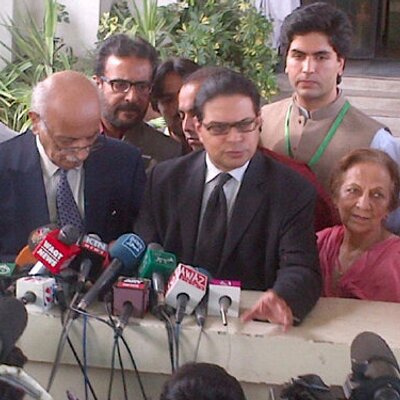
PTI vs a failed order thenews.pk/print/1407414-pti… PTI today stand as the major force against an oppressive order based on electoral fraud, violation of human dignity & suppression of the right to a free and impartial judicial process, the right to speak, to associate and to mobilise
