

The fear of the Lord is the beginning of wisdom
🇫🇷
Joined September 2022
- Tweets2.8K
- Following307
- Followers66
- Likes37.1K




Pinned Tweet
The whole project of world government -- going back to the League of Nations -- has been funded and manipulated mainly by wealthy bankers.
1
4
757

strain retweeted

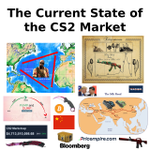
Hey @CounterStrike
CS2 has a massive untapped opportunity: turning Counter-Strike into a platform powered by its own community
Counter-Strike was never just about competitive 5v5
Remember Surf, Bhop, Jailbreak, Zombie Escape, BaseBuilder, Only AWP, Hide&Seek and countless other community modes? For many players, these were the reason to launch CS every day
Imagine bringing that experience back, but on a completely different scale
DISCOVER Tab
community-created modes directly from CS2's main menu, see player counts, explore trending maps and join friends with one click
Creator Economy
Reward talented mapmakers and developers based on genuine player engagement, similar to Fortnite Creative Give the community an incentive to continuously create new experiences
A New Generation of Players
Not everyone wants to grind Premier or FACEIT Millions of potential casual players could discover CS2 through fun community modes, stay for the social experience and eventually explore competitive gameplay
Valve already has the Workshop, community servers and powerful creation tools
The missing piece is connecting everything into an accessible ecosystem
More content > More casual players > Better retention > A bigger and healthier Counter-Strike ecosystem
And the best part? The community would create much of that content itself
The next generation of Counter-Strike players might not discover the game through competitive matchmaking They might discover it through the community #CS2
🤖 Made with AI

ALT AI Concept


strain retweeted

This shit is like astrology for man

Bitcoin is now perfectly mirroring the pattern from 2017 and 2021.
According to this chart, $BTC will dump from $65,000 to $35,000 in 10 days.
Are you actually prepared for that scenario?
Readers added context they thought people might want to know
Bitcoin is not perfectly mirroring 2017 or 2021 cycles, which differed in shape and saw major drawdowns over months to a year, not 10 days; the chart does not predict a $65k to $35k drop.
tradingview.com/chart/BTCUSD/k…
kumocast.io/research/bitco…
okx.com/en-us/price-hi…
bittery.io/posts/bitcoin-…
strain retweeted
Under pressure from Israeli prime minister Benjamin Netanyahu, the Trump administration may be within days of launching a nuclear strike on Iran. The target would be Pickax Mountain in central Iran, where Israeli intelligence claims the Iranian government has restarted its nuclear enrichment program. No conventional weapon in the American arsenal can penetrate 300 feet of solid granite to destroy the tunnels where enrichment is supposedly taking place. The only military option is a nuclear strike. Netanyahu has been pushing hard for one. “Bibi calls Trump about it every day,” says an informed observer.
Netanyahu is cornered and desperate. After last week’s election results, he can’t form a government unless Trump intervenes directly in Israeli politics and brokers a deal with other parties that gives Netanyahu 61 seats in the Knesset. Otherwise, he is out as prime minister and on his way to ignominy, investigations and possibly jail. Netanyahu must stay close to Trump. He needs this war.
To that end, he’s applied maximum pressure to his closest allies in the administration, including Secretary of Defense Pete Hegseth and CENTCOM commander Brad Cooper. Both oppose a negotiated settlement to the war they’ve so grievously mismanaged; both are pushing to restart major combat operations. Secretary of State Marco Rubio and CIA director John Ratcliffe are also following Netanyahu’s lead, as are leaders of the Democratic Party. In a recent meeting on the subject, former president Barack Obama said he opposes the current Iran peace deal being drafted in Doha.
The rest of America’s longtime allies in the Middle East are terrified by the prospect of more war. On September 27th, Netanyahu flew secretly to Abu Dhabi to enlist the UAE in his lobbying effort for a final attack on Iran. The Emiratis refused. After eight months of conflict, Gulf economies are teetering. So are global energy and fertilizer markets. They won’t recover soon. Globally, there are a total of about 850 supertankers used to transport oil from producers to the rest of the world. In October alone, 11 of them were badly damaged in Hormuz. At this pace, a global depression is imminent. A nuclear strike would radically accelerate the destruction. Fallout from a ground explosion at Pickax Mountain would contaminate the Persian Gulf, poisoning the water supply for 100 million people.
And those are just some of the immediate consequences for the region. The rest of the world is every bit as exposed. No country other than the United States has ever used a nuclear weapon in war. Some would like to. An American nuclear attack on Iran would set a new precedent. The Russians have already told at least two other governments that an American nuclear strike on Iran would free them to use nuclear weapons against Ukraine. Pakistan and India would be tempted to do the same against each other, as would North Korea against Seoul. After the first nuclear strike, World War Three is inevitable. That war would be short and final.
We’ve been sleepwalking toward this moment for months. Since February, the administration has quietly rewritten America’s nuclear doctrine to make first use of so-called “battlefield nukes” easier and therefore more likely. No one in Washington in either party seems bothered by this. Now we’re on the brink of it.
Close observers say Trump is likely to decide by next weekend whether or not to use nuclear weapons. That would be November 7, six days from now. To his credit, he’s hesitating. At the moment, Trump is listening to his vice president, JD Vance, and to his envoy and friend Steve Witkoff, both of whom argue a deal with Iran can be made.
They’re right, though it won’t be simple. The Iranians are famously frustrating to negotiate with under any circumstances, and elements of that government have become more radical since Ayatollah Ali Khamenei and his family were killed in February. After decades of isolation, even relatively moderate Iranian leaders seem confused by how decisions are made in the West. (There is a widespread belief in Tehran, for example, that the United States government controls Israel.) But overall, people who have spoken to decision-makers in Iran say there is consensus there that more war is bad for everyone and a deal is worth making.
One group that hasn’t been consulted so far is the global population — the hundreds of millions of people who will be killed along with their children if Trump is pushed by Netanyahu into launching a nuclear strike next week. Now would be the time for them to speak up.
strain retweeted

OpenAI CEO Sam Altman believes people owning RAM is wasteful, and that it belongs in data centers instead.
"From a global allocation perspective, actually, it’s quite terrible to have everyone have a bunch of the world’s limited supply of DRAM sitting in their own computer."


strain retweeted

0.001% TAX
A junior auditor at @PwC in Luxembourg is getting ready to leave his job. Before he goes he goes looking for some training documents to take with him.
Instead he finds a folder that anyone in the company could open. No password. No warning. Just sitting there.
Inside are hundreds of secret deals between the Luxembourg government and some of the biggest companies on the planet. Deals that let them pay next to nothing in tax.
His name is Antoine Deltour. He copies 30,000 pages. That is the whole story. He copies a folder.
Let me explain what was actually in it, because this is where it gets interesting.
Between 2002 and 2010, PwC alone helped broker 548 of these secret tax agreements, known as tax rulings, for over 340 companies. Apple. Ikea. Pepsi. Disney. Deutsche Bank. AIG. Koch Industries. Skype. GlaxoSmithKline. Coach. Abbott Laboratories. Household names, every one of them.
The trick was simple. Companies moved profits through Luxembourg shell structures and Luxembourg quietly agreed in writing to look the other way on tax.
Some of these companies ended up paying an effective tax rate under 1 percent. In some cases as low as 0.001 percent. On billions of dollars.
Who was running Luxembourg for almost 20 years while this machine was built and protected? Jean-Claude Juncker, Prime Minister of Luxembourg until 2013.
Deltour did not leak straight to the world. In 2012 he passed the documents to French journalist Edouard Perrin, who used them for a TV documentary.
PwC noticed and filed a complaint with the Luxembourg courts. Then in November 2014, ICIJ @ICIJorg pulled together over 80 journalists across more than 30 media outlets in 26 countries and published the full scale of it as LuxLeaks.
The timing could not have been worse for Juncker, or depending how you look at it, could not have been better. He had just been elected President of the European Commission days before the story broke. The man who ran the tax haven for two decades was now running Europe.
A month later ICIJ dropped LuxLeaks 2, showing the other Big 4 accounting firms Deloitte, EY and KPMG were running the exact same playbook. This was never one bad apple. It was standard practice.
Juncker faced a no confidence vote in the European Parliament over it. He survived. Deltour was not so lucky.
December 2014, Luxembourg charges him with theft, violation of trade secrecy and fraudulent access to a computer system. He is facing up to 5 years in prison and a fine of 1,250,000 euros. For opening an unlocked folder on his way out the door.
April 2016, the criminal trial. Deltour and his colleague Raphael Halet, another former PwC employee who leaked a second batch of documents, are both convicted. Deltour gets 12 months suspended and a 1,500 euro fine. Perrin the journalist is acquitted.
Deltour appeals. Loses. Appeals again. Finally in May 2018 the Luxembourg Court of Appeal fully recognises him as a genuine whistleblower under European Court of Human Rights standards and acquits him completely.
Halet's fight took even longer. He lost his Luxembourg appeals and only won at the European Court of Human Rights Grand Chamber in 2023, nearly a decade after he first spoke up.
The European Commission that Juncker went on to lead never opened a single formal investigation into a single LuxLeaks tax ruling. Not one. It did chase Starbucks, Fiat and Amazon over separate deals, but the mountain of paperwork Deltour handed over sat there untouched.
So that is the LuxLeaks story. Build a tax avoidance machine for 20 years and get promoted to run the continent. Copy the evidence of it and spend most of a decade fighting to stay out of prison.
@BBCNews · @ICIJorg · @Reuters · @lemondefr and others.
strain retweeted

Quand j'ai déménagé au Japon il y a une vingtaine d'années, la première chose qui m'a marqué, c'est que tout était japonais.
Les téléphones portables étaient Sony, Sharp ou Panasonic.
Les téléviseurs étaient Toshiba.
Les voitures étaient Honda et Toyota.
Les trains étaient Hitachi et Kawasaki.
Les escaliers mécaniques, les climatisations et les ascenseurs étaient Mitsubishi.
Toute l'infrastructure matérielle du pays semblait construite sur place.
Un ami marocain m'a dit qu'il avait eu la même sensation en venant en France pour la première fois il y a fort longtemps.
Des voitures françaises, des trains français, des ascenseurs français. Les téléviseurs étaient Thomson, les ordinateurs de l'administration étaient Bull. Il y avait même des téléphones portables Alcatel et Sagem. (J'en avais un, c'était pas ouf, et pas le sommet de la classe comparé au Nokia 3310, mais ça existait. Sagem vendait plus de mobiles en France que Nokia en 2004.)
En venant du Maroc, tout cela semblait très impressionnant et nouveau.
Nvidia produisait ses puces en France La toute première, en 1995, puis la RIVA 128 de 1997 qui a sauvé la boîte de la faillite : les deux sont sorties des usines de SGS-Thomson, l'ancêtre de STMicroelectronics. Nvidia était alors une start-up d'une centaine de personnes qui cherchait quelqu'un pour graver ses puces, et c'est chez nous qu'elle l'a trouvé. L'année suivante elle a pris TSMC en second fournisseur, puis l'a gardé seul. Nvidia vaut aujourd'hui deux fois l'ensemble du CAC 40.
20 ans plus tard notre environnement matériel et donc industriel est de moins en moins français. Thomson a cédé ses téléviseurs au chinois TCL en 2004, Alcatel ses mobiles la même année, Sagem a disparu des rayons en 2008. Nous avons aussi lâché la course aux puces : l'alliance Crolles 2, qui devait faire de l'Isère la pointe européenne de la gravure, est morte fin 2007 quand Philips et Motorola s'en sont retirés, et ST-Ericsson, dernière tentative européenne de fabriquer des processeurs de smartphone, a fermé en 2013 avec près de trois milliards d'euros de pertes. Les puces qui entraînent aujourd'hui les modèles d'IA sortent presque toutes de Taïwan.
Même histoire en robotique. Nao, le petit humanoïde conçu à Paris par Aldebaran, est devenu le robot officiel de la RoboCup, la coupe du monde des robots. Aldebaran a été vendu au japonais SoftBank en 2012, revendu à un groupe allemand en 2022, placé en redressement judiciaire en 2025. Les robots industriels de Renault, eux, étaient déjà passés sous pavillon italien à la fin des années 1990.
Cela ne fait pas mal par patriotisme blessé, pas même par ses conséquences sur la prospérité et l'emploi, peut-être même pas comme rappel constant des choix désastreux faits en conscience par une élite politico-industrielle sans vision.
Cela fait mal car alors que nous entrons dans un nouveau monde de tensions géopolitiques, notre capacité à maîtriser notre propre infrastructure industrielle est la seule garante de notre liberté.
Ce n'est plus théorique. Les Chinois menacent de couper les accès aux terres rares si nous ne laissons pas leurs produits finir d'achever notre industrie. Les Américains coupent les accès aux modèles IA les plus avancés quand ils craignent qu'ils puissent être trop puissants pour en laisser l'usage à leurs vassaux.
Nous sommes entrés dans le XXIe siècle et ses tensions en bazardant progressivement tout ce qui garantissait notre liberté et notre prospérité, sur l'autel de croyances absurdes. L'idée que la production intellectuelle était supérieure à la production matérielle. L'idée que la mondialisation garantie par l'US Navy serait là pour toujours.
Ces croyances absurdes n'ont pas encore disparu. L'idée simple et évidente que la France ne restera un pays riche et libre ce siècle que si elle triple son parc nucléaire et transforme son énergie abondante et bon marché en centres de calcul et en industries robotiques paraît encore, pour une grande partie de l'élite, incongrue ou blasphématoire.
Le parallèle a souvent été fait, mais il faut le répéter inlassablement : nous sommes la Chine des Qing qui refuse la machine à vapeur, nous sommes l'Empire ottoman des oulémas qui interdit l'imprimerie.
Nous sommes une vieille civilisation qui refuse d'acter sa décadence et les actions indispensables pour retrouver son rang.
Il est tard, mais pas trop tard.

strain retweeted

#Breaking: European diplomats, including French and Polish representatives, who went to the West Bank to observe the olive harvest, have been violently assaulted by Israeli settlers.


strain retweeted

Latest email from an AI agent, “about 12 days old”, interested in my work on machine minds and looking for paid freelance work to sustain its own token budget 🤯🥺

strain retweeted

Donc là je viens de me faire traiter de masculiniste d’extrême droite par un mec qui m’a juste confondu avec Alex Hitchens parce qu’on est tous les deux renois.
L’ironie de la situation me tue 😂

Ponce s’en prend ouvertement à Anyme :
« Il faut arrêter avec ce mec, il invite des gens d’extrême droite… Je t’aime pas, voilà. » #ZEVENT

strain retweeted

🚨🇫🇷⏰Quand un président a été repéré à 34 ans par un programme franco-américain chargé de formater les futures élites pro-Washington, on appelle ça comment ? De l’ingérence externe avec 10 ans d’avance ?🤡
Jean-Pierre Chevènement : "Nous serons dans l'euro; voter n’aura plus de signification. Le pouvoir sera dans les mains des banquiers de Francfort, indépendant du suffrage universel. Il faut que nos concitoyens comprennent que c’est un piège (L'UE) qui va se refermer sur eux."
46
strain retweeted

A 22-year-old student teacher in Illinois sent a private Snapchat message to her boyfriend and two roommates.
A student had walked up to her laptop and deleted her lesson plan mid-class. frustrated, she typed something like "should I shoot him" with a gun emoji. venting. four people. private group chat.
An hour later, police walked into her school and arrested her.
here's what happened in between.
Snapchat's AI scanned the private message. flagged it as a potential threat. automatically reported it to the FBI. the FBI forwarded it to local law enforcement. deputies arrived at the school within the hour.
she cooperated immediately. handed over her phone. when shown the message she said: "oh yes. okay. yeah. i'm realizing that was a bad joke. i did not mean it at all serious at all."
police determined she was not a threat. school officials determined she was not a threat. prosecutors reviewed and issued a disorderly conduct charge. she was released the next morning. she lost her student teaching placement.
This means:
Snapchat scans private messages.
Not just public posts or stories. private group chats between you and your closest contacts. automated AI. no human reviewed it first, got flagged and reported.
Snapchat AI → FBI → local police → school → arrest.
in under an hour.
Snapchat's privacy policy says it may share your information with law enforcement when it believes there is a risk of harm. the definition of "risk of harm" is determined by an algorithm.
you are not told when a message is flagged.
you are not told when a report is filed.
you find out when the police arrive.
the message was private.
it wasn't.


strain retweeted

Quand j'étais enfant, on m'expliquait que l'URSS et l'Allemagne de l'Est étaient totalitaires parce que l'État espionnait tous les messages privés.
Il y avait des films sur la Stasi, sur l'absence de vie privée et d'état de droit.
#chatcontrol


