

Founder & CEO at CyberFusion | Building full-stack robotics platforms | ex-Baseten
Armenia
Joined June 2015
- Tweets1.5K
- Following481
- Followers2.4K
- Likes7.2K




Pinned Tweet
It's Sunday. 4:03 AM. Nobody in the office.
But AI agents are still working.
They're writing code, deploying it to the robot, making it stand up and walk, collecting logs, analyzing results, opening PRs, and repeating the process.
We left the office at 10:36 PM and came back at 10:00 AM. During those 11 hours and 24 minutes:
- Agents ran the robot 16 times
- The robot walked almost half a kilometer
- Agents collected and analyzed 3.6 GB of logs containing 7.3 million messages
- Agents opened 8 PRs
We've spent so much time building a solid robotics platform and the infrastructure that makes experiments like this possible.
And now, watching AI agents independently write software, deploy it, and test it on a real physical robot while nobody is in the office... it's a pretty special moment.
Welcome to the future~
To make this happen, we've been working day and night over the past several weeks, often until 4 or 5 a.m., with no weekends.
Thank you, team! You are the best! ❤️


Teaching a 26 kg (57-pound) robot to do side flips seems rather unnecessary.
But there's a surprisingly interesting engineering problem hidden behind what looks like a rather silly experiment.
We do these kinds of experiments for two main reasons. First, to explore the limits of the robot's mechanical, electrical, and software capabilities. Second, to push the robot to use its body in ways that go far beyond ordinary locomotion.
Both objectives lead to some fascinating engineering challenges. And solving those challenges makes the entire system better, not just at performing a particular trick.
Here's a good example.
Throughout the development of Ayg, we've encountered almost no sim-to-real gaps. Our RL policies have generally transferred from simulation to the physical robot extremely well.
Today, we finally encountered some interesting exceptions.
It turns out there are corner cases where our simulation and the real world behave differently. These differences might remain almost invisible during ordinary locomotion, but become critically important when we push the system toward its physical limits.
And I think that's fantastic. We've discovered limitations in our understanding and modeling of the physical system. Understanding and addressing them should make our sim-to-real transfer even better, including for capabilities that have nothing to do with flipping.
Now, about the flip itself.
We're trying to make 26 kilograms of hardware fly through the air, rotate, and attempt to land on four relatively small feet. This isn't a lightweight simulation character. Dynamic maneuvers expose the entire system to loads and conditions quite different from those experienced during normal walking.
And interestingly, the landing is arguably a harder engineering problem than the flip itself.
Generating enough momentum to get airborne and rotate is one challenge. Returning to a controlled state, absorbing the impact, and consistently landing on your feet is another. As the video demonstrates, we're not quite there yet :)
But that's precisely why these experiments are valuable.
We aren't particularly interested in building a robot with an impressive collection of tricks. We're interested in expanding the range of physical situations in which the robot can remain capable, controllable, and recoverable.
Walking explores a relatively narrow part of that space. Experiments like this take us into much less forgiving territory, where the assumptions in our mechanical design, control systems, and simulations are tested far more aggressively.
The flip is just the visible result. The real engineering progress is everything we have to understand, improve, and sometimes completely rethink to make it possible.
Ayg Gen 1, Revision 1 vs. Revision 2.
Same generation, quite a different walking experience.
To make Ayg Gen 1 walk more smoothly, quietly, and efficiently, we've been making changes to both the mechanical design and the RL locomotion policy.
What started as a biomechanics challenge turned into a much broader engineering problem.
It feels much, much better now, but we've only just started.
The goal is to make it walk so smoothly that people will have a hard time believing it's not CGI or AI-generated 🙂
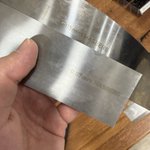
There's something strangely satisfying about working with 0.05 mm tolerances.
At some point, you stop thinking of these as ridiculously small dimensions and start treating them as perfectly reasonable engineering problems 🙂

A single robot consists of roughly 1100 mechanical components. Add the electronics, components on the 9 custom PCBs we design, wiring, connectors, and everything else, and we're probably looking at around 3000 individual components.
And we've already simplified the design quite substantially.
Compared to the previous generation, we've reduced the number of custom mechanical components by around 30%. That's a significant improvement, and one I'm particularly happy about. Not because fewer components automatically mean a better robot, but because we've managed to eliminate a considerable amount of complexity without compromising what we're trying to build.
Yet, every time we assemble another robot, we discover just how much more there is to optimize.
Wiring alone still takes an engineer an entire day. An entire day, just for wiring. :)
I find this contrast particularly interesting. We've made substantial progress in simplifying the mechanical design, but there's still an enormous amount of engineering effort going into the assembly of a single robot.
And this is where some of the less visible, but incredibly important engineering work happens.
You start revisiting decisions that were perfectly reasonable when you made them. Components that work but are unnecessarily complicated to manufacture. Designs that are mechanically elegant but inconvenient to assemble. Things that were easy to deal with when building the first prototype, but that you really don't want to keep dealing with forever.
The difficult part is that you're not optimizing for a single variable. Reducing the number of components can make manufacturing more complicated. Simplifying assembly can make maintenance harder. Making something more compact can introduce entirely new constraints.
You have to find improvements that actually make the system better, rather than simply moving complexity from one place to another.
And I think that's an important distinction. A working robot and a well-engineered robot are not necessarily the same thing. The latter isn't just about what the machine can do, but also about how it's designed, manufactured, assembled, tested, and maintained.
We're making good progress, but there's still a tremendous amount of work ahead.
I increasingly find myself appreciating engineering improvements that nobody will ever notice in a video of the robot walking. Fewer components, fewer unnecessary operations, less assembly time, fewer opportunities for things to go wrong.
Sometimes, the most valuable thing you can engineer is something you no longer need~


We're experimenting with goal-conditioned locomotion in simulation.
We give it a goal and let it figure out how to get there.
The results are somewhere between locomotion, navigation, and parkour.
Ayg has apparently decided to become a mountain goat 🐐
Teaching a robot to recover on a flat floor is one thing. The real world makes it harder: nobody guarantees that when the robot falls, it will land nicely on a flat surface. Stairs, slopes, edges, uneven contacts, weird orientations... the recovery policy still has to get the robot back on its feet.
So that’s what we’re testing now.
Still lots of work ahead, but the recovery policy is holding up surprisingly well 😃
We are building lots of robots...
Building one robot is primarily an engineering problem. Building 30 identical robots is an engineering, manufacturing, supply-chain, and operations problem. The important distinction is that we're not talking about mass production yet. We're talking about low-volume manufacturing. This is an awkward scale: too many robots to build everything manually and improvisationally, but too few to justify a fully automated production line. At this scale, procurement, logistics, customs, inventory, tooling, manufacturing, quality control, configuration management, and assembly all start to matter. And they’re not separate administrative tasks. They’re connected parts of one production system.
This gets even more interesting for us because we’re a vertically integrated, full-stack robotics company. Owning all the layers gives us substantial control, but it also means we’re building several production capabilities at the same time, not just a robot assembly operation.
It’s tough, and I love it.
I think building the first robot will get easier for a lot of people. Knowing how to build N robots that all work the same way, and then doing it again the next month, will stay hard for quite a while.
That’s the part we’re learning and investing in heavily now.

We hadn't driven the old Ayg in almost two months, ever since Gen 1 was ready.
I genuinely don't remember it being this goofy 😂
Gen 1 looks like a completely different species next to it.
Engineering progress is funny sometimes 🙂

Do robots need to feel pain?
My first reaction to this was: don't they already? 😃
Think about what pain actually is, or more precisely, what purpose it serves. It's a signal that something is wrong, that something should be avoided, or that our behavior needs to change
Robots already have plenty of those signals. We penalize undesirable behavior during training, monitor hardware conditions, detect failures, and build systems that react when something goes wrong
Of course, there's an important distinction between detecting a harmful condition and experiencing pain. Humans have a subjective experience associated with these signals, and we don't have evidence that today's robots do
But does that subjective experience matter for the function pain serves?
I'm not convinced it does~
It feels tempting to introduce a new concept called "pain" into robotics, but perhaps we're just giving a familiar name to mechanisms that already exist
There's one thing, though, that makes me think a bit more seriously about a pain-like mechanism: continuous learning
In RL, a policy learns from rewards and penalties during training. But once deployed, the reward function usually isn't running anymore. The policy takes observations and produces actions based on what it learned, without necessarily receiving the same feedback that shaped its behavior in the first place
Now imagine robots that continue learning throughout their lifetime. Wouldn't it make sense for them to have some persistent mechanism that not only detects potentially harmful situations, but also feeds that information back into the learning process?
Even then, I'm not sure we need an entirely new concept called "pain." Perhaps we simply need to make better use of the signals robots already have

2
15
751

Teaching a robot to recover on a flat floor is one thing. The real world makes it harder: nobody guarantees that when the robot falls, it will land nicely on a flat surface. Stairs, slopes, edges, uneven contacts, weird orientations... the recovery policy still has to get the robot back on its feet.
So that’s what we’re testing now.
Still lots of work ahead, but the recovery policy is holding up surprisingly well 😃
This is awesome ~
Recently I’ve been using @ForgeCAD from @ruben_kostard, and I love it. It’s been obvious for a while that the CAD stack needs a major transformation.
All these broken tools like Fusion, SolidWorks, Onshape, and Siemens NX are interfaces built on top of geometric modeling kernels, very often the same one.
And somehow, most of these tools are still trying to make the existing interface slightly better instead of questioning the interface itself. I think that layer needs to be replaced with something programmable, developer-first, and agent-first. Models should be inspectable and manipulable through code. Changes should be deterministic and composable. Agents should be able to build, modify, validate, and iterate on geometry directly, instead of pretending to be humans clicking through SolidWorks or Fusion. There are already a bunch of interesting attempts at this, and ForgeCAD is one of the ones I’ve been enjoying. And I think the really big opportunity is bigger than building another CAD application. There’s a new abstraction layer waiting to be defined between the geometric modeling kernel and the engineer or agent using it.
The race isn’t only about who builds the best product first. Whoever gets this abstraction right early has a chance to define the standard: the representation, language, and interfaces that engineers, agents, and other tools build on top of.
That could be much bigger than another CAD application.

I don't do CAD anymore. Every part is a Python program that builds the model in memory using build123d, an open-source parametric modeling Python framework. It then exports the model as a STEP file, which Fusion 360 imports so they can be inspected visually.
A high-level YAML spec file holds the numbers that define the robot as a whole - dimensions, masses, actuators, joint limits - which is read by the code. The python code obviously is written by an LLM (I currently use Opus).
I did consider using Onshape, but its API is capped to a few thousands calls a year, which make it unusable for me: I use Opus to push the parts, build the assembly, create the joints, set their limits and values, assign materials and densities, and inspect the result. That's easily a few hundred calls a day.
Jev has been replaced in the autonomy stack, as planned. The tactical layer now runs locally, and everything continues to work as before
This is something we call layered autonomy. Ayg can now run autonomously for hours.
I had a PoC of this architecture 6 months ago, and it worked, but nowhere near as well as it does today. The missing piece of the puzzle was Jev.
Jev is the tactical layer in our autonomy stack. In the original PoC, this layer and the modules around it were specialized RL policies.
And to be honest, I still think the long-term solution is to have local, specialized RL policies for the tasks we use Jev for today. But Jev gave us a way to make the architecture work now, and made me much more confident that the original direction was right.
Huge kudos to the @typesafeai team.
The autonomy graph finally feels complete, and the possibilities it opens up are pretty amazing


Had a small singularity moment at the lab today 😃
Today, my agents turned the robot on, ran a mission for a few minutes, stopped it, pulled the logs, analyzed them, changed the code, deployed it, and ran it again. Then they kept going. Test after test, deployment after deployment.
The entire engineering loop is now closed 🙂 This is where all the work we’ve put into Ayg as a platform comes together. We’ve built the hardware and software as one connected system, and the new autonomy layer builds on that foundation, making it much easier for AI agents to work with the robot.
I set the objective. The agents handled the iteration loop with 0 human intervention.
This is one of the doors layered autonomy opens: agents can now test their changes on the physical robot and keep iterating without me sitting between the software and the hardware.
I knew this was possible. I’ve been experimenting with it for a long time, but watching it happen still feels strange. I’m just sitting there while the robot turns on, walks for five minutes, stops, and a few minutes later starts again with updated code.
It’s surreal~
This is something we call layered autonomy. Ayg can now run autonomously for hours.
I had a PoC of this architecture 6 months ago, and it worked, but nowhere near as well as it does today. The missing piece of the puzzle was Jev.
Jev is the tactical layer in our autonomy stack. In the original PoC, this layer and the modules around it were specialized RL policies.
And to be honest, I still think the long-term solution is to have local, specialized RL policies for the tasks we use Jev for today. But Jev gave us a way to make the architecture work now, and made me much more confident that the original direction was right.
Huge kudos to the @typesafeai team.
The autonomy graph finally feels complete, and the possibilities it opens up are pretty amazing