
Waymo Research, Google Brain
Joined October 2013
- Tweets155
- Following156
- Followers2.9K
- Likes157





🚀 Excited to introduce the Waymo World Model — a Genie 3 based new frontier simulator that allows us to explore controllable situations never directly observed by our fleet — snow, tornadoes, floods, fires, elephants, lions, tumbleweed, “T-rex” — anything you name it!
Our World Model accompanies our recently announced Foundation Model, and together they form the foundation of our Demonstrably Safe AI at Waymo.
My team, along with many amazing collaborators at Waymo and Google DeepMind, has been cooking this work for a while. Please check out our blog and I would love to hear your thoughts: waymo.com/blog/2026/02/the-w…
Introducing EMMA: a Gemini based multimodal model for motion planning, perception, and reasoning in autonomous driving! Check out our paper to learn more:
Paper: waymo.com/research/emma/
Blog: waymo.com/blog/2024/10/intro…


Introducing our latest research paper on EMMA, an End-to-End Multimodal Model for autonomous driving! 🤖This cutting-edge AI research highlights the potential to leverage multimodal world knowledge for autonomous driving. Learn more: waymo.com/blog/2024/10/intro…

Still using cross-entropy loss or focal loss? Now you have a better choice: PolyLoss
Our ICLR’22 paper shows: with one line of magic code, Polyloss improves all image classification, detection, and segmentation tasks, sometimes by a large margin.
Arixv: arxiv.org/abs/2204.12511

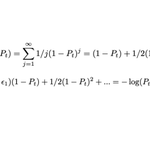
3/N: Our idea is simple: making those coefficients tunable for different models and tasks! Among all coefficients, we find the leading term is the most important one, so our final Poly1 simply tunes the first coefficient by adding one tunable item epsilon * (1 - Pt):

1
31
Mingxing Tan retweeted

Learn how DeepFusion, a fully end-to-end multi-modal 3D detection framework, applies a simple yet effective feature fusion strategy to unify the signals from two sensing modalities and achieve state-of-the-art performance. goo.gle/3M2UgRI

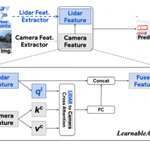
Introducing DeepFusion: a new SoTA lidar-camera multimodal model for autonomous driving.
Use cross-attention to align and fuse lidar-camera info, and drastically improve accuracy & robustness for 3D detection.
Arxiv:arxiv.org/abs/2203.08195
Leaderboard: https://nitter.cf/t.co/BMbFMDZcaZ↓

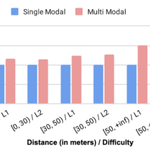
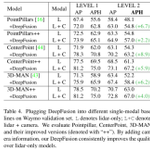
thread 3/n: With such simple modules, we observe a drastic accuracy gain (up to +8.9AP) by DeepFusion:

1
5

Mingxing Tan retweeted
Open-domain dialog—where a model converses about any topic—is a key challenge for language models. Learn about LaMDA, a project to build dialog models that are more safe, grounded, high quality, and in line with our Responsible AI Principles ↓ goo.gle/3KJ2oXJ
Nice paper with beautiful plots and catchy titles!
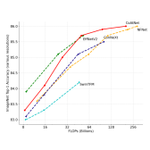
I was hopping it could compare EffNetV2 (ICML 2021, convs only) as well: arxiv.org/abs/2104.00298
If EffNetV2 is included, the figure should look roughly like this:


A ConvNet for the 2020s
abs: arxiv.org/abs/2201.03545
github: github.com/facebookresearch/…
Constructed entirely from standard ConvNet modules, achieving 87.8% ImageNet top-1 accuracy and outperforming Swin Transformers on COCO detection and ADE20K segmentation

Notably, in addition to EffNetV2, we also developed CoAtNet for high data regime (like JFT-3B), by combining convs and transformers: arxiv.org/abs/2106.04803
CoAtNet is worse than EffNetV2 in low data regime and better than EffNetV2 in high data regime:

A more comprehensive blog about efficient models is available here: ai.googleblog.com/2021/09/to…
22
Mingxing Tan retweeted

As in past years, I've spent part of the holiday break summarizing much of the work we've done in @GoogleResearch over the last year. On behalf of @Google's research community, I'm delighted to share this writeup (this year grouped into five themes).
ai.googleblog.com/2022/01/go…
