
Waymo Research, Google Brain
Joined October 2013
- Tweets155
- Following156
- Followers2.9K
- Likes157




Mingxing Tan retweeted

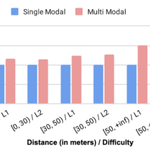
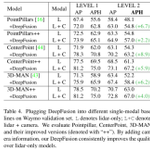
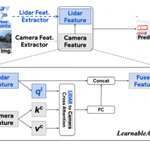
Learn how DeepFusion, a fully end-to-end multi-modal 3D detection framework, applies a simple yet effective feature fusion strategy to unify the signals from two sensing modalities and achieve state-of-the-art performance. goo.gle/3M2UgRI

Mingxing Tan retweeted
Open-domain dialog—where a model converses about any topic—is a key challenge for language models. Learn about LaMDA, a project to build dialog models that are more safe, grounded, high quality, and in line with our Responsible AI Principles ↓ goo.gle/3KJ2oXJ
Mingxing Tan retweeted

As in past years, I've spent part of the holiday break summarizing much of the work we've done in @GoogleResearch over the last year. On behalf of @Google's research community, I'm delighted to share this writeup (this year grouped into five themes).
ai.googleblog.com/2022/01/go…

Mingxing Tan retweeted

🆕 The new EfficientNet V2 models are available on #TFHub!
They’re a family of image classification models that achieves greater parameter efficiency and faster training speed.
Take a look → goo.gle/3fAfmJ3

Mingxing Tan retweeted

For those may have missed it, the official EfficientNetV2 weights are out for Tensorflow/Keras. I've converted the weights and verified all variants in #PyTorch (github.com/rwightman/pytorch…). Thanks @tanmingxing and Google Brain for the consistent releases.


Excited to share the open source of EfficientNetV2 code and modes.
Paper: arxiv.org/abs/2104.00298(accepted to ICML'21)
Code: https://nitter.cf/t.co/97gKzgYtf2
Bonus: amazing speed on both TPUs and V100/A100 GPUs with TensorRT.
Mingxing Tan retweeted
I haven't updated my #PyTorch EfficientDet impl in a while, but there are some new AdvProp+AutoAugment weights out in the TF impl. Added at github.com/rwightman/efficie…

Mingxing Tan retweeted

MobileDets: SoTA object detectors for mobile accelerators.
Our models outperform MobileNetV2 by +1.9/+3.7/+3.4/+2.7 mAP on CPU/EdgeTPU/Hexagon DSP/Jetson GPU at comparable inference latencies.
Paper (Accepted to CVPR 2021): https://nitter.cf/t.co/yCpI65BiAJ
Code: https://nitter.cf/t.co/RHeMyH3bfq

Mingxing Tan retweeted

Finally! EfficientNet v2 by @GoogleAI paper explained!
EfficientNets are more efficient than NFNets after all - just append v2 - problem solved. ^^
YT: youtu.be/CTsSrOKSPNo
@quocleix @tanmingxing
#efficientnetv2 #nas #deeplearning

Mingxing Tan retweeted

Robust and Accurate Object Detection via Adversarial Learning
Det-AdvProp boosts EfficientDet's accuracy by 1.1 mAP on COCO & robustness by 3.8 mAP on COCO-C (natural corruption) and 1.3 mAP on VOC (domain shift). @cihangxie @tanmingxing #CVPR2021 #CVPR
arxiv.org/abs/2103.13886

Mingxing Tan retweeted

#ICLR2021 accepts my favorite work! Thank all collaborators (@yucornetto1, @tanmingxing, Jieru Mei, Peng Tang, Wei Shen, @YuilleAlan, and @cihangxie ) for the invaluable help!
#arXiv : arxiv.org/abs/2010.05981

Our "Shape-Texture Debiased Neural Network Training" paper is just accepted by ICLR. Congrats @yingwei_li
github: github.com/LiYingwei/ShapeTe…

Mingxing Tan retweeted

Some nice improvement on ImageNet: 90% top-1 accuracy has been achieved :-)
This result is possible by using Meta Pseudo Labels, a semi-supervised learning method, to train EfficientNet-L2.
More details here: arxiv.org/abs/2003.10580

Mingxing Tan retweeted
On behalf of the entire Google Research & @GoogleAI communities, I'm excited to share an overview of some of our research in 2020.
Thanks to everyone who helped make this work possible!
ai.googleblog.com/2021/01/go…

Mingxing Tan retweeted

Dear tweeps, Happy New Year!
Its been a while since I did this - but I am really excited to share my latest blog post on EfficientDets.
amaarora.github.io/2021/01/1…
In this blog post, we look at the EfficientDet architecture in detail! Inspiration from - kaggle.com/c/nfl-impact-dete….
Mingxing Tan retweeted

⏪ Papers with Code: Year in Review. We’re ending the year by taking a look back at the top trending papers, libraries and benchmarks for 2020. Read on below!
medium.com/paperswithcode/pa…


Mingxing Tan retweeted
There are so many opportunities for ML to improve accessibility!
Meet Lookout, an Android app to make supermarket shopping easier for those who are visually impaired. Builds on MNASNet & EfficientNet, MediaPipe, high quality OCR models, K-nearest neighbor, etc.
Lookout! Rice!

The Lookout accessibility app for #Android includes the ability to detect and recognize supermarket products. This technology leverages recent improvements in smartphone compute power and neural network design to run entirely on-device. Learn more at: goo.gle/31IdgiD
Mingxing Tan retweeted
TensorFlow 2 🤝 Object Detection API
Today we’re happy to announce that the TF Object Detection API officially supports TensorFlow 2! Learn more about the release and all its new features in the post.
Read the blog ↓
blog.tensorflow.org/2020/07/…
Mingxing Tan retweeted
Extending research into evolutionary #AutoML, we present an approach that evolves algorithms from scratch—using only basic mathematical operations—rediscovering fundamental ML techniques & showing the potential to discover novel algorithms. Read more ↓ goo.gle/3edHPBc

Mingxing Tan retweeted
Today we present SpineNet, a novel alternative to standard scale-decreased backbone models for visual recognition tasks, which uses reordered network blocks with cross-scale connections to better preserve spatial information. Learn more below: goo.gle/3dNq9fa
Mingxing Tan retweeted

A Moore’s law but for DL algorithms:

Since 2012, the amount of compute for training to AlexNet-level performance on ImageNet has been decreasing exponentially — halving every 16 months, in total a 44x improvement.
By contrast, Moore's Law would only have yielded an 11x cost improvement: openai.com/blog/ai-and-effic…

Mingxing Tan retweeted
Cool results from our collaboration with colleagues at @DeepMind on searching for new layers as alternatives for BatchNorm-ReLU. Excited with the potential use of AutoML for discovering novel ML concepts from low level primitives.

New paper: Evolving Normalization-Activation Layers.
We use evolution to design new layers called EvoNorms, which outperform BatchNorm-ReLU on many tasks. A promising use of AutoML to discover fundamental ML building blocks.
arxiv.org/abs/2004.02967
Joint work with @DeepMind
