

COP of USAID Support to Anti-Corruption Champion Institutions program in Ukraine, mother, lawyer, eternal optimist, tireless reformer, tweeting my private views
Kyiv, Ukraine
Joined November 2011
- Tweets52.4K
- Following3.9K
- Followers4.3K
- Likes23.5K






eka tkeshelashvili retweeted

A father screams in anguish beside the body of his dead daughter. Two 15-year-old girls were killed in a russian attack on the center of Chernihiv, Ukraine.
Dozens are injured, including four children aged 10, 16, and 17, and a 10-month-old baby girl.
Meanwhile, Trump has ordered Ukriane not to hit russian oil refineries, so that russia could make billions and build more rockets and drones to kill more Ukrainians.

eka tkeshelashvili retweeted

While Trump and Musk suck Putin's balls for cash, another horrific Russian massacre of civilians in Ukraine's vity of Dnipro.
13 people murdered, at least 10 injured, as Russians target waiting passengers with a jet drone mid-day.
“Serbia’s ability to consolidate its democracy relies on a future in Europe. And Europe now has an opportunity to regain the trust of those who fought for the very democratic values it professes to uphold” a must- read by @srdjancvijic
theguardian.com/commentisfre…

eka tkeshelashvili retweeted

⚡️UK budgets over $13 billion support for Ukraine in 2027.
"Russia's illegal invasion of Ukraine poses a serious threat to U.K. prosperity and security," reads a social media post from the U.K.'s finance ministry explaining the new support to Ukraine.
kyivindependent.com/uk-budge…

eka tkeshelashvili retweeted

Every single day. For 700 days.
In the absence of lots of other factors, this persistence is what keeps the sentiment of uncertainty and inconclusiveness as opposed to a successful autocratic consolidation.
#GeorgiaProtests
📷 @rusudanjakeli

eka tkeshelashvili retweeted

Ukrainian women redefine military service
#ELLE Ukraine has unveiled a new print issue featuring women who are challenging stereotypes and shaping the future of Ukraine’s defence forces.
In collaboration with Ukrainian defence-tech company General Chereshnya, the issue introduces four women serving in roles once widely considered a male domain:
Kateryna “Uragan,” 33 — an FPV drone operator and combat training instructor.
Alina, 30 — head of communications for the Achilles Brigade.
Natalia, 31 — head of the unmanned systems department.
Zoya, 34 — a Ukrainian Marine.
Read more of their stories on the official website.
📷: ELLE Ukraine/Sashko Yavir


eka tkeshelashvili retweeted

Ukraine will help establish the new Defence, Security and Resilience Bank alongside Canada and other partners. With a target AAA rating, it aims to unlock cheaper long-term financing for defence companies. Exactly the kind of capital our industry needs to scale.
canada.ca/en/department-fina…
eka tkeshelashvili retweeted

‼️ IMPORTANT: We expect Putin to use the evacuation from Oleshky as a PR stunt and an attempt to rewrite the history of what happened in the city. The American public should be aware of Russia’s disinformation tactics and know what warning signs to watch for.
Here are some key Q&As ⬇️
What is happening in Oleshky, and how severe is the humanitarian situation?
Oleshky, located across the Dnipro River from Kherson city, has been under Russian occupation since 2022. An estimated 2,000 civilians remain trapped in the city, including around 50 children. Most are elderly people, people with disabilities, and their caregivers.
Residents face severe shortages of food and medicine, with no access to drinking water, electricity, gas, or heating. The last regular road deliveries of food took place in May 2026. Medical and sanitary conditions have deteriorated dramatically. Russia does not provide humanitarian relief to the city and has refused to allow the ICRC or the UN to enter, despite multiple attempts.
Why have residents been unable to leave?
Swarming drones, heavily mined roads, and destroyed infrastructure have made it extremely dangerous for residents to leave. Russian forces have blocked civilians from fleeing and prevented humanitarian aid from reaching those trapped in Oleshky. According to @nytimes, people who managed to escape the city described residents being used as human shields.
What exactly has been agreed upon now?
A localized ceasefire took effect at 3 a.m. Kyiv time on October 27 to facilitate humanitarian assistance and prepare for civilian evacuations. The plan involves demining, aid deliveries, and the opening of a humanitarian corridor, with evacuations expected to begin on October 29.
Ukraine welcomed efforts to provide humanitarian relief, brokered by @FLOTUS Melania Trump and @Pontifex Pope Leo XIV. Ukrainian officials have agreed to the localized ceasefire but remain concerned about implementation and compliance, given Russia’s long history of violating humanitarian agreements.
Where will civilians be taken?
According to @FT, residents seeking evacuation will be first taken to occupied Crimea or Russia rather than directly to Ukrainian-controlled territory across the Dnipro River.
Will the evacuation through Russia be voluntary?
Establishing genuine consent will be particularly difficult when residents are desperate for food, water, and medical care and have limited access to independent information. Many of these people will likely be taken to Russia against their wishes. According to Ukrainian officials, some people may decide to remain in Oleshky.
What will happen to evacuees afterward?
Russian officials have said that residents wishing to return to Ukraine will be able to do so. However, there are serious concerns that people transferred to Russian-controlled territory could face interrogation, filtration procedures, detention, or pressure to obtain Russian documents or register with Russian authorities.
Children face additional risks, including separation from their families or placement in Russian custody. People seeking to reach Ukrainian-controlled territory may have to travel through Russia and Belarus, and then through EU countries before entering Ukraine from the west.
Why is independent international monitoring essential?
Ukraine's Human Rights Commissioner, Dmytro Lubinets, is coordinating evacuation requests, but important operational details remain unclear. There is no confirmation that the ICRC, UNHCR, or other independent international organizations will monitor the evacuations.
Independent monitors should have access to evacuation routes and destinations, be able to speak privately with civilians, verify consent, protect children and vulnerable people, and investigate alleged violations.
Will there be American observers on the ground?
The White House has said an impartial American media organization will accompany the operation and document the process. @Newsmax has announced plans to send journalists to Oleshky.
Their presence could provide invaluable reporting and documentation. However, journalists are not a substitute for humanitarian monitors: they do not have the same mandate, expertise, or access guarantees to protect civilians and enforce compliance with international humanitarian law. Moreover, American journalists themselves also face serious security risks in Russian-controlled territory.
What Russian disinformation tactics should the public watch for?
@peterpomeranzev of @TRPforJustice, who has been studying Russian propaganda for years, warns in his analysis for the @KyivIndependent that residents of Oleshky, under the pressure of living on the brink of death, could become props for Russian propagandists.
Russia may be preparing to stage dozens of videos in occupied Oleshky, in which local residents will be forced to say on camera that they are happy, well-fed, and grateful to the Russian occupiers.
Ukrainian officials have warned that Moscow could portray the evacuation as evidence that Ukrainians freely choose to move to Russia. Russia will most likely try to blame Ukraine for the horrors Russian army has unleashed on Oleshky — and take more Ukrainian children under the pretext of “protecting” them and providing humanitarian assistance.
If you’ve read this far, please share this so more people are aware of the situation and know what to expect next. Thank you!


eka tkeshelashvili retweeted

Damn! They was fast. Ukraine has launched its first satellite for its own communications network

🛰 Great news! Ukraine has launched its first satellite for its own communications network
Himera, together with Denmark's GomSpace, has launched the Obria Nano satellite into orbit.
With its help, Ukraine will be able to develop its own communications infrastructure, relying less on foreign satellite systems.
The first test satellite of Ukraine's future sovereign satellite communications network is already undergoing testing.

eka tkeshelashvili retweeted

Opposition Alliance, uniting nine Georgian political parties, launched a protest campaign on October 25 to culminate in a large demonstration on November 28, as parties face ban through Georgian Dream's constitutional lawsuit.
📹 Nini Gabrirchidze/Civil.ge
eka tkeshelashvili retweeted

Serbia’s early parliamentary elections saw high turnout amid a polarized environment and unequal campaign opportunities, international observers say
Read the full statement of the International Election Observation Mission here: oscepa.org/en/news-a-media/p…


eka tkeshelashvili retweeted

Maria Corina Machado remains the country’s most popular politician, with a September survey by local polling group Meganálisis finding that she would win 61.2 per cent of the vote against Delcy Rodríguez’s 3.1 per cent in an election.
ft.com/content/f691e41e-dd01…

eka tkeshelashvili retweeted

A nightmare for Putin and his tools like Musk, Farage, Le Pen and the AfD - Indefatigable Georgians waving St. George's Crosses, EU flags, and a Ukrainian flag in resistance to the ruling Putinist regime. – at Brighton, England

eka tkeshelashvili retweeted

🇬🇪“Georgia without Ivanishvili!”
Thousands have gathered in Tbilisi to protest against Ivanishvili’s one-party rule and the ban of opposition parties.
The rally is part of a campaign launched by the Opposition party Alliance, titled “Georgia without Ivanishvili! Georgia deserves better”, which is planned to culminate on 28 November, marking two years of continuous protests in Georgia.
Day 697 of continuous protests in Georgia.
Video by MO SE.
#GeorgiaProtests
eka tkeshelashvili retweeted
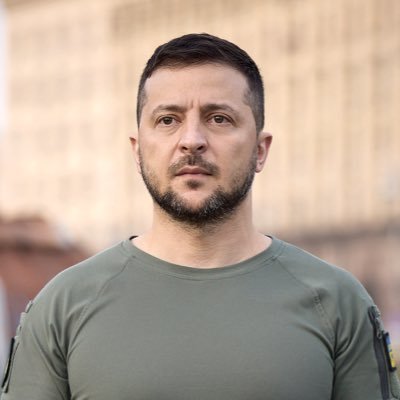
There have been changes in Serbia – a victory of the Student List @studentblokade. And this is clearly a new chapter in the history of the country and its people. We wish Serbia success, real development, and warm relations with the European community. We in Ukraine thank Serbia for respecting our people, our state, and our independence. And we always celebrate our shared achievements – everything that strengthens our societies and gives people more opportunities. We are ready to continue expanding our cooperation, and may all the good hopes of the people of Serbia come true!
eka tkeshelashvili retweeted

HOW STUDENTS DEFEATED VUČIĆ WITHOUT PLAYING HIS GAME
In yesterday's early parliamentary elections in Serbia, the Student List, a political movement initiated by university students in December 2024, defeated Aleksandar Vučić's Serbian Progressive Party by 51 percent to 39 percent.
The outcome presents an analytical puzzle. The incumbent commanded all the traditional instruments of political survival: public finances, state institutions, a nationwide patronage apparatus, and fourteen years of accumulated power. The students possessed neither financial resources nor clientelistic networks, no leader, and had no prior electoral experience. Yet they defeated the regime without adopting its methods. I explain this outcome in five points.
1. The Accumulation of Discontent
The students' victory did not come out of nowhere. They inherited more than a decade of growing discontent with Vučić, which had repeatedly erupted into public protests but had never produced political change.
Vučić assumed power in 2012 by mobilizing widespread resentment against post-communist transition reforms that took place in 2001-2012. Over time, this dissatisfaction inverted. By 2016, the former incumbents (now in opposition) had lost credibility, prompting voters to search for alternatives and new agents. This dynamic produced a sequence of political new agents whose electoral appeal consistently deteriorated. Each initially raised hopes of political change, but these hopes faded as some newcomers undermined themselves while others struggled to compete in an increasingly unequal political environment. Meanwhile, Vučić had transformed Serbia's already weak democracy into a hybrid regime with increasingly authoritarian features. Control over state institutions, public resources, and much of the media allowed him to compensate for declining popular support, weaken the opposition, and maintain his hold on power.
Simultaneously, anti-regime sentiment manifested in successive waves of street protests, recurring roughly every 18 months on average. Each wave mobilized more people than the previous one, but each eventually subsided without achieving political change. (Similar dynamics was seen previosuly in Poland in 2015-2023.) Growing mobilization was thus accompanied by growing disappointment. Dissatisfaction with Vučić continued to accumulate, while confidence in the possibility of removing him gradually declined. By 2024, many voters had also lost faith in traditional opposition parties, which they perceived as part of the same clientelistic system. Increasingly convinced that political change was impossible, many withdrew from electoral politics altogether.
2. Overcoming the Coordination Dilemma
Discontent alone is insufficient to defeat an incumbent. Voters must also believe that others will support a viable alternative. Before the students emerged, many dissatisfied citizens abstained because they considered Vučić unbeatable and the opposition incapable of replacing him. Their expectations reinforced the very outcome they feared.
Beginning with university occupations in December 2024, mobilization culminated on March 15, 2025, when roughly 300,000 people gathered in Belgrade, in what was arguably the city's largest political demonstration since its liberation from German occupation in 1944. The event revealed the scale of opposition and, more importantly, made it visible to everyone. For the first time, many voters saw an alternative capable of defeating Vučić. Whether they identified with the students' political views became secondary. What mattered was their shared opposition to the incumbent and their belief that others would support the same alternative. The students had become a focal point for electoral coordination.
3. Clean Hands, No Ambition for Office
The students differed from previous opposition movements in another crucial respect: they were politically clean. Many established opposition politicians were widely perceived as belonging to the very clientelist system they claimed to oppose. The students, by contrast, were simply too young to have developed or joined such networks. They had no history of political deals, public appointments, or access to state resources. In a system defined by patronage, their lack of political experience became their greatest strategic advantage.
What followed was even more remarkable. When in May 2025 the students demanded early parliamentary elections, they imposed an unusual condition: no student could appear on their electoral list. The implicit message was clear: we want to remove the incumbent without taking his place. It was not about privileges, but about the system itself. This was a striking departure from conventional party politics, where parties seek power primarily to secure office and spoils for their leaders. When the students finally submitted their list of 250 candidates, not a single one was a student, let alone a member of the student movement.
By refusing to seek office themselves, the students made their promise to change the system more credible. This commitment appealed to voters on both the left and the right, including those disappointed by successive opposition failures and those who had withdrawn from electoral politics altogether. The breadth of this appeal was reflected in turnout of approximately 70 percent, with roughly 600,000 more people voting than in December 2023. Their self-denial did the trick.
4. Vučić Became Culturally Obsolete
The students' appeal was not simply that they were politically clean. They were also young, mostly in their late teens and early twenties. Like every generation, they had their own culture, their own values, and their own understanding of what was acceptable, desirable, or simply cool.
What Vučić (and not only him) represented did not belong in it. For them, Vučić was culturally obsolete. He represented a political world with which they no longer wanted to identify: patronage, clientelism, corruption, informal deals, and a system in which personal connections and political loyalty mattered more than education, competence, or merit. This was simply not their thing. The movement attracted and mobilized an extraordinary number of young people who saw Vučić as culturally irrelevant, in much the same way Vučić himself had mobilized voters resentful of post-communist transition reforms in 2012.
This attitude gradually spread beyond their generation. Older voters who had long grown dissatisfied with Vučić, but had repeatedly failed to find a credible alternative, began to identify with the students' rejection of his political culture. With this cultural innovation, the students changed the terms of political competition. Vučić could promise higher wages, offer young people subsidized apartments, or distribute cash benefits, but these traditional instruments had little effect on people who no longer wanted to belong to the political world he represented. It was precisely this system of corrupt clientelism and vote buying that they fought against.
5. It Wasn't the Economy, Stupid!
The explanations above emphasize what was unusual about the students' victory. But several more conventional factors also contributed to Vučić's defeat. Demographic change gradually weakened his electoral base, which relied heavily on pensioners, while younger voters constituted a core constituency of the student movement. Between the previous election and October 2026, approximately 270,000 people died, mostly elderly, while around 170,000 young people completed secondary school. The students also adopted a catch-all approach, attracting both pro-European liberals and nationally oriented conservatives who had previously supported different opposition parties.
The students also developed a different form of political organization. Instead of relying on patronage, financial incentives, and centralized party structures, they mobilized thousands of volunteers who contributed their time and energy without expecting personal rewards. Their motivation was arguably stronger than that of many members of Vučić's political machine. Political commitment thus became an alternative to the material incentives on which conventional party organizations depend.
Just as the students mobilized without material rewards, Vučić was defeated without an economic crisis. Authoritarian incumbents often become vulnerable when economic conditions worsen, as illustrated by Orbán's Hungary in April 2026. Ironically, Serbia was different. Over the preceding five years, the economy did well: living standards had risen, unemployment remained relatively low, real wages and pensions had increased, and the currency was stable.
6. Conclusion
Ultimately, the Serbian election was not merely a contest between political alternatives, but between two fundamentally different ways of organizing politics. The Serbian experience challenges conventional assumptions about the resources necessary to defeat an entrenched incumbent. The fact that a loosely organized, decentralized movement with meager financial resources, no leader (!), no clientelistic networks, and no political experience managed to defeat a powerful clientelistic political machine will become an important subject of scholarly research. The Serbian case will be taught at universities in comparative politics and political economy courses and discussed in academic articles and books.
eka tkeshelashvili retweeted

Thank God Serbia borders Europe, which is why we preserved our democracy. If we bordered Russia, we might have suffered the same fate as Belarus or Georgia. That's why I'm also sad tonight, because our Georgian and Belarusian friends continue to suffer the fate we managed to escape.
eka tkeshelashvili retweeted

Radio Free Europe played a vital role in providing independent news during the struggle against Milošević.
Today, once again, @RFERL stands with the Serbian people in their fight for democracy and freedom of information. Amazing work @RSE_Balkan

Aleksandar Vucic, Serbia's former president and dominant political figure for more than a decade, conceded defeat to the student-led protest movement in the country's parliamentary elections.
While the final election results were yet to be announced, independent observers reported that voter turnout could reach its highest level in decades, approaching 70 percent after a day of long lines at polling stations.
By @RSE_Balkan ⬇️
