

physician-scientist in the Greenleaf Lab | @Penn MSTP | Interested in chemical biology, epigenetics, and clinically useful tests | sifting and winnowing
Mountain View, CA
Joined October 2015
- Tweets355
- Following601
- Followers714
- Likes481





Pinned Tweet
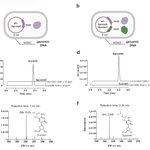
I'm very excited to share the story of how we discovered the DNA base 5cxmC in E. coli. Is it natural or unnatural if a point mutation in one enzyme can make it? Read about what we think this means for the field of DNA modifications here in @CellChemBiol!
cell.com/cell-chemical-biolo…

Clever!

Today, Sculpta releases the first demonstration of bioorthogonal barcoding ("bobcoding"), the process by which we:
1) covalently attach oligonucleotide barcodes to RNA at multiple internal positions with two-step chemistry, and 2) perform a multiplexed reverse transcription reaction to generate barcoded cDNA libraries with >99% barcoding accuracy.
To the best of our knowledge, it is the first time ever that either of these steps have ever been performed by anyone. No one has ever broken the barrier of multiplexing prior to any enzymatic step in library preparation, driving simplicity and higher data quality. Instead of other methods that add 0 or 1 barcode, we add one barcode every ~300bp, adding redundancy and fidelity to RNA measurements.
In our first application described in our pre-print below, we used bobcodes to create the first RNA isoform-resolved drug screening platform. It beats Novartis' DRUG-seq platform by:
- generating full length transcript capture of RNA isoforms, instead of just 3' end counting
- capturing 25-fold more RNA splicing events
- reducing barcode swapping by 10-fold
- using 18 fewer PCR cycles (~250,000 less amplification)
- reducing sample-to-sample variability in gene expression measurements
- eliminating costly and cumbersome library fragmentation/tagmentation steps completely
- reducing workflow complexity and number of steps
- reducing overall protocol duration by ~25%
Though our chemical barcoding method improved transcriptomic data quality while also being simpler and faster than all existing methods, the implications of this work go well beyond this particular use case:
The gate to greater applications of AI in transcriptomics is not a lack of compute. Nor is it a lack of data volume. The elephant in the room has always been our limited ability to faithfully and accurately measure cellular RNAs.
Sculpta now has line of sight to build what we call the first ground truth transcriptomics platform [for single cell, spatial and more] for the future of biological research, drug development and AI-enabled discoveries for the betterment of human health and longevity.
[PS Until the kind folks at bioRxiv get through the apparent backlog of AI slop submissions, Sculpta will host the pre-print PDF on our website. You can sign up for product offerings and other updates at this link too]
sculpta.bio/preprint

1
1
325
Tong Wang retweeted

Chromatin has long been proposed to "store" memory related information; but what kind of information, contents or rules does it hold?
Check out our new preprint: biorxiv.org/content/10.64898… 1/13
Tong Wang retweeted

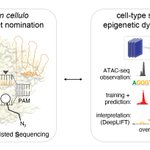
Very excited to announce ENCODE GRAMMAR (Genomic Regulatory Atlas of sequence Models, Motifs, Annotations & Rules): 3,865 experiment-specific deep learning model sets and sequence annotations for decoding human regulatory DNA. 1/

Tong Wang retweeted

Does every enhancer work with every promoter?
With @jengreitz and @WJGreenleaf, we revisit this long-debated question and resolve an outstanding contradiction in the field.
A tour 🧵👇
biorxiv.org/content/10.64898…

Tong Wang retweeted

Very interesting new preprint from @jengreitz lab arguing that rather than there being significant enhancer-promoter compatibility, promoters simply differ in their enhancer responsiveness.
If promoters are responsive, they respond to all enhancers.
biorxiv.org/content/10.64898…

Tong Wang retweeted

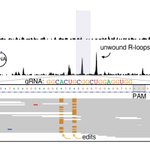
Exciting breakthrough technology from the lab, now live in @CellCellPress ! Instead of cutting the genome where proteins bind (e.g., Cut&Tag), D&D-seq scars the DNA with a deaminase, allowing single cell genome mapping of TFs and chromatin remodellers!

Tong Wang retweeted

The size of new DNA sequences that can be integrated into the human genome is a foundational constraint for engineering and enhancing human cells. In a new collaborative study, we’ve now almost doubled the maximum size of DNA sequences that can be efficiently inserted into primary human cells.
biorxiv.org/content/10.64898…
Tong Wang retweeted

Want to see something amazing?
This chart shows the frequency of vaso-occlusive crises (where sickled cells block vessels) in patients with sickle cell anemia — before and after base-edited hematopoietic stem cell transplants:


Tong Wang retweeted

7/10 Additionally, we observe that the HNH domain engages with a 15 Å swing closer to the target strand scissile phosphate when bound to (-)SC DNA. We suggest that this is the reason for accelerated cleavage activity observed with (-)SC substrates. ⏩
Tong Wang retweeted

Single-molecule peptide sequencing through reverse translation of peptides into DNA go.nature.com/4sRPr2K

I always believed 5cxmC might be a natural DNA modification, but 5gcxmC?!?
nature.com/articles/s41467-0…
@NatureComms

2
131
Tong Wang retweeted

My lab is looking to recruit postdoctoral scholars over multiple projects including combinatorial expression perturbations for cell state engineering, and modeling and perturbing human tissue development with tractable human organoid systems (primarily heart and brain)
Tong Wang retweeted

How can we move toward a quantitative, predictive framework for how RBPs bind and regulate their RNA partners? In a new preprint @Cheers2LO @BintuLab, we show that structural profiling via DMS-MaPseq can be used to measure fractional occupancies of RBPs at single-base resolution.
Tong Wang retweeted
Sensitive and unbiased genome-wide profiling of base-editor-induced off-target activity using CHANGE-seq-BE go.nature.com/4qB6qp8

Tong Wang retweeted

Blog post: Just quit
Quitting projects in science is hard, but we should be doing a lot more of it.
We spend a lot of time as scientists thinking about how to choose a project—and that is, of course, critically important to success. But… no matter how carefully you try to pick out the most groundbreaking, innovative project imaginable, the simple truth is that not every project is going to be awesome. Consequently, just as important as the skill of choosing a project is the skill of knowing when to quit a project.
In my view, we should quit far more often than we do, for the simple reason that time is so very precious. Here is possibly the scariest diagram of all time (from Wait but why):
That is not a lot of weeks. Each scientific project can take up 2-4 ENTIRE COLUMNS. As mentioned, the success of a project is way more probabilistic than we care to admit. So you have to sample, and that means rejecting many samples. Do not let this precious time go to waste. Sometimes, you just have to quit.
Why is it so hard to quit in science? Here are a few top reasons, all of which are based on fear:
Fear of the unknown. It’s in many ways easier to keep going with the devil you know.
Sunk cost fallacy. Don’t finish bad projects. A project typically takes 2-10x as long to finish as you think (and that’s even when you’ve already factored in the 2-10x). Do you really want to “just tie up a few loose ends” on a crummy project for the additional years required?
Falsely estimating the value of future and past time. People often worry about how long a new project will take. Let me tell you, finishing a project you don’t like will usually take way longer than one you do like. Also, time as you become more trained is worth much more than untrained time, especially for graduate students, so don’t waste precious time in the future on ill-spent time in the past.
Bad advice. Beware: other people typically value your time far less than you do. That’s not necessarily bad mentoring or anything sinister, just a very human reality. “Sure, do that extra control to kill the project”—sounds reasonable, and maybe it is, but it’s a lot easier to say when it costs very little to whoever says it.
Feeling like a quitter. We have been socialized in science to have a certain “stick-to-it-iveness” that I think is often counterproductive.
What can you do to make quitting easier?
Frame quitting by time, not results. It is practically a mantra in scientific management to say “I don’t care about time, I care about results”, and we pride ourselves on making decisions based on data. The problem is that there’s always “one more experiment” to do to see whether something will (or most likely, will not) work. Why spend time trying to do the experiment to kill a project you hate when you can just… stop working on it? Set a time, perhaps a week or a month or six months in the future, evaluate then based on whether you’re really getting where you imagined, and move on.
Do the control you’re scared of. Often, you know the go/no-go experiment you should do, but you put it off because you’re scared of the result. You know what I’m talking about. Just have to do it. Don’t chase wishy-washy results down the rabbit hole. When things work, they work. When they seem to maybe work, they usually don’t actually work.
Get some honest external feedback. Find someone that you really trust to give you honest feedback and ask them whether the project is worth pursuing. Sometimes, getting that negative signal from the outside is far more convincing than from your advisor/trainee.
Imagine the future of the project. Envision the title/abstract of the paper you imagine writing. Is that something you really want to spend potentially years writing the rest of? Often, people begin with a starter project in the lab, which can have a habit of turning into way more than a starter. If you’re just not that into it, quit.
And finally, just listen to that voice in your head. You probably already know you should quit, so just do it. I have quit projects many times in my career—grad school, postdoc, professor—and while the alternative is unknowable, with hindsight, it certainly feels like those were almost invariably the right decisions to make.

Tong Wang retweeted
Congrats to @juliaschaepe and @marklundem on the recent publication of their work linking the binding behaviors of TFs in vitro and in vivo! Out in Cell now: cell.com/cell/fulltext/S0092…

Tong Wang retweeted

Now online! Thermodynamic principles link in vitro transcription factor affinities to single-molecule chromatin states in cells dlvr.it/TPTvHF

Tong Wang retweeted
Excited to present the first major work after starting our lab at Stanford and the Arc this year: CRISPR-All, a unified genetic perturbation language for programming any major type of genetic perturbation simultaneously, in any combination, at genome scale, in human cells.
Tong Wang retweeted

Excited to share our new study, led by @dellaVolpe_L, now out in @NatureCellBio! Blocking #ferroptosis enhances human 🩸 stem cell expansion, with implications for transplantation and gene therapy. nature.com/articles/s41556-0…

Tong Wang retweeted

For readers interested in the development of n-of-1 therapies for ultrarare diseases encompassed by a new FDA regulatory pathway based on plausible mechanisms, here's a roadmap from @irdirc
rdcu.be/ePKMG
nature.com/articles/s41573-0…
