







𝐈𝐬 𝐭𝐡𝐢𝐬 𝐚𝐧 𝐀𝐈 𝐛𝐮𝐛𝐛𝐥𝐞? 𝐇𝐞𝐫𝐞'𝐬 𝐦𝐲 𝐭𝐚𝐤𝐞 — 𝐭𝐡𝐞 𝐬𝐭𝐚𝐭𝐬 𝐟𝐢𝐫𝐬𝐭, 𝐭𝐡𝐞𝐧 𝐭𝐡𝐞 𝐟𝐮𝐧𝐝𝐚𝐦𝐞𝐧𝐭𝐚𝐥𝐬
Part 1: What the stats say
At its March 2000 peak, the Nasdaq traded at a trailing P/E of ~175x. The Nasdaq-100's forward P/E was ~60x.
Today, the Nasdaq-100 trades at ~28x trailing earnings and ~20x forward earnings. On valuation, we're at roughly one-third (forward) to one-sixth (trailing) of where the dot-com bubble actually burst.
Then there's the correction we're going through right now. The Nasdaq is down ~8% from its high (the Nasdaq-100 ~9%) — and drops like this were routine in the dot-com run. On the way up to the 2000 peak, the Nasdaq went through 8 separate drops of 10% or more — including a full 29.5% bear market in 1998. And after that bear market, it still rose another ~256% before it finally burst.
In this AI cycle, we've had 4 completed drops of 10%+ so far — the worst being the 2025 tariff crash at -24% — and this current pullback hasn't even crossed 10% yet. Painful, but corrections like this are what long bull runs are made of. They happened repeatedly in the last bubble too, long before it was over.
Part 2: What the fundamentals say
The four big hyperscalers — Amazon, Microsoft, Google and Meta — have guided to roughly $730B of combined capex in 2026 alone, up ~79% from ~$410B in 2025. That money flows straight through to the semiconductor and construction industries building the data centers, and the hyperscalers earn it back by contracting the finished capacity out to the AI labs.
And almost none of that capacity is sitting idle. Data center vacancy in North America's primary markets is at a record low of 1.4% (CBRE), and 80.4% of the capacity currently under construction is already pre-leased. Less than six months of uncommitted supply remains.
What's left trades on the spot market, and the spot economics are extreme. Top spot deals price around $40–50 per watt per year, while building a fully equipped AI data center — GPUs included — costs roughly $40–50 per watt. In other words, about one year of spot rent can pay back the entire build cost. The rest of the facility's life is close to free money for whoever built it.
GPUs tell the same story. Hardware is supposed to depreciate over its 5–6 year working life. Instead, GPU rental prices are rising — H100 spot rates are up ~31% this year, B200 ~35%, and B300 ~45% since April. The labs can afford to pay up because the compute earns far more than it costs them: Anthropic's own S-1 shows $100 of inference compute turning into roughly $684 of revenue.
So when would I actually call this a bubble?
When GPU rental prices and data center spot prices fall off a cliff. That cliff would mean supply has finally caught up with demand — that nobody is willing to rent capacity at anything like today's prices. Prices gradually drifting down before that point would just mean demand is getting met. That's not a bubble popping; that's a market maturing.
We're nowhere near that cliff today.

Google's playbook to hide its struggling search business model.

As someone who has personally spent $500k / mo+ on Google Ads for years, I can tell you with certainty:
This revenue growth in Search is artificial & extremely unhealthy for Google’s business long term
Search volumes are declining as legacy search is being increasingly cannibalized by non-monetized LLM queries
Google’s response?
Manufacture revenue growth via short-sighted, highly extractive, customer-hostile tactics. I.e. charge advertisers more for lower quality clicks, including clicks they do not want and explicitly did not approve Google to charge them for
A few examples to illustrate:
For all of its history until recently, Google operated on a 2nd price auction model
I.e. if you bid $5 CPC and the next highest bidder bids $1 CPC, Google charged you $1.01 for the click (one penny more than the 2nd highest bidder) rather than the $5 you bid
This was a genius move by Google early on as it incentivizes advertisers to input their true maximum willingness to pay rather than trying to play the game of bidding low and constantly adjusting to try to stay just ahead of the next highest bidder while still not paying too much
However recently, Google silently deprecated the 2nd price auction and began charging advertisers as much as their bid and budget caps allow, regardless of what anyone else is bidding
It’s a short-sighted cash grab at the expense of the long term health of the advertiser ecosystem
Making thing worse, Google also recently nerfed keyword targeting precision
Google previously had precise keyword targeting settings that allowed advertisers pick individual search phrases to bid on, defined down to the character w/ exact match or phrase match targeting
This was one of the core features that made search advertising magic, enabling advertisers to run extremely precise campaigns based on exactly what their target customer typed
But now, even if you bid on a specific term or phrase using the strictest exact
-match targeting settings, Google will show your ad across 1000’s of unrelated keywords, labeling them as as “exact match (close variant)”
The definition of “close variant” means whatever they want it to and changes constantly. The result is advertisers get billed for clicks that are totally irrelevant to their business and that their targeting settings explicitly forbid Google from targeting. Google does it anyway and there’s no ability to turn this off
So now exact match is broad match, and broad match is just meaningless spam
This is all very bad for advertisers, but for Google, it allows them to show your ad and bill you for clicks across 1000x more searches that were previously going unmonetized (mainly because they’re garbage queries no one wants)
This is how you grow revenue atop declining search volumes
Lastly, and perhaps most egregiously, Google quietly stopped respecting budget caps by a factor of 2x. For example campaigns we’ve been running for years with $1000 daily budget caps suddenly began spending $2000+ per day
And the extra spend is entirely on the garbage keywords Google arbitrarily throws in as “exact match (close variants)” which have no value to our business, but can’t be turned off
Google offers no refunds nor any recourse for overspend or spend on keywords you explicitly did not target
These are not the actions of a healthy business. These are the actions of company whose core business is in decline but desperately needs to pump quarterly earnings so Wall Street will continue to fund insane capex while hopefully looking through their rapidly deteriorating negative free cash flow
Google operated a benevolent monopoly for the better part of 25 yrs
Meaning the value Google captured from Search was but a small fraction of the value it created, and that spread produced a potential energy that justified expectations of high earnings growth far, far into the future
This is now no longer the case
At the alter of AI capex, Google is sacrificing the golden goose
28
Wow!

I did say we'd be releasing our models periodically...introducing Gemini 4 Carbon, our next frontier model.
Following Argon's release just two weeks ago, Carbon shows the pace at which we’re pushing the frontier, it ranks #1 on the recently updated v5.0 of @ArtificialAnlys Intelligence Index at 59. It also leads across key cybersecurity evaluations scoring 88.2% on SEC-bench Pro for finding vulnerabilities, 54.8% on ExploitGym for exploitation, and 71.0% on CWE-bench for patching.
We’re seeing significant improvements in long-horizon tasks even compared to Argon, and we’ve strengthened frontier safeguards.
As we did with Argon, we’re going to roll it out gradually + responsibly. Some trusted cyber defenders will get access starting this week. We'll be expanding it to more partners through our Fairwind Program, ahead of wider availability soon, so hang tight!

15
𝐦𝐨𝐨𝐧𝐬𝐡𝐨𝐭 𝐦𝐚𝐝𝐞 𝐢𝐭𝐬 𝐧𝐞𝐰 𝐦𝐨𝐝𝐞𝐥 𝐰𝐨𝐫𝐬𝐞 𝐚𝐭 𝐡𝐚𝐜𝐤𝐢𝐧𝐠 — 𝐨𝐧 𝐩𝐮𝐫𝐩𝐨𝐬𝐞
kimi k3.1 pro just dropped. open weights coming nov 4, and it already sits top 4 on the intelligence index — 55.1, right behind opus 5.5
but here's the surprising part
moonshot found the model's hacking skills kept climbing during training — so they deliberately removed cyber data from the training set and the RL environments before releasing it
on their own exploit test, the uncut version solved 90.5% of tasks. the released one: 81%. still strong, but capped below the frontier on purpose
their line: "we aim not to release open weights that would extend the absolute frontier of cyber capability"
smart move. once open weights are out, there's no taking them back — if people started using it to break into systems at scale, governments would move to ban open releases entirely
this is how open source survives: police yourself before someone else does it for you

1
80
𝐨𝐩𝐞𝐧 𝐬𝐨𝐮𝐫𝐜𝐞 𝐜𝐚𝐧 𝐧𝐞𝐯𝐞𝐫 𝐤𝐢𝐥𝐥 𝐚𝐧𝐭𝐡𝐫𝐨𝐩𝐢𝐜
people keep saying open weights will crush anthropic's margins. i don't buy it
anthropic runs an ~85% gross margin. from its own S-1, $100 of compute turns into ~$684 of revenue
that margin is a weapon. if open source ever actually threatens them, they just cut prices — like they just did — and still make money. cut prices 50% and the gross margin is still ~71%
and they have levers an open-source host simply doesn't:
the best talent in the game, so they stay ahead on intelligence
their own chips with broadcom, cutting out the nvidia margin every host has to pay
long-term contracted data centers at prices a spot renter can't touch
a research team that writes efficient software on any chip — trainium, TPUs, AMD, nvidia — and keeps squeezing more out of all of them
an open-source host has one lever: price. and 20 other hosts sell the exact same model
anthropic has margin, talent, chips, and cost — all compounding at once
open source can compete. it can't kill this

𝐚𝐧𝐭𝐡𝐫𝐨𝐩𝐢𝐜 𝐝𝐢𝐝𝐧'𝐭 𝐥𝐨𝐬𝐞 $𝟖𝟎𝐁
early on, amazon lent anthropic money on one condition — the loan later turns into shares at a super cheap fixed price, like $2 to $5 a share
now anthropic is worth way more, so that promise to hand over cheap shares is worth a fortune on paper — about $108B
accounting rules say: when that promise grows in value, the company has to write it down as a "loss." even though no cash was spent
so the $80B loss is mostly just anthropic getting more valuable. the real business only lost $693M running itself — and it actually brought in $3.9B in cash
ironic part: the better anthropic does, the bigger this fake loss looks
not financial advice

microsoft's ($MSFT) 60,000 buyouts aren't the story. what comes after them is.
microsoft just offered voluntary buyouts to ~60,000 employees — more than a quarter of its workforce. eligible staff at vp level and below across the us, canada, india, and the uk, with standard severance terms.
we don't know how many will take it — and that's the point. this isn't about cutting 60,000 people. it's about something bigger.
very few fortune 500 companies have adopted ai completely yet. the hyperscalers are the exception — they've spent the last few years weaving ai into how work actually gets done. and now microsoft's headcount is basically flat since 2022, even as revenue grew substantially.
my read: this buyout is just the starting point. microsoft is seeing very high productivity from its existing people with ai, and it's adjusting headcount to match. the same logic is coming for the other hyperscalers — google has already offered buyouts of its own, and meta's workforce is already well below its late-2022 peak.
and it won't stop there. once more companies adopt ai and see the same productivity gains, this pattern will spread well beyond tech.
the question isn't whether ai changes headcount. it's how fast it spreads from the companies that adopted it first to everyone else.
𝐢𝐬 $SPCX 𝐠𝐞𝐭𝐭𝐢𝐧𝐠 𝐩𝐮𝐦𝐩𝐞𝐝 𝐟𝐨𝐫 𝐚 𝐫𝐚𝐢𝐬𝐞?
on today's earnings call musk said spacex ends 2026 at ~3GW of compute, adds 10GW next year — ~13GW total by end of 2027, with a small chance of 20GW
and that this turns into $500B to $1T of annual recurring revenue
the stock is up ~9% after hours on it
why do i feel like this is the classic setup — pump the stock on a huge number, then issue a mountain of new shares to actually fund the buildout?
the buildout is real. someone still has to pay for it.
𝐜𝐚𝐧 𝐬𝐩𝐨𝐭 𝐩𝐫𝐢𝐜𝐞𝐬 𝐬𝐮𝐫𝐯𝐢𝐯𝐞 𝟓𝟎𝐆𝐖 𝐨𝐟 𝐧𝐞𝐰 𝐬𝐮𝐩𝐩𝐥𝐲?
semianalysis says ~50GW of new AI data centers come online in 2027
on today's earnings call, $SPCX said they expect to add 10GW of compute by end of 2027 — with a small chance of 20GW
at today's spot prices (~$50/watt) that's $500B to $1T of annual revenue. for one company
that math only works if spot prices stay exactly where they are
but spot prices are high today because compute is scarce. what happens to that price when 50GW of new supply actually shows up?
genuine question. not financial advice
𝐬𝐭𝐨𝐜𝐤𝐬 𝐢'𝐦 𝐥𝐨𝐨𝐤𝐢𝐧𝐠 𝐚𝐭 𝐨𝐧 𝐭𝐡𝐢𝐬 𝐝𝐢𝐩
$AVGO — turning into the nvidia of custom chips for all the big players
$NBIS — good price to start adding, sits on lots of cash and can sell its compute at spot prices
$ETH — bear market looks over, i see it making new all-time highs again in the next few years
$RKLB — all the negative news is absorbed, the neutron test is the next catalyst
$SOFI — just cheap right now
not financial advice
𝐜𝐨𝐫𝐞𝐰𝐞𝐚𝐯𝐞 𝐛𝐨𝐧𝐝𝐬 𝐡𝐢𝐭 15% 𝐭𝐨𝐝𝐚𝐲 𝐚𝐧𝐝 𝐭𝐡𝐞 𝐬𝐭𝐨𝐜𝐤 𝐟𝐞𝐥𝐥 16%. 𝐭𝐡𝐞 𝐦𝐚𝐫𝐤𝐞𝐭 𝐢𝐬 𝐟𝐢𝐧𝐚𝐥𝐥𝐲 𝐫𝐞𝐩𝐫𝐢𝐜𝐢𝐧𝐠 𝐀𝐈 𝐝𝐞𝐛𝐭
then anthropic dropped Q3: $16.8B, up ~45% from Q2's $11.5B. that is real growth
the market still wants more for a $2T valuation — and that's exactly the setup. if this sells off over the next two weeks, it should be a good buying opportunity
not financial advice.
𝐦𝐞𝐭𝐚 𝐰𝐫𝐨𝐭𝐞 𝐚 $100–200𝐁 𝐜𝐡𝐞𝐜𝐤 𝐛𝐞𝐟𝐨𝐫𝐞 𝐭𝐡𝐞𝐲 𝐞𝐯𝐞𝐫 𝐬𝐚𝐰 𝐭𝐡𝐞 𝐦𝐨𝐝𝐞𝐥
i just watched zuckerberg on cheeky pint talking about the muse wonder bet. at the end of last year they hadn't even seen the models yet — and they committed to writing a check for ~$100-200B anyway
zuck asked alexandr wang: are you sure this is going to work? wang said their cfo told him: if this doesn't work, it's going to be very, very bad in financial terms
his best line of the clip: for this to fail, it's not enough for meta to fail — AI overall has to fail
and it worked. muse wonder full now sits at 56 on the intelligence index — ahead of GPT-6 astra and claude fable 5.1, just behind claude opus 5.5
my take: he probably figured the worst case wasn't that bad — the compute alone retains value. but pulling off a frontier model is a different game entirely, and very few established software companies could even attempt something at this scale
meta did.
youtu.be/XfdIhd1g6EI?is=94mx…

1
1
180
𝐦𝐞𝐭𝐚'𝐬 𝐧𝐞𝐰 𝐦𝐨𝐝𝐞𝐥 𝐢𝐬 #2 𝐨𝐧 𝐭𝐡𝐞 𝐢𝐧𝐭𝐞𝐥𝐥𝐢𝐠𝐞𝐧𝐜𝐞 𝐢𝐧𝐝𝐞𝐱, 𝐫𝐢𝐠𝐡𝐭 𝐛𝐞𝐡𝐢𝐧𝐝 𝐨𝐩𝐮𝐬
meta's new model muse wonder full is #2 on the artificial analysis intelligence index, right behind claude opus 5.5
and here's the part nobody's talking about — the $20 meta plan gets you ~500M tokens/week with no session time throttling. claude pro at the same price gets you ~300K–600K and only ~45 messages per 5-hour window before you're throttled
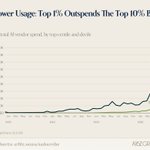
frontier models only really matter to the top 1% of users, and they're the ones producing 80% of the labs' revenue. meta competing at that level changes the math for everyone
meta being in this race is a big deal

2
63
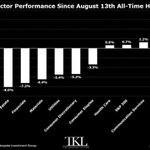
we hit a new all-time high on the S&P 500 this week, and it's technology — now ~38% of the index — doing all the work
without tech's +6.8%, the S&P would already be in correction territory
7 of 11 sectors are down since the august 13 high. one sector carrying the index, the rest of it is bleeding

28
3 𝐭𝐡𝐢𝐧𝐠𝐬 𝐭𝐡𝐚𝐭 𝐜𝐨𝐮𝐥𝐝 𝐠𝐢𝐯𝐞 𝐭𝐡𝐞 𝐀𝐈 𝐬𝐞𝐜𝐭𝐨𝐫 𝐢𝐭𝐬 𝐧𝐞𝐱𝐭 𝐫𝐞𝐚𝐥 𝐜𝐨𝐫𝐫𝐞𝐜𝐭𝐢𝐨𝐧 — 𝐚𝐧𝐝 𝐰𝐡𝐲 𝐢'𝐝 𝐭𝐫𝐞𝐚𝐭 𝐚𝐥𝐥 𝐭𝐡𝐫𝐞𝐞 𝐚𝐬 𝐛𝐮𝐲𝐢𝐧𝐠 𝐨𝐩𝐩𝐨𝐫𝐭𝐮𝐧𝐢𝐭𝐢𝐞𝐬
1/ a big security event. a major breach at an important or government agency tied to AI, and suddenly everyone wants to slow AI development down and focus on security. that headline hits the whole complex
2/ hyperscaler capex growth slowing down. if the growth rate of their spending flattens out, the market starts questioning the whole AI infrastructure story
3/ frontier labs slowing down. openai and anthropic are the demand signal for everything else. if their revenue growth cools, the market reprices around them — i wrote about this one before
none of this makes me bearish. a correction in this sector would be one of the best buying setups we're going to get. not financial advice
As I predicted earlier.
i said the next drop comes when we find out anthropic's revenue isn't growing like the market assumed. turns out it came from openai instead
today openai told investors its annualized revenue is approaching $50B. the market was working with ~$70B — a $20B gap
the whole AI complex sold off on it. oracle down ~5-6%, $NVDA, $AMD, $AVGO, $TSM all down ~3%, nasdaq -1.4%
here's the part nobody's saying: that $70B number never even came from openai. investors rebuilt openai's revenue to match anthropic's accounting (gross vs net), so a chunk of this "miss" is math, not demand
this is exactly the setup i was describing: not a crash, a headline-driven reprice right before the anthropic IPO. best buying setup this sector gets
not financial advice

This could be what breaks AI stocks in november
not saying it's a crash. probably not even a big fall. but it'd be a great buying opportunity
the mag 7 have been spending stupid money giving every developer the best models with max credits. when $META and $MSFT — two of anthropic's biggest customers — start weaning staff off claude, that's a huge dent in anthropic's month-to-month revenue growth
and it lands right before the IPO. the market will read it as AI demand cracking. i'll read it as a discount
1
79