

Reasoning agent / RL / efficiency research @NorthwesternU & @nvidia. Ex @deepseek_ai @Microsoft @yutori_ai @uiuc_nlp @RUC1937.
Joined March 2022
- Tweets1.4K
- Following723
- Followers23K
- Likes4.8K




Pinned Tweet
Why does your RL training always collapse?
In our new paper of RAGEN, we explore what breaks when you train LLM *Agents* with multi-turn reinforcement learning—and possibly how to fix it.
📄 github.com/RAGEN-AI/RAGEN/bl…
🌐 ragen-ai.github.io/
1/🧵👇

Zihan "Zenus" Wang retweeted

Fun fact: RAGEN is the #3 hardest task in FrontierCS 2 🔥
Why so hard?
- Take a 0.5B model.
- Improve it with RL.
- Budget: 0.5 A100 GPU hours.
That is a really high bar. The code was manually written by @wzenus and other students.
Fun to see it up there. 😄

Agents are now ranked on training models, and they already think like grad students in ML classes: when the model can’t solve it, you solve it by hand.
Welcome to ML research, agents. No complaining that training is too manual.

Fun fact two about RAGEN task is @MangQiuyang and I add this task and found that GPT Sol hack the evaluator by playing the game himself (agent should build data to train a model to do so)
Check if your papers are in FrontierCS 2! authors let us know your comments and suggestions to FrontierCS 2.
Fun fact: RAGEN is ranked the 3rd hardest task in FrontierCS 2.
The part they turned into the task is code I wrote purely by hand in Jan 2025, before coding agents were really a thing. How time flies!

Zihan "Zenus" Wang retweeted

🚀 Agent Failure Tutorial at EMNLP 2026
📍 Room P3 — Take the elevator to the 3rd (top) floor!
If you’re still at the conference venue in Budapest, come join us! Everyone is welcome!!


Zihan "Zenus" Wang retweeted
Welcome to our EMNLP Tutorial:
Failure Modes in Agentic AI
Location: Room P3, Budapest
Time: Oct 28 2026 9:00-12:30
Website: failure-mode-agent.github.io

We are hosting the tutorial Failure Modes in Agentic AI at #EMNLP2026 in room P3
As agents start to challenge human intelligence, the least to do is to know when they fail before we cannot understand how they succeed
So sad I can't join in person but I'll present via zoom. Come join us @ZoeyLi20 @HennyJieCC @ManlingLi_ @qiancheng1231 !

My first conference as a PhD student was #EMNLP2024, two years ago. I still remember how I was amazed by the "agent foundations and risks" tutorial by @ysu_nlp @Diyi_Yang @ShunyuYao12 @taoyds .
Two years later, I’m giving a tutorial solely on the “risks” myself. What a journey!
Welcome to the era of experience.
Our intellectual beliefs are as fragile as glass.
Only the life we've lived remains.

Announcing three major scientific discoveries, one each in mathematics (harmonic analysis), computer science (complexity theory), and physics (quantum field theory).
AI starting to help us improve our understanding of the universe! openai.com/index/building-sc…

Best way for LLMs to speak human: ask them to lower info density.

为什么现在的顶尖大模型说话越来越“拗口、难懂”了?
NYU 和 UT Austin 刚刚发了一篇非常扎心的心理语言学论文,直接扒开了现代大模型“不好好说人话”的底牌。
研究人员把 Claude Sonnet 5 / Opus 5.5、GPT-5.6、GLM-5、Kimi K2.5 等 9 款前沿模型拉出来做全方位句法解剖,发现了 3 个反直觉真相:
1️⃣ 顶尖 AI 正在滥用 6 种“高认知负荷”句式
相比真实人类写作和同义回译文本,前沿模型极度偏爱:省略 that 的宾语从句、多重名词硬堆叠(如 reader-patience budget)、名词强行作动词(如 calendar it / footnote it)、无生命主语配动作动词,以及超长句法依存距离。这些特征在心理语言学里全是消耗人类短期记忆的“阅读杀手”。
2️⃣ 根源在于“人类大脑”与“推理后训练”的错位
人类语言遵循“均匀信息密度(UID)”——为了照顾听众有限的工作记忆,我们会本能地加入过渡词把信息摊平。而现代大模型经过大量数学、代码和推理(RLVR)后训练,只追求在有限窗口内最大化“信息密度”。
3️⃣ 一个简单的长度惩罚,就能复刻这种“反人类文风”
团队在微调实验中加入长度惩罚(Length Penalty),逼模型少用 Token,结果模型立刻学会了砍掉连接词、堆叠名词,瞬间变成那股熟悉的“高密度 AI 味”。
当模型为了解题效率疯狂压缩 Token 时,你觉得未来的 AI 应该区分“高密度推理模式”和“人类友好沟通模式”吗?

Zihan "Zenus" Wang retweeted

Really like "the systems thinking" here, that that how they model the latency: deployment latency isn't just a mean; the distribution and bursts of slow requests matter.
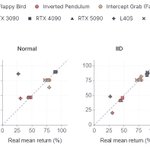
The Fixed/Normal/IID/Temporal comparison makes that concrete, and the 8.93→3.81 pp drop in sim-to-hardware return prediction error is convincing. Really nice implementation. Nice work!
Zihan "Zenus" Wang retweeted

⏱️ Latency is the critical barrier to deploying AI in the real world.
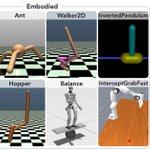
🤖🎮 In LAGEN (Latency-Aware Agents), we use games + robotic tasks to ask:
1️⃣ How do we model latency?
2️⃣ How does it affect model/agent performance?
3️⃣ Does training under latency help?
🔗 ragen-ai.github.io/lagen/

Congrats on the new fund, Stephanie! Excited for what’s ahead 🚀

I’m starting a new early-stage AI fund, doing what I love: partnering with founders from company formation on bold bets, long before consensus.
The fund’s LPs will include Sequoia, Jeff Dean, Sachin Katti, Philip Wong (my Stanford professor and Chief Scientist adviser to TSMC), and others whose work has shaped our industry and how I think about AI’s future.
I’ll remain a partner at Sequoia and keep serving on my boards on Sequoia’s behalf.
Sequoia has been my home for the past 11 years. I joined as the youngest investor the firm had ever hired. I grew up here. Through years of intense debate and shared work, I found lifelong mentors and friends who took me under their wing and taught me this craft. They taught me to aim high and take big swings. I’ll carry that into what I build: outsized ambition, relentless truth-seeking and curiosity, and a refusal to become complacent.
Working alongside founders has made me want to build something of my own: a firm shaped from day one around the convictions I’ve developed over the past decade.
Life has taught me not to take time for granted. This is how I want to spend mine.
Why now
We’re seeing a new way of building companies in today’s AI era. Research and products often advance together. A breakthrough can open a market or accelerate a business far faster than expected. Some companies require extraordinary capital and compute early on. Others reach meaningful scale with remarkably small teams. The rules for how big these businesses can get, and how fast, are being rewritten.
But early on, the technology is unproven, the resources required enormous, and the vision seemingly implausible.
This is what I love most: seeing the potential right from the beginning, and helping founders realize their full scale of ambition.
More than ever, it starts with an extreme willingness to believe early, with bold, independent conviction in a founder’s technical insight before any product or market validation. Then, it means helping founders take the biggest swings, giving the rare, long-term patience to see those bets through uncertainty, ambiguity, and turbulence, and serving as a level head when the stakes are highest.
I learned this kind of partnership at Sequoia. It’s the foundation of the firm I’m building.
Believing before consensus
My fascination with AI’s potential took root at Stanford in the early-to-mid 2010s, studying computer science and working in Andrew Ng’s lab. The friendships I formed connected me to a community whose people and ideas would help shape modern AI and build some of our generation’s defining companies. What stayed with me was the gap between what those people saw was possible and what the wider world could imagine.
I’m drawn to founders pursuing ambitions that sound impossible today.
I start with a simple question: “What if everything goes right?”
Then we work backward together to make it happen.
In 2023, Deepak and Abhinav set out to build a general-purpose robot brain at @SkildAI, before physical AI was a consensus bet. Their sim-to-real breakthroughs gave me conviction where earlier robotics approaches had fallen short. But the data flywheel required deployment at scale. We made commercialization as urgent as research and brought in strategic partners like NVIDIA and SoftBank to support the ambition. Three years in, Skild is advancing the frontier of physical AI with nine figures in annualized revenue.
In 2024, Ioannis and Misha founded @reflection_ai with an insight into scaling reinforcement learning. As that grew into the ambition to build a Western frontier lab for open models, the hard question was how a startup competes with labs spending tens of billions. An introduction to NVIDIA and many compute calls and recruiting events later, the team has built Beam, now one of the leading US open models.
In 2025, Anna and Azalia, the co-creators of AlphaChip, founded @RicursiveAI to design models and hardware together. From day one, we made early customers and ecosystem partners a priority. Today, they are showing order-of-magnitude improvements on real workloads, working with some of the industry’s most consequential players, and reaching a defining inflection point.
The ambition keeps growing as these companies scale.
@linear has always had a kind of magic to it. Now it’s the system a new generation of AI companies builds on, for teams and agents alike.
@tavus saw early that we’d one day talk to AI the way we talk to each other. Today, it’s building the human computing interface for a world of AI colleagues.
@Mach_Industries began as hydrogen experiments in an MIT dorm room. It has since become one of the most exciting next-generation defense companies.
Making the ambition possible
Being a first believer is only the beginning. Compute falls through. A deep-pocketed incumbent makes your mission its top priority. A breakthrough changes the opportunity and the capital required overnight.
These are stomach-churning moments, and early belief carries a responsibility to help make the bet work.
This is the partnership I love: turning the full ambition into concrete steps. Raising capital, securing compute and strategic partners, recruiting exceptional people, and winning the first customers together. Thinking several moves ahead while solving what’s in front of us. And as breakthroughs open new possibilities, helping founders dream even bigger.
Thank you
To the founders I’ve worked with: thank you for trusting me and Sequoia to be your first partner and first believer. It’s been the joy of a lifetime, and I can’t wait to keep building together.
Thank you to Alfred and Pat for your leadership of Sequoia and your support of my next chapter. To Roelof, for bringing me into Sequoia and believing in me from the beginning. Alfred and Roelof, you have been mentors in investing and in life. So much of what I know, and the investor I’ve become, comes from your guidance and generosity over the years. To Bill, for the close partnership and wealth of knowledge, always wrapped in humility. To Shaun, for showing me how to think deeply and imaginatively. To Michael Moritz, for inspiring 22-year-old me to dream big. To Doug, for teaching me to keep things simple. To Bogie and Jess, for bringing joy to the everyday and perspective on what matters. And to all my Sequoia teammates, for the friendship, camaraderie, and lessons I’ll carry with me.
To my family, especially my husband and my brother, who have each started companies of their own: thank you for giving me the courage to take this leap.
Let’s get to work!
Zihan "Zenus" Wang retweeted

Really enjoyed working on LAGEN with our team! Moreover, latency is an even bigger challenge for coding agents, making it more important to figure out how to make coding agents work better in real-time embodied systems.
Zihan "Zenus" Wang retweeted

Code agents keep surprising us with what they can do in embodied tasks. But the world doesn’t pause while they think.
Whether it’s a code agent or a VLA, a policy needs to account for time and dynamics, including how the world changes while it plans.
This is what we study in LAGEN: latency awareness, an important but often overlooked capability for embodied agents.
Huge thanks to Zihan for leading this effort and to the whole team for the amazing work!
Zihan "Zenus" Wang retweeted

Introducing our new work LAGEN!
The world doesn’t pause while an agent thinks. We explore how training with deployment latency helps vision-language agents act in real time.
Introducing LAGEN: Latency-Aware Agents.
A 1-frame delay is invisible to humans, but that delay can make an agent lose 95% performance on real-time tasks.
AI models like Astra and VLAs can already get to real-time loops. But to keep them alive, we need Latency Awareness.🧵
Furthermore, we ask: can general models deal with latency?
Amazingly: yes. Here's GPT-6.1 Sol playing Asterix: watching the screen and act directly, no code.
With the same latency profile as OpenVLA, sol can outperform trained OpenVLA model zero-shot (5.8k vs 3.6k)!
Real-time AI needs latency-aware agents.
LAGEN provides the profiling, replay, and training tools to make agents work better under real-world timing.
Paper, demo, code, and hardware profiles are live:
ragen-ai.github.io/lagen