




Name retweeted
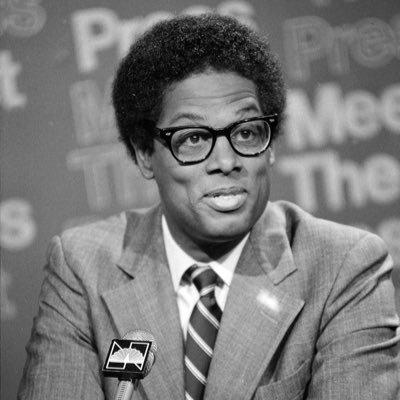
“There are few talents more richly rewarded with both wealth and power, in countries around the world, than the ability to convince backward people that their problems are caused by other people who are more advanced.”
— Thomas Sowell
Name retweeted

I've never known the tech world to be more unanimous about anything than they are about Jensen Huang. Everyone in tech thinks the board made a huge mistake. Except the board. But they are not in tech.
Name retweeted

Once you see the world through this lens, a lot of things that looked random suddenly make sense.
You understand why Macron recognized a Palestinian state at the UN. Not a state with borders it controls, a single government, or elections. A symbol. A gesture for domestic consumption, performed on the world stage. That's the politics of posture over reality, the obłuda I described earlier: what matters isn't what is true on the ground, it's the narrative you get to emit.
You understand why Jean-Luc Mélenchon, the leader of France's hard left and a man trained in Trotskyist organizations in his youth, made Gaza the center of his politics and refused for months to call Hamas a terrorist organization. Look at the mechanism. He doesn't address French Muslims as individuals with their own jobs, families, ambitions and disagreements. He addresses them as a bloc. A mass to be mobilized. That's the collectivist reflex in its purest form: you don't speak to people, you herd categories. Yesterday the proletariat, today identity blocs. The individual disappears every time.
You understand why Zohran Mamdani built his rise on the Democratic Socialists of America. The mayor of New York isn't just a progressive Democrat. He's a DSA member, and DSA doesn't hide what it is: an organization that openly calls itself socialist and treats the Democratic Party as a vehicle. His campaign promised a rent freeze, city-run grocery stores, free buses. Every one of those ideas has the same shape: the individual steps back, the city steps in. The price is set by the planner, the store is run by the planner, and voters are addressed as categories, tenants, riders, communities, rather than as free people who can build something of their own.
And Mamdani didn't come out of nowhere. The same movement helped send Alexandria Ocasio-Cortez to Congress in 2018, and Bernie Sanders spent decades making the word "socialist" respectable in American politics. Different faces, same software. The lie isn't that they hide their ideology. It's the promise attached to it: that you can freeze prices without killing supply, that the state can run what entrepreneurs run, that someone else will always pay. That promise has been tested on every continent. It has never been kept.
And you understand the most important thing: collectivists need chaos.
This isn't a metaphor. It's their own doctrine. Lenin's strategy in 1914 was to turn the war between nations into a civil war inside them. The Soviet Union spent decades arming and funding movements across the Middle East and pushed through the 1975 UN resolution equating Zionism with racism. The KGB had an entire doctrine, "active measures," dedicated to amplifying every division inside Western societies. A stable, prosperous, confident society is the collectivist's worst enemy. Chaos is his natural habitat.
Why? Because chaos is the perfect justification. It justifies emergency powers. It justifies more state. It turns citizens into frightened masses looking for a shepherd. It replaces individual judgment with tribal loyalty. A society at peace with itself asks the planner: what do we need you for?
Look at the two great conflicts of our time through this lens.
Russia's war in Ukraine was launched by a former KGB officer who called the collapse of the Soviet Union the greatest catastrophe of the century. A man formed in the exact school that treated chaos as a weapon. He doesn't just wage war on Ukraine. He wages it on Western cohesion, feeding every division he can find in our elections, our streets, our feeds.
The Israeli-Palestinian conflict is the perfect fuel for Western politics. It splits every campus, every party, every city. It lets politicians like Mélenchon build an electoral base on permanent outrage. And for everyone who lives off that outrage, a real peace would be a disaster. Ask yourself honestly: who in our political class actually has an interest in this conflict ending?
That's the pattern. The people who live off chaos never solve it. They manage it, they feed it, they posture around it. Because a solved problem is a lost lever.
Freedom produces order from the bottom up: people who own things, build things, trade with each other and have something to lose. Collectivism produces disorder from the bottom up and then sells you order from the top down.
Once you see it, you can't unsee it.


A lot of people are trying to explain the Epstein affair through antisemitism. They're looking at the wrong axis.
Bill Gates isn't Jewish. He met Epstein several times, years after Epstein's conviction. If your theory is ethnic, it collapses on the very first name.
I read the Epstein affair through a different lens: the oldest war in human history. The individual versus the mass. Private property, freedom to build, freedom to grow, versus the mind that looks at humanity and sees livestock to be managed.
Look at what Epstein actually believed. He told scientists he wanted to "seed the human race with his DNA" by impregnating women at his New Mexico ranch. In emails released this year, he argued that racial gaps in test scores were genetic and pushed genetic editing as the answer. He mused to an AI researcher that "maybe climate change is a good way of dealing with overpopulation."
Notice what's missing from all of it: the individual. Only populations, stocks, gene pools, numbers to optimize. Humans as raw material for a design drawn up by someone who considers himself above them.
That's not a Jewish trait. It's not even a left or right trait in the electoral sense. It's the mental structure at the core of Marxism: the conviction that an enlightened few have the right to engineer humanity from above, and that individuals are just inputs. Marx wanted to remake man through the economy. The eugenicists wanted to remake him through breeding. The transhumanists want to remake him through technology. Same posture. The planner and the herd.
Communism never died. It changed vocabulary. From the Politburo to the Davos panel. From the five-year plan to the global roadmap. From "the new Soviet man" to "optimizing the species." And the people who hold this view don't need to be cynical. They sincerely believe they're the shepherds.
Which brings us to the AI era. Bill Gates said on national TV that within a decade humans won't be needed "for most things." Think about what that sentence assumes. That a human being's value is their output. That once a machine can produce it, you're surplus. That someone, somewhere, will decide what you're still allowed to do.
That's the real fault line of this century. Not Jews versus non-Jews. Not even left versus right. Collectivists versus free people. Those who see humanity as a mass to be managed, and those who see each human being as sovereign: owner of their body, their work, their property, their future.
AI can go two ways. It can be the greatest tool of individual empowerment ever built, letting one person do what used to take an entire company. Or it can be the ultimate instrument of the planner, the dream every central committee ever had, finally within reach.
Epstein is not an anomaly. He's a symptom. The question isn't who he was connected to by blood. The question is who shares his view of humanity.
Choose your side.

Name retweeted
If we want the world to get better, we'll have to accept one thing: some people really are exceptional, and they really do create value.
I've explained how the system works. Now I'm going to tell you why Elon Musk is under attack.
It isn't because of his tweets or his positions. It runs deeper than that. Elon Musk is under attack because he exists.
In a world built on egalitarianism, the exceptional individual is an anomaly. Worse, he's a threat. Left free, he creates gaps: he produces more value, he moves faster, he climbs higher. Every gap he creates proves that the egalitarian project rests on a lie, the lie that we're all interchangeable.
Kurt Vonnegut saw it back in 1961 in a chilling short story, Harrison Bergeron. In an America made perfectly equal, the strong are weighed down, the beautiful are masked, and the most intelligent have their thoughts scrambled by piercing noises so that nobody rises above anybody. That isn't some distant dystopia. It's the ultimate logic of this system. If equality of outcome is the goal, then excellence is the enemy.
Here's a truth almost nobody dares to say: humanity moves forward through geniuses.
Look across the centuries. Aristotle founds logic. Gutenberg prints and sets knowledge free. Copernicus and Galileo move the Earth. Descartes and Pascal give reason its method. Newton writes the laws of the universe. Pasteur defeats microbes. Darwin explains life. Turing invents computing. Every time, one mind, a single one, tips history over.
In 1905, special relativity was in the air, and others were getting close. But general relativity, without Einstein, we might still be waiting for. And the digital revolution as we lived it, from the personal computer to a phone in every pocket, wouldn't look the way it does without Steve Jobs.
We almost always admire these geniuses once they're dead. Galileo had to recant on his knees. Semmelweis, who understood that washing hands was enough to save mothers, died in an asylum, mocked by his peers. Turing, who helped win the war, was convicted and then chemically castrated. Van Gogh sold almost nothing in his lifetime.
And then there's Nikola Tesla. The man who invented the electric world we still live in: the alternating current that powers our homes, the induction motor, the foundations of wireless transmission. He dreamed of sending energy freely across the planet. When J.P. Morgan stopped funding him, his Wardenclyffe tower was abandoned, then demolished. He ended his life alone, buried in debt, in a New York hotel room, feeding pigeons. He was found dead in January 1943, at 86. The man who electrified the world died with almost nothing.
The irony of history: his name is now written on millions of cars, the cars of the company Elon Musk took to the top. As if history wanted to pay its debt.
The system has always hated those who surpassed it, and it only celebrates them once they can no longer bother it.
It's hard to accept, but it's reality. It doesn't mean geniuses have more rights than anyone else. Before the law, before justice, and in their dignity, all people are equal, and they must stay that way. It means that some individuals, through their talent, their courage, and their risk-taking, create a thousand times, a million times, a billion times more value than ordinary people. And they don't keep that value for themselves. All of humanity benefits from it.
Elon Musk is one of those men.
He revived space exploration when governments had turned away from it. He forced the entire auto industry into a new century. With Starlink, he brought the internet to the most isolated corners of the planet. Every time, he was told it was impossible. Every time, he risked everything, and every time, he won.
He is the first person in history to cross a trillion dollars. People want him to apologize for it. I say the opposite: he deserves it, and he deserves much more. The value he's creating for humanity, with reusable rockets, the electrification of the world, and the road to Mars, is beyond any comparison with what he owns.
His fortune wasn't taken from anyone. It was created where there was nothing.
That's exactly what the system can't forgive him for.
In their worldview, nobody should be above anybody. Success is suspect, wealth is theft, excellence is an injustice to be corrected. Elon Musk is living, dazzling, unbearable proof that their model is wrong: a free man with talent and courage can create more value than all their administrations combined. As long as he exists, their story doesn't hold. So he has to be destroyed. The lawsuits, the investigations, the press campaigns, and the regulatory threats all come from there.
But here's what makes me deeply optimistic.
The system is cracking. It bet that people would end up preferring equality in mediocrity to freedom in excellence, and it lost. People saw the rockets come back and land. They saw what a single man could accomplish when nobody stopped him from acting. And they understood they had been lied to.
What's coming is a new world, built on real meritocracy. Not a world where the same people inherit the same seats, but a world where everyone gets to play. The child of a factory worker, a farmer, or an immigrant can get in the game, and if he's good, he rises fast. Very fast. As high as his talent takes him.
The equality worth defending is equality of opportunity, not equality of outcome. The first sets geniuses free. The second smothers them.
We think it's normal for a soccer player to earn a fortune because he's exceptional with a ball. We think it's suspicious for an engineer to get rich by bringing rockets back from space. The world will be better the day kids have Elon Musk posters on their bedroom walls, the way they have posters of Messi and Ronaldo.
Humanity never moved forward thanks to people who wanted nobody to stand out. It moved forward thanks to those who dared to outrun everyone.
Elon Musk is one of them. And this time, history won't wait until he's dead to recognize it.
🤖 Made with AI

Name retweeted
Right now in the US, part of the Democratic Party has decided to play the "socialist" card. Days before the midterms, DSA candidates are winning primaries and the word isn't taboo anymore.
So today I'm going to show you why socialism never works. Not with ideology. With mechanics.
Let's start with a dumb question. How much should a loaf of bread cost?
You don't know. Neither do I. Nobody does. And that's exactly the point.
The price of a loaf of bread is the instant synthesis of millions of pieces of information that no single person holds: the wheat harvest in Kansas, the price of gas for the oven, the baker's wages, the shop's rent, a drought in Argentina, a war on the Black Sea, whether people feel like bread this morning or a bagel.
In 1920, Ludwig von Mises published a paper that should have ended the debate. His argument: without private ownership of the means of production, those means are never exchanged. No exchange, no prices. No prices, no economic calculation. The planner can't know whether a steel mill is worth more than a dam or a hospital. He's flying blind. He can't even tell that he's wrong.
In 1945, Friedrich Hayek drove the point home in "The Use of Knowledge in Society." Useful knowledge is scattered across millions of minds. The baker knows things about his neighborhood that no ministry ever will. Prices are a telecommunications system: when tin becomes scarce somewhere in the world, its price rises, and millions of users economize on it without even knowing why. No committee, no ministry, no plan can replicate that. The market isn't an ideology. It's a distributed information processor.
Then Milton Friedman picked up a simple pencil. The wood comes from Washington State, the graphite from South America, the rubber from Malaysia. Thousands of people who don't know each other, don't speak the same language, maybe even hate each other, cooperate to make something none of them could make alone. Nobody gave them orders. Prices were enough.
Now run the experiment in reverse. Set the price yourself.
Cap rents below market: landlords stop maintaining, stop building, housing disappears. Swedish economist Assar Lindbeck, a man of the left, said rent control is the most efficient technique known for destroying a city, short of bombing it.
Cap the price of flour: shelves empty, lines form, the black market takes over. Venezuela, 2016. The country with the largest oil reserves on earth, and people standing in line for hours to eat. Nearly 8 million Venezuelans eventually fled.
Socialism smashes the thermometer and then acts surprised that the fever keeps rising.
And this is where it gets serious.
Because when the plan fails, and it always fails, the planner has two options. Admit the plan is wrong. Or blame the people. Saboteurs, speculators, kulaks, enemies of the people.
He always picks the second one.
Hayek saw it in 1944 in The Road to Serfdom, in a chapter with a chilling title: Why the Worst Get on Top. A central plan requires central power. Central power attracts those who crave power. And when reality resists the plan, reality has to be broken. Which means people have to be broken.
Stalin. He collectivizes the land. Output collapses. He blames the peasants and seizes the harvests. The Holodomor, 1932-1933: millions starved to death in Ukraine, the breadbasket of Europe. Add the Gulag, the purges, the deportations.
Mao. The Great Leap Forward, 1958-1962. Backyard furnaces producing useless steel, insane grain quotas, local officials inflating numbers to avoid punishment, and the state requisitioning food based on those fake numbers. The result: the worst famine in human history. Estimates range from 30 to 45 million dead.
Pol Pot. The Khmer Rouge abolish money, markets, property, and empty the cities. The dream of total planning, carried all the way. In four years, roughly one in four Cambodians dies.
Hitler. He sent communists to the camps, but his party called itself National Socialist and the economy answered to the plan and the party. Companies stayed private on paper, but the state decided what to produce, at what price, and for whom. Hayek dedicated The Road to Serfdom "to the socialists of all parties" precisely because he saw the same root: the idea that the state must steer society toward a collective goal, and the individual must step aside.
Different eras. Different continents. Different cultures. Same mechanism. Same ending.
This isn't a bug. It's a feature of the system. Remove prices and you remove information. Remove information and you remove the ability to correct. And when you can no longer correct through prices, you correct through force.
So let me say it plainly. Socialism always starts nice. A rent freeze. Public grocery stores. Make "the rich" pay. Nobody promises the Gulag on day one.
But if America truly goes down this road, the rest of the story is already written. The plan will fail. There will need to be culprits. There will need to be power to punish them. And a socialist government holding the American state apparatus, its surveillance capabilities, its technology, its military, wouldn't be a regional tragedy. It could be the greatest tragedy in history.
The 20th century paid for this lesson with tens of millions of lives. We don't get to forget it in one generation.
Prices aren't the enemy of the people. Prices are the voice of the people.
Name retweeted
On my way to the office this morning, I passed a group of young people protesting, a Palestinian flag draped over their shoulders.
And I asked myself a question I can't shake: why does this generation always fall into the same trap? No matter the history. No matter the context. Even the ones from wealthy families, who went to the best schools, who were dealt every good card. Always the same trap.
I don't think it's stupidity. I think it's a mechanism. And a mechanism can be taken apart, piece by piece.
A. The observation: everything the state touches becomes unaffordable.
Look at economist Mark Perry's famous chart, the one people call "the chart of the century." It tracks US prices since 2000.
At the top, what explodes: hospital services, college tuition, textbooks, childcare, housing. Increases of +100%, +150%, up to +250%, far above general inflation.
At the bottom, what collapses: TVs, software, phones, toys, clothing. A TV today costs a fraction of what it did in 2000, for an infinitely better product.
Look at what separates the two groups. It isn't technology. It isn't complexity. It's one variable: how much the state is involved.
At the top, sectors that are subsidized, regulated, shielded from competition, where the state funds demand and blocks supply. At the bottom, sectors where companies fight every single morning to serve you better and cheaper.
B. The mechanism: why it's systematic.
When the state subsidizes demand without freeing supply, prices rise. Every time. Guaranteed student loans, and universities raise tuition. Housing aid plus blocked building permits, and rents skyrocket. Administered healthcare, and bureaucracy eats the budget before it ever reaches the patient.
In France it's even more vicious, because the price doesn't disappear: it hides. You never see the hospital bill, you pay it through payroll contributions. You never see the cost of school, you pay it through taxes. Public spending at 57% of GDP, one of the heaviest tax burdens in the world, more than €3.4 trillion in debt. And the result? Overflowing ERs, falling PISA scores, young people who can't afford to live in the city where they work.
The market didn't fail in these sectors. It was never allowed in.
C. Suffering demands a culprit.
A 22-year-old lives all of this in their bones. They can't find a place to live. Their degree either buries them in debt or opens no doors. The future feels blocked. That suffering is real, and I don't deny it for a second.
But human beings can't stand suffering without a culprit. They need a face. A scapegoat.
And this is where everything is decided: who taught them how to read the world?
D. Whoever tells the story picks the villain.
Schools are public. Universities are public. Culture runs on grants. Film goes through funding committees. Public broadcasting shapes the narratives. The people handing down the interpretive framework are, overwhelmingly, paid by the very system that creates the problem.
Do you really think that system is going to name itself as the culprit?
No. It names the capitalist. The boss. The landlord. "The rich." The multinational. The commercial West. Same role, same casting, every time.
E. One lens, a thousand causes.
And this brings me back to that flag. A generation taught to read every situation through a single lens, oppressor on one side, rich, Western, capitalist, oppressed on the other, will apply that lens everywhere. To housing. To climate. To conflicts on the other side of the world. The cause changes, the lens stays. That's why the trap is always the same: it's not the cause that draws them in, it's the way of thinking that was installed in them.
F. The perfect inversion.
Here's the irony. Capitalism is the force that drove down the price of almost everything it touched. The state is the force that blew up the price of almost everything it captured. And young people blame the first for the crimes of the second.
It's like blaming the firefighter for the fire because you saw him at the scene.
G. The ballot box confirms it.
In the US, a few weeks out from the midterms, a large share of urban young voters is getting ready to vote Democrat for more state, more spending, more regulation. New York elected a self-described socialist mayor, carried by young voters, on promises of rent freezes and city-run grocery stores. Rent freezes, the policy that has made housing scarcer everywhere it's been tried. The cure that worsens the disease.
In France, it's the same play in two acts. Part of the youth votes for the radical left, which promises more state. Another part votes for the center, which promises to "manage" the state well, and has dug the debt deeper than ever. Two different ballots, one shared assumption: the problem is the market, the solution is the state.
H. The way out.
These young people aren't stupid. They're right to be angry. They're just aiming at the wrong target.
The day they understand that their rent, their tuition and their hospital are expensive precisely because the state runs them, their anger will change direction. They'll stop protesting against those who create. They'll start protesting against those who capture.
That day, the greatest intellectual scam of our time will be over.

Name retweeted

CDC is aware of and closely monitoring reports of a suspected case of pneumonic plague in the Irkutsk region of Russia that resulted in a death. We are working across the U.S. government to assess developments as additional information becomes available.
While the circumstances of this reported case remain unconfirmed, plague is a serious bacterial disease that is treatable with antibiotics, particularly when recognized and treated early.
Pneumonic plague can spread person-to-person through respiratory droplets during close contact, which is why rapid identification and treatment of infected individuals, and monitoring of potentially exposed individuals, are important public health measures.
At this time, there is no indication of a broader threat to the United States, but CDC and our interagency partners are prepared and will continue to monitor the situation closely.
Name retweeted

A society doesn't avoid new things by slowing innovation. They come at you anyway, from nature or from other societies. You just make yourself more vulnerable to them.

Name retweeted

FDA advisory panel endorses Grail blood test for cancer, saying benefits outweigh risks
The endorsement was fairly tepid. Story here:
$GRAL
statnews.com/2026/09/23/fda-…

Name retweeted

All-In Summit: Bill Gurley
(0:00) Bill Gurley takes the stage at the All-In Summit
(1:29) Bill's Presentation: Searching for Feynman
Links to additional resources mentioned in talk and used in research:
p3.institute/searching_for_f…
@bgurley
Name retweeted

“Civil rights used to be about treating everyone the same. But today some people are so used to special treatment that equal treatment is considered to be discrimination.”
— Thomas Sowell

Name retweeted

Executive Brief of our latest episode:
Sell the Truth
1. Credibility matters more than sales tactics. The people worth impressing can see through manipulation immediately, so persuasion starts with authenticity, competence, and honesty.
2. Saying “yes, and” works because most people have a reason for believing what they believe. Understand their position first before trying to move them anywhere else.
3. Objectivity is a form of honesty. The more ego you remove from your thinking, the more clearly you can see reality and make better decisions.
4. Charisma is confidence plus love: projecting strength and goodwill at the same time. Honesty without kindness turns people away; kindness without honesty becomes fake.
5. Leadership is not telling people what to do—it’s making them want to do it. The best leaders connect the mission to people’s own ambitions and motivations.
6. Humans are built to hunt together in small, high-trust groups. The most meaningful work happens when small teams of highly capable people pursue difficult missions together.
7. Sales works best when it doesn’t feel like sales. If you genuinely believe in what you’re offering, enthusiasm replaces technique.
8. Feed your good obsessions. Real work is driven more by obsession, curiosity, and intrinsic motivation than by frameworks, business books, or motivational podcasts.
9. Optionality matters. The wrong long-term deal can trap you for years, so it’s better to walk away than compromise into the wrong partnership.
10. We live in an age of nonlinear returns. One massive outcome outweighs dozens of smaller wins, so focus on asymmetric upside instead of fighting over small spoils.
11. The goal is not to maximize every dollar—it’s to build a life where you preserve your freedom, energy, curiosity, and peace of mind.
Name retweeted

To: Admitted Students on Ivy Decision Day
From: UATX
Congratulations. Getting in was hard and you should be proud. Now here’s some unsolicited advice so you don’t waste the next four years.
Go to class. We know this sounds obvious. But as the New York Times reported recently, Harvard students routinely skip class, rarely speak up when they're there, and focus on their devices instead of the discussion. Faculty say few students do enough preparation to contribute meaningfully. The average college student spends about 20 hours a week on class and studying combined. At UATX, we aim for 50. That’s the difference between a part-time commitment and a full-time job. You (or your parents) are about to spend upwards of $90K a year. If you don't show up, you're paying roughly $250 per skipped lecture for the privilege of sleeping in.
Read the books yourself. Your generation is the first to arrive at college post-literate — raised on short-form video, dependent on algorithms, and increasingly incapable of sitting with a difficult text long enough to let it change your mind. Ninety percent of college students use AI academically. This makes you more reliant on the authority of others. Most professors will also stand between you and the text. They’ll tell you what Marx “really meant,” what Aristotle “failed to see,” as though an academic in 2026 has outsmarted minds that shaped civilizations. The good professors do the opposite: they put you in front of the book and they work with you to find what a great mind has to teach us directly. Find those professors, and read everything yourself.
Say what you actually think. Seventy-three percent of conservative students report withholding their political views in class out of fear their grades will suffer. Our advice isn't political; it's intellectual. If you spend four years learning to say what's expected instead of what's true, you’ll graduate roughly where you started — just older, more credentialed, and more practiced at self-censorship. One study finds that nearly half of students show no measurable gains in “critical thinking” after two years in college. Keep this in mind as you make decisions about which professors to take and how to do your assignments. Taking a small hit on your paper to gain integrity and wisdom is usually worth it.
Ask for real grades. Sixty percent of Harvard undergraduate grades are now A’s. Twenty-five years ago, it was 20%. It got so bad that the legendary Harvard professor, Harvey Mansfield, started giving students two grades: the official one for their transcript, and a private one reflecting what they actually earned. He called the official grades “ironic.” So here's a suggestion: Take your A, but also ask your professors for a “Mansfield grade” so that you know where you stand. And don’t avoid difficult courses to keep your transcript clean for law school.
Get work experience before you graduate. Forty-two percent of recent college graduates are working jobs that don't require a degree. Many employers are projecting the next few years to be the worst college grad job market in years. A degree alone — even from an Ivy — is not a job guarantee. Seek out apprenticeships, internships, and real work starting freshman year. The students at UATX are connected with entrepreneurs and business leaders from day one. Many will graduate with four years of work experience alongside their degree. You can build something similar at your school, but you'll have to do it yourself.
Understand how debt shapes your life. If you're paying full freight or even half, do the math with your eyes open. Your decision to take on debt will quietly reshape the trajectory of your adult life through countless small surrenders: the job you take because it’s safe instead of starting the company. The city you choose to live in. The relationship you delay and the kids you don’t have. For women, a $1,000 increase in student loan debt lowers the odds of marriage by 2% per month in the first four years after graduation. None of that shows up in the college brochure. If you're going to take on debt, treat it like the constraint it is from day one: save aggressively and make sure every dollar is buying something that will actually compound in your favor.
Find the people who take school seriously. The best thing about a great school isn't the lectures or the library. It's the handful of professors and students who are genuinely there to learn — who read ahead, argue in good faith, and push you to be sharper. Find them. UATX is a small community of those who seek a serious education. At a larger university, you have to build this community yourself.
*
The most dangerous thing about an elite university is that it is very easy to do nothing for four years and still come out looking successful. The transcript will say you excelled. The diploma with the fancy crest will open certain doors. Your parents will be proud. And yet you will have coasted — through inflated grades, unread books, and borrowed opinions.
Getting in is an accomplishment. Making the next four years worth it will be harder, and the right decisions will change everything.
We wish you luck.

