




Innes retweeted

On the Origin of the Germanic Language, and why its not from Sweden, Finland or the Baltics.
A Thorough examination of McColl et al. 2026 and the Archaeogenetic record regarding haplogroup I1:

Innes retweeted

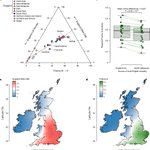
Leicestershire is the most Saxon area of the British Isles. Who knew? Sussex, Derbyshire, and Nottinghamshire are more Anglish than East Anglia!

Innes retweeted
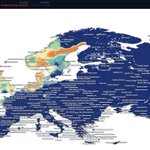
Y-DNA of Hunter Gatherers from the Baltic, 6200-2600BC, showing quite clearly that Germanic I1 could not have come from them.
This chart explicitly does not include Corded Ware individuals despite the late occurance of R1a. Those individuals are labeled as Comb Ceramic Culture.


Innes retweeted

This thread is all about your legal options if you were to travel back in time to medieval Europe and murder someone. It's also about measuring the decline of the extended family and the origins of English individualism. On Bertha Phillpotts' "Kindred and Clan in Past Time".

Innes retweeted
Russell Brand could've benefited from listening to the young Mark Collett as opposed to mocking him.
I'm no huge Collett fan, and certainly not a fan of Brand either, but the irony of this in the presence of current-day attacks on Brand by the media is "funny" to see.


Innes retweeted

amazon.com/dp/B0HPZMDBZC
The Völuspá and Hávamál stand among the most significant surviving texts of pre-Christian Germanic spirituality, preserving the sacred cosmology, ancestral wisdom, and philosophical traditions of the Germanic peoples.
In Orðstírr, @Sagnamadr and I approach these foundational works of the Poetic Edda not merely as historical literature, but as living religious texts offering divine guidance, spiritual insight, and practical wisdom for the modern Heathen.
Using Henry Adams Bellows’s translation, we examine the Völuspá and Hávamál through historical research, comparative mythology, and a distinctly Heathen theological perspective. Selected stanzas include explanatory notes, interpretations, and personal commentary that explore their deeper meanings and relevance to contemporary life.
From the creation and cyclical renewal of the cosmos to Óðinn’s teachings on honor, wisdom, hospitality, and lasting renown, this work invites readers to engage with the Eddas as sources of both spiritual understanding and everyday guidance.
Including discussions of Germanic theology, philosophy, and practical Heathen observance, Orðstírr serves as an accessible introduction for newcomers and a thoughtful companion for experienced practitioners.
For wisdom endures beyond wealth, beyond life, and beyond the passing of generations.
• Bellows’ translations of the Völuspá, Hávamál, and Reginsmál in both Old Norse and English.
• Cultural and Theological commentary by the authors for study and Heathenry-focused practice.
• Rune Poems with rune history and essays on runic magic.
• General Ritual Guide.
• Philosophy and spiritual essays and words of wisdom.

Ordstirr: Commentary on the Voluspa & Havamal
Ordstirr: Commentary on the Voluspa & Havamal
amazon.com
At long last, @HammerandVajra and I’s commentary on the Völuspá, Hávamál, Rune Poems and more is finished and available to order! It’s been a labour of love, and we’re quite proud of it.
Check it out! ᛟ
amazon.com/dp/B0HPZMDBZC

Innes retweeted

this is the location of the newly identified potential La Tene Celtic site.
It could dramatically change our idea of the Celtic range of expansion. It directly aligns with the comments by Tacitus that there were a people in this exact region which spoke a language similar to Brythonic.


La Tène helmet and fibulae recovered in Łysa Góra, near the village of Bagienice, north of Warsaw and not far from the border with Kaliningrad.
While it had been known for some time that Celts were active in southern Poland, new archaeological excavations at the Iron Age site of Łysa Góra are revealing that Celts may have been at the very heart of the Iron Age amber trade, not just part of its downstream network.
The words of Tacitus are now far more realistic.
"On the right coast of the Suebian Sea [the Baltic Sea] dwell the Aestian nations, whose customs and attire are the same as those of the Suebians, but their language more resembles that of Britain."

Innes retweeted
Thomas Pennant in 1772 writes about a Beltane celebration in Perthshire, and this is the full quote:
"On the fire, they dress a large caudle of eggs, butter, oatmeal, and milk; and bring, besides the ingredients of the caudle, plenty of beer and whisky, for each of the company must contribute something. The rites begin by spilling some of the caudle on the ground by way of libation : on that, every one takes a cake of oatmeal upon which are raised nine square knobs, each dedicated to some particular being, the supposed preserver of their flocks and herds, or to some particular animal, the real destroyer of them ; each person then turns his face to the fire, breaks off a knob and flinging it over his shoulder says, 'This I give thee, O fox, spare thou my lambs ! This to thee, O hooded crow ! This to thee, O eagle !' When the ceremony is over they dine on the caudle."
Innes retweeted
In 17th Century Scotland, the figure of the Elven Queen was widely known throughout the Germanic speaking Lowland areas. Infamous witch-trials such as that of Andro Man and Isobel Gowdie in the Northeast of Scotland both involved the Queen and her Kingly husband. In the Early Modern period, many witch trials in Scotland feature the Queen in some way where she usually bestows the sorcerer with different kinds of powers.
In the Ballad of Tam Lin, a romance dating to at least the mid-16th Century - the Queen kidnaps Tam Lin and he becomes of the Elfen race after being imprisoned in Elf-land.
The romance of Thomas the Rhymer dates back to the 15th Century, and also features the Queen of Elf land as a main character. Here she takes on an initiatory role, luring Thomas onto her horse, riding him to a desert with three paths - one to heaven, one to hell, and one to Elfland. The Medieval Romance contains a lot of interesting details and perhaps I'll break it down in a thread at some point, but it evidently has a deeply esoteric aspect to it. Notably Thomas acquires the gift of prophecy, and a tongue that is unable to lie, earning him the name "True Thomas."
Some common features of the Queen is her association with burial mounds, which coincides with her position as monarch over the Elves, a people who dwell in burial mounds.
She is associated with being clad in white linen gowns, with green and brown coats. Green is often associated with the elves and the sidhe in both the Lowlands and the Gaelic parts of Scotland.
Other associations include the Wild Hunt-like fairy ride, typically involving women spirits led by the Elfin queen throughout the times of Halloween.
The Queen of Elfhame is a figure unique to the Germanic regions of Scotland, and is perhaps related to the continental figure known by a multitude of names including Frau Holle, Frau Wode, Perchta, or Wanne Thekla. Historically this figure has been associated with the Goddesses Diana and Hecate, whilst contemporary historians also associate these figures with Frigg, the mysterious wife of Woden.


Innes retweeted
Halloween was an important festival-time in the north of Scotland, like most of the other folk festivals that would occur throughout the year, Halloween was associated with the blaze of a sacral needfire.
Lit by friction in the traditional way, the needfire was burnt on a high-spot and the flames from it were used to relight the fires of hearth and home. Its smoke was holy and cleansing, boys and girls would lay down in the grass to let the smoke roll over them, and the more daring would leap over the fire itself.
In the Highlands there are accounts of men parading around fields with lighted torches to ward off the evil associated with that night. At Balmoral during the reign of Victoria, the effigy of a witch was burnt to the tune of the bagpipe at this time.
In 1793 the Minister of Monquhitter complained that "The Halloween fire was kindled in Buchan. Various magic ceremonies were then celebrated to counteract the influence of the witches and demons and to prognosticate to the young their success and disappointment in the matrimonial lottery."

Innes retweeted

A lot of people are getting this wrong in the comments. No, it does not mean that Irish-Americans are actually English, but it does mean that this batch of samples—which we assume have enough Irish ancestors to justify identifying as Irish-American—have enough non-Irish admixture to pull them slightly away from Ireland to be more English-like (its genetic distance, not admixture). This doesn't even require English ancestry at all, and it probably comes from some small amounts of continental Catholic admixture. For example, a single Italian-American ancestor in recent generations might be enough for an Irish-American's heatmap to look like this, and we know that Italian-Irish intermarriage is not uncommon in American northern cities (Anecdotally, I've met several Irish-Americans with some Italian ancestry). The elevation in EEF from a recent Italian ancestor would bring it closer to English samples. It is less likely to be from significant Irish intermarriage with the WASP population because of confessional barriers, but we don't know because we are not given any information about their heritage outside of "Irish-American". So no, it does not mean that Irish Americans are actually 'le self-hating Anglo-Americans' as some are suggesting, and these results don't even require English admixture. Without bigger sample sizes and transparent family trees, this is ultimately a misleading endeavour. In fairness, this is a hurdle with most American ethnic communities because of higher intermarriage compared to their European counterparts.


Innes retweeted
It's common that example texts of Scots are bible verses, or the Lords prayer. So just for fun I translated the first two verses of the Voluspa into Doric Scots, using @germanicgems English translation as a base.
In Doric, the Voluspa might become "The Spae-wife’s Ley."

Innes retweeted

Bledsian Winterfylleth. Mead, incense and prayers were offered, so Lord Ing may make our lands and people virile and prosperous once more.
Hail Ingvi Freyr, progenitor of the North Sea Peoples, Lord of light, slayer of Surtr!
Ūton lofian Ing! ᛝ


Innes retweeted

In Scandinavia, on All Saint's Day, people illuminate graveyards with candles and offerings for the dead. This is a continuation of an ancient Germanic tradition of a three night festival for the dead that begins on the full moon tonight, the first night of Winter full (OE: Winterfylleth, ON: Vetrnætr).
The three nights of Winter full should include several blots:
Haustboð “harvest offering" for Inguifrey. Pray for a good year.
Álfablót "Elf sacrifice" for the noble dead in the barrows as well as the lord of the elves,Inguifrey, and the lord of the dead, Woden (Irmin).
Disablot "Disir sacrifice" for the goddesses and ancestral mothers called in Norse Disir, or in Old English Idesa.
The Old English Winterfylleth marked the start of winter on this full moon. The Norse equivalent, Vetrnætr "winter nights" is specifically said to last for three nights. The Saxon chronicler Widukind of Corvey wrote that the Saxons on the continent held a three day blot to their god Jǫrmun (Odin) in October who is also referred to as Irmin.
So between the Norse, Old Saxons and Anglo-Saxons we have a clear picture of this three day Germanic festival and the gods that were invoked - Odin/Woden (Jǫrmun/Irmin), Inguifrey/Yngvifrey, the Alfar/Ylfe "Elves" and the Disir/Idesa.


