Tech × Bio media decoding AI, biotech & pharma strategy (part of WTMB Group). Newsletter: https://nitter.cf/t.co/N8EoYcPDMn Sponsorships: https://nitter.cf/t.co/bWSUPaw6Zh
Spain
Joined June 2017
- Tweets1.9K
- Following511
- Followers909
- Likes1.8K
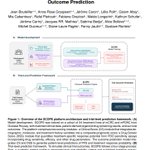


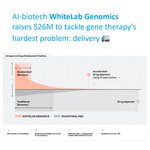


Are quantum-enabled methods and computing tools real in drug discovery?
biopharmatrend.com/artificia…

17
BiopharmaTrend retweeted

Biology hides its best cancer targets in the splicing.
"One of the biggest bottlenecks is no longer just how to build the drug, it's where to point it."
@envisagenics and @Boehringer Ingelheim, a match made in the room.
Visit the @SynBioBeta website to read the full article.
synbiobeta.com/read/the-drug…
Subscribe to our newsletter and get the biggest biotech news straight to your inbox 🧬
syntheticbiologysummit.com/?…

BiopharmaTrend retweeted

If you’ve been wondering what the AI bio chatter is all about, this piece from the A16Z Bio+Health team is a great overview. I like this chart in particular, gives a great sense of where/how AI is impacting the drug discovery and pre clinical development stages:


BiopharmaTrend retweeted

Google can't stop.
@GoogleDeepMind Gemini 4 Hydrogen outperforms @AnthropicAI Opus 5.5 across most of our rare-disease benchmarks for a fraction of the price, lower latency, and faster throughput.
Hydrogen vs. Opus 5.5
RareBench: 49.2% vs. 51.6%
LabBench: 46.0% vs. 40.2%
LabRobotBench: 31.7% vs. 23.0%
ScreenBench: 70.2% vs. 47.2%
And latency and throughput don't get talked about enough. The combination of Gemini 4 Hydrogen's speed and intelligence lets it operate as a real-time agent in the loop with our laboratory robotics.
The video shows our workcell autonomously running an experiment with nothing more than a natural language prompt to Hydrogen. This performance is reflected in its very strong score on LabRobotBench as well.
More information on all of these benchmarks is available at gamowlabs.com/benchmarks
Congrats on another great launch, Big G!
Orakl Oncology raises $34M, touting up to 90% clinical trial prediction accuracy. Can it hold?
biopharmatrend.com/news/orak…

1
1
72

A "century of biology" is unfolding at full steam.

Super proud to announce AlphaGenome 2 - our new DNA sequence model! 🧬 It predicts the impact of DNA variants in different specific cell types - unlocking crucial information for understanding complex diseases. Available for academic research via our API: alphagenomedocs.com/
62
Macrocycles are, without a doubt, one of the modalities that are gaining momentum in drug discovery in 2026

MACROCYCLE SUPERCYCLE
argenx is acquiring not boring portfolio company Unnatural Products for up to $1.15B
huge congrats to Cam & co and props to the bio🐐 @ElliotHershberg for convincing me we should invest (& explaining what a macrocycle is)
endpoints.news/argenx-to-acq…

2
124
At HLTH Europe 2026 in Amsterdam, Dr. Andrii Buvailo sat down with Dr. Michal Tzuchman-Katz, Maccabi's R&D boss, to explore the growing opportunities and challenges in biobanking.
biopharmatrend.com/interview…

BiopharmaTrend retweeted

Thank you Andrii Buvailo, Ph.D. @biopharmatrends for the mention highlighting my X post!
"Melinda B. Chu (@MelindaBChu1) was unimpressed. "Isomorphic is slower than traditional R&D and with $2 billion," she wrote. "No IND in 5 years. Not even real preclinical data reported; only vague Target D." Her prediction: no trial in 2026, and possibly not in 2027."
Thanks to @biogerontology for bringing it to my attention!
biopharmatrend.com/business-…

The $50B question: how do we know if Isomorphic's AI platform works?
biopharmatrend.com/business-…
53
BiopharmaTrend retweeted

El Hospital Vall d'Hebron de Barcelona acaba de anunciar que será el primero de Europa en codesarrollar gemelos digitales humanos con el sector tecnológico.
Son réplicas virtuales de un paciente, hechas con su imagen médica, sus datos clínicos, su genómica y modelos de inteligencia artificial. Sirven para simular cómo evolucionará una enfermedad y qué pasará si le das un tratamiento concreto, antes de dárselo de verdad.
El proyecto STEP tiene 11,7 millones de euros del FEDER de Catalunya, el 100% de la inversión, y es el único de salud entre los ocho proyectos STEP del programa catalán. En tres años quieren gemelos de la actividad eléctrica del corazón en niños, detección precoz de cardiopatías con un electrocardiograma, planificación de ablaciones, válvulas pulmonares y extirpación de tumores hepáticos.
El doctor Manel Escobar, director clínico de Radiodiagnóstico de Vall d'Hebron, lo dice claro: el gemelo anticipa cómo evolucionará el paciente y qué efectos puede provocarle un tratamiento. Eso es apoyo real a la decisión clínica.
En Certuma trabajamos cada día para que la inteligencia artificial ayude al médico a decidir mejor y más rápido. Que un hospital español ponga 11,7 millones en predecir al paciente antes de tocarlo es exactamente la dirección correcta.
La medicina que prueba en silicio antes de probar en carne llega antes, y con menos daño.
It is incredible to see AI systems actually contributing to basic biology research.
Smart humans + powerful AI systems are the ultimate force of progress in this era.

Thrilled to share new work from our experimental biology lab at @AnthropicAI. Led by world-class biochemist Januka Athukoralage, we built a rapid method for the isolation and structural characterization of vaults. It turns out these massive structures are not just found in eukaryotic cells, but also in prokaryotes and even phages. We solve the structure of one of these phage vaults, and then demonstrate we can engineer additional repeats into the wall to make it bigger.
One thing I can't get over about these vaults. They seem to be widespread across life - we assembled them from 8 different bacteria and bacteriophages. But they are just so massive - bigger than ribosomes, AAV, and even some phage capsids. Why devote so much energy to making these huge complexes? They have to be doing something useful - I hope that's the question that gets answered next.
Amazing collaboration with @PeterHYoon, @amirshanehsaz, @eric_kabrams, and @mgdurrant! Grateful to our team for making Claude an amazing labmate and to Anthropic for supporting this type of work on fundamental biology.
Natural mysteries abound - let's get to solving them!
Links here:
Blog: anthropic.com/research/inves…
Technical report: www-cdn.anthropic.com/76e55f…

85
BiopharmaTrend retweeted

Virtual-cell ventures get diligence-ready when the evaluation criterion is specific, not a fundraising story. Avak Kahvejian at #ARDD2026. Photos: agingpharma.org/photos2026


In Oct, @biohub, the Chan Zuckerberg sci. org, expanded Virtual Biology Initiative to $1.8 billion.
The money pays for open, standardized data to train virtual cells, AI models that predict how a cell will respond to drugs or gene edits.
biopharmatrend.com/artificia…

74
📊 Just published "The Virtual Cell Tracker: Who’s Building Them, What Works, Where the Money Goes."
It covers at least 14 models, 11 datasets and 16 deals, with an evidence label on every performance claim.
biopharmatrend.com/business-…

58