

Ardent Human Rights Defender/ Business Consultant/HRE and Civic Education Specialist/ Husband/SRHR & CJ Advocate/ Articulate Moderator/ Events Planner
Uganda
Joined September 2022
- Tweets619
- Following310
- Followers204
- Likes941






Taremwa Albert retweeted

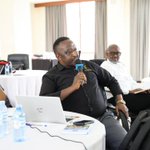
JustiIn⏰: @CommunitiesOrg – the host of EROG-UG- was represented by our ED @ConsultAlbert, along with other #SteeringCommittee members, at the 10th Annual workshop for land and environmental defenders hosted by EROG-Kenya in Mombasa under the theme: “Document, Defend and Mobilise: Strengthening Land and Environmental Defenders through Evidence, Collective Action and Wellbeing”
The Last 10 years have focused mostly on documentation, protection of LEDs, and also developing into an increasingly strong network. A Mechanism to influence change and also this is an opportunity to venture into how we can ensure that advocacy transforms into meaningful change to communities.
What does it mean to be a Land and Environmental defender in the current context? Bring the context into reality, considering regional trends. Who protects the defender while doing their work? A movement cannot be sustainable when the members are exhausted.


Taremwa Albert retweeted

I had almost given up on following up on the directive President @KagutaMuseveni gave me when we met again in February, 24 years after our first meeting. He asked me to follow up through Afande Elimu so I could meet him again.
If this lands on your timeline, I humbly ask you to repost and tag @StateHouseUg or @KagutaMuseveni or anyone you know that can make this happen,so this directive can finally be acted upon.
I have written letters, made calls, and followed up in every way I can. All I ask is for an opportunity to meet him again without having to pay anyone to make it happen.
With all humility, please help me push this forward. 🙏
@StateHouseUg @KagutaMuseveni
Taremwa Albert retweeted
JustIn⏰: @CommunitiesOrg represented by our #ED @ConsultAlbert is a part of the Kigezi Region planning Meeting organised by @NPA_UG at @KabaleDistrict Rukiiko Hall.
Among the issues to discuss are the key challenges that must be addressed under the #NDPIV


Well done my Sister.... Always proud of you and of course we support the dream of ensuring #periodequality is achieved at all levels


Taremwa Albert retweeted

Happening Now:
The @Necda_ug stakeholders’ meeting, organized by @earlyyearsCount, is underway.
@Necda_ug Chairperson Hellen Namulwana shared progress to date, including the successful legal registration of NECDA.
Vice Chair Kabanda Joseph presented the NECDA brief of the strategic plan.
Dr. Safina Mutumba, Assistant Commissioner for Teacher & Pre-primary Curriculum Support at the @Educ_SportsUg, highlighted ongoing restructuring processes at the ministry and ECCE policy dissemination successes
Our ED provided an update on the NECDA Secretariat Transition and the TORs, serving as subcommittee chair for transition planning.
These are great milestones for @Necda_ug, and we are proud to serve as the Parenting Cluster Secretary.


Taremwa Albert retweeted
JustIn⏰: 🌱 EMPOWERING YOUNG PEOPLE, BUILDING RESILIENT COMMUNITIES: LOSCO AND PARTNERS ADVANCING YOUTH EMPOWERMENT IN KIGEZI
Today, the Local Sustainable Communities Organisation (LOSCO) @CommunitiesOrg joined the Ndorwa Secondary School community in Kabale Municipality for the launch of the Thrive Impact Club, an initiative designed to empower young people in school and out of school while addressing challenges such as school dropouts and teenage pregnancies.
The initiative was launched by Hon. Enid Origumisiriza, Kabale District Woman Member of Parliament, and is being championed by Kabale District Youth Councillors Edgar and Natasha, in collaboration with partners committed to advancing youth development and wellbeing.
The launch featured career guidance and mentorship, with emphasis on self-discovery, talent development, life skills, and informed decision-making. Participants also planted fruit trees, reinforcing the importance of environmental conservation and youth participation in sustainable community development.
As part of the broader empowerment efforts, Hon. Enid Origumisiriza continues to support menstrual health and hygiene through the provision of reusable sanitary towels to schoolgirls, in partnership with Pad a Girl Child Foundation Uganda, helping promote dignity and support girls' continued participation in education.
Speaking during the mentorship session, Mr. Taremwa Albert, @Consultalbert - Executive Director of LOSCO, encouraged students to make responsible choices and develop resilience in the face of peer pressure and life challenges.
“Life presents us with choices every day, and the decisions we make today shape our future. Making good choices requires self-awareness, discipline, and the courage to stand by your values, even when faced with peer pressure. Learn to think critically, consider the consequences of your actions, and seek guidance from trusted mentors.” He Said
He emphasised the importance of the 3Cs—Choices, Consequences, and Courage—and encouraged students to believe in their potential, respect themselves and others, and remain focused on their aspirations.
🤝 A Commitment to Long-Term Partnership and Youth Empowerment
LOSCO recognises that sustainable youth empowerment requires long-term collaboration among schools, community leaders, elected representatives, youth structures, civil society organisations, and other stakeholders.
We look forward to building and strengthening meaningful partnerships with Hon. Enid Origumisiriza, youth leaders, schools, and like-minded organisations to expand opportunities for young people both in and out of school. Through sustained collaboration, we aim to advance life skills, education retention, SRHR awareness, environmental stewardship, leadership, and community resilience.
Together, we can nurture informed, confident, responsible, and empowered young people who contribute positively to their communities and shape a more inclusive and sustainable future.
#LOSCO #YouthEmpowerment #ThriveImpactClub #Kigezi #CareerGuidance #Mentorship #SRHR #GirlsEducation #EnvironmentalConservation #CommunityPartnerships #YouthLeadership #SustainableDevelopment


Taremwa Albert retweeted

𝐖𝐨𝐫𝐥𝐝 𝐏𝐚𝐭𝐢𝐞𝐧𝐭 𝐒𝐚𝐟𝐞𝐭𝐲 𝐃𝐚𝐲 𝟐𝟎𝟐𝟔
Theme | Safe care for noncommunicable diseases | 𝘚𝑎𝘧𝑒 𝑐𝘢𝑟𝘦 𝘧𝑜𝘳 𝘭𝑖𝘧𝑒
As Uganda faces a growing burden of cancer and other noncommunicable diseases, alongside ongoing maternal health challenges, #PatientSafety must remain central to every stage of care, right from prevention and early diagnosis to treatment and long-term care.
For many patients, safety is shaped by the health system they encounter, including gaps in specialised diagnostic services, maternal health services, hospital capacity and the cost of accessing timely care. The planned introduction of PET scan services in Uganda is an important step towards strengthening cancer diagnosis and reducing the burden of seeking specialised care abroad.
Safe care starts with informed patients. Knowing your health status, following treatment correctly, keeping medical records, asking questions, practising #SelfCare and seeking care early are all part of protecting your health.
On #WorldPatientSafetyDay, we call for health systems that are adequately equipped, medical interns and other health workers who are well supported and supervised, and patients who are empowered to take part in decisions about their own health.

Taremwa Albert retweeted
JustIn⏰: Our #ED @Consultalbert participating in the INTEGRATING GENDER AND DISABILITY INCLUSION INTO ACCOUNTABILITY PROGRAMMING training organised by @Accu_ug "Gender and disability inclusion are essential to effective #transparency and accountability because #publicaccountability is only meaningful when all citizens can #accessinformation, participate in decision-making, raise concerns and influence corrective action". In Kigezi and beyond, women, girls and persons with disabilities may experience additional barriers arising from #poverty, #socialnorms, #discrimination, inaccessible information, limited mobility and exclusion from community and public decision-making spaces.
Access to information: Public budgets, audit findings, project information and accountability materials are often technical or provided in formats that may be inaccessible to persons with disabilities or difficult for women and other underserved groups to access and understand.
Meaningful participation: Women and persons with disabilities may attend accountability meetings without having meaningful opportunities to speak, influence priorities or participate in decisions. Programming should move beyond numerical representation to meaningful voice and influence.
#Publicresource allocation: Accountability processes should examine whether public resources respond equitably to the needs of women, girls and persons with disabilities, including in health, education, water, roads, social protection and livelihood programmes.
#Accessibilityofaccountability mechanisms: Physical venues, transport, communication channels and digital platforms may create barriers for persons with disabilities and people living in remote communities. Accountability mechanisms should be physically, digitally and communicatively accessible.
#Genderresponsive and disability-inclusive monitoring: Community monitoring should collect and analyse data disaggregated by sex, age and disability, where appropriate, to identify who benefits from public services and who remains excluded.
#Safetyandprotection: Women, persons with disabilities and community accountability actors may face intimidation, discrimination, harassment or retaliation when raising concerns. Safe, confidential and safeguarding-sensitive reporting and grievance mechanisms are therefore critical.
#Representationindecisionmaking: Accountability structures should deliberately include women's organisations, organisations of persons with disabilities and other representative community groups, rather than relying only on traditional leadership structures.
#Relevance to Transparency and Accountability: Integrating gender and disability strengthens accountability by answering a critical question:
“Accountable to whom, and whose experience is being reflected in the evidence?”
For LOSCO, this means ensuring that audit findings, citizen monitoring, community dialogues, media reporting and engagement with duty bearers reflect the experiences of those most likely to be excluded.
The approach will strengthen transparency by making information more accessible; improve accountability by enabling excluded groups to monitor public services; and enhance responsiveness by ensuring that corrective actions address differentiated needs.
Ultimately, gender and disability inclusion will help LOSCO move from “accountability for citizens” to “accountability with all citizens”—ensuring that women, girls and persons with disabilities are not merely counted as beneficiaries, but recognised as rights holders, evidence producers, monitors and active accountability actors.


Taremwa Albert retweeted
Happening now!!! @CommunitiesOrg Citizens' Concern Africa (CICOA) in partnership with Local sustainable communities organization (LOSCO)@CICOA_Ug holding a Regional stakeholder conversation on safe and inclusive accountability pathways in Kigezi Region @NCHRD_UG @DefendDefenders @cehurduganda


Taremwa Albert retweeted

@CommunitiesOrg Thanks for outlaying this content.
It's well put.
Taremwa Albert retweeted
JustIn @CommunitiesOrg represented by ED @ConsultAlbert attending the #4thEdition Joint Review Mission, 2026 for Kigezi Sub Region,
Theme: the role of Governance, leadership, and partnership in strengthening client centred health services and the mission has brought together Key Health Stakeholders including Min of Health @CHRISBARYOMUNS1 the GOH, District Health Officers, health facility in-charges, Health Unit Management Committee (HUMC) chairpersons, political and technical leaders, development partners, CSOs, religious and cultural leaders, health workers and other key stakeholders from Kigezi Sub Region.
Reliable Health facilities are client centred, functional, consistent and well staffed @GAMateeka DHO Chair and DHO Kabale.
The Kigezi Sub-region - Kabale, Rubanda, Rukiga, Kisoro, Kanungu, Rukungiri has made notable progress in expanding access to primary healthcare over the past decade. However, compared to national aspirations and better-performing regions, the sub-region continues to face persistent challenges in equitable access, quality of care, health workforce distribution, and Sexual and Reproductive Health and Rights (SRHR) service delivery, particularly in remote and mountainous communities.
Nationally, Uganda has approximately 8,600 functional health facilities, with about 74% of approved health worker positions filled, reflecting gradual improvements in health system capacity.
However, rural regions such as Kigezi continue to experience shortages of doctors, midwives, specialist personnel, medicines, and diagnostic equipment, with lower-level health facilities bearing the greatest burden.
Uganda's public expenditure on health remains at approximately 6–7% of the national budget, well below the Abuja Declaration target of 15%, limiting investments in health infrastructure, workforce expansion, and service quality.
Maternal and reproductive health indicators illustrate both progress and remaining gaps. Uganda's maternal mortality ratio has declined significantly over the past two decades—from over 500 deaths per 100,000 live births in the 1990s to an estimated 189–284 deaths per 100,000 live births depending on the reporting methodology—but remains well above the Sustainable Development Goal target of fewer than 70 deaths per 100,000 live births. Skilled birth attendance has increased nationally to approximately 74%, and almost all pregnant women receive at least one antenatal care (ANC) visit. Within Kigezi, health-facility performance on institutional maternal mortality has continued to improve and remains comparatively strong relative to several other sub-regions of Uganda. According to the Ministry of Health Annual Health Sub-Programme Performance Report FY2024/25, Kigezi's Institutional Maternal Mortality Ratio (IMMR) declined from 71 maternal deaths per 100,000 health-facility deliveries in FY2022/23, to 63.4 in FY2023/24, and further to 46.9 in FY2024/25. During FY2024/25, the sub-region recorded 57,573 health-facility deliveries and 27 maternal deaths, compared with 55,178 deliveries and 35 maternal deaths in FY2023/24.
This performance places Kigezi well below the national institutional maternal mortality ratio of 69.1 per 100,000 deliveries in FY2024/25, indicating meaningful progress in facility-based maternal health outcomes.
Kobugabe Joanita – Communication Officer, Rubanda DLG
District Health Officers (DHOs) in the Kigezi sub-region have appealed to Government for increased support in providing adequate ICT equipment, connectivity and digital infrastructure to health facilities to facilitate the effective transition to electronic health information systems.
The call was made during the 4th Kigezi Regional Joint Review Mission (JRM) 2026, being held from 1st to 2nd September 2026 at Volcano Hotel, Rubanda District. The mission brings together key stakeholders in the health sector to review achievements, identify persistent challenges and develop strategies for improving healthcare service delivery across the Kigezi sub-region.
The review is providing an opportunity for stakeholders to assess progress in areas including immunisation, maternal and child health, HIV services, tuberculosis control, disease surveillance and other health programmes, while examining gaps that continue to affect the quality and accessibility of healthcare services.
The Chairperson of the Kigezi Regional DHOs Forum and Kabale District Health Officer, @GilbertMateeka, called upon stakeholders to strengthen leadership, accountability and client-centred care at health facilities emphasising the critical role of health facility in-charges and HUMC chairpersons in ensuring that resources invested in health facilities translate into improved health outcomes for communities.
He urged health facility leaders to ensure that facilities remain clean, functional, accountable, responsive and welcoming to clients, while supporting health workers to effectively perform their duties.
Also highlighted are the persistent health challenges affecting the region, including preventable maternal and neonatal deaths, adolescent health challenges, malnutrition, communicable diseases, and gaps in access to and quality of healthcare services.
The #stakeholders also called for stronger partnerships among political leaders, technical teams, religious and cultural leaders, development partners and communities, noting that improving health outcomes requires collective responsibility.
On the fight against corruption, the DHOs expressed support for Government's anti-corruption efforts while appealing for allegations to be properly investigated before action is taken, in order to protect innocent health workers from being unfairly implicated.
They urged health workers to uphold the highest standards of professionalism, integrity and ethical conduct in the execution of their duties.
The DHOs further emphasised that client-centred care should involve respect, dignity, confidentiality, safety, compassion and timely attention to patients.
Health workers were encouraged to avoid unnecessary delays, absenteeism, lateness and neglect of duty, which can undermine public confidence in the health system.


Taremwa Albert retweeted
JustIn⏰: @CommunitiesOrg in partnership with @cehurduganda Supported by @amplifyfund conducted a #baselinesurvey on where Sexual and Reproductive Health and Rights (SRHR) was found to remain central to Uganda's development agenda and the realization of human rights. Despite significant national progress in maternal health, HIV prevention, family planning, and legal reforms, substantial disparities persist among rural populations, women, adolescents, persons with disabilities, indigenous communities, refugees, and other marginalized groups.
The Kigezi Sub-region, comprising Kabale, Rubanda, Rukiga, Kisoro, Kanungu, and Rukungiri districts, is home to approximately 1.79 million people according to the 2024 National Population and Housing Census. The region faces unique geographical, socioeconomic, and cultural barriers that affect access to SRHR information, services, and justice mechanisms. Population growth, rural settlement patterns, poverty, gender inequalities, and difficult terrain continue to influence health outcomes and service accessibility.
This baseline assessment utilized secondary data from the Uganda Demographic and Health Survey (UDHS), Uganda Bureau of Statistics (UBOS), Ministry of Health (MoH), Uganda AIDS Commission (UAC), Justice Law and Order Sector (JLOS), United Nations agencies, and district records to establish the status of SRHR in Kigezi.
The assessment identified several key barriers:
· Limited access to youth-friendly SRHR services.
· Persistent stigma and discrimination affecting vulnerable populations.
· High rates of adolescent pregnancy and early marriage.
· Gender-based violence and underreporting of violations.
· Weak referral mechanisms between health and justice institutions.
· Limited legal literacy regarding SRHR rights.
· Financial and geographical barriers to accessing services.
· Inadequate inclusion of marginalized populations in policy and decision-making processes.
The report further highlighted the critical role of JLOS institutions in promoting access to justice, legal aid, accountability, human rights awareness, and protection for vulnerable populations experiencing SRHR violations.
urlkub.co/5mp1nD


Taremwa Albert retweeted
JustIn⏰: @CommunitiesOrg participating in the simulation #workshop: Protecting Non-Profit Organisations from #TerrorismFinancingAbuse and Unintended Policy Harm- It Begins With You! Organised by @civicadvisory supported by @Brot. Our ED @ConsultAlbert representing the entity.


Taremwa Albert retweeted

𝐅𝐫𝐨𝐦 𝐆𝐮𝐢𝐝𝐚𝐧𝐜𝐞 𝐓𝐨 𝐏𝐫𝐚𝐜𝐭𝐢𝐜𝐞: 𝐏𝐫𝐚𝐜𝐭𝐢𝐜𝐚𝐥 𝐓𝐨𝐨𝐥𝐬 𝐟𝐨𝐫 𝐏𝐫𝐨𝐭𝐞𝐜𝐭𝐢𝐧𝐠 𝐍𝐏𝐎𝐬 𝐟𝐫𝐨𝐦 𝐓𝐅 𝐀𝐛𝐮𝐬𝐞 𝐚𝐧𝐝 𝐏𝐨𝐥𝐢𝐜𝐲 𝐇𝐚𝐫𝐦
Yesterday, we convened a simulation workshop to test our forthcoming handbook, Protecting Non-Profit Organisations from Terrorism Financing Abuse and Unintended Policy Harm: It Begins with You.
The workshop demonstrated the handbook's practical value, with participants applying its guidance to real-world scenarios while providing insightful feedback that will strengthen the final publication.
#AML #CFT #NPOs #CivilSociety #FinancialIntegrity #FATF #Policy


Taremwa Albert retweeted
❝Civic space is the foundation of active citizenship. It is our freedom to speak, organise, assemble, and participate in public affairs. Young people can engage in civic space in many ways, including volunteering, peer education, reporting and documenting evidence based rights violations as well as working with organisations that nurture their ambitions and talents. By taking responsibility to educate and empower others, we the youth help shape the future of our communities and foster inclusivity in the civic space.❞
~ Ms. Victoria Mirembe Abuko, (@VictoriaMabuko) | CEHURD, during a panel discussion at the #BNNYouthSummit2026.
#InternationalYouthDay2026
#ReachAHandAfrica
#BilliNowNow2026


Taremwa Albert retweeted
Notable Co-Conveners who participated in this Local Leadership Labs (LLL) National Reflection Meeting include:
@feminature, @WDFUganda, NARIDE, Hope in the Heat, @CommunitiesOrg, GLPC, Sisters of Hope, Arise Women of Valor, Joint Environment Development Association (JEDA), APSARC, CODI, Feeble Care Uganda, Lango Civil Society Network, @EdrijaruE , and CAPAIDS Uganda (National Convener)
We were also joined by @PlanUganda and @CAREUganda.
One critical area of discussion was the linkage local actors create between communities and government programmes such as PDM and UWEP. This has been identified as a key challenge across several regions and remains a strategic priority that local actors have been urged to address closely. While pursuing strategic partnerships, the Co-Conveners were also reminded of the growing need to build lasting relationships and strengthen their branding.
#CAPAIDSUganda #LocalLeadershipLabs


Taremwa Albert retweeted

Our teams are out of the office today for our Mid-Year Staff Retreat.
We are dedicating time to reflect on the first seven months of the year by reviewing the progress made so far, celebrating key achievements, assessing what is working well, discussing challenges encountered, and aligning our priorities for the months ahead as we continue protecting and promoting the rights of Human Rights Defenders across Africa.
Our emergency helpline remains available should any urgent protection needs arise.
#MidYearRetreat


Taremwa Albert retweeted
𝘍𝘰𝘳 𝘵𝘩𝘦 𝘴𝘢𝘬𝘦 𝘰𝘧 𝘕𝘢𝘬𝘢𝘨𝘸𝘢'𝘴 𝘥𝘢𝘶𝘨𝘩𝘵𝘦𝘳, 𝘢𝘯𝘥 𝘧𝘰𝘳 𝘵𝘩𝘦 𝘵𝘩𝘰𝘶𝘴𝘢𝘯𝘥𝘴 𝘰𝘧 𝘨𝘪𝘳𝘭𝘴 𝘢𝘯𝘥 𝘸𝘰𝘮𝘦𝘯 𝘸𝘩𝘰𝘴𝘦 𝘩𝘦𝘢𝘭𝘵𝘩, 𝘧𝘶𝘵𝘶𝘳𝘦𝘴, 𝘢𝘯𝘥 𝘩𝘶𝘮𝘢𝘯 𝘳𝘪𝘨𝘩𝘵𝘴 𝘩𝘢𝘯𝘨 𝘪𝘯 𝘵𝘩𝘦 𝘣𝘢𝘭𝘢𝘯𝘤𝘦, 𝘵𝘩𝘪𝘴 𝘪𝘴 𝘢 𝘮𝘰𝘮𝘦𝘯𝘵 𝘵𝘰 𝘮𝘰𝘷𝘦 𝘧𝘳𝘰𝘮 𝘢𝘸𝘢𝘳𝘦𝘯𝘦𝘴𝘴 𝘵𝘰 𝘢𝘤𝘵𝘪𝘰𝘯.
Our client, Nakagwa, has bravely recounted the harrowing ordeal of her husband repeatedly defiling their then 10-year-old daughter, and the ongoing legal journey with CEHURD's legal aid. Her story is not an isolated tragedy but a reflection of the realities of Sexual and Gender-Based Violence (SGBV) in Uganda, and its devastating impact on the health, dignity, and futures of girls and women.
Among adolescent girls, #SGBV is linked to heightened risks of HIV, unwanted pregnancies, unsafe abortions, school dropouts, and long-term mental health disorders such as depression, anxiety, and post-traumatic stress. As a Person With Lived Experience and a CEHURD client, Nakagwa's daughter embodies the need for stronger protection mechanisms, timely access to justice, and comprehensive health and psychosocial support for survivors.
Her story exposes how patriarchal norms, silence, and systemic barriers often deny survivors their right to safety, healthcare, and redress. We call upon the government and all duty-bearers to condemn all forms of SGBV, affirm the right of every girl and woman to live free from violence, support initiatives that strengthen legal protection, survivor-centered health services, and community-based prevention programs, and amplify the voices of survivors like Nakagwa's daughter so their experiences inform policy and programming on SGBV.
#CEHURDJudicialColloquium


Taremwa Albert retweeted
JustIn⏰: @CommunitiesOrg a part of the #StudyReport launch and Peer Knowledge exchange Dialogue on EHRDs collecting evidence that leads to a deeper understanding of key challenges faced by #HRDs from the ethnic and indigenous minorities organised by @RRightsAfrica & @MRG


Great Milestone @YAGANET1 Very Exemplary to the true meaning of Resilience....
