
Stevens University Professor, University of Pennsylvania Computational Social Scientist. Founder and director of CSS Lab at Penn @csspenn
Philadelphia
Joined March 2009
- Tweets1.8K
- Following832
- Followers19.6K
- Likes6.1K





Duncan Watts retweeted

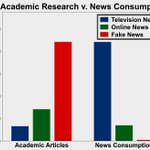
@csspenn has released a new dataset of 140,000+ news articles from the 2024 U.S. presidential election year, providing a new resource for studying how news coverage is selected and framed, published in @ScienceMagazine.
The Penn collaboration includes @annenbergpenn and @wharton and is led by @DuncanJWatts.
“We can't measure bias directly, but we can see its imprints,” says Watts.
bit.ly/3V5J3cV

Duncan Watts retweeted

Duncan J. Watts' Everything is Obvious challenges the confidence we place in common sense, hindsight and expert predictions. These fifteen lessons explore why social systems are difficult to predict, how chance and context shape outcomes, and why better learning systems matter.

Duncan Watts retweeted

#AcademicX: Let me tell you about Sophia Pink
🚨MANAGEMENT JOB CANDIDATE🚨
If you're in a b-school management department and hiring, she's a star you won't want to miss!
Sophia Pink (sophiapink.com) is a PhD candidate at @Wharton. She does incredible research on decision making and goal pursuit in organizations. Sophia’s record is mind-bogglingly good (she was a productive RA before joining our program!): she has *9* publications in top journals like Organization Science, Management Science, Science, PNAS and JESP as well as an exceptional pipeline of great papers including an extraordinary, unpublished job market paper about an ambitious new field experiment on LinkedIn. I've posted the abstract from her job market paper below.
Sophia’s work answers important questions about decision making, goal pursuit, and choice architecture in the age of AI. She is skilled at running both field experiments (with and without corporate partners) and lab experiments. And she’s a terrific communicator.
It has been an honor and joy to advise Sophia Pink alongside an incredible group of supporting mentors including but not limited to the amazing @m_sendhil, @ME_Schweitzer, @amywrzesniewski, @angeladuckw, @edwardhchang, and @erika_kirgios.
#HireThisOne | #WhartonProud


Duncan Watts retweeted
#AcademicX Jose Cervantez (@jacervantez):
🚨MANAGEMENT JOB CANDIDATE🚨
If you're in a b-school management department and hiring, I’ve got a catch for you!
Jose Cervantez (josecervantez.com) is a PhD candidate at @Wharton. He does phenomenal research on sponsorship with a focus on how people and organizations decide who gets recognized, supported and promoted. Jose’s record is excellent: publications in Management Science and Organization Science, and a mind-blowing pipeline of papers describing ambitious field experiments he executed himself. I've posted the abstract from his exceptional unpublished job market paper below.
Jose’s work builds theory and evidence to answer important questions about what it takes to find and feature diverse talent. While he has developed an expertise in running complex field experiments, he is also an adept lab experimentalist.
It has been an absolute privilege to advise Jose alongside an incredible group of supporting mentors including but not limited to the extraordinary Rosalind Chow (@RosalindChow), Maurice Schweitzer (@ME_Schweitzer), Judd Kessler (@juddkessler), Modupe Akinola (@ProfAkinola), Nancy Rothbard (@NRothbard), and McKenzie Preston.
#HireThisOne| #WhartonProud


Duncan Watts retweeted

New paper out in @ScienceAdvances!
News organizations shape public understanding through the choices they make about what to cover and how to cover it. How can we measure these differences across publishers systematically and at scale?
We present the Media Bias Detector!

We owe David for that connection also!

And big shout out to @DavMicRot for connecting my predoc at MSR NYC to @csspenn. People are always asking me how in the world I got involved with @duncanjwatts’s CSSLab…
1
3
1,580
Duncan Watts retweeted
#AcademicX: The OID Department @Wharton is hiring an assistant professor w/ a focus on decision processes! Come join me, @angeladuckw, @duncanjwatts, @jpsimmon, @ME_Schweitzer, @eriksantoro & Gal Smitizsky.
Apply *ASAP* (we will start reviewing Oct 1!): apply.interfolio.com/192153
Duncan Watts retweeted

What happens when scientific claims go beyond what a study can establish?
In new research published in Nature Human Behaviour, Calvin Isch, Timothy Dörr (@Timothy95Doerr), Neil Fasching, Grace Jennings, and Duncan Watts (@duncanjwatts) find causal claims in 46% of 194,631 cross-sectional studies and show that causal wording makes readers more likely to infer causation.
They also find that asking LLMs to simplify research or discuss its practical implications can increase causal overclaiming 🧵⬇️
nature.com/articles/s41562-0…

Duncan Watts retweeted

In a new @PennEngineers-led study, researchers found that while #AI chatbots can encourage vaccine-hesitant parents to immunize their children against HPV, standard written materials yielded virtually the same results. penntoday.upenn.edu/news/tes…

Duncan Watts retweeted
New research from @WarrenCntrPenn faculty affiliate @duncanjwatts's @csspenn Lab suggests that decades of conflicting evidence about the effectiveness of collaboration can be explained by one overlooked factor: the task itself.
Read more here: knowledge.wharton.upenn.edu/…

Duncan Watts retweeted
I'm thrilled to share to share that I defended my PhD at @Penn yesterday! I've had the time of my life working with @duncanjwatts and the amazing people at @csspenn over the past several years. Incredibly grateful for the journey and everyone who made it so special!

Congratulations, Dr. Samar Haider! 🎓🖥️
@samarhdr
Samar successfully defended his dissertation, "A Computational Approach to News Production", studying how computational methods can help us systematically understand what news organizations choose to cover and how they cover it.


Congrats @samarhdr! We are all so proud of you and what you've accomplished.
Congratulations, Dr. Samar Haider! 🎓🖥️
@samarhdr
Samar successfully defended his dissertation, "A Computational Approach to News Production", studying how computational methods can help us systematically understand what news organizations choose to cover and how they cover it.
Duncan Watts retweeted

Quantifying the prevalence and impact of overreaching causal claims in social science via @duncanjwatts et al
nature.com/articles/s41562-0…

Duncan Watts retweeted
Measures like "stops🛑" are building blocks for studying human mobility. But how reliably can we identify them in sparse GPS data?🛰️📍
At the CSS Showcase, Paco Barreras, Andrés Mondragón, and Caroline Chen shared work on the robustness of stop detection in sparse location data

Duncan Watts retweeted
What have we been working on at the CSS Lab? 👀
A quick look inside our Spring Showcase, with lightning talks, posters, new tools, and works in progress across computational social science.
A few highlights from the day 📷 And of course, more to come!
Duncan Watts retweeted
Using nearly 19,000 human survey responses collected across 40 waves during the 2024 U.S. presidential election, Elliot Pickens(@ElliotPickens), David Rothschild(@DavMicRot), Jenny Wang(@jennyshwang), and Jonas Mikhaeil(@jonas_mikhaeil) compared LLM-generated and human responses


Duncan Watts retweeted
Amir Tohidi (@Amir__Tohidi) presented at #IC2S2 Measuring "Copaganda": An Analysis of How U.S. National News Covers Crime, with Baird Howland, Billy Pierce, Duncan Watts (@duncanjwatts), and David Rothschild (@DavMicRot)

Duncan Watts retweeted
Samar Haider (@samarhdr) presented Whose Voice Matters? Measuring Political Representation in News Quotations, with Chris Callison-Burch (@calli7262) and Duncan Watts (@duncanjwatts)! #IC2S2


Duncan Watts retweeted
At @AOMConnect #AOM2026, Bethany Hsiao (@bhsiao01) presented Fairness Preferences in Algorithmic Decision-Making as part of the symposium AI in Organizations: Challenges to Face and Opportunities to Embrace.


Duncan Watts retweeted
Robin Na presented work with Duncan Watts @duncanjwatts and Abdullah Almaatouq on whether grounding LLM predictions in scientific literature improves their ability to predict behavioral experiments, finding that literature conditioning rarely improved prediction accuracy.