

Physicist; Accelerators, Vacuum Science & Technology, Thin-Films, Synchrotron Radiation & Vacuum Modelling, Nuclear Fission & Fusion, Transmutation, & more...
Joined July 2018
- Tweets124K
- Following771
- Followers5.1K
- Likes50.2K






Robert O'Kersevan retweeted

Jeder sollte diese Rede von Katherina Reiche lesen. Stichworte 90 Milliarden VEE-Kosten ab 2035, viele Billionen Kosten insgesamt (Wert von etwa 500 Reaktoren der 1.3-GW Klasse). Auch wenn Sie es nicht glauben: Sie Ist auf den offiziellen Seiten des Bundeswirtschaftsministeriums
bundeswirtschaftsministerium…

Robert O'Kersevan retweeted

CHART OF THE DAY: The price difference between gas in Europe and Asia versus North America, reaching now a ratio of 12 times, has never been wider; not during the 2022 gas shock following the Russian invasion of Ukraine, nor in 2011-2012 after the Fukushima nuclear accident.
My @Opinion column: bloomberg.com/opinion/articl…

Robert O'Kersevan retweeted

Eine Industrienation läuft nicht nach Wetterbericht.
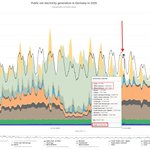
Die Grafik für Oktober 2026 zeigt: Deutschlands Wind- und Solarstrom schwankt stark, mit wiederholten Einbrüchen auf wenige Gigawatt. Frankreichs Kernkraft liefert durchgehend etwa 27 bis 43 Gigawatt. Sie ist steuerbar und weitgehend wetterunabhängig. (Die Y-Achsen beachten)
Die Lebenszyklus-Emissionen laut NREL: Photovoltaik 43, Windkraft 13, Kernkraft ebenfalls 13 Gramm CO₂-Äquivalente je Kilowattstunde. Herstellung, Bau, Betrieb und Rückbau sind berücksichtigt.
Bis 2030 sollen Erneuerbare mindestens 80 Prozent des deutschen Bruttostromverbrauchs decken. Doch ein Jahresziel sichert keine einzige dunkle, windstille Stunde.
Wie schaffen wir mit Erneuerbaren eine jederzeit verlässliche Versorgung? Wer liefert bei Dunkelflaute, mit welchen Emissionen und zu welchen Kosten?
Industrie braucht gesicherte Leistung. Ausbauziele allein halten keine Fabrik am Laufen.
#windkraft #solar #pv #kernkraft #atomkraft #gesicherte #leistung #strom #erneuerbar #fossilfrei #fossilarm #versorgung #volatil

Robert O'Kersevan retweeted

📸Photo du jour
Tournant des années 1970-1980 : La salle des machines de la centrale nucléaire du Blayais (Gironde), en cours de construction.
Source : AFP / Getty Images.


Robert O'Kersevan retweeted

Un eccellente libro divulgativo sull'energia nucleare, molto ben fatto e documentato. I due autori sono esperti del settore che negli anni 80 erano attivisti ecologisti, come ammettono all'inizio del libro, e poi hanno cambiato radicalmente idea di fronte all'evidenza scientifica e razionale. Tanto di cappello per la loro sincerità. Tra i tanti passaggi interessanti, ne riporto uno: cosa sarebbe accaduto se nel 1987 l'Italia non si fosse data la zappa sui denti chiudendo il programma nucleare.


Robert O'Kersevan retweeted

Das ist das AKW Brokdorf aus einer Distanz von vermutlich ein paar km. 1,4 GW, die nicht mehr produzieren dürfen. Dank der Lage braucht es nicht mal ein Kühlturm. 51 davon könnten mengenmäßig Deutschland aktuell zu ~95% mit Strom versorgen. Alle ~7.000 km² eines. Das war es. Mit einem voll elektrifizierten Deutschland bräuchte man alle ~2.500 km² eines. Ein Quadrat mit 50 km Kantenlänge, vorher 83.
Unauffällig und leise, wenig Bedarf für ein europäisches Netz, wenig Reserveleistung, etwas Möglichkeiten, die Abwärme noch zu nutzen. Würde man nicht so ein politisches Aufregen darum machen, könnte man den Müll leicht endlagern und sogar weiterverwenden, Uran kann leicht gebunkert werden und von netten Staaten importiert werden. Anreicherung können wir selbst. Müssten diese noch etwas ausbauen.
Stromverbraucher müssten kaum was ändern. Außer Menschen mit Wärmepumpe, die müssten vermutlich mit einer seltenen Leistungsbeschränkung leben.
Ist aber nicht erlaubt. Lieber Technologie, die größeren Netzausbaubedarf hat, viel mehr Reserve braucht, alle Verbraucher (unnötigerweise) in die Pflicht nehmen will und das Landschaftsbild deutlicher prägt. Darüber hinaus bleibt wohl eine starke Importabhängigkeit von Wasserstoff/Synthesegas bestehen, was man eigentlich auch entspannt mit entsprechenden Reaktoren selber produzieren könnte.
Danke an Dominic Wipplinger für das Bild.

Robert O'Kersevan retweeted

Capital Expenditure (capex)
The global economy is $128 trillion
Global capital expenditure (capex) is $28.5 trillion
By sector, global capex looks like this…
1. $3.9 trillion - Manufacturing, all industries
2. $3.6 trillion - Residential property
3. $2.6 trillion - Non-residential property
4. $1.5 trillion - Electricity infrastructure
5. $1.4 trillion - Transport infrastructure
6. $1.1 trillion - Oil and gas
7. $950 billion - *DATA CENTERS & COMPUTE*
8. $750 billion - Defense
9. $620 billion - Healthcare and education
10. $300 billion - Telecoms
11. $250 billion - Water infrastructure
12. $200 billion - *SEMICONDUCTOR FABS*
[…]
The capital structure that underpins the above capex shortlist varies materially by sector, because the assets are fundamentally different in financial terms.
What matters is their;
• Asset life / duration, it can vary from 3yrs to 50yrs
• Cash flow forecastability, oil & gas is volatile, rent less so.
• Residual value, highly specialized assets are harder to resell
Capex is capitalised with a combination of debt and equity, what matters for pricing the capital is the combination of these things (there’s other stuff but I’m simplifying).
Global capex is about 50% funded by loans and debt instruments, and 50% equity.
What is happening with data centers has nothing to do with global liquidity, which is frankly vast and would like a lot more big projects to originate.
The issue is that a lot of data center projects are delayed or overrunning. Execution is what matters, you must hit the cash requirement milestones. Many are not. The build out is made up of myriad construction projects that compete for the same land and suppliers. Much of the debt financing comes from the same few pools and those pools have reached the point where the marginal loan is net negative to the value of the pool.
It seems that if the economy has to build more than $800bn of data centers in US, then projects start tripping over each other.
This is a major problem, because capex was forecast to hit $2 trillion by 2028 but the construction industry seemingly struggles to deliver that level of site development.
What lenders want and compute operators need is a non-competing supply chain that can deploy data center capacity. A supply chain that is not competing to buy the same powered land, plant equipment and diggers, something that isn’t built out in concrete and grid connections.
The available investment capital and lending is actually greater than ever, and increasing, it’s just looking for another deployment channel, because powered land is stuffed.
Capital is readily available but bankable delivery capacity is what is scarce.
An alternative industrial supply chain (alternative to powered land) can massively expand the set of financeable projects, reduce delivery bottlenecks and make completion more predictable.
Such opportunities exist, and they are able to absorb the stranded $1 trillion capex, and have the delivery capacity to scale well beyond powered land.
What is required… is to make those new channels bankable. Asset financing precedent and mature liability and underwriting contract law all help here, along with actually building and qualifying the delivery capacity channel.
But this is what 2027 is going to be all about without people actually describing it as this.
Construction industry prices will likely rise, but this is somewhat a case of ‘nine women cannot have a baby in a month’. So there’s likely some market dislocations coming as major capital pools move to stand up the new bankable deployment capacity and get funds deployed into the most lucrative part of the economy.
Interesting times!

Robert O'Kersevan retweeted

Renewables aren't protecting us from anything. Grid frequency volatility is increasing as grid inertia is falling, demonstrating reduced stability. Do your job to protect energy security. More detailed thread in reply below.


Robert O'Kersevan retweeted

Imposte sui redditi della Spagna
Il sistema spagnolo di tassazione sui redditi divide l'imposta tra lo Stato e le regioni. Per questo il carico dipende molto da dove si vive.
•L'IRPF ha due metà. La scala statale va dal 9,5% al 24,5%. Ogni comunità autonoma aggiunge la propria scala, che può fissare liberamente.
•Con la scala regionale di riferimento, uguale a quella statale, gli scaglioni sono 19%, 24%, 30%, 37%, 45% e 47% oltre 300.000 €.
•Il 45% marginale scatta a 60.000 €, molto presto rispetto a Germania e Francia.
•L'aliquota massima cambia da regione a regione: 45% a Madrid, 54% nella Comunità Valenciana. Paesi Baschi e Navarra hanno un sistema fiscale proprio.
•Il minimo personale esente è di 5.550 € e cresce con figli, età e disabilità. Le soglie non vengono adeguate all'inflazione da anni, quindi il drenaggio fiscale lavora in silenzio.
•I redditi da capitale hanno una base separata, tassata dal 19% al 30%.
•La dichiarazione è individuale, ma le famiglie possono scegliere quella congiunta, che però è vantaggiosa solo con un reddito dominante.
•Per un singolo l'aliquota media è il 20% a 30.000 €, il 26% a 50.000 € e il 35% a 100.000 €.
In sintesi: progressività forte già sui redditi medi, poco riguardo per la famiglia e una concorrenza fiscale tra regioni che sposta residenze e capitali verso Madrid.

Robert O'Kersevan retweeted
☢️🚗 En 1958, Simca imagine une voiture à propulsion atomique pour l’an 2000 ! Baptisée Fulgur, elle ressemble à une soucoupe volante et promet une conduite automatique. Elle sera exposée dans plusieurs salons… mais ne roulera jamais à l’énergie nucléaire.
🧵👇1/4

Robert O'Kersevan retweeted

"Per la prima volta nella storia americana." Leggiamola bene, perché la notizia c'è ma non è quella che sembra.
Il Dipartimento dell'Energia ha dato il via libera all'analisi di sicurezza di Kaleidos, il microreattore di Radiant: circa 1 MW elettrico dentro un container, pensato per prendere il posto dei generatori diesel nei posti più isolati.
Però è il via libera a un test all'Idaho National Laboratory, non una licenza per vendere energia. Quella, per un cliente vero, passa ancora dalla NRC.
E prima del test c'è ancora strada: la verifica che impianto e persone siano pronti, il carico del combustibile, poi 60 giorni equivalenti a piena potenza.
Il dettaglio che mi interessa di più è un altro: almeno 150 ore di fila a piena potenza senza che nessuno tocchi niente.
Perché un reattore che deve sostituire un diesel in mezzo al nulla non lo giudichi dalle approvazioni. Lo giudichi da quanto riesce a stare acceso da solo.
La carta è firmata, adesso deve girare.


Robert O'Kersevan retweeted

Drei schwere Überspannungsvorfälle innerhalb von vier Monaten haben zahlreiche Haushalte getroffen. In Apfelstetten entstand ein geschätzter Schaden von mindestens 600.000 Euro, in Schleswig-Holstein waren bis zu 40.000 Haushalte vom Stromausfall betroffen. Besonders teuer werden Schäden an Heizungen, Steuerungen und moderner Haustechnik – und nicht immer ist klar, wer am Ende zahlt.
#Überspannung #Stromnetz #Versorgungssicherheit #Netzstörung
blackout-news.de/aktuelles/u…

Robert O'Kersevan retweeted
Right now solar is producing zero. Our 32GW wind fleet is producing less than 2.5GW. Yesterday NL's wind & solar output fell to zero. Intermittent renewables aren't protecting us from anything and never will.

Robert O'Kersevan retweeted

29./30.10.2026 wurden ~450 GWh elektrische Energie aus Gas bereitgestellt. Das entspricht ~1100 GWh Gas.
Die letzten 6 KKW hätten bei 8 GW Leistung 190 GWh geliefert und ~550 GWh Gas pro Tag gespart.
Man wusste 2023, dass Gas wegfällt - Ausstieg zu diesem Zeitpunkt war dumm!


Robert O'Kersevan retweeted

We just need more batteries!
To put a cost on Thursday evening's 150 minutes of near-zero wind generation in Alberta:
With electricity demand around 11,000 MW, approximately 27,500 MWh of battery storage would have been needed to cover the shortfall.
Based on the estimated construction cost of Ontario's Skyview 2 battery project, that works out to $13.2 billion for the storage capacity alone.
To also meet the required power output using Skyview 2's design, the estimated cost rises to $21.2 billion.
And that's just to cover 2.5 hours.

Last night, Alberta's wind generation remained below 1% of capacity for 150 minutes, dropping from 57 MW to just 13 MW before recovering back above 57 MW.
With electricity demand around 11,000 MW, relying on wind, solar and batteries alone would have required approximately 27,400 MWh of stored electricity during this time. The sun had set, so there was no solar generation.
Alberta currently has approximately 541 MWh of energy storage.
That's equivalent to 3 minutes of last night's electricity demand.
Robert O'Kersevan retweeted

@ENERGY has approved the Documented Safety Analysis for our Kaleidos reactor design. That’s a significant milestone for @RadiantNuclear, and for advanced nuclear.
We’re approved to test for criticality, AND for full power and full temp: we’re testing a complete reactor system!

Radiant has secured U.S. Department of Energy (@ENERGY) approval of its Documented Safety Analysis for Kaleidos, making it the only microreactor to be reviewed and approved by the DOE for full power operations.
The approval is not just for criticality, but for Radiant’s full power, full temperature testing at the Idaho National Laboratory. Radiant will test the complete reactor system using the same design it will manufacture at scale.
Next up in the path to commercialization: Readiness Review.
Read more here 🔗 radiantnuclear.com/news/radi…
Robert O'Kersevan retweeted

France, 1897, a double-decker train more than 125 years ago!
This remarkable early film shows a double-decker suburban train arriving at Joinville-le-Pont, just outside Paris, on the Vincennes railway line.
These unusual carriages provided extra capacity for the growing numbers travelling between Paris and its suburbs. Passengers could travel on the open upper deck, reached by external steps.
Filmed by French cinema pioneer Auguste Baron in 1897, it captures everyday commuters at a time when moving pictures themselves were still an astonishing new invention.
#Paris #1890s #RailwayHistory #Trains #VictorianEra