

Grammy, MPG & multi-platinum award-winning mastering engineer
Berlin
Joined May 2012
- Tweets13.1K
- Following1.2K
- Followers1.4K
- Likes97.1K




Kevin Tuffy retweeted
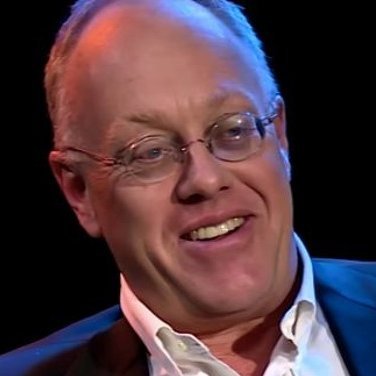
DUBLIN: It is a blustery, overcast morning on the Irish coast. I am standing on the roof of the Martello Tower, looking down at bathers diving from a rock into the Forty Foot in Dublin Bay on the beach at Sandycove. I hold James Joyce’s “Ulysses.”
With nothing but the wind to disturb me, I open the book. I read the first chapter, which Joyce — who lived briefly in this decommissioned coastal fortification — set in the tower.
“Stately, plump Buck Mulligan came down from the stairhead, bearing a bowl of lather on which a mirror and a razor lay crossed,” I read. “A yellow dressing-gown, ungirdled, was sustained gently behind him by the mild morning air. He held the bowl aloft and intoned: Introibo ad altare Dei.”
The Latin translation is “I will go in to the altar of God,” the opening of Mass in the Catholic Church for centuries.
There is the stench of corruption in the opening chapter, with Mulligan intoning a dark Mass to Stephen Dedalus, who has spurned his mother’s request to pray at her deathbed. Dedalus, cast out from his father’s house, is soon exiled from the tower to wander Dublin. His refusal to bow before authority, whether embodied in the Roman Catholic Church or the British colonizers, makes him an outcast, like the novel’s protagonist, Leopold Bloom.
We too are being orphaned in our own land.
I cope with the savagery around me by reading. I retreat into past worlds and past lives. I revel in the lyricism and musicality of great writing. I heed the wisdom of our ancestors.
Joyce detests what we should all detest. War. Violence. Nationalism, including Irish nationalism. Grasping capitalists. Fatuous pundits and journalists. Pseudo-intellectuals. Utopian dreamers. Pompous politicians. Bullies and brutes.
He distrusts causes and noble ideals. Joyce knows the more inflated the rhetoric — “the big words that make us so unhappy,” as Dedalus says in the novel — the more the demand for human sacrifice. He chronicles the foibles, idiosyncrasies and struggles that define our lives. Like V. S. Pritchett — another writer I love — he reminds us that no one is ordinary.
Joyce’s heroes do not adorn recruitment posters enticing young men to fight in the suicidal folly of World War I, underway when he wrote much of the novel. Bloom’s bodily functions, including defecation and masturbation, are described in detail, scenes that led to the book being banned for obscenity in the United States and Britain and in the Soviet Union for “not conforming to the policy of socialist realism.”
But the point was to bring Bloom down to earth. Bloom is unmistakably human, yet filled with pathos, empathy and a desperate yearning for love. Heroism, Joyce shows us, is defined by the ability to endure suffering, rather than inflict it.
There is much in this world, from the genocide in Gaza to the consolidation of fascism in the U.S., which warrants despair. But when it becomes overwhelming, there is the reassuring comfort of novels like “Ulysses,” which is set on one day, June 16, 1904. It improbably casts a Jewish advertising salesman as a hero, as a modern Odysseus, struggling to hold on to goodness and kindness in a world where the cruel and heartless triumph.
Read the rest of my column — Reading Ulysses at the Martello Tower — at the link below.


Kevin Tuffy retweeted

The ugly truth about France and some of the other European countries currently in turmoil - and which none of the politicians want to admit because it'd be political suicide - is that you can't solve the problem by going after immigrants (as the right asserts) or the rich (as the left asserts), but you could solve it by going after the old.
One extraordinary statistic for you: people over 60 in France, a quarter of the population, own 60% of France's wealth, non-financial and financial (ofce.fr/pdf/revue/2025/3-192…).
And here is another crazy statistic:
that same quarter of the population, those above 60, receive nearly two-thirds of all social spending by the French government (previssima.fr/actualite/prot…) - which is famously among the highest in the world (France's government spending is an insane 57.3% of GDP).
Last statistic: they make up about 40% of voters because they're a third of registered voters (insee.fr/fr/statistiques/266…), and they turn out far more than anyone else (franceinfo.fr/elections/sond…).
Put our 3 statistics together and there's almost a bit of an apartheid situation here: the old own most of the country's wealth, collect most of the social spending and have the political power to keep it that way.
Which makes them a de-facto rentier class, living off assets and transfers paid for by younger generations.
And, of course, at the risk of stating a truism, the future is built by the young. Yet France keeps effectively taking money away from them to give it to those whose working lives are already behind them - and need the money far less since they already own the country's wealth.
What about inheritance, I hear you ask? That's the funniest/saddest aspect: given that life expectancy has kept rising, the French now inherit a home at 54 on average. The most common case is someone in their 80s leaving it to heirs in their 50s, in effect the very old transferring wealth to the about-to-be old (insee.fr/fr/statistiques/fic…).
You can add this to our earlier apartheid statement: on top of all the rest, even when the old finally let go of their wealth, it stays within their own "camp".
That's my personal situation, incidentally: I'm 42, my father is 71 and he is starting to look at ways to pass things on to me and my siblings, when our professional lives are already well settled, so it'll arrive when it changes things the least, which is pretty much the French system in a nutshell.
Now, I get that there'd be some unfairness in going after them: they paid into the system their entire working lives, playing by the rules of a social contract that told them if they paid up they'd collect at the end. Changing the rules now means breaking that promise, which is admittedly unfair.
But there's no magic wealth tree in any society: you can only take it where it is. That's the way most major societal transformations end up happening. They're often triggered by a catastrophic event (the so-called "four horsemen": mass-mobilisation war, revolution, state collapse, plague) BUT what really drives change is a transfer: wealth gets pried from the privileged class who've been sitting on it and handed to those who'll build what comes next.
So, in theory and in an ideal world, you can do without the catastrophic event and directly proceed with the transfer...
The fact that in France, and elsewhere in Europe, it's the youth protesting is probably no coincidence - even though they don't frame it as a generational fight. And even though, cruel irony, the left politicians many of them march behind promise to bring the retirement age back to 60 (lcp.fr/actualites/legislativ…), which would make the situation even worse.
Let's say they understand intuitively that the system is stacked against them, even if they haven't yet figured out how. And politicians are obviously doing what politicians do, meaning pandering to the people who actually vote, while pointing the young towards easier - and politically convenient - scapegoats.
To be clear I'm not saying it's the only problem in France, VERY far from it. I'm also not saying that all old people in France live a lavish lifestyle at the expense of younger generations: there are also plenty of very poor retirees who, if anything, would deserve more.
What I am saying is that it's probably the biggest elephant in the room: everyone can see it, nobody dares mention it - no politician, from any side, wants to run on cutting grandma's pension - and it makes every other problem harder to fix.


Kevin Tuffy retweeted

feels like there's kind of an elephant in the room with this map but I can't quite put my finger on it


Kevin Tuffy retweeted

€1.2 trillion in nuclear power plants would’ve turned the European Union into an interplanetary industrial empire

💶 Over €1.2 trillion invested in sustainable activities in the EU since 2021.
Our sustainable finance framework is helping to channel investment into clean technologies, renewable energy and infrastructure, strengthening Europe’s energy security and competitiveness.
🔗 More: link.europa.eu/KvY9My

ALT Wind turbines generate renewable energy across a hilly landscape under a blue sky. A blue gradient overlays the bottom of the image, with yellow text reading “SUSTAINABILITY” and white text stating “Commission data shows continued growth in sustainable investments across the EU”. The European Commission logo appears in the bottom-right corner.
Kevin Tuffy retweeted

Never disturb a toddler in this moment! Don’t help. Don’t suggest. Observe. A capable problem solver is in training and development.


Kevin Tuffy retweeted

You have to apologise for swearing at midnight on the telly in the country that's going to livestream an execution.


Kevin Tuffy retweeted

French Presidential Candidate Jean-Luc Mélenchon:
They keep talking about "native French people."
Native to what? Christian roots? What exactly are these roots?
Half of people no longer live in the department they come from.
A process of creolization has already taken place among us French people, simply because we change places and adopt one another's jokes, tastes, cuisine and music.
All those dreaming of a static world are dreaming of something that no longer exists and will never exist again.