
Da espressione geografica a Stato nazionale ... e ritorno. From geographical expression to Nation State ... and back.
Joined October 2012
- Tweets3.2K
- Following783
- Followers218
- Likes5.8K






Pinned Tweet
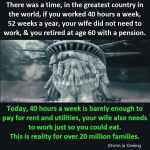
L'unico argomento del quale la politica dovrebbe occuparsi (perché è la chiave per interpretare ed affrontare tutti gli altri):

Marco Sonsini retweeted

Lord Palmerston is reported to have said in the 19th century:
"Only three people have ever really understood the
Schleswig-Holstein business
– the Prince Consort [Prince Albert], who is dead
– a German professor, who has gone mad
– and I, who has forgotten all about it."
Marco Sonsini retweeted

Non lo è mai stata

La #UE🇪🇺 è ancora una democrazia?
@BowesChay: "Mi hanno sanzionato attraverso un tribunale chiuso dove non potevo vedere le prove né contestare le bugie. Il Quarto Reich a Bruxelles non risponde più agli elettori. Ma mi hanno solo reso più forte."
Marco Sonsini retweeted

THE GERMAN MODEL DID NOT BORN OF INNATE SUPERIORITY: GDP, WAGES, AND COMPETITIVE ASYMMETRIES
1990: GERMANY WAS THIRD, NOT SECOND
In 1990, Germany was the world's third-largest economy by GDP, behind the United States and Japan, according to IMF data. The distinction is not insignificant: it places Germany in a position that the current narrative of the "German model" tends to portray as if it had always been second, or as if its superiority were a given. It was not.
GDP IS NOT PRODUCTIVITY
The size of GDP does not measure productivity. Italian manufacturing productivity grew faster for decades, while Italy was catching up with West Germany in terms of GDP per capita. The Maddison data place Italy still slightly behind reunified Germany in 1990, but with a much smaller gap than would later open up. Italy was converging, not diverging.
WHAT CHANGED NEXT
Then came reunification, lower wages, the Hartz reforms, and an undervalued euro that favored German exports at the expense of its neighbors. Empirical research confirms the mechanism: after the Hartz reforms, sectors exposed to international competition saw full-time employment growth 2.7 percentage points higher than non-exposed sectors, and wage bill growth 4.7 points higher. The effect was uneven: it was concentrated in export-oriented sectors, while local services lagged behind.
On the currency front, the literature confirms that German wage moderation, in the early years of the euro, produced a cumulative productivity-to-wage gap of approximately 18% in the tradable goods sector and 11% in the non-tradable goods sector. This gap, under a fixed exchange rate regime, translated into a permanent price advantage for German exports.
CONCLUSION
The German economic model did not emerge from innate superiority. It increasingly relied on foreign demand, wage moderation, and competitive asymmetries. Germany in 1990 was third, not second. Italy was catching up, not losing ground. What changed subsequently was not the confirmation of a natural hierarchy, but the result of specific political and economic choices, made in an institutional context—the euro—that amplified their effects.
#Germany #Italy #Euro #Hartz #GDP #FactCheck #TheWorldCorrespondent


Actually, Germany ranked third in global GDP in 1990, behind the US and Japan. IMF data. Nice start.
And GDP size isn't productivity. Italian manufacturing productivity grew faster for decades, while Italy was catching up with West Germany in GDP per capita. By 1990, Maddison's figures even put Italy ahead of reunified Germany.
Then came reunification, wage suppression, Hartz reforms and an undervalued euro favoring German exports at its neighbours' expense.
Germany's economic model didn't emerge from some innate superiority. It increasingly relied on foreign demand, wage restraint and competitive asymmetries.
Try understanding the numbers before calling others clowns.
Marco Sonsini retweeted

The "Middle Class" was a 50-year fluke designed to prevent a communist revolution during the Cold War. Now that the threat is gone, the elites are systematically dismantling it. You aren't "falling behind"; you’re being pushed back into the peasantry.

Marco Sonsini retweeted

Trump won White voters by the same margin in 2016 as Reagan did in 1980
Trump lost the popular vote. Reagan won the popular vote by 10%
The old GOP made itself unelectable through its betrayals on immigration. We needed Buchananism then and need it even more now


Marco Sonsini retweeted
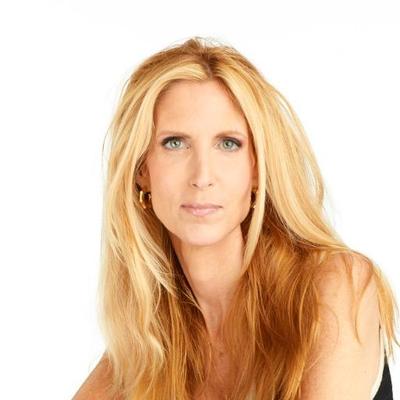
Netanyahu Grabbed Trump By The P*ssy
Our most urgent task after the midterms is to create a list of everyone who supported the Iran War so we’ll know who to never, ever, ever, ever trust again. Pending a full accounting, here are the top two: Benjamin Netanyahu, Prime Minister of Israel, and Rupert Murdoch — still alive as of this writing — patriarch of Fox News and The New York Post.
It may be unfair to blame Netanyahu, since it obviously doesn’t matter who the prime minister is. Israelis overwhelmingly support the war and worship Trump for pursuing it.
Let’s see how much they love this: eighty percent of the party that’s about to control Congress has an unfavorable view of Israel. (And the other 20% is fanatically anti-Israel.)
The American Israel Public Affairs Committee (AIPAC) and closely affiliated United Democracy Project (UDP) spent an estimated $45 million to defeat Abdul El-Sayed in Michigan—who famously refused to answer whether Israel or Iran was a bigger threat to the U.S. That money became toxic, driving support for El-Sayed. He will now be the first Muslim United States senator.
As some of us warned you from the beginning, the war was going to be very bad for our country, bad for the GOP—and bad for Israel. That’s why a lot of people who appreciate Israel’s core values were among those issuing this warning. But war supporters apparently felt their strongest counter-argument was to scream about antisemitism.
Mark Levin, whom Murdoch has given his own show for some reason, called war opponents the “Woke Reich” driven by a “hatred of Jews” who are “ok with Iran and Putin” and act as “the modern-day appeasers of Hitler in the 1930s.”
Even Ben Shapiro, who unlike Levin was never kicked in the head by a horse, denounced libertarian Rep. Thomas Massie for opposing the war, as well as foreign aid to Israel—or to anybody else, for that matter—accusing him of harboring a “not particularly subtle antisemitism.” (Sorry, Ben! You’re almost always right, but this is a really annoying argument.)
And look what happened. Previously, most Americans never thought about Israel, and those who did—evangelicals and neoconservatives—unreservedly supported it. A Pew poll this spring found that 60% of Americans now hold an unfavorable view of the country. In a Quinnipiac University survey, 60% of voters said they disapproved of the U.S. sending military aid to Israel. This matched other surveys, such as one by the Chicago Council on Global Affairs.
Today—for the first time since 2001—more Americans sympathize with the Palestinians than with Israel, according to Gallup polls. Support for Israel used to run in the double digits. ...
While the media are determined to convince us the blue tsunami was about the public’s hatred of ICE, Elon Musk, tariffs, “voter suppression,” Jan. 6, and that monkey business at Bonwit Teller, voters have consistently said it’s the Iran War and its consequences.
October polls:
· AP-NORC poll: 80% want the next Congress to make “cost of living” a top priority; 70% say ending the Iran war is the top priority.
· NYT/Siena poll: Voters trust Democrats more than Republicans on two issues: gas prices and “foreign wars.” Trump’s worst issue was gas prices, with 73% disapproving.
· Fox News poll: 75% “extremely” or “very” concerned about the Iran war.
· Gallup poll: 47% called the Iran War “extremely important,” and 42% named “gas prices.” Only the economy and healthcare narrowly edged out Iran as extremely important at 50% each.
And so on. Virtually every poll shows that the top election issues were the Iran War, gas prices, and the cost of living. And the reason gas prices are high is because of the war; the reason the cost of living is high is because of gas prices.
FULL COLUMN WITH LINKS HERE:
anncoulter.substack.com/p/ne…
Marco Sonsini retweeted

Peter Hitchens, looking back on his days as a revolutionary Marxist:
“When I was a Revolutionary Marxist, we were all in favour of as much immigration as possible. It wasn’t because we liked immigrants, but because we didn’t like Britain. We saw immigrants, from anywhere, as allies against the staid, settled, conservative society that our country still was at the end of the Sixties. Also, we liked to feel oh, so superior to the bewildered people, usually in the poorest parts of Britain – who found their neighbourhoods suddenly transformed into supposedly ‘vibrant communities’. If they dared to express the mildest objections, we called them bigots.”
Nothing fundamental has changed.
Today’s left still doesn’t like Britain.
They still treat mass immigration, open borders and demographic transformation as a weapon against the people, culture and institutions that already exist here.
The motive was never affection for the newcomers; it was hostility to what the country was and, in their eyes, still is.
That is why the same circles keep aligning with Mohammadans, recent arrivals, the useful “born here’s,” the halves and anyone else willing to help dissolve what’s left of the old country.
They still sneer at anyone who objects as a bigot or a racist, while making sure their own lives stay as far from the consequences as possible.
The revolutionary students of the Sixties came mostly from the nicer parts of London and the Home Counties; today’s equivalents do the same.
They talk endlessly about vibrancy and enrichment from safe distance, then retreat to the expensive enclaves, the private schools and the areas that have not yet been transformed.
The people who actually live with the results are told their concerns are “illegitimate.”
Hitchens noted even then that many of the arrivals were not useful revolutionary allies at all, deeply religious, socially conservative, with attitudes toward women that sat uneasily with the left’s supposed principles.
The modern version of the project has simply absorbed that contradiction rather than confront it.
The alliance continues because the shared goal remains the same: to weaken and remake Britain in their image, not because the partners suddenly became “compatible”.
Same anti-British impulse, same strategy of demographic change as political tool, same contempt for the native population that notices what is happening.
Only the branding has been updated.
The continuity is plain in the way dissent is handled.
What was once the sneer of student radicals is now institutional practice: objections to the pace and scale of change are met with the same labels, the same refusal to debate numbers or outcomes, and the same insistence that noticing patterns is itself the problem.
Meanwhile the areas most affected continue to change, and the political class that oversaw it continues to treat the resulting tensions as evidence of the public’s failure to adapt rather than as the predictable result of policy.
Hitchens has since described the arrogance and self-righteousness of that earlier outlook.
The present version shows little sign of the same self-examination.
The project proceeds under new names, diversity, inclusion, anti-racism, but the underlying calculation remains recognisable:
demographic transformation as a means of permanently altering the character of the country, carried out by people who will not be required to live with the full weight of what they have set in motion.

Marco Sonsini retweeted

You can cancel an election and ban the winner from running (Romania), you can ban your opponents from ever running again (Hungary), you can threaten to ban the main opposition party and subject it to relentless investigations by the secret police (Germany), you can threaten a ban on the leading presidential candidate and make them wear an ankle monitor (France), every member of your circle can be investigated for corruption (Spain), you can try and cancel local elections because you will lose them (Britain), and you can storm the constitutional court with riot police because you want to control it (Poland).
You can just do all these things. The secret is you just have to be on the right side of the European Commission.
Marco Sonsini retweeted

Imperdibile e lapidaria la testimonianza del Prof. @GiovanniFrajese presso la Commissione parlamentare Covid. “I vaccini non hanno mai funzionato e provocano danni sistemici all’organismo”: lo dimostrano i dati scientifici che il Prof. porta all’attenzione. Dopo 5 anni di menzogne, tutta la verità sulla più vergognosa e criminale sperimentazione di massa della storia umana. youtu.be/xy6CQ7W_49Q

Marco Sonsini retweeted

Ci sono 4 tipi di persone di sinistra. Una volta che le hai notate, non puoi più non vederle.
Capire la sinistra non significa comprenderne le idee. Le sue idee cambiano ogni dieci anni. Significa comprenderne la struttura. È una piramide, e ogni livello ha un ruolo preciso.
IL CINICO
In cima alla piramide. Sono rari. Spesso sono brillanti. Non credono a nulla di ciò che dicono: credono nel potere. Le cause sono strumenti, e uno strumento va cambiato quando non serve più.
In Francia, il boss finale si chiama Jean-Luc Mélenchon.
Guarda la sua traiettoria. Nel 1992, fa campagna per il «sì» a Maastricht. Nel 2005 diventa il volto del «no». Trenta anni nel PS, senatore, ministro di Jospin, poi scopre improvvisamente che il PS tradisce il popolo.
Sulla religione: il laico purosangue che, nel 2015, contestava il termine stesso di «islamofobia», nel 2019 sfila alla marcia contro l’islamofobia.
Sull’immigrazione: nel 2016, al Parlamento europeo, spiegava che il lavoratore distaccato rubava il pane ai lavoratori locali. Oggi teorizza la «creolizzazione».
Un uomo che cambia idea su tutto in vent’anni non è evoluto. Ha seguito l’elettorato. Non crede. Calcola.
IL FANATICO
Secondo piano. Abbastanza intelligente da gravitare attorno al cinico, non abbastanza per capire che tutto questo è una recita. Lui ci crede. Davvero.
Si beve tutte le cause che il cinico strumentalizza: clima, Palestina, LGBT, antirazzismo, decrescita. Anche quando si contraddicono frontalmente. Difendere i diritti dei gay sventolando la bandiera di movimenti che li perseguitano. Salvare il clima combattendo il nucleare. Il femminismo e il velo nello stesso corteo.
Non vede la contraddizione perché non cerca la coerenza. Cerca l’appartenenza. È l’attivista, l’assistente parlamentare, l’editorialista. È il più pericoloso dei quattro, perché è sincero.
IL NAIF MEDIO
La base. La grande maggioranza. Ne abbiamo tutti uno nella nostra cerchia: in ufficio, alla cena di famiglia, nel gruppo WhatsApp.
«Bisogna arginare l’estrema destra.»
Non legge nulla di economia. La politica «non è proprio il suo campo». Ma è sorprendentemente categorico su praticamente tutto.
Perché in realtà non vota per delle idee. Vota per un’immagine di sé stesso. Stare dalla parte del bene, senza mai correre il minimo rischio sociale. Non è una convinzione, è una sicurezza. Non è cattivo. È a suo agio.
IL TELECOMANDATO
Il livello più basso, e il più rumoroso. Lo riconosci in due secondi: triangolo rosso nel nickname, foto di calcio come avatar o banner. Antifa, «woke», inclusivo: spunta tutte le caselle.
È emotivo al 100%. È convinto di salvare il pianeta con ogni tweet.
È il sogno del cinico. Con la giusta chiave emotiva, puoi portarlo su qualsiasi terreno. Lunedì il clima, martedì Gaza, mercoledì la polizia, giovedì un calciatore. Non verifica. Non dubita. Condivide.
LA MACCHINA
Il sistema regge perché ogni livello alimenta l’altro. Il cinico crea la narrazione. Il fanatico la porta avanti. Il telecomandato la amplifica. L’ingenuo la convalida nella cabina elettorale.
Al cinico non serve che tu sia d’accordo con lui. Gli basta solo che tu non guardi chi tira le fila.
La prossima volta che discuti con un uomo di sinistra, chiediti prima di tutto a quale livello si trovi. Ti eviterà di perdere tempo. Non si convince un cinico. Non si fa ragionare chi è telecomandato. L’unico con cui vale davvero la pena parlare è l’ingenuo. Lui può ancora svegliarsi.

Il y a 4 types de gauchistes. Une fois que tu les as vus, tu ne peux plus ne pas les voir.
Comprendre la gauche, ce n'est pas comprendre ses idées. Ses idées changent tous les dix ans. C'est comprendre sa structure. C'est une pyramide, et chaque étage a un rôle précis.
LE CYNIQUE
Tout en haut. Ils sont rares. Ils sont souvent brillants. Ils ne croient à rien de ce qu'ils disent : ils croient au pouvoir. Les causes sont des outils, et un outil, ça se change quand il ne sert plus.
En France, le boss final s'appelle Jean-Luc Mélenchon.
Regarde sa trajectoire. En 1992, il fait campagne pour le oui à Maastricht. En 2005, il devient le visage du non. Trente ans au PS, sénateur, ministre de Jospin, puis il découvre soudain que le PS trahit le peuple.
Sur la religion : le laïcard pur jus qui, en 2015, contestait le terme même d'« islamophobie » défile en 2019 à la marche contre l'islamophobie.
Sur l'immigration : en 2016, au Parlement européen, il explique que le travailleur détaché vole son pain aux travailleurs locaux. Aujourd'hui, il théorise la « créolisation ».
Un homme qui change d'avis sur tout en vingt ans n'a pas évolué. Il a suivi l'électorat. Il ne croit pas. Il calcule.
LE FANATIQUE
Deuxième étage. Assez intelligent pour graviter autour du cynique, pas assez pour comprendre que tout ça est une pièce de théâtre. Lui, il y croit. Vraiment.
Il avale toutes les causes que le cynique instrumentalise : climat, Palestine, LGBT, antiracisme, décroissance. Même quand elles se contredisent frontalement. Défendre les droits des gays en agitant le drapeau de mouvements qui les persécutent. Sauver le climat en combattant le nucléaire. Le féminisme et le voile dans le même cortège.
Il ne voit pas la contradiction parce qu'il ne cherche pas la cohérence. Il cherche l'appartenance. C'est le militant, l'assistant parlementaire, le chroniqueur. C'est le plus dangereux des quatre, parce qu'il est sincère.
LE NAÏF MOYEN
La base. La grande majorité. On en a tous un dans notre entourage : au bureau, au dîner de famille, dans le groupe WhatsApp.
« Il faut faire barrage à l'extrême droite. »
Il ne lit rien sur l'économie. La politique, « c'est pas trop son centre d'intérêt ». Mais il est étonnamment péremptoire sur à peu près tout.
Parce qu'en réalité, il ne vote pas pour des idées. Il vote pour une image de lui-même. Être dans le camp du bien, sans jamais prendre le moindre risque social. Ce n'est pas une conviction, c'est une assurance. Il n'est pas méchant. Il est confortable.
LE TÉLÉCOMMANDÉ
L'étage le plus bas, et le plus bruyant. Tu le reconnais en deux secondes : triangle rouge dans le pseudo, photo de foot en avatar ou en bannière. Antifa, woke, inclusif : il coche toutes les cases.
Il est 100 % émotionnel. Il est convaincu de sauver la planète à chaque tweet.
C'est le rêve du cynique. Avec la bonne clé émotionnelle, tu peux l'emmener sur n'importe quel terrain. Lundi le climat, mardi Gaza, mercredi la police, jeudi un footballeur. Il ne vérifie pas. Il ne doute pas. Il relaie.
LA MACHINE
Le système tient parce que chaque étage nourrit l'autre. Le cynique fabrique le récit. Le fanatique le porte. Le télécommandé l'amplifie. Le naïf le valide dans l'isoloir.
Le cynique n'a pas besoin que tu sois d'accord avec lui. Il a juste besoin que tu ne regardes pas qui tient les ficelles.
La prochaine fois que tu débats avec un gauchiste, demande-toi d'abord à quel étage il se trouve. Ça t'évitera de perdre ton temps. On ne convainc pas un cynique. On ne raisonne pas un télécommandé. Le seul qui vaut vraiment la peine qu'on lui parle, c'est le naïf. Lui peut encore se réveiller.

Marco Sonsini retweeted

Un Cacciari perfetto su San Francesco. Grazie @salviamoroma per la segnalazione.

Finalmente una definizione corretta di #SanFrancesco è sorprendente che debba spiegarlo un non credente
instagram.com/reel/DeFSHNcFK…


Marco Sonsini retweeted

Afd è stata votata per il 61% da operai. Il tema nazista nulla conta . Guardate agli effetti del green deal , della deflazione salariale e leggete il libro di Giacchè “Anschluss”
#realpolitic
Marco Sonsini retweeted

La Storia del Milan è in lacrime per la scomparsa di Franco Baresi. Il suo esempio e la sua profondità saranno, per sempre come la sua maglia numero 6, parte integrante e fondamentale del DNA e del cammino di tutto il Club. Le condoglianze che AC Milan porge alla famiglia tutta di Franco Baresi sono le stesse che ogni tifoso rossonero fa a sé stesso in un'ora così dura.
The entire history of AC Milan is in tears following the passing of Franco Baresi. His example and integrity will be forever etched into the Club's DNA, just as his iconic number 6 shirt is. The condolences AC Milan extends to Franco Baresi's family at such a difficult time are shared by every Rossonero, who feels this loss as their own.

Marco Sonsini retweeted

Esto que he encontrado en Instagram le va molar a @futbolycine y @sergiocortina
un sistema rappresentativo in cui i confini dei collegi elettorali sono alla mercè della maggioranza politica del momento è una farsa. Sono ridicoli, a prescindere da chi ne beneficia in un dato momento e in un determinato Stato.

In Virginia, i dem (che governano lo stato con una ex agente della CIA) hanno vinto 51-49 un referendum che gli permetterà di ridisegnare i confini dei distretti elettorali, passando da un 6-5 in loro favore a un 10-1. In uno stato in cui la Harris vinse 52-46 e che fino all'anno scorso aveva un governatore repubblicano.
Questo è l'uso spregiudicato del potere. Permesso da:
- convinzione del tuo elettorato di stare combattendo le forze del Male
- stampa amica (a parti invertite era "attentato alla democrazia")
- apatia degli avversari che si interessano poco di politica o magari si astengono per "punire" i propri rappresentanti (senza accorgersi che così puniscono sé stessi).
1
34
Marco Sonsini retweeted

In Virginia, i dem (che governano lo stato con una ex agente della CIA) hanno vinto 51-49 un referendum che gli permetterà di ridisegnare i confini dei distretti elettorali, passando da un 6-5 in loro favore a un 10-1. In uno stato in cui la Harris vinse 52-46 e che fino all'anno scorso aveva un governatore repubblicano.
Questo è l'uso spregiudicato del potere. Permesso da:
- convinzione del tuo elettorato di stare combattendo le forze del Male
- stampa amica (a parti invertite era "attentato alla democrazia")
- apatia degli avversari che si interessano poco di politica o magari si astengono per "punire" i propri rappresentanti (senza accorgersi che così puniscono sé stessi).
