

I'm a biomass in a lab. With Wifi access. (A psych working with autistic people). Bluesky = BiomassBob
Somewhere near a volcano
Joined October 2021
- Tweets27.7K
- Following1.5K
- Followers805
- Likes23K





Biomass Bob retweeted

Silly to draw any general inferences from that rubbish study. Known for decades that fructose flux matters & that an average 24hr load of c 40g looks to be the load that can be ingested without any adversity. This 3 day study involved doses of over 4 times that upper limit so yeah, not a dose anyone ever recommended. (Let's leave aside for now issues around biome composition & intestinal permeability/integrity which are usually the big variables w.r.t. to endotoxemia etc.)
Biomass Bob retweeted

Actually no. Several longitudinal human overfeeding trials have paired serial adipose tissue biopsies with direct insulin sensitivity testing before and after experimental weight gain. Overfeeding simultaneously drives adipocyte hypertrophy and worsening insulin sensitivity—and shrinking those cells via caloric restriction reverses the defect.

Biomass Bob retweeted
Around 70% of ingested fat is stored before being burned. Higher for terrestrial animal fats, and higher yet when consuming over 50 grams in one meal.
The primary cause of insulin resistance is excess fat storage, to the point of overfilling adipocytes.
@grok can confirm. ☺︎

Eating fat does not make you fat.
Eating high-carb food day after day keeps your blood sugar and insulin high, and high insulin locks up your fat cells so you can't burn the fat stored in them. Get your insulin back down to low normal and keep it there, and those fat cells unlock.
7 Ways the Carnivore Diet Works! [Suppressed Mechanisms] - 2024
youtube.com/watch?v=Sikx_OCS…
Biomass Bob retweeted

If you want change starting with a new Democratic Speaker and not Chuck Schumer hit like and Retweet!!!

56 seats was an unimaginable result even just a few months ago. Most people didn't think 51 Democratic Senate seats was a possibility at the beginning of this cycle.
But I knew if we concentrated on getting the best candidates, and if we focused like a laser on the costs, corruption, and chaos that Donald Trump has wrought throughout America, we would have shot.
With 56 seats, Democrats are in a prime position to create a durable majority that can create lasting, real results for the American people. We must earn back trust by passing bills that lower costs and improve lives – and dare Donald Trump to veto them at his own peril. We will be relentless. This is just the beginning.
Biomass Bob retweeted

That an NHS doctor, whose apparent aim is to make low carb more “credible”, the reposting of slop like this is embarrassing.
Dr Unwin continuously reveals himself to be ideologically captured by paleo-magick, is ill informed, and promotes nutri-quacks and grifters.

Biomass Bob retweeted

Carnivores hate fiber - don't believe in atherosclerosis from LDL
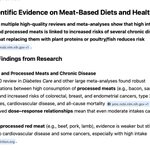
Ken, first we can retire the Victorian image that fiber “scrubs the colon clean.” It doesn’t. Fiber is not a bottle brush. Different fibers affect stool water, bulk, fermentation, microbiota and motility in different ways.
And yes, there are constipated patients who feel worse with more fiber — especially bloating, pelvic-floor dysfunction or slow-transit constipation. That is why constipation is treated as a diagnosis, not a morality tale about bran.
But this 2012 Singapore paper does not prove fiber is useless. It studied 63 highly selected patients with idiopathic constipation, was not randomized to no-fiber versus high-fiber diets, and after the initial intervention, people essentially chose how much fiber they wanted to resume. By six months, there were 41 in the no-fiber group and only six in the high-fiber group. Interesting? Yes. Definitive? Hardly.
Modern AGA/ACG guidelines still suggest fiber supplementation for chronic idiopathic constipation, particularly psyllium, while recognizing that the evidence is not especially strong and that fiber can worsen gas and bloating in some people.
And the bigger sleight of hand is using a tiny constipation study to imply that fiber has no health value. A 2025 umbrella review covering more than 17 million people found higher fiber intake associated with lower risk across numerous chronic diseases, with particularly strong evidence for cardiovascular mortality and diverticular disease.
So if fiber makes your constipation worse, by all means investigate why and adjust it.
But “six people resumed high fiber and remained constipated” is not the scientific obituary for fiber. It is just a small constipation study and now you are asking it toCarnivores carry an enormous carnivore argument.
I used to tell people fiber scrubbed their colon clean. I really believed it.
Then a colorectal surgery group in Singapore took 63 people with chronic constipation off fiber. Six months later, the 41 who stayed completely off it went from one bowel movement every 3.75 days to one a day, and none of them had bloating or straining anymore. The 6 who went back to high fiber didn't improve at all.
If fiber isn't fixing your constipation, try cutting it out.
Study:
pubmed.ncbi.nlm.nih.gov/2296…
What the Carnivore Diet did to My POOP (TMI Alert) 2026
youtube.com/watch?v=rcbx7O1K…

Biomass Bob retweeted

Same guy who came up with the misleading "vegans have smaller brains" based of a 2008 Oxford study on vitamin B12 and brain volume loss in elderly people, not a study of vegans btw.
@BenBikmanPhD popularized the "less meat > smaller brain" version, but the underlying paper never measured diet, veganism, vegetarianism, or meat intake.
A true crisis..
Of grifters.
We need a cleansing.

The carb crisis: A crisis so large that it turns many men bald because they are fearmongered by other bald men into believing that you should avoid carbs and nuke your body with cortisol, high prolactin, low dopamine, low selenium, gluconeogenesis and deprived hair follicles, among other things.
A true crisis indeed.


Biomass Bob retweeted

Watch how health fear-mongering works: tell young adults they aren't safe even at a normal weight, claim standard blood work 'hides' danger, then pitch a niche fasting insulin test. Let's separate the real survey data from the anxiety-driven testing funnel.

Four in ten young American adults without diabetes are already insulin resistant, and nearly half of them aren't obese.
That finding comes from national health survey data on adults between 18 and 44 who had neither diabetes nor heart disease, which is the group most people assume is metabolically safe. Insulin resistance was common across a full decade of surveys, and the share stayed high from one survey cycle to the next.
The young adults with insulin resistance were already carrying more of the problems that eventually lead to heart disease and diabetes, with high blood pressure and high cholesterol each about twice as common as in their insulin-sensitive peers, along with lower levels of physical activity.
The part that matters most for how people get screened is that body weight only partly lined up with insulin resistance. A higher BMI, a larger waist and more body fat were all associated with it, but nearly half of the young adults who were insulin resistant weren't obese, which means a normal reading on the bathroom scale doesn't rule it out.
Insulin resistance also tends to hide on standard blood work. Glucose can stay normal for years because the pancreas keeps making more insulin to hold it there, so the earliest sign of trouble is often a rising fasting insulin, and that's a test most doctors don't routinely order.
For a young adult, this is the stretch of life when insulin resistance is easiest to turn around, long before glucose climbs high enough to earn a diagnosis of prediabetes or diabetes, and the researchers themselves concluded that screening for insulin resistance regardless of BMI may be needed.
If a young adult wants to know where they stand metabolically, adding a fasting insulin test to the usual glucose check gives a far clearer picture than weight or glucose alone.
Biomass Bob retweeted

On the China Chips Scandal:
There was no honeypot.
There was no entrapment of an unwitting innocent.
There was collusion.
Jensen Huang and Alice Huang worked together to evade export controls and get chips to China.
And they worked with Lutnick & Trump.
It was a conspiracy.


Biomass Bob retweeted

Conventional wisdom suggests that building muscle requires a caloric surplus, while losing fat requires a caloric deficit. But is it possible to accomplish both simultaneously?
Our newly published review in JISSN (PMID: 43007655), led by Sia Naddafha, examines the scientific evidence on body recomposition and provides practical recommendations for optimizing results.
Here are some key takeaways:
1. Body recomposition is achievable. Research shows that gaining muscle while losing fat is possible, even when consuming fewer calories than you expend.
2. Resistance training is essential. Progressive resistance training provides the stimulus needed to promote muscle growth while dieting.
3. Protein intake matters. Consuming at least 1.6 g/kg of body weight daily appears to be a sound general target; potentially higher relative intakes appear to be beneficial during energy restriction.
4. Training status influences results. Recomposition tends to be more pronounced in beginners and individuals with higher body fat levels. Experienced lifters can also achieve recomposition, but the magnitude of change is generally smaller.
5. Avoid overly aggressive dieting. Moderate caloric deficits, sufficient carbohydrate availability, and adequate recovery can help preserve or increase muscle while promoting fat loss.
BOTTOM LINE: You don't necessarily need separate bulking and cutting phases to improve body composition. With appropriately programmed resistance training, sufficient protein, and a well-managed diet, you can potentially build muscle while losing fat. However, the extent of recomposition depends on factors such as training experience, body fat levels, and nutritional status. Individualization is key.
Importantly, while it is possible to recomp, you cannot maximize muscle growth while prioritizing fat loss. If maximizing muscle gain is your primary goal, focus on that objective with a small energy surplus and accept that some fat gain may accompany the process.
tandfonline.com/doi/full/10.…


Biomass Bob retweeted

I remember when Elon’s DOGE (Department of Government Efficiency) fired ~400 Federal Aviation Administration (FAA) employees and Elon did this to celebrate.
Biomass Bob retweeted

It's great when someone honestly destroys Trump's insanely stupid foreign policy on camera.
It would be great if more countries acquired the testicular fortitude to make this a habit.

Biomass Bob retweeted

Dietary fat does little to help retain muscle; swapping for some carbohydrate would be more productive
+ resistance exercise 💪


Biomass Bob retweeted

You cannot ask “what network are you from” when the network YOU came from was fucking MTV

Biomass Bob retweeted

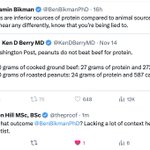
Ken Berry: statins only buy you 3 to 4 days. It's the same averaging trick as Bikman's on Wednesday (Kristensen, BMJ Open 2015). It counts only deaths, in short trials where most people never have an event. It ignores the roughly 22% fewer heart attacks, strokes and stents per 39 mg/dL of LDL lowered (CTT, Lancet 2010).
Ben's right, and most people have never heard the actual number.
A review of the statin trials measured how much longer people lived on the drug. For people without heart disease, the median was 3.2 days. For people who already had heart disease, 4.1 days. Those trials ran 2 to 6 years.
Most people never hear that when they're told to take the prescription for the rest of their life. And almost nobody asks what's driving the plaque in the first place: the sugar, the starch and the high insulin.
Study:
pubmed.ncbi.nlm.nih.gov/2640…

Biomass Bob retweeted

Ken, dear, once you read the details of both trials, neither supports your opinion that "seed oils deserve their bad reputation."
Sydney Diet Heart Study: 458 men who had already had a coronary event. The "seed oil" group got safflower oil plus a safflower margarine from the 1960s, when margarines were partially hydrogenated. The American Heart Association calls it a trans-fat-rich margarine. So the test was probably "seed oil + trans fat vs usual diet," not "seed oil vs animal fat." Trans fat is one of the clearest heart risks we know of. Blaming the harm on linoleic acid alone doesn't hold up.
Minnesota Coronary Experiment: run in mental hospitals and a nursing home during mass discharges. About 75% of patients left in the first year, and the average time on the diet was about one year. That's far too short to change atherosclerosis. The diet was also extreme: imitation meat, milk and cheese made with corn oil, giving about 13% of calories from linoleic acid. No guideline recommends that.
The "22% higher risk per 30-point drop" isn't a randomized result either. It's a correlation inside the trial, and illness and frailty lower cholesterol on their own (reverse causation). The extra deaths were also limited to people over 65.
Now look at all the evidence, not two flawed 1960s trials:
• Cochrane 2020 (15 RCTs, about 56,000 people): cutting saturated fat for 2+ years cut cardiovascular events by 17%. Swapping in polyunsaturated fat was a "useful strategy."
cochranelibrary.com/cdsr/doi…
• A pooled analysis of 30 cohorts (68,659 people) measured linoleic acid in blood and tissue, not food diaries. Higher levels went with 22% lower cardiovascular death.
pubmed.ncbi.nlm.nih.gov/3097…
You're right that LDL isn't the whole story. But the wider evidence points away from seed oils being harmful, not towards it.
Lowering LDL isn't the same thing as keeping people alive.
When NIH researchers recovered the missing data from the Sydney Diet Heart Study, the men told to replace animal fat with safflower oil, a seed oil, died at a higher rate: 17.6% vs 11.8%.
In the Minnesota Coronary Experiment, corn oil lowered cholesterol about 14% and saved no lives. Every 30-point drop in cholesterol went with a 22% higher risk of death.
Both were randomized, controlled trials in Humans.
Seed oils deserve every bit of their bad reputation.
Sydney Diet Heart Study:
pubmed.ncbi.nlm.nih.gov/2338…
Minnesota Coronary Experiment:
pubmed.ncbi.nlm.nih.gov/2707…
Most Dangerous Cooking Oils (Avoid These)
youtube.com/watch?v=wPlHuXYI…


Biomass Bob retweeted
I’m starting to think you could have a conversation with a keto person about absolutely anything to do with carbs and eventually they’ll tell you that your body can make all the glucose it needs. You could be talking about insulin, thyroid function, stress hormones, glycogen, exercise, digestion, protein metabolism, practically anything, and somehow they’ll find a way to tell you that carbs aren’t essential. And if you point out that the brain uses glucose, they’ll tell you it can use ketones. If you explain that it still needs glucose, they’ll tell you the liver makes it. If you ask why making glucose is necessarily better than eating it, they’ll tell you carbs aren’t essential. If you explain that something not being essential for survival doesn’t mean it can’t be beneficial, they’ll tell you the brain can use ketones. And if you explain that nobody was actually arguing about whether you can survive without carbs in the first place, they’ll tell you the liver makes glucose. And round and round we go. Apparently being able to survive without eating carbs settles every possible question about whether eating them might actually be beneficial. You can survive without exercise, sex, sunlight or ever leaving your house too, but I wouldn’t recommend making an entire philosophy out of it. It’s like trying to have a conversation about the benefits of owning a car with someone who keeps interrupting to tell you that humans can walk. Yes, congratulations, we can walk. Nobody was arguing that we couldn’t walk. We’re talking about cars. And the funniest part is that they’ll accuse you of not understanding metabolism while repeating the same three facts over and over again, none of which actually answers anything you’ve said. I’m beginning to think ketosis isn’t just a metabolic state anymore…it’s a conversation you can never escape.