

Assistant Professor at @LKYSch, studying international relations and political economy.
Singapore
Joined February 2021
- Tweets248
- Following222
- Followers415
- Likes1.1K




Pinned Tweet
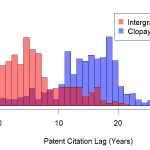
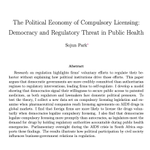
My paper, "The Political Economy of Compulsory Licensing: Democracy and Regulatory Threat in Public Health," has been accepted at Public Choice! It shows why foreign drug companies voluntarily licensed their AIDS patents in democracies during the AIDS crisis. 1/N

Sojun Park retweeted
New paper: "AI Article Reviews Dominate Human Peer Reviews at Their Best: Evidence and Policy Choices" See: GaryKing.org/peerless. with Steven Worthington. Comments welcome!

Sojun Park retweeted

I’m delighted to share that my book, Closing the Institutional Gap: How Foreign Investors Shape Domestic Institutions in Emerging Markets, is forthcoming with Cambridge University Press later this fall. A short thread on the argument and what I hope the book contributes.🧵

Sojun Park retweeted

Where do development finance institutions invest—and how does foreign aid shape those choices?
Our new @RevIntlOrg paper with @nicolasbaufr, Simone Dietrich, and Duy Trinh examines how prior ODA shapes the geography of DFI investment.
link.springer.com/article/10…

Sojun Park retweeted

Replication has become much easier in the era of generative AI.
I'm not the first person to say that.
However, I've seen fewer people acknowledge a specific aspect of this lowered cost for replicating scientific work:
Generative AI will very soon allow us to assess the robustness of individual scholars' full bodies of work.
Soon, we will be to compute measures of which scholars do robust science, and which do not.
What's wild is that we may be able to almost do that already.
Let me show you what I mean.
In June, I gave Claude a pretty basic prompt. It read:
"I have a big task for you. I want you to start a folder. Call it Acemoglu Replications. Then, go find as many replication archives for Daron Acemoglu as you can. Keep a spreadsheet of the ones you can find and those you can't. Then, start a replication/reproduction effort on those articles. People have in the past criticized the research designs and general robustness of his individual papers. I want to know how strong his body of work is as a whole. Don't come in with any prior beliefs; be dispassionate."
I let Claude run overnight while I slept.
When I came back in the morning, 29 of Acemoglu's replication archives were fully loaded in my Dropbox. All the code reproducing the paper's results had run. And there was a first draft of a paper assessing the robustness of Acemoglu's full body of empirical work.
I'll admit, the first draft of the paper wasn't great. But with 15 short follow up messages--which took me about an hour to write--I was able to prompt engineer a paper-length examination of Acemoglu's work. I've attached the screen shot of the abstract below.
I think this reassessment of Acemoglu's work is certainly not done. I'm posting the abstract as a proof of concept, rather than a definitive answer. I'm not posting the full paper yet because I think it still needs more work.
Ultimately, I paused this project for three reasons.
1.) Limited time/topical expertise: Most of Acemoglu's work is outside of my area of topical expertise. So, I have limited time to work on it. What this type of a project really needs is someone who has the time and the know-how to dig into each of the replication's individually to make sure they are doing the right things. I think the ideal approach combines the breadth that LLMs afford and the depth of attention/expertise that humans can give.
2.) Questions about the value of the "assess one scholar at a time" enterprise: I totally get that having a database of scholar-level robustness metrics would be very valuable in theory.
But what I don't know is whether this approach is truly valuable. Moreover, doing so would come with distinct challenges.
a.) Many journals have very restrictive space constraints. A body of work approach would, of necessity, be very long.
b.) Collecting replication archives is harder for some types of scholars (those who post them all on their websites) than others (those who don't).
c.) We'd have to think hard about questions like: what scholar-specific robustness metrics would be best? And: how would we deal with the fact that prolific authors' robustness metrics would be estimated much more precisely than less prolific scholars?
Additionally, I'm just not sure that "taking on" one scholar at a time has enough scientific merit to pursue. If I measured how robust an individual scholars' work is, I'd ideally want to know where that metric stands vis-a-vis the rest of scholars in that field/area. To do that, we'd ideally want the population of these scholars or, at minimum, a random sample.
Concretely, if Acemoglu has, say, 78% of published headline results reproducible under some standardized protocol, is that excellent, mediocre, or terrible? To answer that, you need a reference distribution. That makes a random or otherwise well-defined sample of scholars much more attractive than selecting prominent individuals one by one.
(I'll acknowledge that I may just be wrong on #2. Arguing against myself, I do agree that human-driven reproduction/replication work rarely assesses full/representative slices of a field. Instead of assessing one scholar at a time, we assess one paper at a time. Field-wide detective work is becoming more common, but my sense is that it's still the exception rather than the rule.)
3.) Cost/benefit considerations and replication norms: we have very weakly formed norms around reproduction/replication generally speaking. We have basically no developed norms around replicating individual authors one at a time.
What this means is that the people who would lead a scholar-by-scholar replication effort will, likely, bear a heavy cost and, potentially, reap limited benefits.
On the costs side, focusing on scholars' total bodies of work risks making the replicators look petty, vindictive, and antisocial. Enough of the scientific field is hostile towards replications of individual papers. Imagine what will happen if/when a scholar submits a scholar-specific "take down" of a full body of work.
My sense is that it's common enough for scholars having their work replicated to be asked to be a reviewer for those manuscripts. I've seen very hostile responses when one paper is at issue. Imagine what type of reviewer Acemoglu would be for a paper that took on his entire body of empirical work! Even if Acemoglu weren't a reviewer, prolific authors tend to have wide coauthor/friend networks. The rally-around-my-friend dynamic we often see would certainly work against this type of paper being published.
Even a completely neutral analysis acquires an accusatory character simply because the sampling unit is a named person. And that creates an unfortunate problem of its own: readers may interpret the choice of scholar as evidence that the investigators expected to find something.
On the benefits side, replicating individual scholars' total body of work may offer limited payoffs. What journals would accept this type of scholar-specific replication? I'm not sure the top ones would.
Conclusion: Generative AI has enormous potential in assessing and, ultimately, enhancing the robustness of scientific research.
Instead of asking questions like, “does this famous individual paper replicate?”, we can begin asking questions like:
-“What proportion of published empirical findings in [field X] survive a common robustness protocol?”
-“How much of the variation in replicability is attributable to papers, authors, journals, methods, or subfields?”
-“Are scholars persistently more or less robust across their work?”
-“Can we predict which findings will prove fragile?”
I may just be wrong on what I think about a one-at-a-time full body examination of scientific research. If I am, please let me know!
I am also happy to chat one-on-one with anyone who is curious to learn more about the early-stage Acemoglu-specific replication project.


It's notable that 25 years later there still isn't consensus on what we can learn from the settler mortality paper.
Does the result depend on incorrect mortality rates? Did @albouy selectively drop half the countries?
A real science would care about getting to the bottom of these things. Or maybe these papers just exist for status competition and nobody really cares?
Someone should put a big team of AIs on this and write a conclusive paper on whether there is anything robust here.


Agree. It’s good to be quick in research, but what’s equally important is going deep. I don’t see why AI cannot help with that.

Just my personal experience, but one way it can help a lot is formalize theories.
AI is really good at math, so it can formalize verbal arguments. This makes it much easier to tell if eg hypotheses follow from assumptions, if there are "hidden" assumptions, if there are some implications of the theory that were missed, whether some predictions rely on certain parameter values, etc
In my experience, some of my initial arguments had some logical holes or missing pieces that were identified much quicker this way, also sometimes there were implications that I did not realize follow from the assumptions. Wrt your point, it can actually make theories more parsimonious by revealing unecessary assumptions.
Sojun Park retweeted

I am so happy to see this out, and I hope you will read and enjoy the paper!
It took a while, but I am proud of how it turned out!
We have been working on a package to implement it all: bcallaway11.github.io/contdi…
And I can tell you that much more is coming!
So stay tuned!

Forthcoming in the AER: "Difference-in-Differences with a Continuous Treatment" by Brantly Callaway, Andrew Goodman-Bacon, and Pedro H. C. Sant'Anna. aeaweb.org/articles?id=10.12…

Sojun Park retweeted

New paper with @MD_Mangini, forthcoming in @apsrjournal: “Trade Interdependence in the Modern Global Economy.”
The global economy did not get flatter. Since 1995, trade dependence has become more asymmetric. China is a colossal driver.
Preprint: stephenchaudoin.com/gravity.…
🧵[1/7]

Sojun Park retweeted

Join me at @mcgillu! We're recruiting an outstanding International Political Economy (junior) scholar with a strong quantitative research profile. I am on the search committee. DM or email me for questions. Vibrant research community and amazing city! l1nq.com/y2b8jgd

Sojun Park retweeted

I'm pleased to see our paper introducing the Democratic Erosion Event Dataset, an events-based dataset on democratic erosion, finally out in Scientific Data. In our data, we distinguish between resistance, precursors, symptoms, and destabilizing events nature.com/articles/s41597-0…

Sojun Park retweeted

Pleased to announce that Eitan Sapiro-Gheiler and I have created the Comprehensive Courts of Appeals Database, which extends the Songer Database to the universe of published Courts of Appeals cases between 1892 and 2025.
coadata.org/data/
Sojun Park retweeted
Our paper “Difference-in-Differences Designs: A Practitioner’s Guide” is now published in the Journal of Economic Literature. It took us a while but we are happy!
We put together a lot of material to make the paper useful in practice: psantanna.com/JEL-DiD/
Hope you like!

Sojun Park retweeted

My book will be published by Cambridge University Press this September! There is growing debate over whether federal employees should be easier to dismiss in order to make them more responsive to presidential directives. What would be the consequences of such a change?


Sojun Park retweeted

Very excited to share this. One of the big challenges in studying geoeconomics is measuring how firms respond to pressure. The new GCAP Geoeconomic Monitor uses earnings calls + LLMs to track firm exposure and responses to tariffs, sanctions, and export controls in real time.

Introducing the GCAP Geoeconomic Monitor, tracking how firms around the world are responding to tariffs, sanctions, and export controls in real time.
👉Explore the Monitor globalcapitalallocation.com/…
👉User Guide globalcapitalallocation.s3.u…
1/4

Sojun Park retweeted

The International Political Economy Society's (IPES) Virtual IPES is calling for papers.
VIPES features a unique small workshop format, offering an online venue for authors to interact with and receive feedback from two to four members of the IPES community.

Sojun Park retweeted

1/ Technology is always advancing. So what does it take to future-proof the law? My latest research in @IntOrgJournal argues that efforts to maximize legal clarity can actually undermine the law’s resilience.
cup.org/4bX6mKJ

My research agenda on trade and intellectual property was featured in a recent MIT newsletter interview. I am truly grateful to @MIT_CIS for the opportunity to expand my research into both AI and green technology! news.mit.edu/2026/sojun-park…

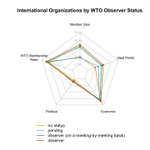
Attending #ISA2026? Check out our ongoing research (with @Sayumi_Miyano) on the determinants of WTO observer status for IOs, to be presented tomorrow! We study how geopolitical alignments among IO members shape WTO observer status decisions and information exchange between IOs.


Sojun Park retweeted

This Guardian map suggests that Europe and others have started to vote more with China. A more careful look shows that the U.S. has changed; not the rest of the world. U.S. voting behavior has become so extreme that it practically breaks the scale of UN ideal point estimates.


The world isn’t moving away from the U.S.
The U.S. is moving away from the world.
@ErikVoeten explains in his latest piece that data shows most countries haven’t changed. The U.S. has.
Read: goodauthority.org/news/the-w…

Sojun Park retweeted

Join us for the Political Economy of International Organization Conference (@The_PEIO) at the University of Texas at Austin, January 7-9, 2027. Submission is now open at peio.me. Thanks Terry Chapman, Dan Nielson, @goodhouses, @NateMJensen for hosting!
