

Canadian social/cultural psychologist at UBC. Japanophile. Author of "Start Making Sense.," "DNA is Not Destiny," and "Cultural Psychology."
Joined August 2020
- Tweets1.1K
- Following451
- Followers1.3K
- Likes2.1K




Pinned Tweet
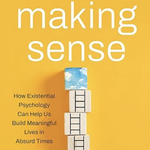
It’s PUBLICATION DAY!! Very happy to announce the release of my new book, Start Making Sense: How Existential Psychology Can Help us Build Meaning Lives in Absurd Times. A 🧵
hachettebookgroup.com/titles…

Steven Heine retweeted

Excellent piece by Dr. Lisa Mckenzie defending sociology. I particularly appreciated her call to action for her fellow academic sociologists:
“I also make a plea to my fellow academics: stop allowing this to happen. Stop allowing academic institutions to make appointments and pursue policies that denigrate everything we do. We need to go back to first principles. We need to forget the identity politics, the DEI quotas and the tick-boxes, and support and fund what we do best – deepening knowledge of what is really happening in society and arguing why that matters.”
In my view, anthropologists need to do the same. If we don’t, we’ll find our departments and our discipline even worse off with respect to faculty positions, student enrollments, grant funding, and public support. The situation is already bad. If we’re not careful, instead of there being just a few jobs for our PhD students and postdocs to apply for each year, there’ll be virtually none.
My sense is that sociologists and anthropologists need something akin to the discipline-wide reform process that medical researchers initiated in the early 1990s and which has become known as the evidence-based medicine movement. We need to begin pushing for an ‘evidence-based sociology’ and an ‘evidence-based anthropology’. We could do this together as closely related disciplines, perhaps with colleagues elsewhere in the social sciences, thereby creating the evidence-based social sciences movement.
The lowest hanging fruit in such a reform process would be for us, when we’re acting as reviewers, to agree not to approve any paper or book for publication that makes claims based solely on autoethnography. Autoethnography should be regarded as a means of generating hypotheses and research questions, not as a research method. Reconceptualising autoethnography this way would immediately improve the rigour and reliability of sociological and anthropological research. Multiple reforms are needed but this is the most obvious and easiest place to start, I reckon.
@drianpace, @redrumlisa, @HamesRaymond

I'm a Sociologist and we need to defend Sociology the Arday affair has caused so much damage.
In defence of sociology - spiked share.google/dEEpj71OLsLTkFq…

Steven Heine retweeted

New Analysis @JF_Schulz @DumanBRad @mmuthukrishna @StevenHeine4 @DrNathanNunn @MohammadAtari90 @vsavitskiy1 Psychologists: read down, and you'll see a central role for psychology. Genetists: we used runs of homozygosity to measure culture.

Steven Heine retweeted

New study: Loneliness predicts seeking AI chatbots for companionship. But chatting with AI makes people more lonely (but on just one measure, not all).
psychologicalscience.org/art…


Steven Heine retweeted

(🧵1/11) For the past year and a half, I've been investigating OpenAI and Sam Altman for @NewYorker. With my coauthor @andrewmarantz, I reviewed never-before-disclosed internal memos, obtained 200+ pages of documents related to a close colleague, including extensive private notes, and interviewed more than 100 people.
OpenAI was founded on the premise that A.I. could be the most dangerous invention in human history—and that its C.E.O. would need to be a person of uncommon integrity. We lay out the most detailed account yet of why Altman was ousted out by board members and executives who came to believe he lacked that integrity, and ask: were they right to allege that he couldn't be trusted?
A thread on some of of our findings:

Steven Heine retweeted

Education research the least likely to replicate according to a huge new paper published by Nature

Steven Heine retweeted

I find it fascinating how huge majorities of almost every group agrees that:
People have a soul or spirit in addition to their physical bodies.
Even 69% of agnostics agree with that.
The huge outlier are atheists.
Just one-third think that they have a soul.

Steven Heine retweeted
New study just out! 🚨 We created a way to rewind and fast forward through cultural differences in China.
nature.com/articles/s41597-0… @NaturePortfolio

Steven Heine retweeted

New article in JPSP on Apocalyptic Thinking! Takeaways in the title: End of world beliefs are common, diverse, and predict how people perceive and respond to global risks.
Cindel J.M. White, @azimshariff, & Ara Norenzayan
dx.doi.org/10.1037/pspi00005…
Preprint: matthewibillet.com

Steven Heine retweeted
Why am I talking about being WEIRD? Because people in Western, individualistic cultures tend to choose more of these abstract pairings. @JoHenrich @StevenHeine4 science.org/doi/10.1126/scie…

Steven Heine retweeted

NEW EPISODE!!
@EricNeumannPsy chats with SHINOBU KITAYAMA about a truly global psychology.
Most cultural work has focused on the West and East Asia. What about the rest of the world?
What are his hopes for the future of cultural psychology?
stanfordpsychologypodcast.co…

Another finding that suggests that sleep duration is not the key variable associated with sleep health.


Steven Heine retweeted

I finally made a best books of the year list! Go check it out. It has books from some amazing authors like @kurtjgray @wstorr @StevenHeine4 @olgakhazan @ElieNYC @davidenrich @lindy2350 @PatFlynn @dollarsanddata and many more!
Read: open.substack.com/pub/therew…

Here are some new insights from the science of meaningful lives. greatergood.berkeley.edu/art…

Steven Heine retweeted

Sleep duration is an interesting indicator. Yet a recent PNAS study shows that shorter average sleep isn’t necessarily worse for health; instead, health is higher when sleep duration aligns with local cultural norms.
nitter.cf/StevenHeine4/status/19…

Here's a nice summary of our PNAS paper showing that healthy sleep durations vary across cultures.
youtube.com/shorts/MJNX0DNEo…
pnas.org/doi/abs/10.1073/pna…

Steven Heine retweeted

In episode 1072, I talk with Dr. Steven Heine (@StevenHeine4) about his great book, Start Making Sense: How Existential Psychology Can Help Us Build Meaningful Lives in Absurd Times. #Psychology #Science
youtu.be/oQj1VpqU1kQ

Steven Heine retweeted

I wrote a little bit about the "missing heritability" question and several recent studies that have brought it to a close. A short 🧵

Steven Heine retweeted

Why every behavioral study should be cross-cultural? Because for decades, science got something very wrong...
Elena Brandt, Ph.D. and founder of Besample, explains how Western bias in research can lead to catastrophic conclusions when it’s based on data from a single country.
Steven Heine retweeted
One of things that @jonestony and I hear from non-religious folks is that they are, "Good without God."
Our data supports that idea.
The "Dones" are about as far away from traditional religion as possible.
They score almost the same on the well-being scale vs. Christians.

Steven Heine retweeted

One of the giants of social psychology was a serial sexual harasser.
This new report reveals how Miles Hewstone touched, bullied, and sexual harassed numerous women during his 18 years at the University of Oxford. It's amazing how often bullying and sexual harassment go together in academia.
I know several of the women who were harassed by this guy. They had real courage to testify. This article reveals how he engaged in serious professional retaliation against women (and several were clearly afraid of him).
This needs to end. I've seen how many people curry favor with known sexual harassers and how the worst can still manage to leap from job to job.
But the truth will always out. Sunlight is the best disinfectant.
Here is the full article from Bloomberg:
bloomberg.com/news/features/…

Steven Heine retweeted

We are deeply saddened to share that Dr. Paul Ekman has passed away. His groundbreaking research transformed our understanding of emotion, facial expression, deception and compassion. We are creating a memorial page if you would like to share a reflection: ow.ly/vvX650XtSyi
