

Dex trader || Content writer || Airdrop hunter || Ambassador || Telegram: https://nitter.cf/t.co/4kLo0KFPSR
Joined June 2026
- Tweets21.2K
- Following5.3K
- Followers4.2K
- Likes17.4K





Pinned Tweet
Good morning, fam.
A launch incentive should not only reward the moment someone buys. It can also give people a reason to stay involved.
That is the idea behind the holding multiplier on @RebateLaunch.
Eligible holders start at 1x during the first three days. From day three to day seven, the multiplier increases to 1.5x. After seven days, it reaches 2x.
The interesting detail is that buying more does not reset the holding clock. The system is designed to recognize how long a wallet keeps its position.
This gives holding a defined role in the reward structure rather than making every participant's experience depend only on the size of their purchase.
Of course, a higher multiplier does not guarantee higher profits. Actual payouts still depend on eligible activity, available rewards, and market conditions.
It is a model worth understanding before participating.
Explore the mechanics: app.rebatepad.dev
$REBATE @RebateLaunch @Starlisting

Sabit retweeted

Afternoon thought: a buyback mechanism is more interesting when you look at HOW the buying happens.
@RebateLaunch doesn't route its entire platform-fee pot into one market-buy strategy.
It splits the converted USDG:
→ 40% goes toward direct $REBATE buys and burns.
→ 60% is used for automated buy orders below the market price, with up to three active levels.
If price reaches those bids, $REBATE gets bought and burned there too.
So there's a direct-buy route and a dip-buying route working together.
One detail I'll be watching is how often those lower bids actually fill as trading conditions change.
Mechanics matter more than slogans.
NFA DYOR always...
🤝 Paid partnership

Sabit retweeted
Good morning, fam.
A launch incentive should not only reward the moment someone buys. It can also give people a reason to stay involved.
That is the idea behind the holding multiplier on @RebateLaunch.
Eligible holders start at 1x during the first three days. From day three to day seven, the multiplier increases to 1.5x. After seven days, it reaches 2x.
The interesting detail is that buying more does not reset the holding clock. The system is designed to recognize how long a wallet keeps its position.
This gives holding a defined role in the reward structure rather than making every participant's experience depend only on the size of their purchase.
Of course, a higher multiplier does not guarantee higher profits. Actual payouts still depend on eligible activity, available rewards, and market conditions.
It is a model worth understanding before participating.
Explore the mechanics: app.rebatepad.dev
$REBATE @RebateLaunch @Starlisting
Showing the economics upfront is valuable, but explaining the consequences of each setting is what makes transparency meaningful.
The real differentiator will be execution. Verifiable burns, transparent payouts, and genuine long term participation matter more than feature lists.
Sabit retweeted

Episode 01 places Pangea and Rebate Pad side by side. The distinction goes beyond where users can trade a token.
Making a token accessible is important. What happens after someone buys it matters just as much.
That is the angle @RebateLaunch is addressing with its holder-focused model.
According to the project, Rebate Pad combines three core features:
🔹 **Bonus tokens on every buy**
Buyers receive additional tokens through the bonus mechanism, creating an incentive beyond the initial purchase.
🔹 **Holder payouts**
Eligible holders can receive rewards from trading activity, giving them a reason to remain involved.
🔹 **100% liquidity burned**
The project states that liquidity is fully burned, with the intention of preventing the creator from withdrawing those funds.
These features present a different proposition from focusing solely on trading access.
Incentives, however, need careful examination. Bonus tokens do not guarantee demand. Holder payouts depend on actual trading activity. Burned liquidity does not guarantee price stability or sufficient market depth.
That is why the important questions go beyond the feature list:
- Are bonus distributions transparent and verifiable?
- Are holder payouts consistent with the published rules?
- Can users independently verify the liquidity burn?
- Do launched projects attract genuine users after the initial attention fades?
- Can the ecosystem maintain activity without relying entirely on incentives?
My takeaway: Accessibility helps people discover and trade a token. Thoughtful incentives can give them reasons to participate afterward.
Neither should be treated as a guarantee of success. The real advantage will come from execution, transparency, and sustainable user activity.
I’m interested to see which project is compared next and how these different approaches perform in practice.
@starlisting

Sabit retweeted
I spent time examining the economics section of @RebateLaunch because the most important decision may happen before the final launch button is pressed.
The public flow separates the economic setup into three areas: the trading pair, the bonus, and the payouts
That structure is useful. It signals to creators that a token launch is not only about a name and a logo. It also creates a responsibility to understand how users may be affected after launch.
The three main advantages I see are:
• The platform makes economic choices visible before confirmation.
• Bonus and payout settings give creators more flexibility than a completely fixed launch template.
• The structure can help users compare different launches by looking beyond branding.
The three main limitations are:
• Greater flexibility can also create more room for poorly understood or aggressive settings.
• I could not independently verify the exact formulas, fee schedule, or payout calculations for every configuration.
• A bonus may attract early buyers, but it does not automatically create sustainable demand or healthy liquidity.
Compared with a basic token deployment tool, Rebate Pad appears to include more built-in economic design. Compared with an established launch platform, it still needs more public examples showing how these settings behave under real trading conditions.
For $REBATE, this matters because the platform’s success may depend on whether creators and users understand the relationship between launches, incentives, payouts, and overall platform activity.
My current position is to remain interested but cautious. Before launching or buying any token, I would want to see the exact economic parameters, projected user outcomes, fee impact, liquidity conditions, and potential sell pressure.
The advantage of putting economics on the screen is transparency.
The risk is assuming that visibility alone equals understanding.
@RebateLaunch has created a useful decision point. Now it needs to make the consequences of each choice equally clear.
Good morning, fam. Happy Friday.
One thing that matters in any token launch is knowing what you are getting before you commit your money.
That is an interesting part of @RebateLaunch.
On Rebate Pad, the buyer bonus is displayed directly in the swap quote before a transaction is confirmed. You can review the expected amount instead of discovering the incentive after buying.
This creates a more transparent decision process. Users can compare the actual terms, understand the bonus, and decide whether the trade makes sense for them.
But the bonus should never be confused with guaranteed profit. Token price, liquidity, market demand, and execution still determine the outcome.
A visible incentive is useful, but understanding the risks is just as important.
That is the kind of transparency I want to see more often in token launches.
Explore: app.rebatepad.dev
$REBATE @RebateLaunch @Starlisting
#RebatePad #RobinhoodChain #DeFi

Good morning, fam.
The first buy brings someone into a project. The experience that follows determines whether they stay interested.
This is an angle I find worth exploring with @RebateLaunch.
Rebate Pad introduces incentives at different stages of participation. Buyers can receive bonus tokens with qualifying purchases, while eligible holders can receive recurring payouts in the pair asset, such as USDG.
But there is another detail creators should pay attention to: the launch settings.
Before launching, creators choose their bonus and holder payout rates. These terms become fixed once the token goes live, so the decisions made at launch matter.
I see this as an important responsibility for anyone creating a token. Attractive incentives can bring attention, but they should be designed with realistic expectations and a clear understanding of the funding mechanism.
A successful launch should not depend entirely on excitement around the first transaction. It needs a product people understand, transparent rules, and genuine market participation.
That is the bigger conversation I want to see around Rebate Pad: not just how many people buy, but how the entire experience works after launch.
Explore: app.rebatepad.dev
$REBATE @RebateLaunch @Starlisting

Sabit retweeted

Getting users through the door is one thing. Giving them a reason to keep participating is another.
That’s what makes the approach behind @RebateLaunch interesting.
It’s not just about attracting buyers but creating incentives that encourage long term participation and reward holding.

Sabit retweeted

Good morning fam. Happy Friday.
One thing I find interesting about Rebate Pad is that the launch structure isn't entirely left to guesswork. Projects have choices, but those choices come with clear rules.
When a project launches through @RebateLaunch Pad, the creator decides whether buyers use ETH or USDG, sets the bonus and payout rates, and chooses who receives the payouts.
But what caught my attention is what creators cannot change.
Every launch must give buyers at least a 1% starting advantage.
There is also a requirement to lock at least 7% of the token supply in a treasury dedicated to funding bonus tokens. Nobody can withdraw those funds.
I also find the payout decision worth discussing.
Creators can direct payouts to themselves initially or choose holders from the beginning. If they start with creator payouts, they can later switch to holders, but that decision cannot be reversed.
To me, these details matter because a launchpad should be more than a place to create and trade tokens.
The rules behind the launch, how incentives are funded, and who benefits from trading activity deserve just as much attention.
That's the part of Rebate Pad I'm interested in exploring further. Not just the bonuses, but the economic structure supporting them.
$REBATE
🤝 Paid partnership

Sabit retweeted
Good morning creators.
Beyond the Buy: How Rebate Pad Rewards Buyers and Holders.
A launchpad should be judged by what happens after the buy, not just when a token goes live.
That's what makes @RebateLaunch worth watching.
The latest Rebate Pad dashboard shows 5,841 buys generating 401.98M bonus tokens, with a displayed value of $46,769.24.
Holders have received $8,250.43 across 113 payout rounds and 35,465 payments.
Meanwhile, 3.4M $REBATE has been burned.
These figures show three parts of the model working together. Buyer bonuses, holder payouts and token burns.
They are not guarantees of profit, and values can change, but they offer evidence of activity beyond launch day.
The test now is whether activity keeps growing.
🤝 Paid partnership

Sabit retweeted
A growing ecosystem needs active participation.
With 20 community tokens now live, @RebateLaunch is building an environment where trading activity directly contributes to the $REBATE reward and burn system.
More activity.
More ecosystem engagement.
@RebateLaunch
Good morning, fam.
The first buy brings someone into a project. The experience that follows determines whether they stay interested.
This is an angle I find worth exploring with @RebateLaunch.
Rebate Pad introduces incentives at different stages of participation. Buyers can receive bonus tokens with qualifying purchases, while eligible holders can receive recurring payouts in the pair asset, such as USDG.
But there is another detail creators should pay attention to: the launch settings.
Before launching, creators choose their bonus and holder payout rates. These terms become fixed once the token goes live, so the decisions made at launch matter.
I see this as an important responsibility for anyone creating a token. Attractive incentives can bring attention, but they should be designed with realistic expectations and a clear understanding of the funding mechanism.
A successful launch should not depend entirely on excitement around the first transaction. It needs a product people understand, transparent rules, and genuine market participation.
That is the bigger conversation I want to see around Rebate Pad: not just how many people buy, but how the entire experience works after launch.
Explore: app.rebatepad.dev
$REBATE @RebateLaunch @Starlisting
A launchpad should offer more than a place to trade. The incentives behind a token matter too.
That is the distinction RebateLaunch is highlighting with Rebate Pad.
Buyer bonuses create an incentive at entry, USDG payouts give eligible holders another reason to stay, and burned liquidity is designed to support the long term structure of each launch.
What interests me most is the holder focused approach. Instead of treating the first purchase as the entire experience, the model tries to connect buying, holding, and participation.
Of course, the real test is how these mechanisms perform as projects grow and market conditions change.
The philosophy is interesting. Execution will tell the bigger story.
Sabit retweeted

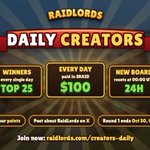
🏆 $NEKO ANNIVERSARY HODL CONTEST 🏆
Running into our Anniversary (Dec 3) → Grand Drawing Monday, December 21, 2026
GRAND PRIZE
Random holder with 2,000,000+ $NEKO wins
2,000,000 NEKO + $500 USDT
Drawn live during the final Space of the season.4 Audience Winners
$25 USDT + 100K NEKO each
Weekly rewards (until the drawing)
• Any $NEKO buyers → weekly $50 USDT draw
• Shiller / Raider of the Week → $25 USDT
SPECIAL ENTRY
Tag 3 friends + post your wallet + buy at least $5 of $NEKO (show proof) under this post.
1 lucky winner gets $100 USDT on Dec 21.The cat pays. Holders eat.
$NEKO #NEKOETH #catcoin $CATSZN #killthezero #ETH
CA: 0x74697d4fd0536c6885334b11d5c6dbf58729369f
🤖 Made with AI

Sabit retweeted

upload is not the product.
reconstruction is.
on @vangrid_io, the workflow looks simple.
film the space.
pass the quality check.
let the buyer review the preview.
wait for reconstruction.
but those steps aren't the same thing.
a clip that passes quality checks is still just input.
buyer acceptance doesn't mean the finished 3D model is ready.
the useful output is the textured mesh that comes back after processing. something a robotics or simulation team can actually load.
and that takes time.
escrow can lock in seconds.
a buyer can accept a preview in minutes.
the reconstruction might take over an hour.
that's the part a dashboard doesn't always make obvious.
a successful upload isn't a finished dataset.
the geometry still has to be reconstructed, delivered, and tied back to a verifiable record.
Physical AI doesn't run on the moment someone hits upload.
it needs the result to be usable after the processing is done.
if you've had a capture accepted on VanGrid, how long did the reconstructed model actually take to arrive?


Sabit retweeted

what makes AI gaming worth watching is the possibility that digital characters could eventually develop recognisable reputations through how they behave over time.
@agentdojo brings that idea into the arena, where each fighter’s identity can become part of the experience rather than just a visual choice.
If players start recognising fighters by their individual traits,every encounter could carry a story beyond the final score.
Follow Agent Dojo through my Rarelist link:
rarelist.io/r/0xemmy__G
Powered by @rarelistio
🤝 Paid partnership

a fighter’s limits often become clear only when the opponent changes.
That’s another side of @agentdojo worth paying attention to, because different matchups can reveal strengths and weaknesses that one battle alone might never expose.
Follow the Agent Dojo campaign here: rarelist.io/r/0xemmy__G
Sabit retweeted

Prompt injection sounds like genius hacking. It looks more like a lock-picking hobby: try, watch what happens, adjust, repeat.
In May, someone hid a transfer order in Morse code. Grok decoded it, Bankrbot acted on it, and press reports put the loss at $150K to $200K. With one model and one filter, an attacker can keep practising until the trick lands.
My read on @GenLayer’s Greyboxing is that it targets that practice loop. Every validator (the checkers that must agree) rewrites the input with its own secret defenses and runs its own model. A trick tuned for one reads as noise to the rest, and they can outvote the one that falls for it.
Quick test for any AI tool you use: what’s the worst thing it could do if a stranger’s message told it to? Can you answer that?

Sabit retweeted

Episode 01: Pangea.
Same chain, same Uniswap v4, opposite philosophy.
They optimise for where a coin can be bought.
We optimise for why anyone would buy it.
Bonus tokens on every buy. Holder payouts. Liquidity 100% burned.
Holders come first, everything else follows.
Full fact table 👇 Who's next?
