


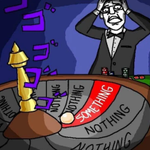


The big difference is that Riemann Hypothesis was pretty much largely assumed to be true while P=NP is largely assumed to be not true.

A lot of people are worried about P = NP.
Here’s the simple version.
P is the set of problems a computer can solve quickly. Sorting a list, finding the shortest route on a map, multiplying numbers.
NP is the set of problems where, if someone hands you an answer, you can check it quickly. A filled-in Sudoku is easy to verify, but solving a hard one from scratch can take forever.
If you can check an answer fast, can you also find it fast? P = NP says yes. Almost everyone believes the answer is no, but nobody has proved it either way. It’s a $1M Millennium Prize problem.
Riemann is solved, but it doesn’t change your day. P = NP would change everything very fast.
Almost all modern security rests on the assumption that some problems are brutally hard to solve but easy to check. Factoring huge numbers is the classic one.
If P = NP, that wall could fall. HTTPS, online banking, passwords, digital signatures, crypto wallets, all of it would be at risk.
The same power that breaks encryption would solve the hardest optimization problems we have.
Protein folding and drug discovery would speed up massively. Logistics, flight schedules and supply chains would become near perfect.
Training AI models could get far cheaper. Even finding mathematical proofs could be automated.
It depends on how it’s proved. If the proof is not constructive, or the algorithm runs in something like n^100 time, it's useless in practice. The scary version is a fast, practical algorithm.
Most researchers bet on P ≠ NP, and that is the reason your bank account is safe today.
But if someone ever proves P = NP with a practical algorithm, the world gets rewritten overnight.
Best case, we cure diseases and solve problems we thought were impossible.
Worst case, every lock on the internet opens at once.
Something to worry about indeed.

1
1
120


You will use the clawshot and you will be happy

The main thing I can't forgive the Ocarina remake for, is the way they changed hookshot interactions: organically targeting wooden surfaces seems to have been thrown out completely, in favour of explicit, impossible to miss hookshot targets.
A baffling design decision that completely destroys the player's incentive to think and use the tool playfully and creatively ☹️

4
389


Oasis 💾 retweeted

Pub was playing Kryptonite by 3 Doors Down and I thought of this image and started laughing so hard i had to leave


Right click saving is cooked

This feels illegal to know.
Someone built a file format which corrupts a little every time you open it.
It's called decayfmt, a small open source tool by Arav Panwar. You take an image or a text file, encode it, and from that point on every open damages the file on disk before it shows you anything.
There's no undo and no recovery from the file alone.
The decay speed lives in the filename. A photo saved as photo.idcy1 loses about 9.5% of its pixel data each time you look at it.
Save it as photo.idcy10 and roughly 63% gets scrambled on the first open. Rename the file and you change how hard the next open hits.
The design details are what got me. The corruption comes from your operating system's randomness, so there's no seed anyone can replay to rebuild the original.
The tool writes the damage to disk before it displays the file, so a crash can never hand you a free read. It never touches transparency on images, which means the decay shows up as color noise instead of holes.
Text only swaps in printable characters, so a sentence rots into something that still looks like language.
The author calls it a social contract enforced by math. It isn't encryption and it isn't secure deletion. Anyone with a backup or a hex editor can beat it, and you know that going in.
What I like about it is how backwards it feels. Every digital file copies for free, and the models I use every day can regenerate almost anything on demand.
Then someone writes a small Rust tool where reading a file costs you part of the file, and you have to decide whether it's worth opening.
A printed photo fades in a drawer. Nobody ever needed a tool to make a JPEG do the same thing, until this one.
1
182