

A Atmi Hanefi Sunni Kurd from Antep-London 🇬🇧 @spursofficial fan Y-DNA : https://nitter.cf/t.co/GpQmPyDAT4
London, England
Joined October 2015
- Tweets593
- Following66
- Followers78
- Likes2.8K





Pinned Tweet
My G25 Results as a Atmi Kurd from Gaziantep
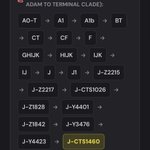
Y-DNA : yfull.com/tree/G-Z33325/
Credits to @Yhbjio for doing this for me.
🤖 Made with AI

Bilz retweeted

New sample under R1a-YP4141!
In what can only be described as a class of its own, we have provided a sample to YFULL with 96x read depth, making it the most in-depth sequenced individual Iranian-speaker that we are aware of.
The individual in question is a Baluch from Zahedan, and he can be found on the unopened branch of R1a-YP5049. What this means is that while he certainly is not basal, no other sample on the tree matches him sufficiently enough to form an unique subclade under YP5049. This implies that, with a more robust sampling strategy, we will have a better understanding of the clade diversity.
The link to the clade can be found below:
yfull.com/tree/R-YP5049/


Bilz retweeted

London Clubs to have produced a Ballon D'or winner:
Spurs (1) - Harry Kane
Arsenal (0)
Chelsea (0)
West Ham (0)
Bilz retweeted

The Ayyubid Kurdish governor in Yemen, Wardashār b. Payāmī, has left two inscriptions in Sanaa dated 603 AH / 1207 CE.
In the inscriptions, he describes himself as:
“He of the highest rank, the great, the mightiest, the chosen one, king of the Kurds.”


Bilz retweeted

🗓️ #OnThisDay in 2017:
Tottenham 3-1 Real Madrid
⚽️ D. Alli [27’, 56’]
⚽️ C. Eriksen [65’]
⚽️ C. Ronaldo [80’]
Iconic game at Wembley, beating one Europe’s greatest ever sides.
Bilz retweeted

🧬Genetic Results of a Yörük Woman from Küçükdeliler Village, Bursa, Türkiye | qpAdm (ADMIXTOOLS)


Bilz retweeted

Anti-Kurdish narratives are so normalised in academia that foreigners unknowingly put forward exceedingly ignorant proposals. Firstly, the palatal *ḱ in proto Indo-European *ḱerdʰ- becomes Indo-Iranian *ć, and PIE *e becomes *a, which gives *ćárdʰa-. Iranian then loses the aspiration of *dʰ, which gives Proto-Iranian *ćarda-. Iranian turns *ć into s, apart from Old Persian, which turns it into θ. In Middle Iranian the final vowel is lost and *rd becomes *rδ. In Persian and Kurdish this becomes l, with the a lengthened to ā, and in Persian the inherited *θ becomes h.
The final outcome of PIE *ḱerdʰ- (which gives English herd) would therefore be *sāl in Kurdish and *hāl in Persian. The word for “year” went through exactly the same changes from a different root: Old Persian θard-, Avestan sarəd-, Parthian sarδ, Kurdish sāl. The Avestan cognate of herd is sarəδa- “kind, species”. It is not possible for Kurd to come from Proto-Indo-European *ḱerdʰ-. Kurd has k instead of s, θ or h, u instead of a or ā, and keeps r plus a dental (the Pahlavi spelling kwltʾ/kwrtʾ is pronounced kurd) where *rd should have become l. Of course, this etymology is proposed on Wiktionary, where anyone can edit and type nonsense.
Secondly, there is not a single shred of evidence that the word Kurd originally meant herder or tent dweller, and especially if you use any historical Iranian account. There is 11 non-Kurdish Iranian nomadic, tent dwelling, herder tribes living in the plateau before the Islamic age: The Mardi, the Sagartians, the Dropici, the Tapuri, and so on. Eratosthenes of Cyrene and Strabo specifically list the Kurds as a tribal entity living in the Zagros. It has taken a long time, but the most prominent academics in the field now, such as Boris James, now reject the old orthodoxy that Kurd was a lifestyle label. The entire premise of Kurd meaning shepherd or herder rests on isolated, mistranslated and misappropriated early Islamic Arabic historiographical accounts that draw analogies and comparisons. These same accounts treat other ethnic groups, in the exact same way but you will never see a claim like Persian means farmer even though we can build a case showing exactly that if we decide to become disingenuous.
A lot of these older western academics have relied too heavily on the ideologically driven yappings of local near easterners who built narratives to serve certain nation building projects at the expense of Kurds. Or just built upon these narratives out of spite. It doesn't help that the odd Kurd who entered into academia only contributed mickey mouse unserious tier narratives about us Kurds.


Bilz retweeted
Here I will make an additional post for those who want an expanded commentary on the post below from the linguistic perspective in particular. Originating as an outer garment (thick, sleeveless felted cloak of religious and cultural significance) that is loaned and then historically adopted as a tribal name for a particular group of Iranians in the Zagros by 220 BCE, and later transforming into an ethnonym in the Islamic age, all the while still maintaining a secondary outer cloak garment meaning. I will walk through the derivation stage by stage, then go through the related forms found across the Iranian world, both ancient and modern.
*kr̥t-í- (Proto-Indo-European). This is the root *kr̥t- plus the suffix -i-. The root is *(s)kert-, the t-form of *(s)ker- “to cut” (Pokorny 941–942). One might ask whether the root had a laryngeal, which would change its Iranian outcome. It did not: Sanskrit kṛntáti “cuts” has a short ṛ, whereas *r̥H would have given īr or ūr.
*kr̥ti- (Proto-Indo-Iranian). The form is unchanged from Proto-Indo-European. The meaning is “cut”: something that cuts or is cut. On the Indic side it gives Vedic kṛtí- “dagger”, a weapon of the Maruts in Rigveda 1.168.3, which keeps both the r̥ and the accent. It is a different word from *kr̥ti- “making”, from *kʷer- (Avestan ākərətiš): the shape is the same, but the root and meaning differ, so the two must not be mixed.
*kr̥ti- (Proto-Iranian). The form is again unchanged: r̥ survives as a syllabic r, which Avestan writes ərə. The main meaning stays “cut”, and a secondary sense appears, probably early in Iranian: a garment. The step from “cut” to “garment” is a natural one, since a garment is a piece of cut or tailored cloth, and the Iranian sources make the link themselves. The Pahlavi commentary renders Avestan kərəti- as kirrēnīdag “cut”, and Bailey derives the Khotanese garment word from kart- “to cut, tailor”.
*kur(ə)ti- (the u-forms). Here r̥ became ur. That is not the expected outcome, but it is not a problem, for two reasons. First, the u is not reconstructed out of nowhere. It is attested, in Kýrtioi by 220 BCE and in Parthian kórtēn. Second, ur after k is a known Iranian outcome: Balochi has kurt “did” < *kr̥ta-, and ur is the usual outcome in Parachi, Sanglechi-Ishkashmi and Shughni (Clayton 2022). So the u comes either from a western dialect of the Balochi type, or from an eastern u-form that spread west with the garment, as the borrowed name of a traded item. This word family shows that kind of travel twice: the *kurət- forms in Ossetian, Bactrian and the Tarim Basin are loans, and later Sogdian kurθ- spread west as Persian kurta. Persian itself cannot be the source, since it gives ur only after labials (murd “died”, burz “high”) and ir after k (kird “did”, kirm “worm”).
*Kurt(i)- (garment word and tribal name). Polybius records the Kýrtioi (Latin Cyrtii) as slingers for the Median satrap Molon in 220 BCE. Livy has Cyrtian slingers at Magnesia in 190 BCE, and Strabo places them in Media Atropatene and Persis. The match is sound for sound: κ = k, υ = u, ρ = r, τ = t. The weak ə after the r, if it was there, has been lost. Greek had δ for d, so the τ shows a real t at this date. With no suffix after the -i, the i never became y, so no θ arose as it did in Sogdian. The word kept its garment sense alongside the name, because its descendants still carry it at both later stages. Parthian kórtēn shows it at the t-stage (below). Arabic kurdī, a plain wool wrap recorded from the narrator Ibn Abī al-Zinād (d. 790 CE) in Abū Dāwūd 915, shows it at the d-stage, though it can also be read as “the Kurdish one”. A garment becoming a tribal name is nothing unusual: the Kurdish Sanjabi are said to be named after squirrel-fur tunics, and the Turkic Qarapapaq and Karakalpak both mean “black hat”.
*Kurt (early Western Middle Iranian). The final -i is lost. Parthian has kórt-ēn, which Hesychius explains: “The Parthians call by this name a garment that boys receive when they reach manhood.” Schmitt lists it among the Parthian garment words in Hesychius. Latte’s edition traces the gloss to Diogenianus, who wrote under Hadrian, so it dates to 138 CE at the latest, with the t still unvoiced. Two details belong only to the Greek: the -ēn is the Greek accusative ending, and the o is a normal Greek spelling of a short u. Greek had no letter for a short u, so older writers used υ (Kýrtioi; Kŷros for Old Persian Kuruš), and later ones often used o (Πάκορος for Parthian Pakur, Ὀσρόης for Husrōw).
*Kurd (later Western Middle Iranian). t became d after r, a regular change in Parthian and Middle Persian (compare Middle Persian kird “did” and murd “died”). It came after 220 BCE, when the Kýrtioi still had t, and was roughly complete by the 3rd century CE. The name did not stay *Kurt, as Balochi kurt did, because the Kýrtioi lived in Media and Persis, inside the area where Parthian and Middle Persian voiced t after r. This gives Kurd, the form found in Middle Persian (Pahlavi kwlt’) and from there into the early Islamic period.
In Arabic, kurdī is loaned to mean a wool wrap in Abū Dāwūd 915, from the narrator Ibn Abī al-Zinād (d. 790 CE), and Ibn al-ʿArabī (d. 1148 CE) repeats it as kurdiyya, quoting the same narration. In Ottoman Turkish, Meninski (1780) gives kürdiye as “cloak, short garment”. Redhouse (1890) gives kürdiyye and kürdekī as “frock coat with short sleeves” and kürdī as “woollen cloth or garment of Kurdish make”. Lady Mary Wortley Montagu (1717) describes the curdee as “a loose robe”.
Now for the other Iranian forms:
Avestan kərəti-. This is a religious outer garment worn over the sacred shirt and belt (Nērangestān 91); the belt counts only if it is tied on the shirt beneath it. Avestan ərə writes r̥, so this is *kr̥ti- itself. The meaning is secure at §91. A second instance at §87 depends on Waag’s emendation, and Bartholomae and Bulsara read that passage as a different word, but nothing here depends on it. The ending -īš could also fit an ī-stem, but Vedic kṛtí- and Old Ossetian *karti- point to an i-stem.
Ossetian kærc “fur coat, sheepskin coat”. It comes from Old Ossetian *karti-, which Abaev says “corresponds perfectly” to kərəti-. The sound changes are regular: r̥ > ar, a > æ, and final -ti > -c.
Khotanese kīḍ- (in kīḍakyä “garment”). The changes are again regular: r̥ > ä, rt > ḍ, and the vowel becomes ī before the -i- of -ti- (Bailey 1979). A Late Khotanese document has kīḍakyä begaṃnä śau, “one garment, woven”, written before Khotan fell around 1006. Khotanese cannot show whether its vowel came from zero-grade *kr̥ti- or a full-grade *karti-, but the zero grade is the one Avestan and Vedic show, so it is the simpler assumption.
The *kurət- loans: Ossetian kuræt (Iron kʷyræt) “beshmet”, Tarim kuratu “shirt” and Bactrian kuratīg “shirt”. These cannot be inherited. A native Ossetian t would have become d, and native -ti gives -c, as in kærc. Native Bactrian would have ιρ and δ (compare κιρδο “made”). So they are borrowings from an unknown donor, and their vowel after the r shows that the u-form had a weak ə there. Each language adapted it in its own way: Ossetian ə > æ (and in Iron u > y, hence kʷy-), Tarim ə > a with a local ending -u, and Bactrian ə > a with ο for u and the suffix -īg. Bactrian kuratīg appears in a letter about “linen shirts from Balkh”, and Tang glossaries of the 8th century give the Tarim form as the “Sanskrit” for Chinese shan “shirt”.
*kr̥θy- (the θ-derivative). A suffix beginning with a vowel turned *kr̥ti- into *kr̥ty-. Since ty > θy is a Proto-Iranian change (Avestan haiθiia- < *satya-), this derivative is old. Sogdian has both kərθ- (krδʾkh, in the early 8th-century Mugh documents) and the u-form kurθ- (kwrδʾk, qwrθy): the regular vowel and the u-form side by side in one language. Both lost the y after θ, as in xēpθ “own” < *xwaipaθya- (Yoshida 2016). kərθ- shows the ordinary Sogdian r̥ > ər, and kurθ- the u-form. That θ cannot come from t, because Sogdian keeps old t. Yaghnobi kŭrta and kŭrsa “shirt” inherit the word, with θ > t in the west and s in the east.
The later kurt- loans. Persian kurta, kurtak and kurtī, Kurmanji kurtek “robe”, Tajik kurta, Pashto kurta, Parachi kurtī, Shughni kurta, Armenian kʻurtik and Arabic qurṭaq (“arabicised from kurta”) all come from Sogdian kurθ-. They have no vowel after the r (unlike Bactrian kurat-), their θ became t, and that t was never voiced, so they were borrowed after t > d. This is also why Kurd has d while kurta has t: Kurd was already in Western Iranian before t > d, while kurta arrived from Sogdian after it.

MAJOR development. After several years of on and off attempts, I have finally solved the etymology of the ethnonym Kurd, which currently has no solution in academia. It comes from Proto-Indo-European *kr̥t-í- “cut” → Proto-Indo-Iranian *kr̥ti- → Proto-Iranian *kr̥ti- → *kur(ə)ti- (“cut”, but also an outer “garment”) → *Kurt(i)- (adopted as a tribal name) → *Kurt → *Kurd (by the 3rd c. CE) → Kurd (from a tribal identity to an ethnonym).
The first image, an etymological tree, sets out and justifies each sound change, if you want to see how the derivation is linguistically proven. It also contains the historical details on each form where attested. X reduces image resolution, so to read it clearly, expand the image and open it in a new tab. The second image shows the garment in question: the thick, tent-like traditional shepherd’s cloak made of dense felted wool, or wool mixed with goat hair.
Specifically, the name Kurd comes from this outer-garment sense, which was later adopted as a tribal name. Among Iranian languages, the garment word first appears in Avestan as kərəti-, in instructions on how Zoroastrians should wear it together with the sacred shirt and belt. In Parthian, kórt-ēn was the garment boys received as a coming-of-age gift when they reached manhood (which is linguistically a close match to the word Kurd, as the stem's predicted outcome of the Parthian would eventually become Kórd/Kurd since that gloss predates t > d). The word has cognates across the Iranian world, living and extinct, such as Khotanese, Ossetian, Sogdian and Bactrian.
There is historical evidence that Kurd still carried a secondary garment meaning in the early Islamic period, as the word was borrowed into Classical Arabic for a type of garment: kurdī, from the narrator Ibn Abī al-Zinād (d. 790 CE in Baghdad), in Abū Dāwūd 915 (before 889 CE), and kurdiyya in Ibn al-ʿArabī (d. 1148 CE), among others. The hadith reads: “…from ʿĀʾisha, with this report. He said: and he took a kurdī that belonged to Abū Jahm. It was said: O Messenger of God, the khamīṣa was better than the kurdī.” This is important because it shows the t > d form unlike Kurt-(ek), and other forms that passed through west Iranian languages later on via Sogdian. They are still from the same root however.
Tribal names and clans very often come from places, animals, objects and so on. The Kurdish tribe Sanjabi is named after the squirrel fur, Herki is named after a citadel, etc. Kurds are first attested in history specifically as a tribe by Eratosthenes, Strabo and others. The older reading of Kurd as “nomad” has no etymological basis in any Iranian language, and many Kurdologists/Iranologists today regard it as an anti-Kurdish narrative with no basis in the historical record (see Boris James). Some earlier academics unknowingly built on Arabic mistranslations and deliberate misreadings, which are now corrected. There were also at least 11 Iranian nomadic tribal organisations on the plateau before Islam with no Kurdish identification, and 5 Iranian tribal organisations on the plateau that never had a Kurdish tribal affiliation which completely contradicts this narrative.
The main sound-change question left open in my tree is how r̥ became ur, since it normally gives ar or ər. There are several resolutions, but it is not yet clear which one it is. The u-form *kur(ə)ti- may have spread by borrowing, as a garment from the East Iranian lands: ur is the usual outcome in Parachi, Sanglechi-Ishkashmi and Shughni (Clayton 2022), and Sogdian kurθ- probably passed into Persian kurta. Or it may be a regular change in some western dialect, as in Balochi kurt “did” < *kr̥ta- (Korn 2003).
Several scholars already tie the garment word to the root for “cut”. Abaev derives Ossetian kærc “fur coat” from Old Ossetian *karti-, which “corresponds perfectly” to Avestan kərəti- “garment” (that is, *kr̥ti-), perhaps from *(s)ker- “to cut”; he calls Ossetian kuræt a loan. Bailey derives Khotanese kīḍakyä “garment” from kart- “to cut, tailor”, comparing kərəti-. Henning took Sogdian kurθ- “garment” as the same word as kərəti-, and Benveniste linked Persian kurta to the Sogdian. Sims-Williams, publishing Bactrian kuratīg “shirt”, calls it “a word of unknown but probably non-Iranian origin”, which would leave room for a substrate source such as the BMAC (2007: 224). Although Sims-Williams did not gloss through the full extent of the Iranian forms, or look too deeply into it.
I have opted otherwise, and agree with the other scholars who do derive it through Iranian, because of the following reasons. Avestan kərəti-, Ossetian kærc and Khotanese kīḍ- show the regular outcomes of *kr̥ti- at opposite ends of the Iranian world. The root has an Indo-European etymology, *(s)ker-t- “cut”, shared with Vedic kṛtí- “dagger”, and the Pahlavi commentary renders kərəti- as kirrēnīdag “cut”. The forms Sims-Williams compares are the u-forms, and they can all be accounted for within Iranian. The Sogdian θ comes from the regular change ty > θy. Persian kurta, Arabic qurṭaq, Pashto kurta and Ossetian kuræt are loans. A word with a regular Iranian etymology doesn’t need a substrate source.
To clarify for anyone who doesn't know, the stem is important for derivation as it carries the evidence of descent, while the the suffixes don’t necessarily. A stem passes down through Iranian forms and goes through its regular sound changes, so kurt- with t, kurθ- with θ and kurd with d each show where a form sits on the tree. Suffixes are added afresh by each language and are often swapped or borrowed depending on the application and context.
Given this etymology, the identification of the Cyrtians with the Kurds is even stronger than it already was, as the forms are an exact match. Identifications with the Carduchi, Qardu, among other folk proposals have become even more improbable, both linguistically and historically, than they already were.


Bilz retweeted

Genetic breakdown of Kurds from Turkey.
p : 0.288
~48.6% Iran_DinkhaTepe_MBA.AG
~25.4% Uzbekistan_Sappali_BA.SG
~6.1% Russia_Stavropol_Yamnaya_KNK001.AG
~16.6% Kazakhstan_Pavlodar_Andronovo_MLBA.SG
~3.3% Russia_Kam_Tyttugem_Altai_Hunnic.SG
@sapphiregnm

Bilz retweeted

Wonder how IE linguists will view this. Nevertheless interesting.
“Proto-Indo-European *kr̥t-í- “cut” → Proto-Indo-Iranian *kr̥ti- → Proto-Iranian *kr̥ti- → *kur(ə)ti- (“cut”, but also an outer “garment”) → *Kurt(i)- (adopted as a tribal name) → *Kurt → *Kurd (by the 3rd c. CE) → Kurd (from a tribal identity to an ethnonym).”
MAJOR development. After several years of on and off attempts, I have finally solved the etymology of the ethnonym Kurd, which currently has no solution in academia. It comes from Proto-Indo-European *kr̥t-í- “cut” → Proto-Indo-Iranian *kr̥ti- → Proto-Iranian *kr̥ti- → *kur(ə)ti- (“cut”, but also an outer “garment”) → *Kurt(i)- (adopted as a tribal name) → *Kurt → *Kurd (by the 3rd c. CE) → Kurd (from a tribal identity to an ethnonym).
The first image, an etymological tree, sets out and justifies each sound change, if you want to see how the derivation is linguistically proven. It also contains the historical details on each form where attested. X reduces image resolution, so to read it clearly, expand the image and open it in a new tab. The second image shows the garment in question: the thick, tent-like traditional shepherd’s cloak made of dense felted wool, or wool mixed with goat hair.
Specifically, the name Kurd comes from this outer-garment sense, which was later adopted as a tribal name. Among Iranian languages, the garment word first appears in Avestan as kərəti-, in instructions on how Zoroastrians should wear it together with the sacred shirt and belt. In Parthian, kórt-ēn was the garment boys received as a coming-of-age gift when they reached manhood (which is linguistically a close match to the word Kurd, as the stem's predicted outcome of the Parthian would eventually become Kórd/Kurd since that gloss predates t > d). The word has cognates across the Iranian world, living and extinct, such as Khotanese, Ossetian, Sogdian and Bactrian.
There is historical evidence that Kurd still carried a secondary garment meaning in the early Islamic period, as the word was borrowed into Classical Arabic for a type of garment: kurdī, from the narrator Ibn Abī al-Zinād (d. 790 CE in Baghdad), in Abū Dāwūd 915 (before 889 CE), and kurdiyya in Ibn al-ʿArabī (d. 1148 CE), among others. The hadith reads: “…from ʿĀʾisha, with this report. He said: and he took a kurdī that belonged to Abū Jahm. It was said: O Messenger of God, the khamīṣa was better than the kurdī.” This is important because it shows the t > d form unlike Kurt-(ek), and other forms that passed through west Iranian languages later on via Sogdian. They are still from the same root however.
Tribal names and clans very often come from places, animals, objects and so on. The Kurdish tribe Sanjabi is named after the squirrel fur, Herki is named after a citadel, etc. Kurds are first attested in history specifically as a tribe by Eratosthenes, Strabo and others. The older reading of Kurd as “nomad” has no etymological basis in any Iranian language, and many Kurdologists/Iranologists today regard it as an anti-Kurdish narrative with no basis in the historical record (see Boris James). Some earlier academics unknowingly built on Arabic mistranslations and deliberate misreadings, which are now corrected. There were also at least 11 Iranian nomadic tribal organisations on the plateau before Islam with no Kurdish identification, and 5 Iranian tribal organisations on the plateau that never had a Kurdish tribal affiliation which completely contradicts this narrative.
The main sound-change question left open in my tree is how r̥ became ur, since it normally gives ar or ər. There are several resolutions, but it is not yet clear which one it is. The u-form *kur(ə)ti- may have spread by borrowing, as a garment from the East Iranian lands: ur is the usual outcome in Parachi, Sanglechi-Ishkashmi and Shughni (Clayton 2022), and Sogdian kurθ- probably passed into Persian kurta. Or it may be a regular change in some western dialect, as in Balochi kurt “did” < *kr̥ta- (Korn 2003).
Several scholars already tie the garment word to the root for “cut”. Abaev derives Ossetian kærc “fur coat” from Old Ossetian *karti-, which “corresponds perfectly” to Avestan kərəti- “garment” (that is, *kr̥ti-), perhaps from *(s)ker- “to cut”; he calls Ossetian kuræt a loan. Bailey derives Khotanese kīḍakyä “garment” from kart- “to cut, tailor”, comparing kərəti-. Henning took Sogdian kurθ- “garment” as the same word as kərəti-, and Benveniste linked Persian kurta to the Sogdian. Sims-Williams, publishing Bactrian kuratīg “shirt”, calls it “a word of unknown but probably non-Iranian origin”, which would leave room for a substrate source such as the BMAC (2007: 224). Although Sims-Williams did not gloss through the full extent of the Iranian forms, or look too deeply into it.
I have opted otherwise, and agree with the other scholars who do derive it through Iranian, because of the following reasons. Avestan kərəti-, Ossetian kærc and Khotanese kīḍ- show the regular outcomes of *kr̥ti- at opposite ends of the Iranian world. The root has an Indo-European etymology, *(s)ker-t- “cut”, shared with Vedic kṛtí- “dagger”, and the Pahlavi commentary renders kərəti- as kirrēnīdag “cut”. The forms Sims-Williams compares are the u-forms, and they can all be accounted for within Iranian. The Sogdian θ comes from the regular change ty > θy. Persian kurta, Arabic qurṭaq, Pashto kurta and Ossetian kuræt are loans. A word with a regular Iranian etymology doesn’t need a substrate source.
To clarify for anyone who doesn't know, the stem is important for derivation as it carries the evidence of descent, while the the suffixes don’t necessarily. A stem passes down through Iranian forms and goes through its regular sound changes, so kurt- with t, kurθ- with θ and kurd with d each show where a form sits on the tree. Suffixes are added afresh by each language and are often swapped or borrowed depending on the application and context.
Given this etymology, the identification of the Cyrtians with the Kurds is even stronger than it already was, as the forms are an exact match. Identifications with the Carduchi, Qardu, among other folk proposals have become even more improbable, both linguistically and historically, than they already were.
Bilz retweeted
Massive drop, make sure to read this post ⬇️
MAJOR development. After several years of on and off attempts, I have finally solved the etymology of the ethnonym Kurd, which currently has no solution in academia. It comes from Proto-Indo-European *kr̥t-í- “cut” → Proto-Indo-Iranian *kr̥ti- → Proto-Iranian *kr̥ti- → *kur(ə)ti- (“cut”, but also an outer “garment”) → *Kurt(i)- (adopted as a tribal name) → *Kurt → *Kurd (by the 3rd c. CE) → Kurd (from a tribal identity to an ethnonym).
The first image, an etymological tree, sets out and justifies each sound change, if you want to see how the derivation is linguistically proven. It also contains the historical details on each form where attested. X reduces image resolution, so to read it clearly, expand the image and open it in a new tab. The second image shows the garment in question: the thick, tent-like traditional shepherd’s cloak made of dense felted wool, or wool mixed with goat hair.
Specifically, the name Kurd comes from this outer-garment sense, which was later adopted as a tribal name. Among Iranian languages, the garment word first appears in Avestan as kərəti-, in instructions on how Zoroastrians should wear it together with the sacred shirt and belt. In Parthian, kórt-ēn was the garment boys received as a coming-of-age gift when they reached manhood (which is linguistically a close match to the word Kurd, as the stem's predicted outcome of the Parthian would eventually become Kórd/Kurd since that gloss predates t > d). The word has cognates across the Iranian world, living and extinct, such as Khotanese, Ossetian, Sogdian and Bactrian.
There is historical evidence that Kurd still carried a secondary garment meaning in the early Islamic period, as the word was borrowed into Classical Arabic for a type of garment: kurdī, from the narrator Ibn Abī al-Zinād (d. 790 CE in Baghdad), in Abū Dāwūd 915 (before 889 CE), and kurdiyya in Ibn al-ʿArabī (d. 1148 CE), among others. The hadith reads: “…from ʿĀʾisha, with this report. He said: and he took a kurdī that belonged to Abū Jahm. It was said: O Messenger of God, the khamīṣa was better than the kurdī.” This is important because it shows the t > d form unlike Kurt-(ek), and other forms that passed through west Iranian languages later on via Sogdian. They are still from the same root however.
Tribal names and clans very often come from places, animals, objects and so on. The Kurdish tribe Sanjabi is named after the squirrel fur, Herki is named after a citadel, etc. Kurds are first attested in history specifically as a tribe by Eratosthenes, Strabo and others. The older reading of Kurd as “nomad” has no etymological basis in any Iranian language, and many Kurdologists/Iranologists today regard it as an anti-Kurdish narrative with no basis in the historical record (see Boris James). Some earlier academics unknowingly built on Arabic mistranslations and deliberate misreadings, which are now corrected. There were also at least 11 Iranian nomadic tribal organisations on the plateau before Islam with no Kurdish identification, and 5 Iranian tribal organisations on the plateau that never had a Kurdish tribal affiliation which completely contradicts this narrative.
The main sound-change question left open in my tree is how r̥ became ur, since it normally gives ar or ər. There are several resolutions, but it is not yet clear which one it is. The u-form *kur(ə)ti- may have spread by borrowing, as a garment from the East Iranian lands: ur is the usual outcome in Parachi, Sanglechi-Ishkashmi and Shughni (Clayton 2022), and Sogdian kurθ- probably passed into Persian kurta. Or it may be a regular change in some western dialect, as in Balochi kurt “did” < *kr̥ta- (Korn 2003).
Several scholars already tie the garment word to the root for “cut”. Abaev derives Ossetian kærc “fur coat” from Old Ossetian *karti-, which “corresponds perfectly” to Avestan kərəti- “garment” (that is, *kr̥ti-), perhaps from *(s)ker- “to cut”; he calls Ossetian kuræt a loan. Bailey derives Khotanese kīḍakyä “garment” from kart- “to cut, tailor”, comparing kərəti-. Henning took Sogdian kurθ- “garment” as the same word as kərəti-, and Benveniste linked Persian kurta to the Sogdian. Sims-Williams, publishing Bactrian kuratīg “shirt”, calls it “a word of unknown but probably non-Iranian origin”, which would leave room for a substrate source such as the BMAC (2007: 224). Although Sims-Williams did not gloss through the full extent of the Iranian forms, or look too deeply into it.
I have opted otherwise, and agree with the other scholars who do derive it through Iranian, because of the following reasons. Avestan kərəti-, Ossetian kærc and Khotanese kīḍ- show the regular outcomes of *kr̥ti- at opposite ends of the Iranian world. The root has an Indo-European etymology, *(s)ker-t- “cut”, shared with Vedic kṛtí- “dagger”, and the Pahlavi commentary renders kərəti- as kirrēnīdag “cut”. The forms Sims-Williams compares are the u-forms, and they can all be accounted for within Iranian. The Sogdian θ comes from the regular change ty > θy. Persian kurta, Arabic qurṭaq, Pashto kurta and Ossetian kuræt are loans. A word with a regular Iranian etymology doesn’t need a substrate source.
To clarify for anyone who doesn't know, the stem is important for derivation as it carries the evidence of descent, while the the suffixes don’t necessarily. A stem passes down through Iranian forms and goes through its regular sound changes, so kurt- with t, kurθ- with θ and kurd with d each show where a form sits on the tree. Suffixes are added afresh by each language and are often swapped or borrowed depending on the application and context.
Given this etymology, the identification of the Cyrtians with the Kurds is even stronger than it already was, as the forms are an exact match. Identifications with the Carduchi, Qardu, among other folk proposals have become even more improbable, both linguistically and historically, than they already were.
Bilz retweeted
Kars et al 2021 Turkey WGS samples : drive.google.com/file/d/1yiO…
Bilz retweeted
Andronovo and Yaz weren't nomads, the latter was a straight-up settled culture, while the former had some migratory elements but wasn't "nomadic" in the slightest.


Bilz retweeted
You can’t compare Kurdish Ethnogenisis with Turkish Ethnogenisis. Kurds have kept their late Sassanid era profile which is about 60%. Meanwhile an average Anatolian Turk scores 25% of medieval Turkic admixture. Also to add Kurds have got 20-30% Proto Iranian admixture meanwhile Turks have got on average 10-15% of Slab Grave ancestry (Proto Turkic). Both groups aren’t pure and have different admixtures over a period of time. Infact almost 40% of Kurdish paternal lineages drive from Early Mazdayasni Period (Proto Iranian). Meanwhile Anatolian Turks barely have below 5% of Proto Turkic lineages (Don’t mix this up from Oghuz Medieval which is about 25-35%). Overall both groups aren’t pure and have different from of Ethnogenisis.


