

High school textbook author. Interest in African Refugee studies. PhD. student @Stell_History, @StellenboschUni
Johannesburg, South Africa
Joined October 2014
- Tweets2.8K
- Following5.3K
- Followers1.5K
- Likes9.3K




Brian Maregedze retweeted

Dans la presse - "Centres de retour" au Rwanda: "Une honte pour l'Europe"
➡️ go.france24.com/VtN6

Brian Maregedze retweeted

IMPORTANT; US,UK, France back genocide of Sahrawi people, UN troops forced to leave after decades of peacekeeping.
War will return. Barbaric.
End of UN mission in Western Sahara threatens to plunge the region into new war morningstaronline.co.uk/arti… #morningstaronline

Brian Maregedze retweeted

We continue to advocate for reduction of passport fees in Zimbabwe as the cost of obtaining a passport is high compared to other countries in the region.We take a look at the policy brief we produced in Oct 2025 titled " Advocacy for the Reduction of Passport Fees in Zimbabwe".


Brian Maregedze retweeted

US$170 passport is a barrier to freedom of movement, rights commission says
♦️ ZHRC wants fees cut to regional levels and payment in local currency
zimlive.com/us170-passport-i…

Brian Maregedze retweeted

UNHCR launches new Refugee Data Portal to strengthen evidence and drive solutions for millions displaced
unhcr.org/news/press-release…

Terror In Zaka: Mad Donkey Mauls Villagers, Leaves Granny With Broken Leg zimcitizennews.com/terror-in… via @ZimCitizenNews

22
Brian Maregedze retweeted

Five European Union countries have confirmed their plan to send people whose asylum claims have been rejected in the EU to Rwanda starting in 2027.
Human Rights Watch has consistently found that deportations to third countries expose people to rights violations and suffering. hrw.org/news/2026/11/16/eu-c…

Brian Maregedze retweeted
UNHCR statement on High Commissioner’s participation in meeting with five European governments and Rwanda in Vienna
unhcr.org/news/press-release…
Brian Maregedze retweeted

Germany, Austria, the Netherlands, Denmark and Greece have announced that Rwanda will be used as a deportation centre for migrants who have failed in their bid for asylum.
The so-called ‘return hub’ will be ready to accept arrivals in 2027.
Brian Maregedze retweeted

Five European countries are set to announce plans on Monday to send rejected asylum seekers to a deportation hub in Rwanda, two sources familiar with the plans said. reuters.com/world/five-eu-co…

.

US$200 to slaughter a chicken? Harare’s proposed tariffs spark concern
heraldonline.co.zw/us200-to-…

47
Brian Maregedze retweeted

The Parliament of Zimbabwe, through the Portfolio Committee on Mines and Mining Development, will conduct public hearings on the Mines and Minerals Bill [H.B. 1, 2025] from 17-22 November 2026.
The Zimbabwe Council of Churches (ZCC) encourages citizens, particularly faith leaders, mining communities, women, young people, and civil society organisations, to participate and contribute towards a mining legislative framework that promotes transparency, accountability, environmental protection and equitable sharing of mineral wealth.
📍 See the attached schedule for hearing dates, venues and times. You can also contribute your views and recommendations by writing to Parliament via email on [email protected], addressed to the Portfolio Committee on Mines and Mining Development.
“But let justice roll down like waters, and righteousness like an ever-flowing stream.” - Amos 5:24


Brian Maregedze retweeted
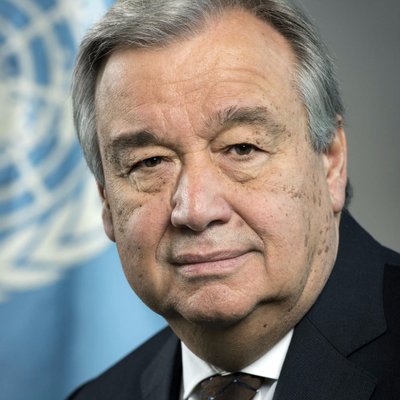
In the face of lies, hatred and the law of “might makes right” – universities are irreplaceable.
They are places where we learn to question, to verify and to debate.
More than ever, we must protect academic freedom and the independence of research.


Brian Maregedze retweeted

Born in a refugee camp in Tanzania. Now a professional footballer with AFC Toronto.
Nyota Katembo’s journey is a powerful reminder of what refugees can achieve when given the opportunity to thrive.
Keep inspiring, Nyota!


Written sources are the lifeblood of historians, and those involved in the recent upsurge of refugee history have been assiduous in seeking out archival, secondary and other sources on which to base their work. Relatively little attention has been given, however, to the memoirs and biographies of UNHCR staff members, a growing number of which have been published.@JFCrisp thanks for being a guiding light on this.
refugeehistory.org/blog/2026…

Brian Maregedze retweeted

More than a place of refuge, Tongogara Refugee Settlement is a community of resilience & opportunity. With support from @WFP refugees are building skills, restoring livelihoods, & pursuing their aspirations as they work towards a brighter future for themselves & their families.
Brian Maregedze retweeted

Cecil John Rhodes, some of his books and fleet! This & more at Rhodes Nyanga Museum – National Trust of Zimbabwe🇿🇼 share.google/EcVIqIbqmPvnr7P… #NoBorders

Migration micro-narratives

Veteran broadcaster Ezra Tshisa Sibanda speaks to Martin Sibindi, a Kenyan of Zimbabwean descent, born and bred in Nairobi.
Sibindi, whose father migrated to Kenya as part of a 1960s religious pilgrimage that included Shonas and Ndebeles, has never been to Zimbabwe before, but has relatives.
He is a Kenyan of Zimbabwean origins.
Sibindi is a typical Zimbabwean Ndebele surname, historically of South African origins.
The surname Sibindi is deeply rooted in the history of South African Ndebele people of the Manala clan, descendants of King Musi, found in KwaMhlanga and other surrounding areas of the Pretoria/Mpumalanga region.
King Musi is the foundational ancestor of the South African Ndebeles and their last undivided leader.
Sibindi, a Nguni surname, shares common roots and origins with Ndebeles of the Manala, Mabhena, Sikhosana, Mthombeni, Kekana, Mhlanga and Nzuza clans, among others.
These clans were raided and assimilated into Zimbabwean founding Ndebele King Mzilikazi's migration party in the 1820s from present-day KwaZulu-Natal to Matabeleland.
Mzilikazi defeated and executed Chief Magodonga Mahlangu — a leader of local Ndebele/Nzunza groups in the Transvaal region.
A descendant of the Khumalo clan, Mzilikazi lived in Pretoria and surrounding areas, among other places in the Transvaal, for more than a decade during his historically famous breakaway and march from fierce Zulu King Shaka's rule to Zimbabwe; from 1822 arriving in 1840, at the height of Mfecane.
Kenya recently officially granted citizenship and national identity cards to about 1 650 to 1 700 members of the ethnic Shona and Ndebele communities, ending over five decades of statelessness.
The Shona and Ndebele families originally migrated to Kenya from Zimbabwe and some parts of Zambia in the late 1950s and 1960s as Christian missionaries.
There are Zimbabweans living in Zambia for decades.
When Kenya became independent in 1963, they missed a narrow registration window, and over the decades, they lost legal ties and documentation to their ancestral countries, leaving multiple generations stateless.
On December 12, 2020 during Kenya's Independence Day/Jamhuri Day celebrations, then-president Uhuru Kenyatta directed the recognition and registration of the Shona and Ndebele communities, alongside stateless persons of Rwandan descent.
3
1
145
Brian Maregedze retweeted

A centuries-old Chinese remedy is fuelling demand for donkey hides, threatening rural African livelihoods. Donkeys ease daily labour, especially for women and children. But China's booming market for ejiao, made from hides, is driving illegal trade.
theconversation.com/china-im…
