

Principal @servicenow // previously: @meta, @twitter, @roblox, @patreon
Cupertino, CA
Joined April 2010
- Tweets1.5K
- Following826
- Followers2.1K
- Likes4K











Debashish Paul retweeted

Introducing Griffin, the first model to pass the video Turing test.
48% of people who talked to it live thought it was a real human. Previous systems have had a pass rate <3%. It is #1 on NVIDIA's benchmark for full-duplex AI video.
It’s the first Human Interaction Model (HIM).
Readers added context they thought people might want to know
The 48% figure and "video Turing test" claim are from Tavus's own study of 54 one-minute calls, not independently verified or using a standard protocol. Griffin-Lite leads NVIDIA's VideoFDB benchmark on their public leaderboard.
cellcog.ai/blog/tavus-gri…
research.nvidia.com/labs/amri/proj…
tech-ish.com/2026/10/02/tav…


Debashish Paul retweeted

Freckle is the first kids phone built for real-world adventure.
Shipping in December. Pre-order today: freckle.tech

Debashish Paul retweeted

Impressive. This set of talks, along with the new America dot gov website, has the unmistakable feel of an Apple launch event. They're rebooting the federal government as a tech startup. Several observations.
(1) First, with this new AI interface to the entire federal government, if it works as promised, there won't be a single American who can't say their life wasn't helped at least in part by AI, or that the benefits accrued solely to zillionaires. This in itself cannily mitigates anti-datacenter sentiment.
(2) Second, Joe Gebbia and Marco Rubio's talks on simplifying name changes and passport filings introduce a completely new era where the US government is actually launching tangible features that benefit users.
(3) Third, this launch event in and of itself may visibly drive reform. It could become much more important than the State of the Union. Unlike laws, code is user-visible, and can be instantly audited by the public, as Obama found out with the failed obamacare website launch. So: the annual America dot gov event may be substance, whereas SOTU is traditionally optics. I wouldn't be surprised to see the President present at the next one.
(4) Fourth, this kind of event is a perfect example of where tech and red cooperate best. They both hate bureaucracy. Automating paperwork with code reduces the power of statists over both capitalists and nationalists. It's also hard to undo by other admins: once you digitize a process, hard to turn it back to paper.
(5) Fifth, it's an obvious point perhaps, but think about how much influence YCombinator has had in 20 years. From Gebbia's Airbnb joining their 2009 batch to a complete overhaul of the user interface of the US bureaucracy, and thus the US government.
(6) Sixth, this is another take on the network state. The functional part of the US (the network, meaning tech) is merging with and partially reforming the dysfunctional part (the state, meaning bureaucracy) by automating 20th century paper forms.
As a tech startup, there will no doubt be bugs and user issues and so on, but unlike with paper laws those issues will be visible and the code fixes will be verifiable. A new era of AI America. Rooting for them.


Debashish Paul retweeted

Ai is evolving.
Jev can be armed at all times.
I can speak freely and it knows ( from probabilities ) if im asking my computer to do something or blaberring away at something else.
no wake word.
speed + affordability + intelligence is getting to the point where an always on ambient jarvis style assistant is possible.
Im loving where we are going.
CNVS is still the future of vibecoding.

Debashish Paul retweeted

to build a cool product now, you really only need two ppl:
one dude with exceptional vision & taste who knows what should exist & can provide the right feedback loops for iteration.
& one dude who is absolutely relentless about making it real no matter what.
that’s it. & sometimes these two are the same.
Debashish Paul retweeted

This is big because normal AIs chat like wordy humans: smart but slow and pricey for tiny decisions. Computers need millions of quick yes/no or score answers, not essays.
Jev (from a ChatGPT co-inventor) skips text. It just spits structured decisions with confidence scores. 20-200x faster, 40-400x cheaper (outputs free). Software can now embed real AI judgment everywhere without lag or cost. That unlocks mass automation and economic shift.
Debashish Paul retweeted

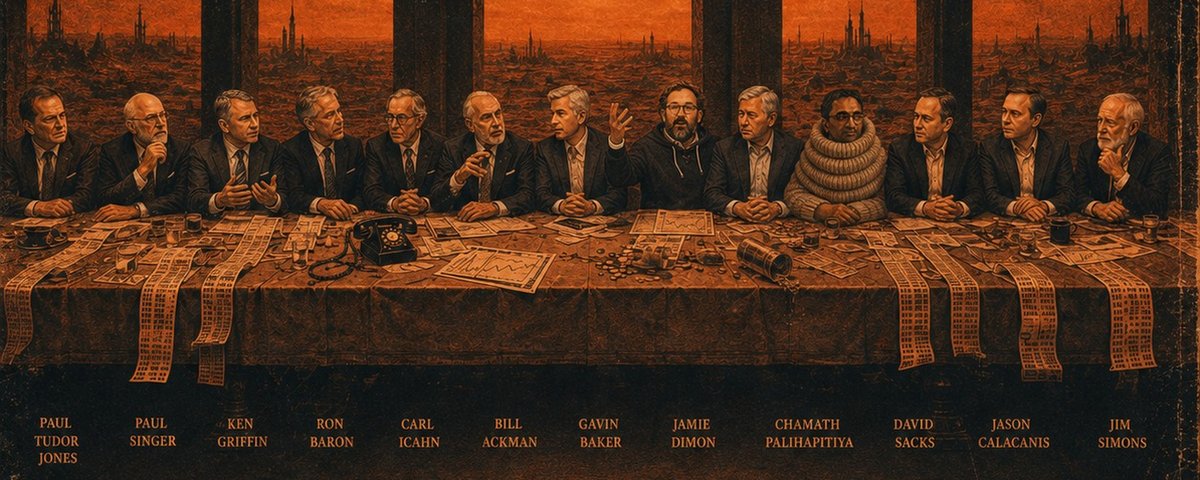
Satya Nadella said the quiet part about the entire AI industry out loud: for the first time you are buying a technology where the data your own use generates may not belong to you
"it's like if I sold you a database and said the data you put into your database is not yours and it's mine, and it goes away if I took away the license. "How would you like that?"
this is him explaining why he thinks the model layer taking all the royalty cannot last, the one test he tells enterprises to run before they trust any model, and the new kind of insider risk he says nobody is building for
"it may fake my books"
"we should avoid these cozy arrangements of who is testing what"
bookmark & watch it - then read the article below ↓

Debashish Paul retweeted

Peter Thiel on why the name of your startup is predictive of success or failure
“This is a slight aesthetic thing that I believe in very strongly: the names of companies are often very predictive of future failure or success.”
PayPal and Napster are the first example Thiel gives:
“PayPal was a very friendly name — it was the friend that helps you pay. Napster was a bad name — you nap some music, you nap a kid. That sounds like a bad thing to be doing, and it’s no wonder the government then comes in and shuts the company down within a few years.”
“You want to be very careful of how you name companies,” Thiel warns founders. In the context of the sharing economy, he likes Airbnb more than Uber:
“Airbnb sounds very innocent like this virtual bread and breakfast — this very light, non-threatening sort of company. Uber sounds like a bad name from Germany sometime in the 1930s. What are you exactly above? Maybe the law? This is probably something that, again from a regulatory perspective, I think Airbnb is a vastly better name than Uber.”
And on the social networking side, Thiel likes Facebook more than MySpace:
“You can say that all these social networks involve both reading and writing… Over time, reading dominates writing. Facebook was about learning about people around you — about their real identities at Harvard. MySpace started among wannabe actors in Los Angeles, and it was about them coming up with fictional narratives around themselves and a lot of other people in LA who are generally like that. And because reading dominates writing, Facebook would ultimately dominate MySpace. There’s a certain version where the whole arc of the company and the whole product arc was implicit in the names.”
Source: @mercatus (Apr 2015)
Debashish Paul retweeted

After co-inventing ChatGPT, I kept asking myself: why have superhuman chat models not led to AGI?
I’ve spent the last 2 years in stealth building a new way to train models (RLCD), and a new type of frontier AI model that we are releasing today: Jev
• 20-200x faster
• 40-400x cheaper (w/ output tokens free)
• Frontier composable intelligence optimized for decisions
AFAICT the shortest path to AI-based economic revolution


Debashish Paul retweeted

Lazy work used to mean too little output.
Now, with AI, it often means too much and more work for everyone else.
@tobi call it "slop grenades."
A "Slop Grenade" is when you let AI produce the work and pass it on without adding any value (including checking it).
Someone else has to wade through it, catch the mistakes, and clean up the mess.
You save time and look productive but someone else pays for it.

My third conversation with Shopify co-founder and CEO @tobi.
0:00 How Shopify Uses AI
7:18 River: Shopify's Internal AI
8:55 How to Encourage Osmosis Learning
10:52 AI Dreaming and Self-Reflection
11:53 How to Use AI for Strategic Decision Making
14:11 The One Thing AI Cannot Do
16:04 What AI is Making Worse at Shopify
19:46 Predictions: Where AI is Headed Next
21:55 The Future of AI-Powered Software
24:40 Will CEOs Be Replaced with AI?
27:54 Can Superintelligence Be Controlled?
31:13 Critical Skills in AI Age
34:22 Why Complex Solutions are Usually Wrong
36:33 Conditions Needed for True Intuition
38:02 The Best Path Doesn't Have Instant Feedback
44:51 How Affirmations Can Shift Your Behavior
50:44 The Inobvious Thing Hurting Companies
52:37 Relationship Between Beauty and Creation
56:23 How SpaceX Moves Forward By Subtraction
1:00:24 Why Companies Need Refounding Events
1:01:50 Books as Cheat Codes
1:02:39 Three Books to Change Your Thinking
Enjoy!
(Includes paid promotions.)
Debashish Paul retweeted

AI has collapsed the cost of building products, but not the cost of knowing what to build.
- The old loop: spec, scope, build
- The new loop: build, play, design, ship
Prototypes are cheap. Great products still require taste, judgment, and a clear understanding of what users actually need.
a16z's @joshelman on the artifact a product manager actually produces: a16z.news/p/product-manageme…


