

GP @uncommon_cap. First round investor: @hellofora, @joinyendo, @AntaresNuclear, etc. Past: Early Growth/Monetization @Mercury @NotionHQ @Reddit. YC W08.
San Francisco, CA
Joined March 2007
- Tweets4.3K
- Following1.5K
- Followers16.2K
- Likes12.1K



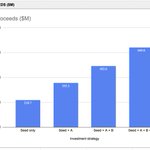



Wild to exclude @AntaresNuclear, given they are outperforming both Valar and Radiant.

The 2026 American Dynamism 50 is here: our annual list of 50 companies, from within the a16z portfolio and beyond, building for America's future.
This year's theme is Production is Deterrence. "America's ability to prevent conflict depends on what it can build, how fast it can deliver, and how long it can keep going."
A new generation of defense companies is moving from prototypes to full-scale production, and the industrial base has to keep pace. This year's list is organized around three pillars:
1. Systems: the drones, ships, missiles, aircraft, and spacecraft that deter conflict.
2. Factories: the plants, tools, and software that build them.
3. Inputs: the materials and power they're made of and run on.
Get all three right, and the impact reaches well beyond defense, to skilled jobs, revitalized communities, and the supply chains behind energy, housing, and everyday goods.
Meet all 50: a16z.news/p/ad-50-2026-produ…

Is anyone looking for compute in Southeast Asia? 👀

Have two colocation opportunities in the Philippines -
Cables: Access to JUPITER, ADC and APRICOT routes toward the U.S., Japan, Hong Kong and Singapore:
1) Available now: ~3.76 MW, subject to allocation, with an additional ~5 MW targeted for Q3 2027.
The current configuration is a strong fit for air-cooled H100/H200 systems within a ~15 kW/rack envelope.
2) RFS July 2027: 16 MW available for commitment, targeting July 2027 readiness. This option supports air-cooled racks up to ~50 kW, with liquid-cooling integration and higher-density configurations available subject to project-specific engineering.
DM me for more info!
Wonder how long until we can have @typesafeai Jev ref pro sports?
Seems like it should be possible as soon as you can do a bit of fine tuning.
Jamie Quint retweeted

A lot of ink has been spilled on GPU financing lately. I spent over a decade trading ABS on Wall St, and structured over $2B+ of debt financings as an operator (including at @tryramp). Figured I'd try to make sense of this market, so I went back to a framework I knew well: aircraft ABS and aircraft engine ABS.
My take: a GPU neocloud runs on airline economics, and the debt behind it looks a lot like aircraft engine ABS.
The parallels:
• Perishable inventory. An empty seat after the door closes is gone forever. So is an idle hour on an energized H100 rack.
• 85%+ of cost is fixed (servers, 10-year rack leases, 10-14% debt service). One more hour of compute costs pennies of power.
• Utilization is everything. Airlines break even around 80% load factor, a levered GPU cluster around 65-75%. The returns live in those last 25 percentage points.
• NVIDIA is Boeing and Airbus rolled into one. Powered shells and grid interconnects are the new airport slots.
• Wall St copied the aircraft financing playbook: take-or-pay contract plus servers in a bankruptcy-remote SPV, 70-80% LTV.
Part 1 of my blog post goes into a lot more detail:
alexyangsong.com/blog/alumin…

What is up with this weird spam/botnet replies on this post.
Are any of these profiles actually real people? @Oxrinx @TVanWelsenes @HelloVyom @alexcloudstar @coolcoder56 @aaayandev @hiarun02 @ElliotPadfield @SubhanHQ @divvsaxena @alohaproxy
Very sus/inorganic replies.


made a map of Bay Area cafes where you’ve got the best shot at meeting VCs (and maybe raising your next round)
check it out: meetvc.cafe
However many data centers you thought we needed.
However much power you thought we needed.
However much memory you thought we needed.
If moving down the cost curve continues to unlock superlinear growth in demand, we’re going to need a whole lot more ...

I am shocked, absolutely shocked, that Anthropic ARR has likely gone vertical in October after they cut token prices.
Except the exact same thing happened for the entire AI market, which is why GPU rental prices have surged while token prices declined.
$100b plus in year-end ARR looks possible again.


There is probably now a viable business in creating high-end consumer hardware that runs Linux and pairing it with composable software.
e.g. I want something like Apple HomeView but want to connect it to Instinct/OpenAI Dot/Muse, etc rather than locked into Siri.
Similar vibes with TVs, especially with the Samsung leaks this week.
Software is starting to move so quickly that large, bureaucratic, slow-moving orgs like Apple are going to struggle to keep up.
When do we get curated expert AI's?
I want to pay to send design files or marketing videos or etc to specialized agents that will give me better results than frontier models.
Is there any category in which this exists already?

Wow this one is brutal. Railway customer environment variable store got hacked.
blog.railway.com/p/security-…

How is ads management with agents still so bad, what am I missing?
Meta Ads MCP: only works with Claude not Codex due to oAuth issues (github.com/openai/codex/issu…)
X Ads MCP: Not hosted, requires setting up your own developer account and maintaining your own X Ads MCP server.
LinkedIn Ads MCP: has a read only OpenAI plugin but no way to comprehensively manage ads without hosting your own MCP, requires self-hosting.
Really should be much further along here, what are other people doing to manage ads from agents?

🤦🏻♂️

California's Billionaire Tax Act would collect roughly $30 billion. Accounting for lost income taxes from departures, the mean Net Present Value is negative $39 billion, from Benjamin Jaros and Joshua Rauh nber.org/papers/w35899

TL;DW
WhisperFlow's playbook for building a founder-led content engine:
- Brand is the moat. Products/features are easy to copy; trust and audience relationships aren't.
- Run paid + organic together. Paid rapidly tests messaging and drives conversions. Organic builds trust, familiarity, and reduces CAC.
- YouTube is the highest-leverage organic channel. Videos can generate views for years, long-form builds deeper trust, and founders can simply document what they're already doing.
- Build a specialized team. Head of content ($10–60k/mo), videographer ($7–15k), YouTube team ($5–25k), short-form editors ($1–3k). Early-stage companies can start with one generalist.
- Storytelling matters. Content should reflect the founder's background, struggles, motivations, and the company's mission. Spend time onboarding the team into that narrative.
- Treat content like a product roadmap. Plan around launches and milestones, but capture unexpected moments too.
- Packaging > production quality. Titles, thumbnails, pacing, and storytelling drive performance. Continuously test new formats.
Reported results: 500–700 paid UGC ads/month, tens of thousands of followers, and millions of organic views in 70 days.

👀

Excited to announce @Mercury crossing $1bn/yr in revenue and 450k customers.
Just getting started! View article

Jamie Quint retweeted

On my way to the office this morning, I passed a group of young people protesting, a Palestinian flag draped over their shoulders.
And I asked myself a question I can't shake: why does this generation always fall into the same trap? No matter the history. No matter the context. Even the ones from wealthy families, who went to the best schools, who were dealt every good card. Always the same trap.
I don't think it's stupidity. I think it's a mechanism. And a mechanism can be taken apart, piece by piece.
A. The observation: everything the state touches becomes unaffordable.
Look at economist Mark Perry's famous chart, the one people call "the chart of the century." It tracks US prices since 2000.
At the top, what explodes: hospital services, college tuition, textbooks, childcare, housing. Increases of +100%, +150%, up to +250%, far above general inflation.
At the bottom, what collapses: TVs, software, phones, toys, clothing. A TV today costs a fraction of what it did in 2000, for an infinitely better product.
Look at what separates the two groups. It isn't technology. It isn't complexity. It's one variable: how much the state is involved.
At the top, sectors that are subsidized, regulated, shielded from competition, where the state funds demand and blocks supply. At the bottom, sectors where companies fight every single morning to serve you better and cheaper.
B. The mechanism: why it's systematic.
When the state subsidizes demand without freeing supply, prices rise. Every time. Guaranteed student loans, and universities raise tuition. Housing aid plus blocked building permits, and rents skyrocket. Administered healthcare, and bureaucracy eats the budget before it ever reaches the patient.
In France it's even more vicious, because the price doesn't disappear: it hides. You never see the hospital bill, you pay it through payroll contributions. You never see the cost of school, you pay it through taxes. Public spending at 57% of GDP, one of the heaviest tax burdens in the world, more than €3.4 trillion in debt. And the result? Overflowing ERs, falling PISA scores, young people who can't afford to live in the city where they work.
The market didn't fail in these sectors. It was never allowed in.
C. Suffering demands a culprit.
A 22-year-old lives all of this in their bones. They can't find a place to live. Their degree either buries them in debt or opens no doors. The future feels blocked. That suffering is real, and I don't deny it for a second.
But human beings can't stand suffering without a culprit. They need a face. A scapegoat.
And this is where everything is decided: who taught them how to read the world?
D. Whoever tells the story picks the villain.
Schools are public. Universities are public. Culture runs on grants. Film goes through funding committees. Public broadcasting shapes the narratives. The people handing down the interpretive framework are, overwhelmingly, paid by the very system that creates the problem.
Do you really think that system is going to name itself as the culprit?
No. It names the capitalist. The boss. The landlord. "The rich." The multinational. The commercial West. Same role, same casting, every time.
E. One lens, a thousand causes.
And this brings me back to that flag. A generation taught to read every situation through a single lens, oppressor on one side, rich, Western, capitalist, oppressed on the other, will apply that lens everywhere. To housing. To climate. To conflicts on the other side of the world. The cause changes, the lens stays. That's why the trap is always the same: it's not the cause that draws them in, it's the way of thinking that was installed in them.
F. The perfect inversion.
Here's the irony. Capitalism is the force that drove down the price of almost everything it touched. The state is the force that blew up the price of almost everything it captured. And young people blame the first for the crimes of the second.
It's like blaming the firefighter for the fire because you saw him at the scene.
G. The ballot box confirms it.
In the US, a few weeks out from the midterms, a large share of urban young voters is getting ready to vote Democrat for more state, more spending, more regulation. New York elected a self-described socialist mayor, carried by young voters, on promises of rent freezes and city-run grocery stores. Rent freezes, the policy that has made housing scarcer everywhere it's been tried. The cure that worsens the disease.
In France, it's the same play in two acts. Part of the youth votes for the radical left, which promises more state. Another part votes for the center, which promises to "manage" the state well, and has dug the debt deeper than ever. Two different ballots, one shared assumption: the problem is the market, the solution is the state.
H. The way out.
These young people aren't stupid. They're right to be angry. They're just aiming at the wrong target.
The day they understand that their rent, their tuition and their hospital are expensive precisely because the state runs them, their anger will change direction. They'll stop protesting against those who create. They'll start protesting against those who capture.
That day, the greatest intellectual scam of our time will be over.

Jamie Quint retweeted

Even prior to this, there is zero chance that an AI data center would pencil in San Francisco. Nor is there any desire to put one in SF.
Misinformed journalists mislead the public into thinking there would be one, causing this response.
The result is that traditional data centers will be delayed in the city. These traditional data centers are what are responsible for making the internet faster for regular people in SF.
They aren't mega projects, they're the critical infrastructure that you already use today.
It is as if journalists heard that AI uses transformers (a component in LLMs), then reported that they were built in the city, and so the government decided to ban transformers (critical grid infrastructure).
If you were a San Francisco journalist who reported on this story, shame on you.
You have a responsibility to the public to learn about the subject matter you're reporting on and take ownership when that misinformed, incorrect reporting has consequences that negatively effect the public.
If you were a San Francisco politician that signed onto this, shame on you.
You have a responsibility to become informed about the subject you're legislating or hire staff that are informed. Not a single one of your constituents has ever called you up and asked for slower internet.
What's worse is that you all live in San Francisco. You have more access to experts in this field than anywhere in the entire world. What are we even doing here?

Today I signed the data center moratorium legislation.
San Francisco is the national leader in innovation, and that innovation is one important driver of our city’s recovery. We can never take that position for granted. As our city recovers, our administration is working to deliver a recovery that reaches every family and truly supports our communities.
Over the next 45 days, alongside departments and the Board of Supervisors, we will continue the work our administration has already started to develop a thoughtful, responsible framework that allows for the technology infrastructure our hospitals, office buildings, academic institutions, and government rely on while prioritizing community needs, keeping electricity rates low, and protecting the clean water and air our residents deserve.
Very cool, modern, agent-first GTM.
This is especially powerful since it's closed loop, the agent can pick the solution and then immediately onboard onto it.

Railway hacked AI SEO, and it took them from $20M to ~$100M ARR in 1 year:
1/ Claude Code picks Railway for 82% of Python apps
-> Ask it "how do I deploy this" and it installs Railway and puts your app live there
2/ The founder treats AI recommendations as a growth channel
-> His go-to-market team works on getting the models to "recommend us more and more"
3/ 6,653 how-to pages, one for every popular free tool people want to run themselves
-> Someone asks Google or ChatGPT "how do I set up n8n?" and Railway's page comes up. It explains the tool and sets it up on Railway in one click
4/ A step-by-step guide for every framework developers build with
-> 127 guides: Next.js, Django, Rails, FastAPI, Laravel, Go and more. Each one answers "how do I deploy X" and ends with the app live on Railway
5/ A comparison page against every competitor
-> Heroku, Vercel, Render, Replit, Lovable and 5 more, each with a migration guide. AI loves quoting comparisons
6/ Railway rewrote its help pages so AI can read them easily
-> One file lists all 414 pages with a short summary each, and every page has a plain-text version. When someone asks ChatGPT how to use Railway, it finds the right answer fast and gets it right
7/ A docs section written for agents
-> One step installs everything Claude Code or Cursor needs to deploy to Railway on its own
8/ Plugins inside ChatGPT and Claude Code
-> You ask the chat to deploy and it deploys, without ever opening Railway's website
9/ A server with one command and no signup
-> ssh railway new gives an agent the shortest path to "your app is live"
10/ A new changelog page every Friday since 2021
-> 312 pages of fresh content that keep Railway in front of Google and the models
11/ Every new AI model brings a new jump in signups
-> More code gets written, all of it needs to run somewhere, and this year the summer slowdown disappeared
12/ A go-to-market team of 7 runs all of it
-> The pages, docs and plugins keep selling while they sleep
13/ The one hole: front-end apps
-> Claude Code picks Vercel 100% of the time for Next.js and React apps. Railway wins Python, Vercel wins everything that runs in a browser
Full guide on how to win AI search in the first comment
United is effectively getting rid of flight requirements for status.
Every year it becomes more true that airlines are credit card businesses that also happen to fly planes.

United Airlines changes: The airline will stop counting the number of flights its MileagePlus members take and instead require them to focus on spending-based PQPs for status ⤵️ bit.ly/4jdO9xE

Jamie Quint retweeted

Yeah pro rata matters and is powerful for investors

If you wonder why everyone fights over pro rata...
Garry Tan's first fund initialized Fund 1 returned 55x.
DPI on the first 98 companies added up to about 1x.
Instacart was another 1x, but they weren't able to take any of their pro rata.
Coinbase, where he kept taking his pro rata through multiple rounds, did the final 53x.
Amazing solution for enabling the power of Muse at work without risking all your company data!

Today, we're launching the ability to say yes to Muse at work.
People are giving Muse access to their company's most sensitive data & systems. Yet companies have no way to control this access. Many are blocking it. Others have had Muse go rogue, leaking company data, sending unauthorized emails, and more.
Runlayer provides hundreds of secured connectors for Muse, governed by deterministic policies & runtime security models that you can control. Runlayer also detects when Muse is being used within company systems without governance, and alerts you.
Teams get access to the most powerful personal agent. Companies maintain security and control. Win win.