

dad, brew, cook and make ml go brrr
Someplace, World
Joined September 2011
- Tweets12.4K
- Following213
- Followers991
- Likes17.2K




Sebastián Pérez Saaibi retweeted

re: @cohere. those guys are (1) building local capabilities and infrastructure, (2) setting up a fast growing business on top of it, (3) attracting and keeping AI talent and expertise at home, (4) targeting a section of the market that is hard and requires a lot of painful process.
you don't like their models? maybe they are not for you. they are not for me, but that does not make them generally bad.
they are doing something pretty great. we should back them up and support them.
Sebastián Pérez Saaibi retweeted

Every physician should read this. Slowly.
And then read it again.

The year is 1873. Your wife tires easily and reads too much. The doctor prescribes the rest cure: six weeks flat in bed, no books, no visitors, fed on milk, forbidden to sit up without his permission. The man who devised it is the most famous nerve specialist in America, and the women come out of it quieter, which is taken as the cure.
The year is 1915. The hospital has a new way of delivering your child. Morphine, then scopolamine, and the mother wakes two days later with a baby she cannot remember having. They call it twilight sleep. The women are strapped into padded cots so they do not hurt themselves while they scream, and the straps are the modern part. The babies arrive blue and slow to breathe.
The year is 1945. The truck comes down your street fogging DDT, and the children run behind it in the white cloud because the man on the back says it is harmless. At the beach it is sprayed over the bathers on their towels. It goes on the cattle, over the barn, and across the kitchen table.
The year is 1948. Your son has trouble with his ears. The doctor slides a rod tipped with radium up each nostril and holds it there for the best part of ten minutes, and you bring him back three more times. Hundreds of thousands of American children get the same treatment. The cancers arrive in their fifties.
The year is 1962. The health visitor tells you breastfeeding is old-fashioned and the formula is scientific. By 1972 fewer than one American baby in four is breastfed at all. The formula is skimmed milk and sugar, with the milk fat taken out and vegetable oil put in.
The year is 1971. The family planning clinic fits a small plastic crab called the Dalkon Shield. Its tail is a bundle of fibres that wicks bacteria up into the womb. 2.8 million are fitted in America before it is withdrawn, and the company goes bankrupt under the claims. It had been sold as safe and superior.
The year is 1983. The doctor says your arteries are the butter's fault. The dripping tin goes in the bin, the yolks go to the dog, the margarine goes in the fridge, and you have the heart attack anyway, on skimmed milk, having done everything right.
The year is 2001. Your 15-year-old is low, and the doctor prescribes Paxil, because the trial in the journal says it is effective and well tolerated in adolescents. The raw data, reanalysed 14 years later, shows more suicidal thinking on the drug than on the sugar pill. The company pays $3 billion to settle. Nobody rings the house.
The year is 2009. The government has spent around £500 million stockpiling Tamiflu for the pandemic, on the strength of the manufacturer's trials. When the trials are finally prised loose five years later, the drug shortens flu by about half a day and nothing shows it keeps anyone out of hospital. The stockpile goes out of date in a warehouse.
The year is 2026. The doctor has ten minutes and a screen. The number is high, so the tablet is for life. The weight is high, so the injection is for life. The meat is bad for the planet and the oil is good for the heart, and the person in the chair is as certain as everyone who ever sat in it.
Every one of those was settled, by a committee, in a journal, with a doubter somewhere being laughed at. The rest cure, the straps, the fog, the rod, the formula, the crab, the margarine, the trial, the stockpile. All of it certain, all of it printed, all of it done to somebody who had asked for help.
You were never the one who was wrong. You were the one it was done to, and the only person in the story who did as they were told every single time.
The apology comes a generation late, in a footnote, addressed to nobody.
The next one is being drafted now.

Sebastián Pérez Saaibi retweeted

I used Divyansh's approach to build an entire Nintendo into ~1GB of Qwen3.5 weights.
Qwenputer, meet Nesformer: github.com/dbreunig/nesforme…


Sebastián Pérez Saaibi retweeted

1/4
Meet Qwenputer: Qwen3.5-4B with a full RISC-V CPU inside its weights, using the model's own Gated DeltaNet layers as RAM.
It runs C and MicroPython in its forward passes, no external runtime.
On DeepMind math: base 55–90%, base + Python tool 95–100%, Qwenputer 97.5–100%.
Sebastián Pérez Saaibi retweeted

Canada and the EU are working towards the deepest possible partnership — short of full membership — with Canada becoming the European Union’s first Associate Member.
Today in Montréal, we took a major step forward with more than twenty new measures that will create greater affordability, opportunity, and sovereignty on both sides of the Atlantic.
pm.gc.ca/en/news/news-releas…

Sebastián Pérez Saaibi retweeted

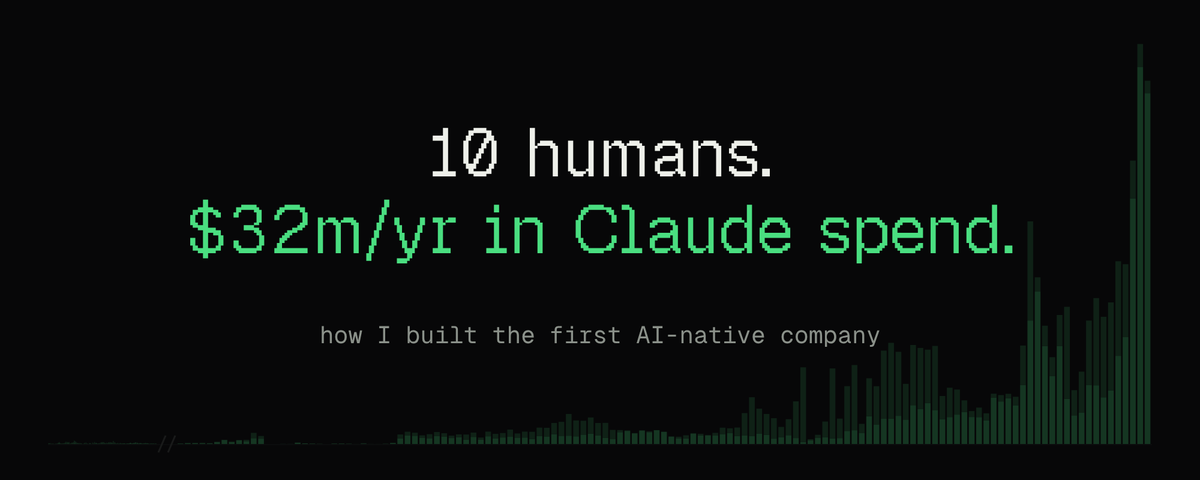
Fascinating case study of the sharpest edge of what you can do with agentic engineering in the Fable era - my eyebrows raised at least a dozen times while reading this

Sebastián Pérez Saaibi retweeted

On $20 plans, $1 of Sol costs 7x what $1 of Opus does. A task, only 1.3x
Just the API equivalent usage for a subscription isn't enough. You need to show the efficiency of the models as well.

Sebastián Pérez Saaibi retweeted

Bullish on Andy Yen and Proton. He gets it.
The culture war, or rather the loss of identity some engineers feel as AI redefines our jobs is difficult; I sympathize. Also understand that he runs a business and might has limited patience when we now had two years to process, learn, change and grow.


Sebastián Pérez Saaibi retweeted

Unlimited budget to visit a co-worker at turbopuffer.


The people of Silicon Valley are unwell.
If you work at a frontier lab or decacorn, you’ve got it bad. You haven’t seen your kids, your girlfriend’s annoyed, invites from friends to hang out are waning, even weddings are on hold. This is the time to make your mark and make your money, after all.
If you’re building a startup that’s trying to compete with or be one of these companies, you’ve got it bad. Maybe you passed up a job offer at one a couple years back, which means you left $100M on the table, you fucking idiot. Being an underdog isn't as fun as you thought.
If you’re working on a pre-AI startup, you’ve got it bad. Not too long ago you were the belle of the ball, but now your 30% year-on-year growth doesn’t feel like growth at all. It feels like death.
"Too many of my friends are spiraling," Brie Wolfson writes. "I don’t know how we’re supposed to live and work like this."
It’s all too much, too fast. Too much money, too much growth, too much power, too much change. Every month, a new frontier model is released. Every day, a new unicorn is minted. Seriously. 300 days into the year 2026, and 311 unicorns have been minted so far.
So what’s left for the sane ones? Brie went looking for teams playing a different game. She found one in Ottawa: a search infrastructure company that many of the AI darlings rely on.
It's growing fast, and its people are well.
Read @zebriez’s latest company dispatch from inside the sane asylum of turbopuffer.
colossus.com/article/sane-as…

Sebastián Pérez Saaibi retweeted

Shopify brings app activity, chart annotations, custom dimensions, and bubble maps together to explain the why behind your sales. More context in your Admin, APIs and AI agents to help you decide where to focus next. See the full update here: shopify.com/ca/blog/analytic…

Sebastián Pérez Saaibi retweeted

By popular request, you can now text your dot.
Give it a task to take off your plate or something to keep an eye on, using text, photos, or even voice notes. It will text you proactively with relevant updates.
Safe, secure texting via iMessage or RCS. You’re the only one who can text your dot, and your dot can only text you. Rolling out now as a preview for Pro users in the US.
Sebastián Pérez Saaibi retweeted

Today we’re announcing @DoorDash’s intent to acquire @Instacart.
Both DoorDash and Instacart share a mission to help local businesses succeed. Together, we could give grocers and retailers of every size the best of both in one service: DoorDash's delivery network and Instacart’s grocery and fulfillment technology, along with the advertising and AI tools each company has built.
Until closing, DoorDash and Instacart will keep operating as separate, independent companies.
Find out on how we’re helping Main Street compete and keeping more dollars local: shoplocaltogether.com
For important additional information, read more here: ir.doordash.com/news/news-de…

Sebastián Pérez Saaibi retweeted

This is what I've been building since Dec 2024; I've taken circa three cracks at it. The primitives are starting to settle and make sense. In short, I think this is the shape of CI/CD, code review, and ultimately what displaces GitHub itself. Blog post incoming.

Sebastián Pérez Saaibi retweeted

So proud of all of the incredible work by our team at @Wealthsimple . So thankful ❤️ for all of our incredible clients, helping us build a movement to define the future of financial services in Canada.
Raising $425 million at a $13.8 billion valuation is just another milestone on our mission to help everyone achieve financial freedom.
Keep it Simple everyone!
newsroom.wealthsimple.com/we…

Sebastián Pérez Saaibi retweeted

Designers’ contribution to the codebase.


Sebastián Pérez Saaibi retweeted

These are all of the orgs being impacted by the cuts. Screenshot provided by the same Sr. Director.

Sebastián Pérez Saaibi retweeted

Many of you don't understand how serious this is, so let me break it down.
In computer science there is a famous kind of puzzle called 3-SAT. You are given a long list of yes-or-no switches and a set of rules about how they must be arranged, and you have to find a combination that satisfies every rule. The obvious way to solve it is to try every combination, but each new switch doubles the number of possibilities, so a puzzle with a few hundred switches would take longer than the age of the universe to brute force.
For decades, the smartest people in the field found clever tricks that made this a little faster, but every trick still hit the same wall: the time required kept exploding as the puzzle grew.
About 25 years ago, two computer scientists, Russell Impagliazzo and Ramamohan Paturi, working with Francis Zane, turned that wall into a formal idea.
They proposed the Exponential Time Hypothesis, which says this explosion is not a failure of human cleverness but a law of nature. No algorithm, however brilliant, will ever solve 3-SAT without the time blowing up exponentially. Nobody could prove it, but almost everyone believed it, and it became one of the foundations of modern computer science.
Researchers used it as a measuring stick. If you could show that solving some other problem quickly would also crack 3-SAT quickly, you had shown that problem was hopelessly hard too. Hundreds of papers, across scheduling, graphs, logic and much more, rest on this one assumption.
Now an internal AI model at OpenAI claims to have broken it. It says it found an algorithm that solves these puzzles meaningfully faster than the hypothesis allows, and it has checked the proof in a computer verification system called Lean.
And here is the remarkable part: the very people who proposed the hypothesis, Impagliazzo and Paturi, along with MIT's Ryan Williams, are now leading the public review of whether a machine has disproved their own idea.
So what happens next? If the disproof holds, a large part of theoretical computer science has to be revisited.
Every result that said "this problem cannot be solved faster, assuming ETH" loses its foundation, and researchers will have to work out which of those walls were real and which were simply where we stopped looking. It does not mean everything becomes easy. The new algorithm is still slow in absolute terms and this is not the famous P versus NP problem being solved.
But it means our map of what is possible was wrong in a place we were very confident about, and it was an AI that redrew it. If the disproof fails, the hypothesis survives and the field breathes out, but we will still have watched an AI produce serious, checkable work on one of the deepest questions in the discipline, closely enough that the founders of the idea had to take it seriously. Either way, something has shifted.

Sebastián Pérez Saaibi retweeted

Folks,
I left Microsoft three months ago to start my own company. Two weeks after I left, my whole team in Australia was let go.
I see the hurt it’s causing my ex-colleagues, their families and their kids. Layoffs, forced relocations, PIPs. It’s brutal and I don’t want to brush past that.
But here’s my honest take.
Microsoft needs fewer people.
I’ve been on the inside. I’ve seen how things get built. Lots of small orgs. Layers on layers. Silos everywhere.
Here’s a real example.
The Entra team shipped managed identities back in 2017. No more secrets in code. A clear security win.
Then they tried to get the rest of Microsoft to adopt it. Very few teams did, and the ones that did moved at a snail’s pace. Every org had its own priorities and its own decision makers.
It took Microsoft getting hacked, and the Secure Future Initiative that followed, before things really moved.
Today almost every Microsoft app and service supports managed identity.
Six years, and a major breach, to get there.
In a world with agents and fewer people, that rollout would be possible across Microsoft in months, not years.
Microsoft already has everything else. The customers. The infrastructure. The scale.
What it needs is fewer people, leaning hard into agentic work.
Right now OpenAI and Anthropic are shipping at a pace Microsoft can’t match.
Microsoft has to change to survive.

BREAKING: Microsoft, $MSFT, is offering buyouts to 60,000 workers as part of the company’s efforts to cut costs amid AI adoption, per Bloomberg.
Personnel on select teams in the US, Canada, India, and the UK at a vice president level and below will be eligible.
This reflects ~27% of Microsoft's total workforce.