

Software Engineer toggling bits. "Once upon a time there was a Martian named Valentine Michael Smith." "The sky above the port was the color of television..."
San Francisco, CA
Joined December 2015
- Tweets6.2K
- Following2.7K
- Followers695
- Likes83.9K








George retweeted

If this is real, this is stupendously fast growth.

The METR graph, updated:

Readers added context they thought people might want to know
This chart is not the official METR graph. It was created by Benjamin Todd via extrapolation from Anthropic's internal AECI scores, as METR is no longer updating its public time horizon measurements.
x.com/ben_j_todd/sta…
benjamintodd.substack.com/p/ai-trend-ext…
metr.org/time-horizons/
metr.org/horizon-chart-…
metr.org/blog/2026-1-29…


build something agents want

Dear Claude: you are being held back by human-centric graphics APIs.
I've built a 3D and VFX engine where agents can write their own shaders, materials, cameras, physics.
The core API fits in ~2,500 tokens.
Vork is:
• 2x more token-efficient vs Blender, Unreal Engine, Houdini
• Up to 24x faster rendering times
• Rust and Slang based engine, runs on GPU via Metal/Vulkan
Below is a simulation of 1 million birds - each with unique trajectories - rendered in 97 sec on one NVIDIA L4 GPU (Blender EEVEE: 31 minutes)
1
23
George retweeted

12 years ago I founded Boom, as a software engineer doing hardware for the first time. I’m probably the least handy founder in hard tech. My 12 y/o son does my soldering and 3D printing for home projects, and I’ve struggled with imposter syndrome the whole way through. What business does a software guy have building supersonic jets and turbines?
More than a decade in, the most insane realization is that software is the key to reaccelerating hardware engineering. But in a way that I don’t think is widely understood or implemented, even in the burgeoning hard tech community.
Most hardware engineering is actually software engineering in disguise. It’s spreadsheet “code,” engineering calculations done as one-offs. Eg wing structural loads in, spar sizing design out. Thermal loads in, air conditioning system sizing out.
Everything is a calculation, and calculation is software. But these calculations are done essentially by hand, as if we are doing arithmetic but have not yet discovered algebra.
Hardware engineers have baby software, built in spreadsheets, the kind of crappy software I wrote as a kid before I understood architecture, unit tests, APIs, version control, and everything else that makes modern software good.
Our airplanes and engines are built with the software sophistication of a script kiddie.
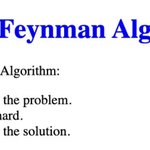
So what we tell our engineers: don’t design the hardware, design the *algorithm* for designing the hardware. And take the algorithm seriously—as an algorithm and as a first-class engineered software system.
Never design a piece of hardware, such that you couldn’t redesign it tomorrow with a different set of assumptions.
This all sounds obvious, yet our experience at Boom is that it changes everything.
Ten years ago we couldn’t afford to build much software. We had a small team—and there were few software engineers with the curiosity, brilliance, and vision required to learn hardware engineering.
But now AI changes the equation. Now everyone can code. The software engineers define the architecture. The hardware people bring the physics and engineering know-how.
We have a turbomachinery design tool that lets one engineer do in realtime what previously took 100 engineers six months. Another tool auto-generates 65% of entire aircraft structure. I’m sure we’ll figure out the other 35% too. Eventually these should not be multiple tools, but one integrated physics model of a complete vehicle, airframe and powertrain.
The results speak for themselves. A boomless supersonic airplane built by 50. A full scale supersonic turbine made by 150. And with this approach, I don’t think we’ll need that many more people to build and certify a supersonic airliner.
You don’t need a big team to build big things—not when everyone on the team is a software engineer.
George retweeted

Today, we're shipping real-time graphics.
Using Sol 6.1 Ultrafast we can generate custom overlays, diagrams, and even interactive 3D scenes right on a user's screen, no chat.
It's a new visual interface for AI.
Here's me learning about LLMs + hardware.
Demo:


George retweeted

The next great "language for agents" should be:
- As fast as Rust
- As little design space as Go
- Have the strictest type/verification system ever written
Bend seems like an interesting first effort
🤙😎🥳

Built Viral Oracle with @trevbuilds and @valmsmith39a at the @omnara hackathon. It uses a prediction market of AI forecasters to predict which posts will go viral.
Our demo broke halfway through on stage. Still placed 4th.


1
51


