
BioE PhD Student @Stanford with Hie/Fischbach/Deisseroth labs, previously Scheres group @MRC_LMB via @MarshallScholar, Zhang lab @broadinstitute, @MIT '22
Joined April 2018
- Tweets1.2K
- Following5.6K
- Followers1.5K
- Likes6.1K





Pinned Tweet
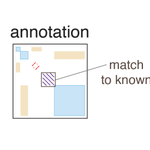
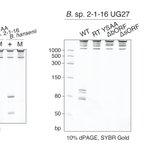
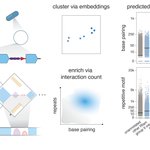
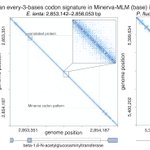
Excited to share Minerva, our approach using genome language models for biological discovery! Using Minerva, we find that UG27 reverse transcriptase systems encode variable arrays of diverse ncRNAs with a shared structure, each templating a short DNA hairpin. With @garykbrixi.

David Li retweeted

1/15 New preprint: Evidence of Ebola spread among Kenema Government Hospital (KGH) staff—not just from patients, but among colleagues in an interconnected network.
medrxiv.org/content/10.64898…
Led by @Chris_Y_Shin & @msquare2013
KGH team w/ @broadinstitute @tulane @scrippsresearch @LSTMnews

David Li retweeted

We are pleased to announce that Edison Scientific is partnering with Pfizer to bring superintelligence to their R&D organization. Read more below.

David Li retweeted

Language models can learn new tasks from just a few examples in their prompt, with no retraining. This is called in-context learning (ICL). Now genome language models can do it too.
With a handful of examples, Evo 2 ICL generates proteins, de novo antibodies, CRISPR-Cas9 loci, mitochondrial genomes and entire bacteriophages.
We can even use the synthetic sequences iteratively to construct a chain-of-thought (CoT) and achieve harder design goals.
New work with Yukun A. Hao, @BrianHie and team 🧵
David Li retweeted

In new work, we report a surprising finding: prompting Evo 2 with a handful of sequences of shared function can steer the model to generate new sequences with similar function, a form of generative in-context learning (ICL). This is an emergent phenomenon that we did not anticipate during training.
In a first study, led by Alex Hao, we show that ICL enables few-shot design of mammalian regulatory elements, including novel enhancers with cell-type specificity for a neuronal subtype in the mouse brain.
In a second study, led by @garykbrixi and Alex Hao, we extend these results to the computational design of natural proteins, de novo antibodies, protein-RNA systems, and complete bacteriophage genomes.
As part of this work, we also release several useful new artifacts, including a highly efficient new inference stack. 1/n

David Li retweeted

How do unrelated plants make the same neuroactive molecules? Here, we show how two medicinal plants independently evolved to produce alkaloids that inhibit monoamine oxidase, a longstanding target of antidepressants. Excellent work led by @FabiolaMuroV biorxiv.org/content/10.64898…

David Li retweeted

We are announcing three new discoveries in mathematics, computer science, and physics about harmonic analysis, complexity theory, and quantum field theory.
openai.com/index/building-sc…

David Li retweeted

An internal model at OpenAI has produced a claimed refutation of ETH! Russell Impagliazzo, Mohan Paturi, and I have been asked to help organize an open and independent examination of this claim. 1/4
Wow congrats Constantine!! Def check out this awesome work!


David Li retweeted

Excited to share our new paper in NSMB! We reveal the architecture of the Norrin signaling complex and use these insights to design synthetic Norrin mimics, taking a step toward developing strategies to restore the BRB. rdcu.be/DZdju6tDqpPa
David Li retweeted

RNA言語モデルを用いた保存RNA構造探索手法を提案し、ヒトに保存されるRNA構造を探索しました。
biorxiv.org/content/10.64898…

David Li retweeted

We find that 5MP proteins promote high-fidelity initiation by binding 48S scanning complex to bypass weak start codons. We propose renaming them eIF1S (euk initiation factor 1 scanning).
Great collab w/ @grigoriefflab.bsky.social
Congrats to all authors! science.org/doi/10.1126/scia…

David Li retweeted

Our new study reveals how 5-HT2A receptor β-arrestin signaling and psychedelic kinetics enable lasting antidepressant-like effects with fewer hallucinogenic-like effects, opening new avenues for psychedelic-inspired antidepressant design. (1/6)
doi.org/10.1038/s41593-026-0…

David Li retweeted

Last month, we demonstrated high-rate alchemy: turning mercury into real, stable gold, beating CERN’s record by a factor of 10.
Last week, we enriched isotopes in the world’s most powerful plasma centrifuge, beating the Soviet record that stood for 40 years.
Now, we’re building a fusion reactor in San Francisco to achieve record power density.
David Li retweeted

Hi all, I have a new result I'm excited to share. It turns out that *all existing implementations* of softmax and cross-entropy (that's JAX, PyTorch, textbooks, etc) have a subtle bug --- two bugs, actually. A simple rewrite fixes both, and eliminates "slingshots" when grokking:
David Li retweeted

Today is an emotional day for me. Together with Prof. John McCutcheon lab @ASU we have visualized by cryoEM what looks like a very funky ribosome from an insect endosymbiont.
We believe there are important evolutionary implications.
Here the pre-print:
biorxiv.org/content/10.64898…

David Li retweeted

Thrilled to share my freshly "baked" Baker lab paper. We took a bottom-up approach to designing transcriptional regulators. Instead of relying on natural activation domains, we designed compact proteins that recruit specific cofactors. Activators for now, repressors to come!
David Li retweeted

Ever wondered what a cell has experienced in the past? This is in general hard to measure. Here we introduce the recordanelle, to equip cells with a tool that lets them record their own history.
nature.com/articles/s41587-0…
@NatureBiotech @ETH @randall_platt @ETH_BSSE

David Li retweeted

Haven't used this is in a while, but a new paper from the group is a good excuse. This is monster of a paper from Sebastian Kaiser about the evolution of non-ribosomal peptides. nature.com/articles/s41559-0…

David Li retweeted

Our recent work presents a 1-gram wireless mesoscope for cortex-wide imaging at single cell resolution in naturally behaving mice, published in @Nature . It's interesting to see large-scale neural activities in multiple mice within a very natural habitat. rdcu.be/iGFq4KbdWuza
David Li retweeted

Avengers assemble: 1 year BakerLab + NVIDIA GenAIR = 🔥 rfd4-proteina.org
Presenting RFD4-Proteina, our latest protein design model, significantly better and faster than everything we compared against, both in silico and in the lab! 1/30