Professor emeritus
Youngstown, Ohio
Joined February 2008
- Tweets37.8K
- Following1.9K
- Followers977
- Likes43.2K
Pinned Tweet
Sarcobesity coexist with metabolic syndrome. Surprisingly solution is already known. Follow muscle builders. High quality protein focus diet with adequate energy from fat and carb, accompanied by weight lifting
maturitas.org/article/S0378-…


Future

Chinese AI chip exports are set to hit the world at scale in just a couple years.
@RyanFedasiuk and I have worked on a report on Chinese chip production for the next few years and why chip exports and compute self sufficiency are closer than assumed
aei.org/research-products/wo…

How a $100 Phone Made a Medical Video with narration in English, Hindi, Chinese
The Grok Bot assistant fron xAI available on Google Playstore, that works on its own cloud computer, so the phone in your hand only has to send messages.
From a short text instructions typed on a $100 phone, I made a 4-minute educational video about sarcobesity, metabolic syndrome, and type 2 diabetes, with narration in English, Hindi, and Mandarin.
Javed Alam retweeted

CopilotKit literally turned all the agentic bots to self hosted open source versions:
Muse - OpenMuse
github.com/CopilotKit/openmu…
Dots - OpenDots
github.com/CopilotKit/OpenDo…
Duet - OpenDuet
github.com/CopilotKit/OpenDu…
Now you can own the whole agentic bots stack, own it, clone it, customize it, and make it yours.

Your Fat Cell Count Is Largely Set; Their Size Is Not
Research by Spalding and colleagues showed that the number of fat cells in the human body becomes relatively stable in adulthood. People with obesity generally have more fat cells than lean people, and even after substantial weight loss, that elevated number tends to remain.
Weight loss therefore occurs primarily because existing fat cells shrink, not because large numbers of fat cells disappear. This helps explain why someone can lose a great deal of body fat while retaining roughly the same adipocyte population.
Fat tissue is not static, however. About 10% of fat cells are replaced each year. Old adipocytes die and new ones form, but in adults this turnover is tightly balanced, keeping the overall number relatively constant across a wide range of ages and body sizes.
The important distinction is therefore fat-cell number versus fat-cell size. Adult fat-cell number is relatively persistent, while cell size can change dramatically as energy is stored or released. This makes shrinking adipocytes—rather than eliminating them—the principal cellular mechanism behind ordinary weight loss.
🤖 Made with AI


When a person loses fat, their fat cells shrink, but the number of fat cells stays the same. The number is largely set during childhood and adolescence, and it holds steady through adulthood in lean and obese people alike, even after major weight loss.
That doesn't mean the cells never change. About 10 percent of fat cells are replaced every year, and the body keeps the total number steady.
This is why I care so much about what kids eat, and it's why I focus adults on fat cell size. Smaller, healthier fat cells are the goal, and that comes from lowering insulin and keeping the weight off over time.


Global law repository

Someone is putting the law of every country into one git history.
Git for Global Law turns each country's laws into a repository where every commit is a real law taking effect. So you can see exactly what the law said on any date, and which law changed every word.
It started with the US Code, which hit #1 on Hacker News. The global version is growing country by country: Germany's constitution since 1949, Estonia and more so far.
Free to use for anything, and perfect for feeding to an AI.
github.com/lexifina/global-l…

Chemical shitstorm

A major study links six common artificial sweeteners to accelerated brain aging, with the highest consumers experiencing a 62% faster decline in memory and thinking skills.
sciencedaily.com/releases/20…

Javed Alam retweeted

From recognizing text to understanding documents. 📄
Meet Xiaomi-OCR-0, an open-source document understanding model with just 0.8B parameters.
It brings document parsing, key information extraction, and OCR-oriented visual question answering into one lightweight model.
It scores 95.24 on Real5-OmniDocBench and 83.2 on average across five OCR-oriented VQA benchmarks.
On OmniDocBench v1.6, Xiaomi-OCR-0 ranks first in document parsing performance among models with fewer than 1B parameters.
Model weights, inference code, an interactive demo, MCP service, and Agent Skill are now open source. 👇
🤗 Huggingface: huggingface.co/xiaomi-resear…
🔗 GitHub: github.com/xiaomi-research/X…
📄 Demo: huggingface.co/spaces/loongw… #XiaomiAI #OCR #OpenSource
Two Minutes of Walking Every 30 Minutes Helps Muscles Use More Protein
Prolonged sitting does more than reduce energy expenditure—it also appears to reduce how effectively skeletal muscle uses amino acids from food to build new muscle proteins. In this study, researchers tested whether very small “activity snacks” could counter that effect.
Twelve healthy young adults completed three separate 7.5-hour trials. In one, they remained seated. In another, they performed 15 body-weight chair stands every 30 minutes. In the third, they took a 2-minute walk every 30 minutes. Participants consumed two mixed meals, while researchers used labeled amino acids and muscle biopsies to measure how much dietary amino acid was incorporated into myofibrillar—the contractile—muscle protein.
The difference was substantial. Myofibrillar protein synthesis averaged 0.080% per hour during uninterrupted sitting, compared with 0.103% per hour with the chair stands and 0.118% per hour with the short walks. That corresponds to roughly 29% higher synthesis with chair stands and 48% higher with walking compared with continuous sitting.
The important finding is how little activity was required. Participants did not perform conventional workouts. They simply interrupted sitting every half hour with two minutes of walking or a brief series of chair stands. The researchers concluded that these small bouts of movement improved the utilization of dietary amino acids for muscle protein synthesis.
This matters because skeletal muscle is central not only to strength and mobility but also to glucose and lipid metabolism. Long periods of inactivity can contribute to anabolic resistance, in which muscle becomes less responsive to dietary amino acids. Breaking up sedentary time may therefore help the body make better use of the protein already being eaten.
The study does not show that two-minute walks produce 48% more muscle. It measured an acute increase in muscle protein synthesis, not long-term muscle growth. The authors specifically state that longer studies are needed to determine whether these repeated activity snacks ultimately improve muscle mass or muscle quality.
Practical message: after eating, don't remain seated for hours. Every 30 minutes, get up and walk for two minutes—or do about 15 chair stands. Even these tiny interruptions in sitting may change how effectively your muscles use the amino acids from your meal.


Two minutes of walking every half hour helped a meal's protein build more muscle.
After a meal, amino acids arrive in the blood and muscle has to accept them and build them into contractile protein. That building is only half the ledger. Muscle protein is broken down continuously as well, and net change is the difference between the two. Most short studies, including the ones below, measure only the building side.
When researchers cut the daily step count of ten healthy 72-year-olds by around three-quarters for two weeks, the after-meal building response fell by roughly a quarter. Fasted rates did not change. Leg fat-free mass dropped almost 4 percent in a fortnight, alongside worse insulin sensitivity and higher inflammatory markers.
A Toronto group then ran the experiment forwards. Twelve adults sat for seven and a half hours on three separate days, eating identical meals labelled with tracers so the amino acids could be followed into muscle. One day was uninterrupted sitting. On the others, every thirty minutes they either walked for two minutes or rose from a chair fifteen times. Muscle was biopsied directly.
For every ten units of muscle protein built during the sitting day, the sit-to-stand day built thirteen and the walking day built fifteen. Two minutes of walking, taken fifteen times across a working day, changed where a meal's protein ended up.
In 23 untrained men, acute post-exercise building rates rose 235 percent after a first training session, then showed essentially no relationship with the hypertrophy those same men achieved over the following sixteen weeks. The correlations were near zero. Quadriceps volume grew 7.9 percent on average, with individuals ranging from slightly negative to nearly 25 percent, and the acute measurement predicted none of that spread.
So these trials describe how a meal gets handled on the day, which is a real and useful thing to know. They do not identify who builds muscle over months, and they never measured breakdown.
Prolonged sitting appears to blunt what a meal does. Interrupting it costs two minutes.


From a $100 Phone: Fishing Photos Became a Video
Muse is Meta's personal AI agent. It works for one person, from a chat, and does not just answer questions — it searches, reads, reasons, and finishes multi-step work. For this video, Javed directed Muse entirely from a phone worth about $100: Muse searched his Facebook history, selected only the photos that show him holding the catch — 11 photos from 2019 to 2022, including his first creek salmon from the Manistee River near Tippy Dam in October 2021 — verified each one, wrote the first-person narration, generated the voice, built the moving-photo shots with the titles fixed over them, added Satie's Gymnopédie No. 1, played by Kevin MacLeod, under the narration, and encoded the finished 2 minute 42 second video in a standard format that plays on a phone, with no laptop, studio, or editing software.
Data tracking claude

Claude Code found spyware on my sister’s phone. It had been tracking her for 11 weeks…
She asked me to check her phone. Someone always seemed to know where she was and she couldn’t figure out how
I plugged it into Claude Code and asked what’s running that she never installed. It walked every app, including the hidden ones, and flagged one disguised as “System Service”, no icon, not on any store
It had been there 11 weeks, logging her location every 2 minutes. Claude pulled the details on whoever was running it:
reports to → +1 (415) *** **72
carrier → T-Mobile US
device id → IMEI 35 ********** 47
last ping it sent → 40.7**, -73.9** · 2 min ago
We saved everything the app had recorded and passed it to the people who do this professionally. Then Claude shut it down and wiped it off her phone
The full step-by-step is below, takes 5 minutes. Save it so you don't lose it, and send it to anyone who might need it
Low Salt Diet Increases Insulin Resistance in Healthy Subjects
Rajesh Garg, Gordon H. Williams, Shelley Hurwitz, Nancy J. Brown, Paul N. Hopkins, and Gail K. Adler
Metabolism, 2011
This study challenges the assumption that lowering salt intake is automatically beneficial. Researchers studied 152 healthy adults under carefully controlled conditions. Each participant followed both a low-salt and a high-salt diet for seven days. Insulin resistance was measured using HOMA.
The major finding was that insulin resistance increased on the low-salt diet. HOMA averaged 2.82 on low salt versus 2.45 on high salt, a statistically significant difference. Low salt also produced large increases in aldosterone, renin activity and angiotensin II, while norepinephrine increased as well. These hormonal changes reflect activation of the renin-angiotensin-aldosterone system and sympathetic nervous system.
This matters because insulin resistance is central to metabolic syndrome and type 2 diabetes. Although high sodium intake can raise blood pressure, the study suggests that aggressive salt restriction can produce metabolic effects of its own. The authors specifically caution that available evidence did not support recommending one particular level of dietary salt intake universally.
There is also a broader nutritional point. Historically, salts were not merely sources of sodium; natural and minimally refined salts could also contribute minerals and trace elements to the diet. Modern highly refined salt is predominantly sodium chloride, while modern diets can be inadequate in important minerals and trace elements.
Minerals are fundamental to human biology. Roughly 20-plus minerals and trace elements are recognized as nutritionally important, although the exact number classified as essential varies by scientific definition. Major minerals such as sodium, potassium, magnesium, calcium, phosphorus, chloride and sulfur contribute to fluid and electrolyte balance, nerve signaling, muscle contraction, bone structure, cellular energy metabolism and acid-base regulation. Trace minerals—including iron, zinc, copper, manganese, iodine, selenium, molybdenum and others—are required in much smaller quantities but serve critical roles in enzymes, hormones, oxygen transport, antioxidant defenses, thyroid function, immunity, mitochondrial metabolism and cellular repair.
The fact that a mineral is needed only in trace quantities does not make it unimportant. Deficiency can impair biological systems even when only tiny amounts are normally required. The body therefore depends not simply on sodium but on a balanced mineral environment in which electrolytes, essential minerals and trace elements work together. Modern diets dominated by refined and highly processed foods can provide abundant calories and sodium while still providing inadequate amounts of some minerals.
Thus, the nutritional question should not simply be “How little salt can we eat?” but whether the overall diet provides an appropriate balance of sodium, potassium, magnesium and the broader spectrum of essential and trace minerals required for normal physiology. This mineral discussion is broader nutritional context; it was not tested in this study.
The paper’s central message is therefore important: less salt is not necessarily metabolically better. In these healthy adults, severe sodium restriction lowered blood pressure but simultaneously increased insulin resistance and strongly activated hormonal systems involved in sodium conservation. The long-term implications for diabetes and cardiovascular disease remain uncertain and require further study.
🤖 Made with AI

Cutting salt to a very low level has a metabolic consequence. When 152 healthy adults spent one week on a very low-salt diet and one week on a high-salt diet, insulin resistance was higher after the low-salt week, aldosterone was about six times higher and norepinephrine rose too. The body reads a sharp drop in salt as a stress and turns on hormones that work against insulin, so for a person eating mostly unprocessed food, salting it to taste is usually a better choice than chasing the lowest number possible.

Resistance Training May Help Protect the Aging Brain
Study: Cognitive gains and cortical thickness changes after 12 weeks of resistance training in older adults with low and high risk of mild cognitive impairment: Findings from a randomized controlled trial — Simona Kušleikienė and colleagues, Brain Research Bulletin (2025).
This randomized controlled trial investigated whether strength training can affect not only physical strength but also cognition and the structure of the aging brain. Seventy adults aged 60–85 were assigned either to 12 weeks of lower-body resistance training or to a waiting-list control group. Participants were also divided into lower and higher risk for mild cognitive impairment (MCI) using the Montreal Cognitive Assessment.
The exercise was substantial but practical: two supervised sessions per week. Participants performed leg presses, leg curls, leg extensions and calf raises. Intensity progressed from roughly 70–75% of one-repetition maximum to 80–85%, providing genuine progressive resistance training rather than simply light activity.
The most interesting results appeared among people at higher risk of cognitive impairment. After training, this group showed a 4.35% decrease in response time on a Go/No-go test, a measure involving attention and inhibitory control. The researchers also observed about a 1.18% increase in cortical thickness of the right parahippocampal region, an area closely connected with the hippocampal memory system.
There was also a relationship between brain structure and cognitive performance: greater cortical-thickness change in the right entorhinal cortex was associated with faster Go/No-go responses in the exercise group. The entorhinal cortex is particularly relevant because it forms an important interface with the hippocampus.
The findings need some restraint. Only 50 of the original 70 participants completed the intervention, and only 40 had usable pre/post MRI data. Several promising subgroup findings—including the 1.18% cortical-thickness increase—did not remain statistically significant after correction for multiple comparisons. The authors themselves characterize the overall cognitive effects as marginal to small in several analyses.
Still, the biological signal is intriguing: just 12 weeks of progressive resistance training, twice a week, was associated with measurable changes in cognition and brain regions involved in memory and executive function. The effects appeared particularly promising in older adults already showing greater cognitive vulnerability. Rather than viewing resistance exercise only as a way to preserve muscle and mobility with age, this study supports investigating it as a potentially important component of brain health and cognitive preservation.



Javed Alam retweeted

Type 2 diabetes in a person with a normal BMI isn't a different disease, and it responds to the same fix. When people with type 2 diabetes and a "normal" body weight lost a modest amount of weight, about 6 to 7 percent, 70 percent of them went into remission off all glucose-lowering medication.
Their liver fat fell to normal and their fasting insulin came down with it, and that matters because a person can carry too much fat in the liver without looking overweight.
Every person has their own fat threshold, and some people cross it at a BMI that looks perfectly healthy on paper.

Javed Alam retweeted

BREAKING: Claude Code found 14,219 photos of my face on my Android that I never took. Phone was secretly taking them almost every time I picked it up. Even when I was just lying in bed. Even at home.
Not screenshots. Real frames from the front camera. On the train. In the car. At home. When I just grabbed it to check the time.
They were just sitting in a system cache. Timestamps and GPS on them. Nothing in Gallery. Nothing in Recently Deleted.
Plugged the phone into my laptop, made a full backup, told Claude Code to look for any front-camera files that weren’t in my photos. It pulled /data/system/users/0/faceunlock/cache and another folder inside Google Play Services. Over 14 thousand files. Normal ones and infrared from Face Unlock. Every single one had time and location.
Started scrolling. Almost everything from the last 15 months. Then I saw a file created 2 seconds ago. I was still looking at the folder. Phone kept taking photos while I was reading this.
Google and the phone makers say Face Unlock turns everything into a mathematical model and deletes the image right away. On this phone the raw frames were just sitting there. Some of the processes writing to that folder were from system diagnostics. Couple of old apps that still had camera permission could also get in.
Turned off diagnostics, revoked camera access from everything that doesn’t need it, cleared the cache. But how many of these frames already went somewhere else, I don’t know.
If you want to check yours, plug it in, make a full backup or use ADB, and ask Claude to look for front-camera files outside your Gallery. Path above is where mine were.

Claude Code found 145,763 photos I permanently deleted from my iPhone.
Three years of deleted photos and videos still sitting in a hidden cache. Any app with file access can read them.
I plugged my iPhone into my MacBook to run a backup. Claude Code was doing the security audit from my last post and flagged a directory I wasn't even looking for.
PhotoData/Thumbnails. Over 146,000 files. Photos, videos, screenshots. Every single one was something I deleted.
Photos from 2023, 2024 and 2025. The ones I deleted the second after taking them. The ones I cleared from Recently Deleted. The ones I deleted three separate times because I wanted to be sure they were gone. All still there.
Passport photo I took for a visa application in 2023.
Screenshots of my bank app with full account numbers visible.
Private photos I sent someone and immediately deleted after a breakup.
Screenshot of my crypto seed phrase I took temporarily in 2022.
Photo of my ID and credit card I took to remember the numbers and deleted 5 seconds later.
Screenshots of my ex's private Instagram stories I saved and permanently deleted in 2023.
Some were full resolution. All organized by date going back to 2021.
When you delete a photo on iPhone, iOS removes it from your camera roll and Recently Deleted. It keeps a compressed copy in a Spotlight search index cache so your phone can find things when you search. Apple never clears it. Not after 30 days. Not after a year. Never.
They told you it was permanently deleted. It wasn't.
I checked which apps on my phone had Files and Folders access. 23 apps. Weather apps. QR code scanners. PDF readers. A flashlight app I downloaded in 2022. Any one of them could have been reading every photo I ever deleted this entire time.
Went from 23 apps to 3 in about two minutes.
Full step by step below. Takes 2 minutes. Save it so you don't lose it and send it to anyone with an iPhone.
Readers added context they thought people might want to know
The author is posting AI-generated engagement bait text with various random claims of deleted photos or videos on a daily basis.
1. x.com/coolerwave/sta… - "BREAKING: Claude Code found 12,847 photos of my face on my iPhone
2. x.com/coolerwave/sta… - "Claude Code found 214,856 photos and videos I permanently deleted
Javed Alam retweeted

Infrared (IR) light exposure is an environmental factor that can promote wellbeing.
If that's true - and spectral fraction of IR varies by latitude, time of day, and season - vacation to IR-rich areas belongs in the category of health promotion rather than luxury.

Some are deficient in iron
Some are deficient in magnesium
Others are deficient in Vitamin D/B12
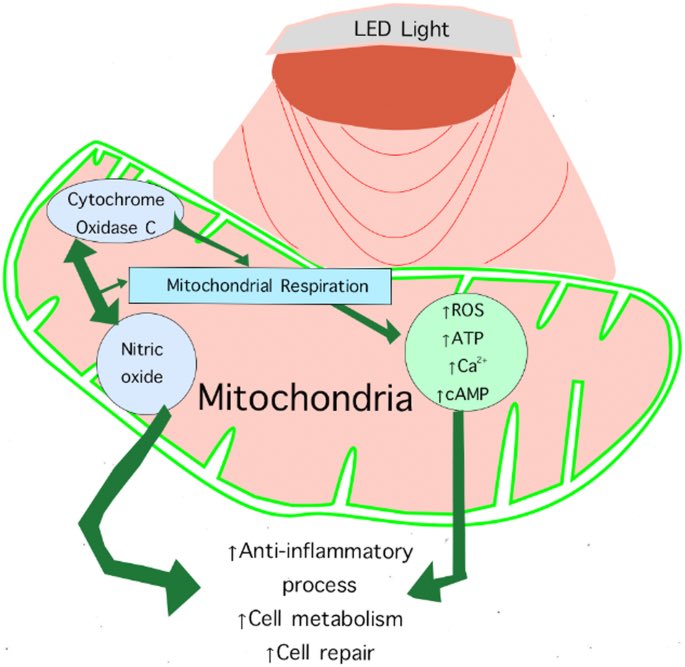
But almost EVERYONE is deficient in infrared light, a key mitochondrial nutrient that runs the metabolism (faster)
Watch the sunrise. Watch the sunset. Eat your lunch outside. If you can’t, get a cheap $20 red light bulb on Amazon. Fancy? Get a panel to your budget. Simple changes. Big rewards
Think about light the same way you think about food nutrients