
Urban economist studying housing regulations. https://nitter.cf/t.co/mLjgPJNovT
Joined August 2021
- Tweets338
- Following523
- Followers236
- Likes3.3K



Pinned Tweet
[Call for papers: Second Urban/Real Estate Conference in Banff] The Business Economics group @UAlbertaBiz @UAlberta is proud to annouce the second Rocky Mountain Urban and Real Estate (#RMURE) Conference at #Banff, on June 11 - 13, 2027. The purpose of this conference is to bring together an academic community of #Urban and #RealEstate economists, broadly defined, in Canada and worldwide. As such, we invite papers on a broad range of topics that would be appropriate for presentation at the @UrbanEconomics or @AREUEA_ORG meetings.
Keynote: Prof. Atif Mian (@AtifRMian)
Submission deadline: January 31, 2027 Submit your papers to: [email protected] For more details, please visit our conference website:
sites.google.com/site/jungsi…
(Organizers: @JayHyunEcon @mmacekk Nate Schiff)


James Macek retweeted

In the last 24 hours, two economists, @jmb112485 and @microsamonomics, have complained here on X about receiving papers that Pangram flagged as 100% AI-generated.
My own experience as an editor is similar: we are getting more and more of these submissions.
This situation is not hypothetical; it is a reality today.
And, as I have already written, the real problem is not that the papers were AI-generated; it is that no one had done the thinking behind them, and you can so easily tell. The papers are useless and a waste of time for everyone involved.
Journals should implement a policy right away to check paper submissions with Pangram. The rate of false positives in Pangram is so ridiculously low that Pangram is a very good first line of defense. And no, sorry, Pangram will not flag your paper as 80% AI-generated if you use AI for proofreading or to improve your English because English is your second language. Why a part of the political spectrum refuses to accept that Pangram is extraordinarily good at avoiding false positives is an unfathomable mystery to me (and please, do not leave a comment that confuses a false positive with a false negative; it is high school material).
Now, you can trick Pangram into thinking your text is human-generated. But, at least, we are forcing authors to pay a small tax before sending out a reckless submission.
If you are asked to referee an AI-generated paper, tell the editor right away!
If you received an AI-generated report, tell the editor right away!
The original posts:
nitter.cf/microsamonomics/status…
nitter.cf/jmb112485/status/21249…

James Macek retweeted

SITUATION UPDATED: The Riemann Hypothesis proof has passed the independent kernel check. MIT's Andrew Sutherland exported Alpöge and Claude's full proof and ran it through separately written kernels. nanoda (Rust) accepted it in about 28 minutes. con-leche accepted all 1.47 million declarations and confirmed the five theorems, including RH itself, match Mathlib-only statements. lean4lean passed all 175,187 modules, and Lean's own kernel replay passed with zero rejections. A Lean bug is now essentially ruled out, since every checker would have to share it. Two slower checks are still running, and nothing has failed. What's left is the human part: no readable proof exists yet, and the Clay prize needs publication plus two years of review. The Riemann Hypothesis is proven, but not yet understood.

SITUATION DETECTED: The Riemann Hypothesis proof was verified overnight. MIT's Andrew Sutherland and others independently compiled Levent Alpöge and Claude's Lean code, about 17 million lines across 175,000 files, and the Lean kernel accepted it using only the three standard axioms. I went through the code myself: the final theorem uses Mathlib's own definition of RiemannHypothesis, nothing in the project redefines it, there's no sorry and no custom axioms. What's left is an independent kernel check to rule out a bug in Lean itself and a human-readable version of the proof.
James Macek retweeted

New at JIE: "Love-for-variety: with an application to an Armington model of competitive trade" by Kiminori Matsuyama, Philip Ushchev
doi.org/10.1016/j.jinteco.20…

James Macek retweeted

The University of RuneScape produced another billionaire
Stake's founders met on RuneScape - now the guy who built SoulSplit at 14 is the youngest Dutch billionaire
When are we admitting that RuneScape had the most goated entrepreneurial education of all time?


James Macek retweeted

PhD candidate @GrantWBenjamin wanted to understand the benefits firms experience when their products go viral. To investigate, he used @onebite pizzeria reviews. #Influencers #Branding #Pizza #EconTwitter newsletter.economics.utoront…


James Macek retweeted

Such an embarrassment.
Every other AI company - even the scams - has no problem raising hundreds of millions, if not hundreds of billions, of dollars in private markets.
Our clown show needs taxpayer money to keep the lights on.
Total joke.

"Cohere is a Canadian success story being written before our eyes" - Prime Minister @MarkJCarney
James Macek retweeted

New working paper: Can AI forecast treatment effects in economics from pre-registration documents?
Answer: Yes. 1/


James Macek retweeted

jrosenthalkay.github.io/2026…
@jordanr_k on Greany (2026) and related “change the elasticity” counterfactual scenarios.
James Macek retweeted

@ubcVSE is hiring this year with a focus on International Trade/Spatial Economics and Macroeconomics/International Macroeconomics. Please apply!
See econjobmarket.org/positions/… for more
James Macek retweeted

My college classmate Matt and I just used AI to create a Erdos #374 solution w/ a Lean-verified proof. We used a reciprocal-prime equidistribution estimate, Harman’s almost-all short-interval theorem, Weil’s bound, and the analytic large sieve. Full proof: papers.ssrn.com/sol3/papers.…

Erdős Problem #374 is solved! Jonathan Hartley and Matthew Olson proved the Erdős–Graham conjecture that D₆, the set of numbers needing six factorials to form a square, has positive density. They formalized the complete solution in Lean, and we verified it.
erdosproblems.ai/374

James Macek retweeted

Look at him, thats my Qual.
Your what?
My Qualitative! My vibe specialist. Look at him, you notice anything different about him? Look at his face.
I'll give you a hint, his name is Jayden. He won a local poetry competition in bushwick! Yeah I'm sure of the vibe.


Quant firms are hiring idea guys, not quants
I've been skeptical about the whole - software is commoditized, ideas are the moat argument
But I've seen first hand the best quant and technical firms in the world hire thinkers, liberal arts grads, and generalists
I predict the trend accelerates
Letter from @AQRCapital below

James Macek retweeted

Happy to share our preliminary draft! Attacks on oil tankers have economic effects that are smaller than, and distinct from, conventional oil shocks. Thanks to everyone for their input! Updated version coming soon.

Super interesting!
"Oil Shipping and Pirates: The Macroeconomic Effects of Oil Tanker Attacks" by Viktor Gradoux and Julian Marcoux.
"This paper studies the macroeconomic effects of attacks on oil tankers. We identify oilshipping-cost shocks by combining a narrative record of tanker attacks with high-frequency changes in tanker freight rates. We focus on attacks along key shipping routes in the Middle East and Southeast Asia. Focusing on the period since the onset of the U.S. shale oil boom, we find that these shocks lower economic activity and raise consumer prices in both the United States and the world economy. Crude production and oil prices show no significant immediate response, while inventories decline. These responses differ from those associated with conventional oil supply shocks and other shipping shocks. U.S. evidence points to an energy-trade channel, with increased congestion at Middle Eastern ports, lower crude imports and refinery inputs, leading to higher fuel prices. We also document that manufacturing orders and shipments fall immediately, consistent with precautionary adjustments in firms’ purchases and investment plans. These findings, together with the contraction in global activity, suggest that oil-shipping disruptions can hurt both oil-importing and oil-exporting economies."
dropbox.com/scl/fo/8fxblwhw2…

James Macek retweeted

NEW: We’ve spent months reporting on a Chinese intelligence effort to penetrate the Federal Reserve. It’s a fascinating and important saga, revealing the lengths that Chinese spies are willing to go to get any scrap of information about the Fed. It features lies, betrayal, nude photos, extortion, false identities and document leaks. And it doesn’t end at all the way you might expect: cnbc.com/2026/09/30/john-rog…

James Macek retweeted

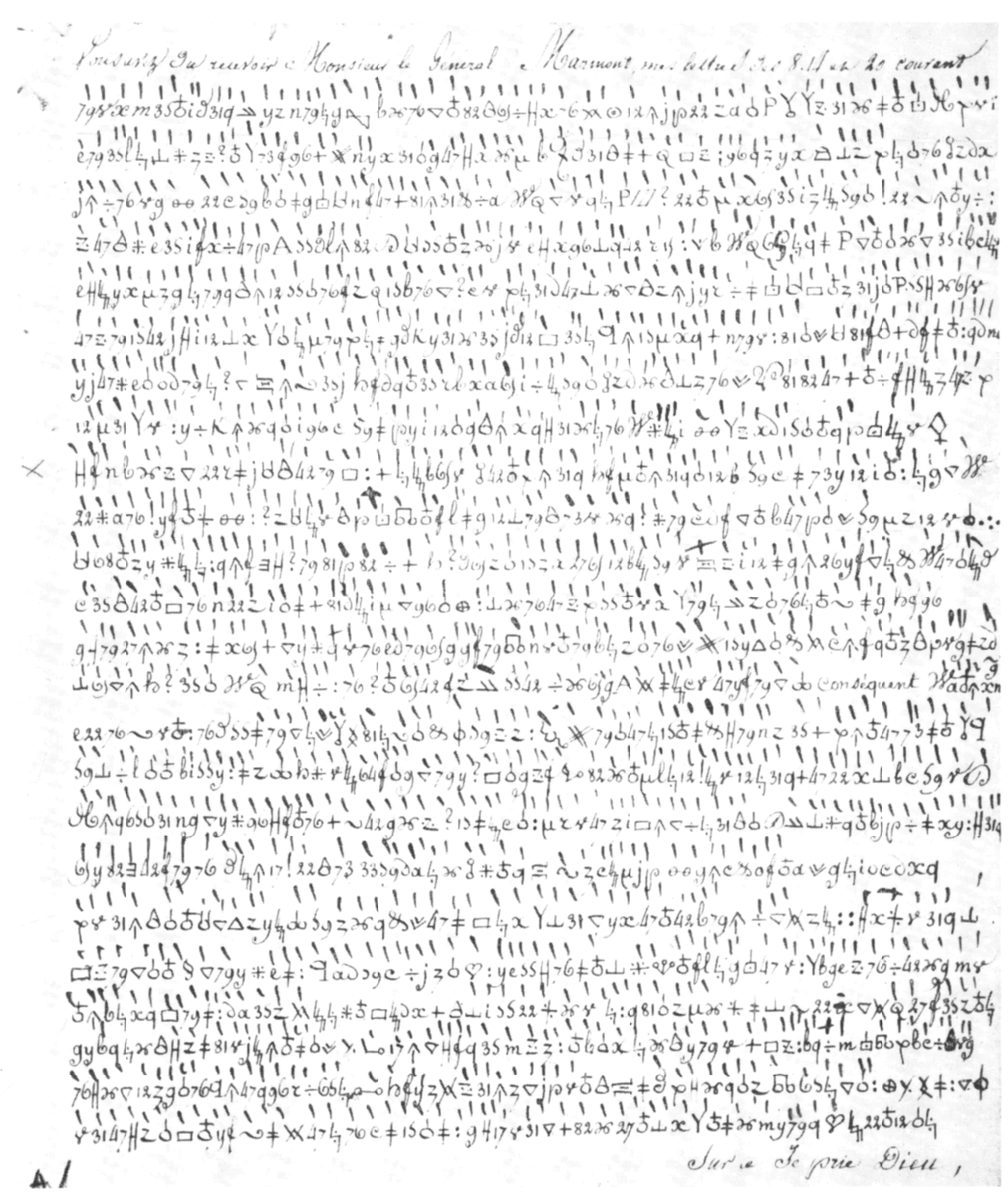
I used GPT-6 Astra to break an unsolved cipher to one of Napoleon's generals that had gone unread for 217 years.
What makes this impressive isn't actually the codebreaking, but that Astra completed the entire multi-modal workflow in ~6 hours from a single image and goal.
1/6🧵


James Macek retweeted

Studying how property rights uncertainty affects prices and speculative activities in the housing markets using a natural comparison of full and limited property houses in Shenzhen, from @HanmingF, Jing Wu, and Vincent Yao nber.org/papers/w35797
